

A bump to the head can happen in an instant. You might slip on a wet floor, take a knock during sport, or have a small accident at home. In the moments that follow, you may feel mostly fine apart from a tender spot or mild headache, and it can be tempting to brush it off and carry on as usual.
In many cases, minor head injuries do heal well with simple care and rest at home. Still, it is not always easy to tell when an injury needs a closer look, especially since some warning signs can appear later.
Understanding which head injuries you can safely monitor, which ones should be checked at an urgent care centre, and when emergency care is needed can help you protect your health and recover with greater peace of mind.
What is a head injury?
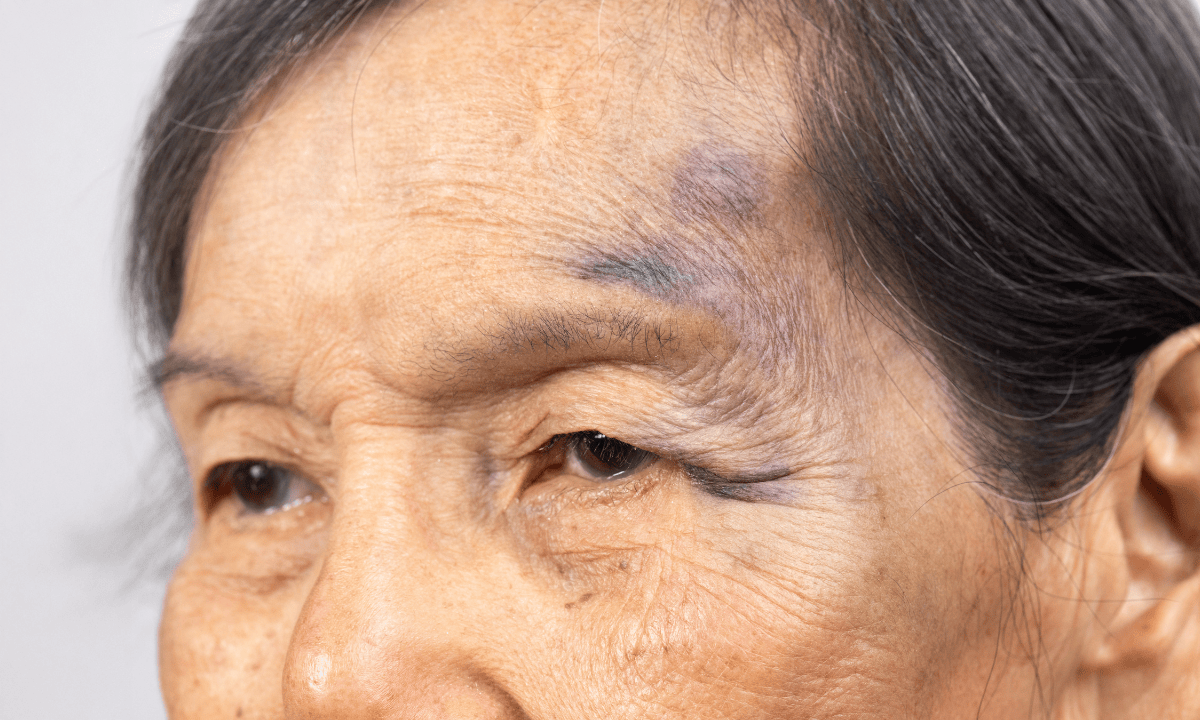
A head injury is any knock or blow to your head. It might be a small bump that leaves a tender spot, a cut that bleeds, or something more serious that affects your brain.
Head injuries fall into three main categories:
Mild injuries:
Minor bumps, bruises, or small cuts to the scalp that don't affect brain function.
Moderate injuries:
Injuries that may cause brief loss of consciousness, confusion, or other symptoms that need medical assessment.
Severe injuries:
Serious trauma involving skull fractures, bleeding in or around the brain, or prolonged unconsciousness.
You can't always tell how serious an injury is just by looking at it. A big, dramatic-looking bump might heal on its own. But sometimes a smaller knock that barely leaves a mark can cause problems beneath the surface. What you observe helps you make decisions about what to do next.
Causes of head injuries
Head injuries can happen to anyone, often in the most ordinary moments of daily life:
At home:
Slipping in the shower or on wet floors
Tripping on stairs or rugs
Bumping your head getting out of the car or on cupboard doors
Falls while doing DIY or household tasks
During play and sports:
Children bumping their heads while playing or learning to walk
A football to the head or collision during a game
Tumbles from bikes or scooters
Playground accidents
Out and about:
Traffic accidents involving cars, bikes, or pedestrians
Losing balance and falling, especially in older adults
Workplace incidents, particularly on building sites
Accidents happen even when we're being careful. You don't need to blame yourself. The important thing is knowing how to respond and when to seek help.
Our urgent care centre specialist
Loading...
What to do immediately after a minor head injury?
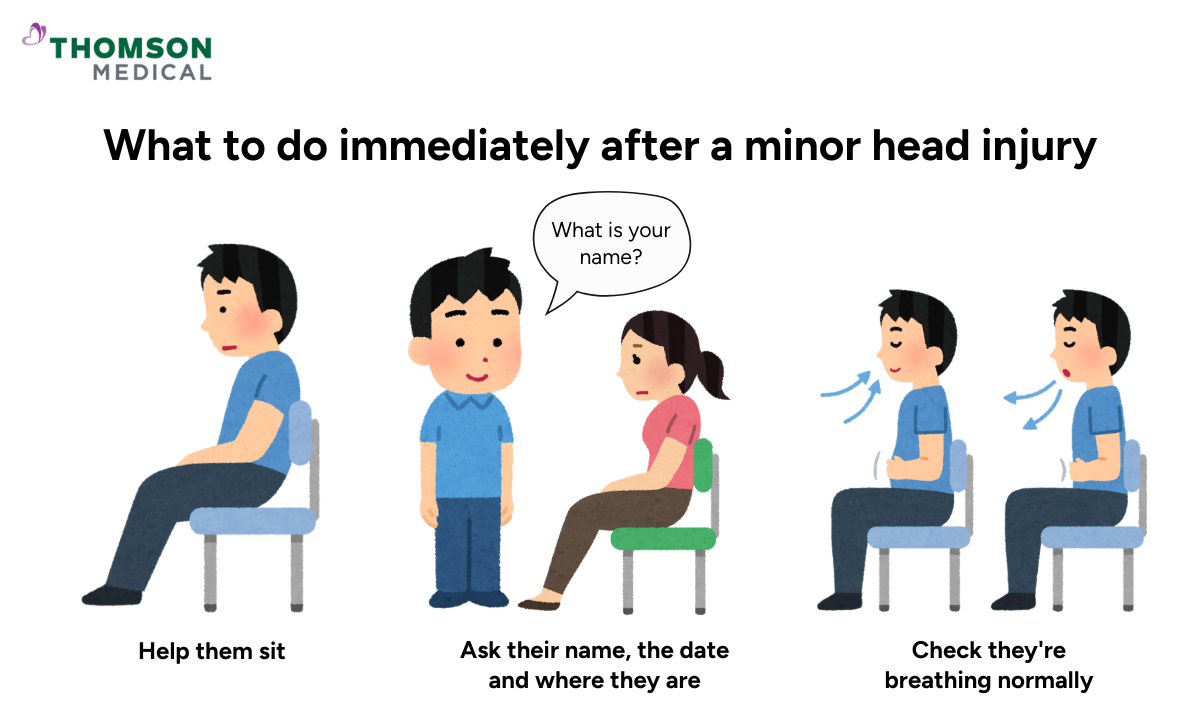
The first few minutes after impact are important. This is when you can spot most warning signs. You can also get a clear picture of the person's condition before symptoms develop or change.
Stay calm and check the basics:
Help them sit or lie down somewhere safe
Ask their name, the date and where they are
Look for bleeding, swelling or visible wounds
Check they're breathing normally and responding to you
For minor bleeding:
Apply gentle pressure with a clean cloth
Clean minor wounds with water
Cover with a clean dressing
These initial checks help you understand how serious the injury might be and guide your next steps. If everything seems stable and the person is alert, you can move on to monitoring for any developing symptoms.
Symptoms to watch for in the first 48 hours
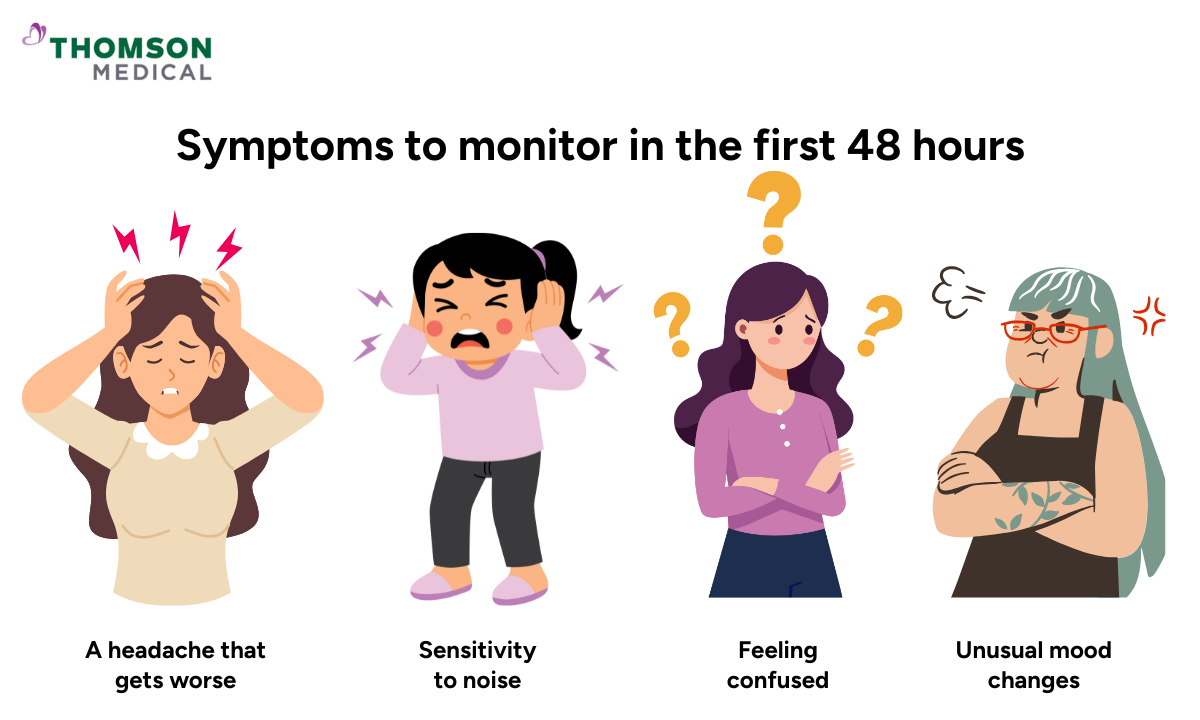
Even if things seem fine initially, certain symptoms can develop over the next day or two. These aren't necessarily emergencies, but they warrant medical attention to ensure proper recovery and rule out complications.
Stay alert for:
A headache that starts mild but gets worse
Feeling sick or dizzy when moving around
Sensitivity to light or noise
Sleeping much more or much less than usual
Feeling confused or trouble concentrating
Unusual irritability or mood changes
However, not all head injuries require emergency care. Many fall into a middle ground where professional assessment is helpful, but the situation isn't an emergency. This is where Urgent Care Centres (UCC) become valuable.
When to visit an urgent care centre
If you're unsure whether your head injury needs medical attention, a UCC can provide an initial assessment:
Very minor head bumps with no red flags
Small scalp wounds needing cleaning and wound care
Mild bruising or swelling where the person is fully alert
Mild headache only after a minor bump
Follow-up care for previously cleared minor injuries
UCCs can examine you, clean and dress wounds, provide advice on monitoring, and determine if you need referral to emergency care. This makes them ideal for head injuries that seem minor but would benefit from professional assessment.

What happens during a UCC visit for head injury
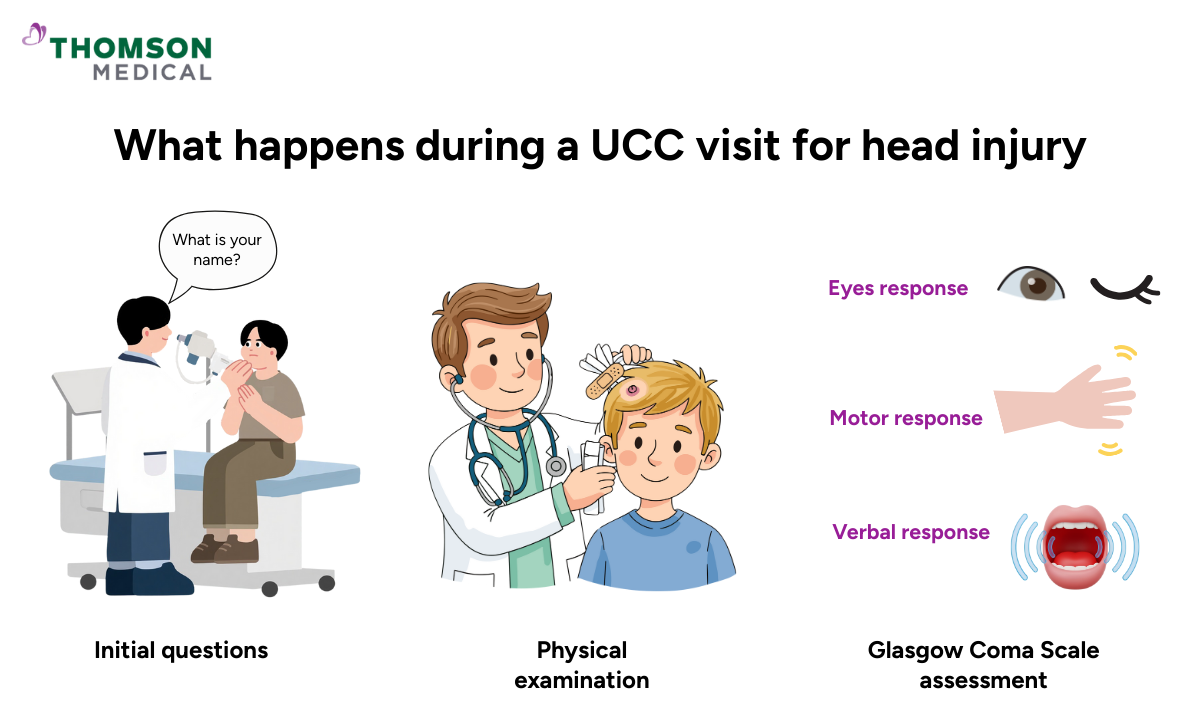
When you arrive at a UCC with a head injury, your doctor will conduct an assessment to check for any signs of complications. Most visits take 30 to 60 minutes from start to finish.
Initial questions
Understanding how your injury happened is the first step in assessing its severity. The force and type of impact can indicate what kind of damage might have occurred, even if you feel fine right now.
You will be asked about:
How the injury happened and the force of impact
What symptoms appeared
Your medical history and current medications
This information helps them determine which physical tests are most important for your specific situation and what warning signs to look for.
Once they understand the situation, your doctor will move on to physical examinations to check how your brain and nervous system are functioning.
Physical examination
Your brain controls everything from your eye movements to your balance. By testing these functions, your doctor can detect signs of injury that aren't visible from the outside. These tests reveal whether the impact has affected your brain's ability to control your body properly.
Your doctor will check:
Alertness by asking simple questions about your name, location and the date
Eye response to see if both pupils react properly to light and are equal in size
Balance and coordination through tasks like walking in a straight line or touching your nose with eyes closed
Reflexes by tapping specific points on your body
Any wounds to determine if stitches or adhesive strips are needed
These observations feed into a standardised scoring system that helps determine your next steps.
Glasgow Coma Scale assessment
The Glasgow Coma Scale is a universal tool used worldwide to measure how well your brain is functioning after an injury. It helps your doctor assess your condition and track any changes. A lower score indicates more serious impairment, while a higher score suggests your brain is working normally.
This standard test measures three areas:
Can you open your eyes on command?
How well do you respond to questions?
Can you follow simple instructions like lifting your arm?
The score helps determine if you need a CT scan to check for bleeding or skull fractures or specialist care.
The UCC will arrange for a transfer to the A&E if the examination reveals concerning signs such as worsening symptoms, abnormal responses, or indications of skull fracture or internal bleeding.
Warning signs that need emergency care
Certain symptoms indicate serious injury and warrant for emergency care. Knowing these red flags helps you decide between Accident and Emergency (A&E) and a UCC. What you're watching for depends on age – young children and babies show red flags differently compared to adults.
Go to the A&E immediately if you notice any of these warning signs:
Red flags in adults
Adults are often able to explain how they feel. However, they sometimes play down symptoms or try to carry on as usual.
Seek emergency help if you notice:
Loss of consciousness (even briefly)
Repeated vomiting (more than once)
Severe or worsening headache
Confusion or unusual behaviour
Extreme drowsiness or difficulty staying awake
Clear fluid or blood from nose or ears
Any seizure (even if it only lasts a few seconds)
These symptoms suggest the brain may be under pressure or bleeding has occurred.
With head injuries, time matters, so seeking medical attention promptly helps provide appropriate assessment and care.
Red flags in children
Children might not be able to accurately tell you how they're feeling, so watch their behaviour closely.
Get emergency help if your child has:
Loss of consciousness or seizure
Repeated vomiting
Extreme drowsiness or difficulty waking
Confusion or doesn't recognise familiar people
Won't stop crying or seems inconsolable
Clear fluid draining from nose or ears
Sudden personality changes, including becoming very aggressive
Young children often show injury through changes in behaviour rather than describing symptoms. Pay attention to anything that seems out of character, as this can be your warning sign.
Red flags in infants and toddlers
Babies need extra careful watching because they can't tell what's wrong. Small changes in how they normally behave can signal serious problems.
Seek urgent care if your baby has:
Loss of consciousness
Bulging soft spot on top of head
Won't stop crying for more than 10 minutes
Vomits more than once
Extreme sleepiness or difficulty waking
Won't feed or drink normally
Bruising around both eyes or behind the ears
Any visible dent or odd shape to their skull
Caring for an injured baby can feel frightening, especially when they can't tell you what's wrong. If you spot any of these red flag symptoms, trust your instincts as a parent and seek medical attention straight away.
If none of these emergency symptoms are present, you can still visit a UCC if you would like professional reassurance
Head injuries can feel scary, but most minor ones heal well with proper care and monitoring. By knowing what to watch for and when to seek help, you're already taking the right steps towards recovery.
FAQ
How long after a head injury can symptoms appear?
Symptoms can show up immediately or develop gradually over 24 to 48 hours. Most appear within the first day, but occasionally bleeding inside the skull causes symptoms days or even weeks later. Delayed symptoms are rare but explain why monitoring matters even when you initially feel fine.
What's the difference between a concussion and a head injury?
A head injury describes any trauma to the head, ranging from a minor bump to a severe injury. A concussion is one specific type where the brain is shaken inside the skull, temporarily affecting how it works.
When can I exercise again after a concussion?
Don't rush back to physical activity or sports injury-prone activities until all symptoms disappear and a doctor clears you. Your brain needs time to heal. Returning too soon can cause another injury or worsen brain damage. Follow return-to-sport guidelines with a gradual step-by-step increase in activity, and stop immediately if symptoms come back.
How do I know if my baby hit their head too hard?
Watch their behaviour closely. Crying immediately after the bump is normal and actually reassuring. Seek medical help if they won't stop crying, seem unusually sleepy, vomit, refuse to feed, or develop a bulging soft spot on their head. When you're uncertain, contact your doctor rather than waiting to see what happens.
How can I prevent head injuries in young children?
Use safety gates at stairs, avoid baby walkers, and secure children in proper car seats and high chairs. Always supervise infants and toddlers closely and remove hazards from your home. When they're old enough for bikes or scooters, make sure their protective helmet fits properly. It should sit level on their head and not move when they shake it.
When do I need a CT scan after hitting my head?
You'll likely need a CT scan if you experience red flag symptoms like passing out (even briefly), vomiting more than once, a severe headache that worsens, confusion, or clear fluid from your nose or ears. Doctors use the Glasgow Coma Scale to check your alertness and decide if brain imaging is needed to look for skull fractures or bleeding inside your head.
The information is intended for general guidance only and should not be considered medical advice. For personalised recommendations and advice based on your unique situation, please consult a specialist at Thomson Medical. Request an appointment with Thomson Medical today.
For more information, contact us:
Thomson Medical 24-Hour Urgent Care Centre (Novena)
- Call: 6350 8812
Notice:
The range of services, vaccinations, and tests may vary. Please contact us directly to enquire about the current availability.
Request an Appointment