

Feeling pain or tightness in your chest can be unsettling, especially when it comes on unexpectedly or keeps returning. You might find yourself wondering if it is just stress, indigestion, or something more serious. It is completely natural to feel anxious when symptoms involve your heart and you are unsure what they mean.
Chest or heart-related pain can have many possible causes, and not all of them are dangerous. Still, your body’s signals deserve attention. Understanding the different types of heart pain, what they may indicate, and when to seek medical help can give you clarity and help protect your health.
What is heart pain?
Heart pain, often called chest pain or angina, is any discomfort or unusual sensation you feel in your chest area. It might present as a dull ache, sharp stabbing pain, tightness, pressure, or even a burning feeling.
Whilst the term "heart pain" suggests the discomfort comes from your heart, chest pain can actually originate from your heart muscle, the surrounding tissues, your lungs, digestive system, or even the muscles and bones in your chest wall.
If you're experiencing chest pain, it's completely natural to feel worried, as your body is sending you an important signal, and understanding what it means can help you know when to seek medical care.
What causes heart pain?
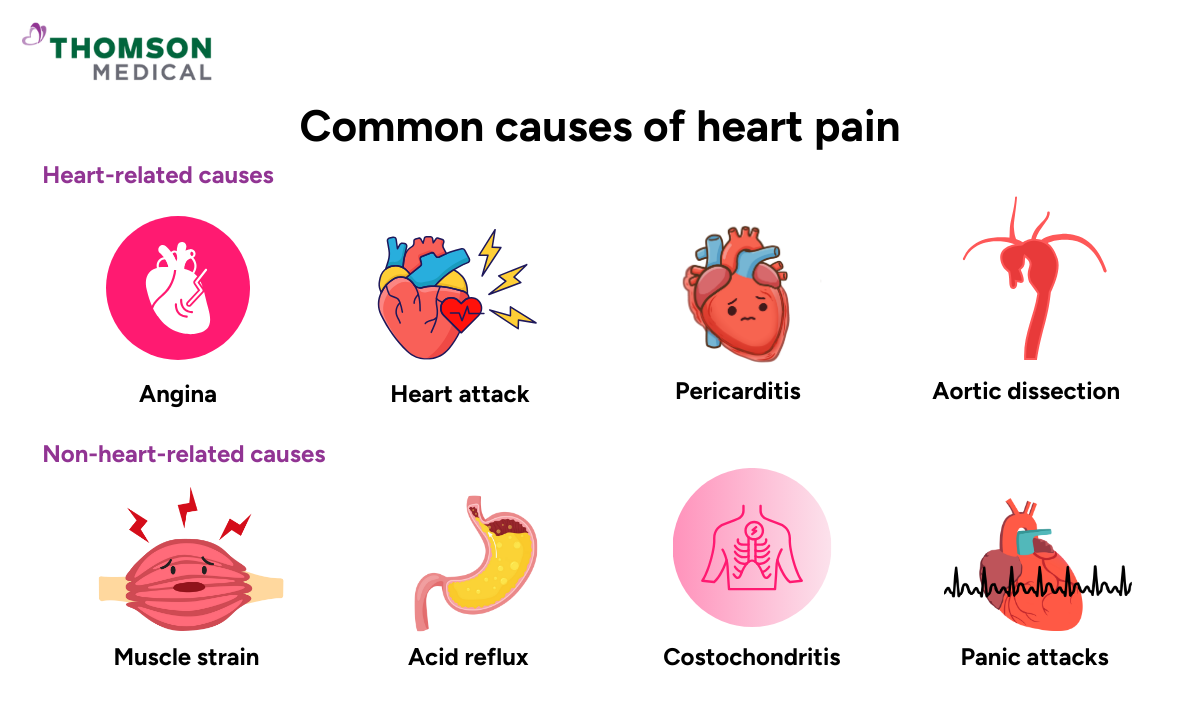
Your body may be signalling something that needs attention. Recognising the possible causes can help you respond appropriately.
Heart-related causes
If your chest pain is coming from your heart, seeking clarity is the right step. Some heart-related conditions need urgent attention, whilst others can be managed with proper care.
Here are the main heart-related causes of chest pain you should be aware of:
Angina:
Reduced blood flow to your heart muscle, often described as pressure, squeezing, or heaviness in the chest
Heart attack (myocardial infarction):
A blockage in blood flow to part of your heart, requiring immediate medical care
Pericarditis:
Inflammation of the tissue surrounding your heart, which may cause sharp pain that worsens when you breathe deeply or lie down
Aortic dissection:
A serious condition involving a tear in the wall of your aorta, the main artery carrying blood from your heart
Whilst some of these causes need more immediate medical help than others, if you're experiencing persistent or severe chest pain, please don't hesitate to seek medical care. Your concerns are valid, and getting prompt evaluation can provide both answers and peace of mind.
Non-heart-related causes
Your chest pain may not be heart-related at all, which can be a relief to hear.
Several other conditions commonly cause chest discomfort, such as:
Muscle strain:
Overuse or injury to chest wall muscles can cause localised pain that worsens with movement
Acid reflux (GERD):
Stomach acid flowing back into your oesophagus can create burning chest discomfort, often after eating
Costochondritis:
Inflammation where your ribs meet your breastbone, causing tenderness and sharp pain
Anxiety or panic attacks:
These can produce chest tightness, rapid heartbeat, and shortness of breath that feel very real and frightening
Respiratory conditions:
Issues like pneumonia, pleurisy, or pulmonary embolism can cause chest pain, especially when breathing
Whilst these conditions don't involve your heart directly, they can still cause real discomfort and deserve attention. If you're experiencing chest pain, it's always worth seeking urgent medical evaluation so you can get the relief and answers you need.
When should you seek urgent care?
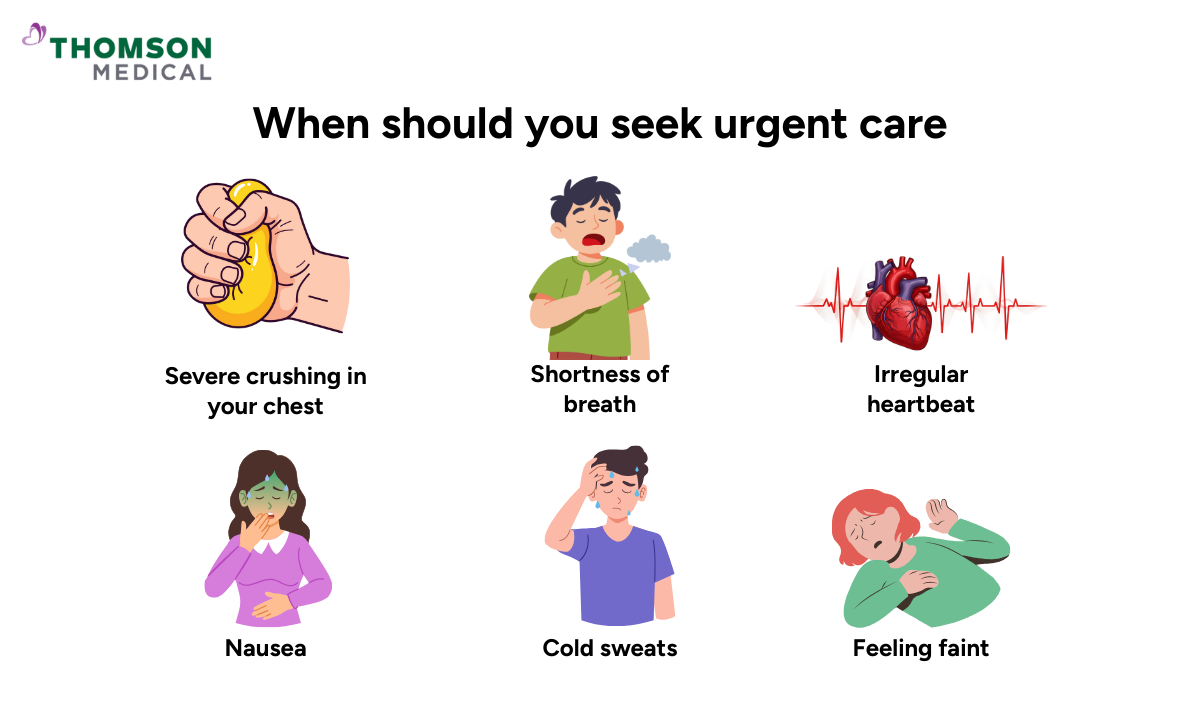
Deciding whether to seek immediate care can feel really difficult, particularly when you're scared and unsure what your body is trying to tell you.
If any of these warning signs sound familiar, please come to an Urgent Care Centre (UCC) straight away or call for emergency assistance:
Severe crushing, squeezing, or pressure in your chest that lasts more than a few minutes
Pain radiating to your jaw, neck, shoulder, arm, or back
Shortness of breath occurring with or without chest discomfort
Sudden intense pain that feels different from anything you've experienced before
Cold sweats, nausea, or vomiting alongside chest pain
Dizziness, lightheadedness, or feeling faint
Rapid or irregular heartbeat that concerns you
These symptoms could indicate a heart attack or another serious condition that needs prompt attention. If something doesn't feel right to you, please listen to that feeling. Seeking medical care is always the right choice, even if it turns out to be nothing serious.
How to describe your heart pain?
When you visit a UCC, providing clear information about your symptoms helps our medical team understand what's happening. Consider these questions before your visit:
About the pain
Where exactly do you feel the pain?
What does it feel like? (Sharp, dull, burning, pressure, squeezing?)
How long does it last?
Does it come and go, or is it constant?
Triggers and patterns
What were you doing when the pain started?
Does anything make it better or worse? (Rest, movement, eating, breathing deeply?)
Have you experienced this before?
Do you have a family history of heart disease?
Associated symptoms
Are you experiencing shortness of breath, sweating, nausea, or dizziness?
Do you feel pain anywhere else in your body?
Sharing these details with the doctors helps ensure you get the right care as quickly as possible. The more we understand about what you're experiencing, the better we can help you feel better.
Taking care of yourself
If you've experienced chest pain, your body is telling you something important.
Even if the pain has subsided, it's worth having it evaluated, especially if:
This is the first time you've experienced such symptoms
The pain was severe or accompanied by other concerning symptoms
You have risk factors for heart disease (high blood pressure, diabetes, family history, smoking, high cholesterol)
You're feeling anxious or uncertain about what happened
At Thomson Medical's Urgent Care Centre, our team is available 24/7 to assess chest pain. Our medical professionals will evaluate your symptoms and advise on the next steps for your care.
FAQ
How do I know if my heart pain is serious?
Chest pain that requires urgent medical attention is typically accompanied by symptoms like shortness of breath, sweating, nausea, pain radiating to your arm or jaw, or a feeling of pressure or squeezing. If you're unsure or worried about your symptoms, it's always worth having them evaluated. Trust what your body is telling you.
How do I know my chest pain is not heart-related?
It can be difficult to figure out whether chest pain comes from your heart or another cause. Pain that worsens with movement, breathing deeply, or pressing on your chest may be muscular or related to your ribs, whilst burning sensations after eating might suggest acid reflux. However, the only way to know for certain is through proper medical evaluation.
What does angina feel like?
Angina typically feels like pressure, tightness, squeezing, or heaviness in your chest. Some people describe it as feeling like something heavy is sitting on their chest. The discomfort may also spread to your shoulders, arms, neck, jaw, or back. It often occurs during physical activity or stress and usually eases with rest.
When should I worry about chest pain?
You should seek immediate medical care if your chest pain is severe, lasts more than a few minutes, comes with shortness of breath or sweating, or feels different from anything you've experienced before. Even if you're uncertain, it's better to have it checked than to wait and worry.
Can indigestion feel like heart pain?
Absolutely. Acid reflux and indigestion can cause burning or discomfort in your chest that feels quite similar to heart-related pain. The key difference is that digestive chest pain often occurs after eating, may improve with antacids, and typically causes a burning sensation rather than pressure. If you're unsure what's causing your symptoms, a medical evaluation can provide clarity.
Can anxiety cause chest pain?
Yes, anxiety and panic attacks can cause very real chest pain, often with tightness, rapid heartbeat, and difficulty breathing. While these symptoms can feel frightening, they're usually not dangerous. That said, it's important to have chest pain evaluated medically first to rule out heart-related causes, as the symptoms can feel very similar.
What should I do if I have chest pain at night?
If you wake up with chest pain, don't ignore it. Sit up, take slow breaths, and assess your symptoms. If the pain is severe and accompanied by shortness of breath, sweating, or radiating to your arm or jaw, seek emergency care immediately. Even if the pain seems mild, if it persists or concerns you, it's worth visiting an urgent care centre for evaluation.
The information is intended for general guidance only and should not be considered medical advice. For personalised recommendations and advice based on your unique situation, please consult a specialist at Thomson Medical. Request an appointment with Thomson Medical today.