

Receiving a positive HPV result can feel alarming, and it is natural to have questions about what this means for your health. You may worry about how long the virus has been present, whether it will cause harm, or what lies ahead.
For many women, HPV is something the immune system manages quietly over time, often without causing any lasting complications. But staying informed matters, particularly when it comes to high-risk strains. Knowing how long HPV can stay dormant and what you can do about it can help you feel more prepared and in control while preparing for the next steps forward.
What is human papillomavirus (HPV)?
HPV is one of the most common viral infections in the world. Most sexually active people will encounter it at some point, often without any symptoms or awareness.
HPV spreads through skin-to-skin contact in the genital area. There are over 100 types, but most clear up on their own without causing any problems. A few types, mainly HPV 16 and 18, are considered high risk because they can slowly cause changes to cells in the cervix over time.
What does it mean when HPV is "dormant"?
When HPV is dormant, the virus may be present in your body without causing symptoms or detectable cell changes. There may be no discomfort, no warts, and a completely normal screening result.
It means the virus is present but inactive. Unlike some viruses, HPV can quietly settle into the cells it infects, making it harder for your immune system to fully detect and eliminate. This is why the body often suppresses it rather than clearing it completely and why the process can take time.
Dormancy is not the same as clearance. Clearance means the body has eliminated the virus altogether, though testing cannot always confirm this with certainty. Both can feel exactly the same from day to day, which is why screening over time matters, even when your result appears normal.
How long can HPV stay dormant?
There is no single timeline for HPV dormancy – everyone's experience is different.
For some, the immune system suppresses the virus within months. For others, it can linger quietly for several years, and with high-risk strains, sometimes longer. There is no way to predict which path it will take.
It is also worth knowing that a positive result today does not necessarily mean you had recent exposure. Standard sexual health panels do not routinely test for HPV unless cervical screening is included. That’s why it is entirely possible to have carried the virus for some time without any indication.
This is why many people carry HPV without ever knowing. It is simply how quietly the virus behaves and says nothing about you or your health habits.
What factors affect HPV dormancy?
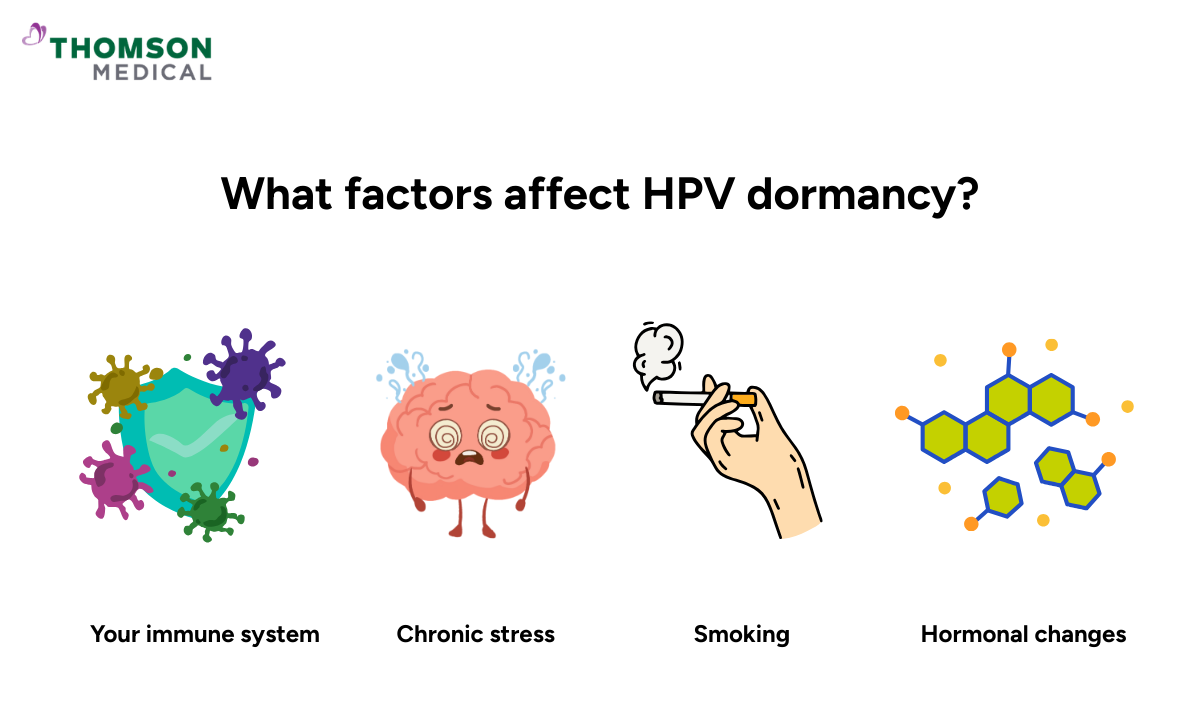
Whether HPV stays suppressed or becomes more active can depend on a number of factors, and your immune system plays a significant role in this.
Your immune system's role
When your immune system is functioning well, it can suppress the virus effectively, sometimes to undetectable levels. When your immunity is weakened, whether from illness, certain medications, or significant physical stress, the virus may become harder to keep in check.
Lifestyle factors
Certain lifestyle factors may affect your immune health and influence how well your body keeps HPV suppressed:
Chronic stress:
Sustained stress can dampen your immune function over time, making it harder for your body to manage the virus.
Smoking:
Smoking can impair local immunity in your cervix, which may increase your likelihood of HPV persisting.
Hormonal changes:
Shifts in oestrogen levels during your pregnancy, menopause, or hormonal contraceptive use can affect the cervical environment and how it responds to HPV.
While these factors do not guarantee that HPV will progress, addressing them where possible gives your immune system the best chance of keeping the virus suppressed.
Can dormant HPV become active again?
In some cases, HPV that has been suppressed can become detectable again – this is known as reactivation. It does not happen to everyone, but when it does, it can be difficult to distinguish from a new infection.
Understanding the difference can help you make sense of results that might otherwise feel confusing.
What's the difference between a new infection and reactivation?
When HPV is detected after a period of normal results, it is not always a new infection. It may be the same strain resurfacing after a period of dormancy, sometimes years later.
Testing can identify the strain present but cannot always confirm with certainty whether it is returning or new. This distinction matters, particularly in long-term relationships, where a positive result can sometimes cause unnecessary concern.
What a positive result after a period of normal screenings does tell you is that your immune system may benefit from closer attention – regardless of whether it is a new infection or a reactivation.
If you've received a positive HPV result after a period of normal screenings and aren't sure what it means for you, schedule an appointment with Thomson Medical. Our doctors can review your results, clarify whether reactivation may be a factor, and guide you on the right next steps.
Why monitoring HPV matters
Because HPV can reactivate without symptoms, how you feel day to day is not a reliable indicator of your cervical health. Regular screening remains the most effective way to detect any cell changes early, before they have a chance to progress.
Two key tests work together to give a clearer picture:
Pap smear checks for abnormal cell changes in the cervix
HPV test detects the virus when present at detectable levels
Used together over time, they allow your doctor to identify any changes that may need closer attention and to act early when outcomes are most favourable. If you are unsure whether you are due for screening, it is worth checking sooner rather than later.
Sexual health specialists at Thomson Medical
Loading...
How to reduce your risk of HPV

While there is no way to eliminate all risk, there are steps you can take to meaningfully reduce it and support your health going forward:
HPV vaccination:
The HPV vaccine offers protection against the most common high-risk strains, including HPV 16 and 18.
It is most effective before exposure to the virus but may still offer some benefit to adults.
Barrier contraception:
Condoms can reduce the risk of HPV transmission, though not eliminate it entirely.
Support your immune system:
Consistent sleep, a balanced diet, not smoking, and managing stress all help your body keep the virus suppressed.
HPV is common, and living with it, or the uncertainty around it, can feel unsettling at times. What matters most is staying informed, keeping up with regular screening, and knowing that for many people, HPV is something the body manages well with the right support.
If you're unsure whether you need a screening, are overdue for one, or want to know if the HPV vaccine is right for you, schedule an appointment with Thomson Medical. Our doctors can assess where you are and recommend an approach suited to your situation.
FAQ
Can HPV stay dormant for decades?
It is possible. In some cases, HPV can remain suppressed for many years before being detected again, which is one reason a positive result does not always mean a recent exposure.
Can I still spread HPV if it's dormant?
The risk is considered lower during dormancy, but it cannot be ruled out entirely. HPV transmission is not fully understood, and there is no reliable way to confirm when the virus is or is not transmissible.
Can a dormant HPV infection suddenly show up on a new test?
Yes. HPV that was previously undetectable can become detectable again if the immune system is less able to suppress it. This is known as reactivation.
Does dormancy mean the virus has cleared from my body?
No. Dormancy means the virus is present but inactive. Clearance suggests the body has eliminated the virus, though testing cannot always confirm this with certainty.
Can stress reactivate a dormant HPV infection?
Chronic stress can weaken immune function over time, which may make it harder for the body to keep HPV suppressed. It is one of several factors that can influence viral activity.
How do I know if my HPV is active or dormant?
There is no test that distinguishes between active and dormant HPV. Cervical screening can detect cell changes, while HPV DNA testing can confirm whether the virus is present.
Should I still go for HPV screening if I have no symptoms?
Yes, and this is especially important with HPV, as changes to cervical cells often develop without any symptoms at all.
The information provided is for general guidance only and should not be considered as medical advice. For a personalised consultation and tailored advice, schedule an appointment with Thomson Medical today.
For more information, contact us:
Thomson Specialists (Women's Health)
Thomson Women's Clinic (TWC)
- Novena:
6592 6686 (Call), 8611 8986 (WA) - Bukit Batok:
6569 0668 (Call), 8686 3525 (WA) - Choa Chu Kang:
6893 1227 (Call), 8282 1796 (WA) - Jurong:
6262 8588 (Call), 6262 8588 (WA) - Katong (female doctor):
6970 2272 (Call), 8611 9020 (WA) - Punggol:
6243 6843 (Call), 8811 0328 (WA) - Sembawang: 6753 5228
- Sengkang: 6388 8125
- Serangoon (female doctor): 6382 3313
- Tampines: 6857 6266
- Tiong Bahru: 6276 1525
Notice
The range of services may vary between TWC/TS locations. Please contact your preferred branch directly to enquire about the current availability.
Request an Appointment