
.png%3Fbranch%3Dprod&w=3840&q=75)
Receiving a diagnosis that you have an ovarian cyst can naturally cause you to worry or have questions about what happens next. You may be wondering whether if your ovarian cyst will grow quickly, remain stable, or resolve on its own over the next few months.
What people don't know is that ovarian cysts behave differently, depending on their type and your hormonal cycle. Some functional cysts can grow and shrink within a single menstrual cycle, while others may persist longer. Factors such as pregnancy or underlying conditions can also influence how a cyst changes over time.
Understanding how cysts typically develop and what patterns are considered normal can help you feel more confident about your follow-up plan and recognise when new symptoms should be assessed.
What are ovarian cysts, and why do they form?
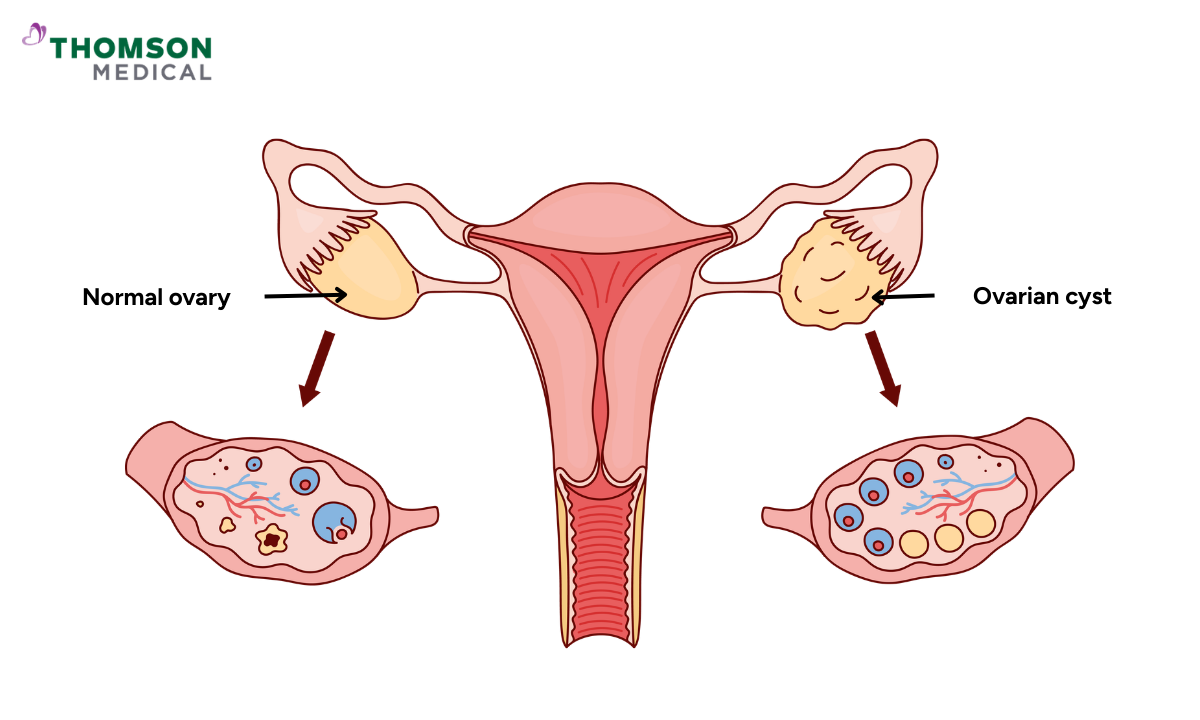
Ovarian cysts are fluid-filled sacs that develop on or within the ovaries. They're common, particularly during the reproductive years, and most are benign.
Most ovarian cysts form as part of your natural menstrual cycle.
Each month, your ovary produces a follicle containing an egg. Normally, this follicle releases the egg and then shrinks. Sometimes it doesn't release the egg or dissolve as expected, so fluid accumulates inside, forming a functional cyst.
Other cysts form differently – through endometriosis, abnormal cell growth, pregnancy-related hormonal changes, or long-standing hormonal imbalances. Because these causes vary, ovarian cysts can differ in size, behaviour, and how long they persist.
How quickly can an ovarian cyst grow?
If you've been diagnosed with an ovarian cyst, one of the first questions you might have is how quickly it could grow. Growth rates vary quite a bit, and they depend largely on what type of cyst you have.
Functional cyst growth rates
Functional cysts are the most common type. They usually grow over one or two menstrual cycles, usually reaching around two to five centimetres before hormone levels shift and growth naturally slows or stops.
Most resolve on their own within six to eight weeks without treatment. If yours continues to grow or persists beyond two or three cycles, your doctor may recommend further evaluation to understand what's happening.
Other cyst types and their growth patterns
While functional cysts are most common, other types of ovarian cysts grow at their own pace, such as:
Dermoid cysts grow very slowly – often just a few millimetres per year. They may not cause symptoms for many years.
Endometriomas tend to enlarge gradually, influenced by your ongoing menstrual cycles. These are less likely to disappear on their own.
Cystadenomas can grow more quickly and sometimes become quite large, which may cause abdominal discomfort or pressure.
Malignant cysts are less common, particularly in younger women. When they do occur, they often show irregular or rapid growth and usually have other concerning features visible on imaging.
Knowing which type you have gives you and your doctor a clearer picture of what to expect and how closely your cyst needs to be watched.
If you've been diagnosed with an ovarian cyst and want to know which type you have, schedule an appointment with Thomson Medical. Our doctors can explain your specific cyst type and create a personalised monitoring plan based on your individual needs.
Factors that affect ovarian cyst growth speed
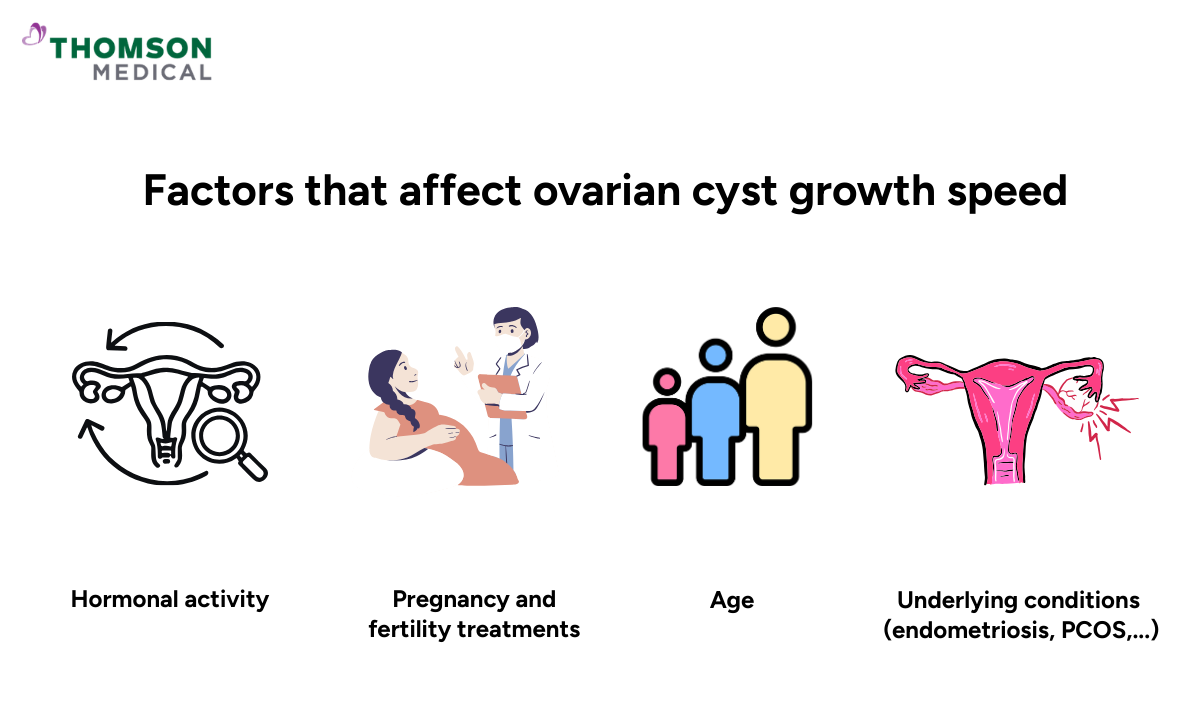
Cyst type isn't the only thing that matters.
Your body's unique hormonal landscape and life stage can also play a role in how a cyst behaves:
Hormonal activity plays a key role, particularly oestrogen levels. During your reproductive years, normal hormonal fluctuations can affect cyst development and growth.
Pregnancy and fertility treatments can temporarily increase cyst size due to hormonal changes. This is usually a normal part of the process and normally resolves after pregnancy or treatment ends.
Age matters too. Cysts that develop after menopause are less likely to be functional, which is why they're monitored more carefully.
Underlying conditions such as endometriosis or polycystic ovary syndrome (PCOS) can contribute to cyst persistence and ongoing growth.
Recognising these influences can help you make sense of what's happening in your body. If you're concerned about how any of these factors might be affecting your cyst, your doctor can talk through your specific situation and what it means for your care.
When should you be concerned about cyst growth?
It's natural to worry when you've been told you have an ovarian cyst. Knowing what's considered normal and what needs attention can help ease some of that concern.
Normal vs. concerning cyst sizes
Most small ovarian cysts are simply part of normal ovarian function, including:
Under 3 centimetres:
These are commonly seen on ultrasound and usually need no treatment. Many women have them without even knowing.
3 to 5 centimetres:
Still generally benign and often only needing observation. Your doctor may suggest a follow-up scan to check if the cyst has resolved.
5 to 7 centimetres:
At this size, closer monitoring is recommended. The risk of complications such as ovarian torsion starts to increase.
Over 7 to 8 centimetres:
Cysts this large, especially if they continue to grow or show complex features on imaging, usually need specialist assessment.
It’s worth noting that size is one important factor, but it's not the only thing your doctor considers when monitoring your cyst. Your symptoms, age, and what the cyst looks like on ultrasound all help guide your care plan.
Warning signs to watch for
While many ovarian cysts cause no symptoms at all, certain changes in how you feel should prompt you to contact your doctor, such as:
Sudden, severe pelvic or abdominal pain:
This could indicate a ruptured cyst or ovarian torsion, which needs urgent attention.
Pain with fever or vomiting:
These symptoms together may signal a complication that requires medical care.
Increased bloating or feeling of fullness:
Especially if it's new or becoming more noticeable, this may suggest the cyst is growing.
Pressure on your bladder or bowel:
Difficulty emptying your bladder fully or changes in bowel habits can happen with larger cysts.
Changes to your menstrual cycle:
Heavier periods, irregular bleeding, or spotting between periods may need investigation.
If you experience sudden, sharp pain, don't hesitate to seek immediate medical help. For other symptoms that develop gradually, reach out to your doctor so they can assess whether your cyst needs closer monitoring or treatment.
If you're experiencing any of these symptoms or feel uncertain about whether your cyst needs medical attention, schedule an appointment with Thomson Medical. Our gynaecologists can perform necessary imaging and provide clear guidance on the right course of action for your situation.
Treatment options for growing ovarian cysts
Not all ovarian cysts need treatment. Many resolve on their own with careful monitoring. However, treatment may be recommended in certain situations.
Your doctor might suggest treatment for ovarian cysts if:
The cyst continues to grow or doesn't resolve after several menstrual cycles
You're experiencing significant pain or pressure symptoms
The cyst shows suspicious features on imaging
You've had complications such as ovarian torsion or cyst rupture
Observation with regular monitoring remains the first approach for most functional cysts, especially if you're not experiencing symptoms. Regular pelvic ultrasounds allow your doctor to track any changes without rushing into intervention.
Hormonal contraception may be suggested to help prevent new cysts from forming, though it doesn't make existing cysts disappear faster.
Surgery is considered when a cyst is large, persistent, causing symptoms, or showing concerning features. The type of surgery depends on the cyst's characteristics, your age, and your reproductive plans. Your doctor will discuss what's right for your situation.
Every woman's situation is different, and your doctor will consider not just the cyst itself but also how it's affecting your daily life and overall wellbeing.
If you've been diagnosed with an ovarian cyst, remember that most are benign and many resolve without intervention. Stay connected with your healthcare team, keep track of any symptoms, and don't hesitate to ask questions. The more you understand about your cyst, the better placed you are to make decisions about your own care.
Our women’s health specialist
Loading...
FAQ
Can an ovarian cyst grow overnight?
It's very unlikely. Most ovarian cysts grow slowly over weeks or months. If you experience a sudden increase in pain or discomfort, this is usually due to bleeding into the cyst, a rupture, or ovarian torsion rather than the cyst actually growing overnight.
Can stress cause ovarian cysts to grow faster?
Stress doesn't directly cause cysts to grow. However, chronic stress can affect your hormone balance and menstrual cycles, which may influence how functional cysts form or persist. That said, stress alone isn't a primary driver of cyst growth.
Can ovarian cysts grow back after surgery?
Yes, particularly functional cysts. Because your ovaries continue to ovulate, new cysts can form even after surgery removes an existing one. The risk of recurrence depends on the cyst type and your underlying hormonal factors.
Do birth control pills stop ovarian cysts from growing?
Birth control pills don't reliably shrink cysts that are already there. Their main benefit is preventing ovulation, which can reduce the formation of new functional cysts. They're less effective for non-functional cysts such as dermoid cysts or endometriomas.
Can a growing ovarian cyst affect my fertility?
Most ovarian cysts don't affect fertility. Functional cysts usually resolve without any impact. However, cysts related to endometriosis or those requiring repeated surgery may affect your ovarian reserve and fertility. The effect depends on the cyst type, size, and whether treatment involves removing ovarian tissue.
How to treat an ovarian cyst in pregnancy?
Most ovarian cysts found during pregnancy are benign and managed through observation and regular ultrasound monitoring. Many resolve on their own as pregnancy progresses.
Surgery is only considered if the cyst is large, continues to grow, causes severe symptoms, or shows suspicious features. When needed, surgery is usually safest during the second trimester.
The information provided is intended for general guidance only and should not be considered medical advice. For personalised recommendations and advice based on your unique situation, please consult a specialist at Thomson Medical. Request an appointment with Thomson Medical today.
For more information, contact us:
Thomson Specialists (Women's Health)
Thomson Women's Clinic (TWC)
- Novena:
6592 6686 (Call), 8611 8986 (WA) - Bukit Batok:
6569 0668 (Call), 8686 3525 (WA) - Choa Chu Kang:
6893 1227 (Call), 8282 1796 (WA) - Jurong:
6262 8588 (Call), 6262 8588 (WA) - Katong (female doctor):
6970 2272 (Call), 8611 9020 (WA) - Punggol:
6243 6843 (Call), 8811 0328 (WA) - Sembawang: 6753 5228
- Sengkang: 6388 8125
- Serangoon (female doctor): 6382 3313
- Tampines: 6857 6266
- Tiong Bahru: 6276 1525
Notice
The range of services may vary between TWC/TS locations. Please contact your preferred branch directly to enquire about the current availability.
Request an Appointment