

Your baby doesn't have any teeth yet, so oral care can wait, right? Well, not quite. Breast milk residue can build up on your baby's tongue even before the first tooth appears, creating an ideal environment for bacteria.
Fortunately, taking care of your baby's oral hygiene is straightforward and only takes a few minutes. Let's learn how parents can do it safely and what to watch out for.
Why is it important to clean your baby's tongue?
Just like yours, your baby's mouth naturally contains bacteria. However, babies produce less saliva than adults, meaning their mouths cannot wash away milk residue as effectively. This residue can build up on their tongue, resulting in the white coating that you may have noticed.
Gently cleaning your baby tongue helps remove milk residue and loosen bacteria buildup, protecting their delicate gums from potential infections like gum disease while reducing the risk of oral thrush.
When should you start cleaning your baby's tongue?
Parents can start cleaning their newborn's tongue almost immediately after birth. Even before any teeth appear, establishing an oral care routine will help to keep your baby's gums and tongue clean, particularly after meals.
Every time your baby eats, whether from the breast or from a bottle, a thin layer of milk can remain in their mouth. A quick, gentle clean afterwards helps remove this residue before it builds up, keeping your baby's mouth fresh and healthy.
Starting early also introduces your baby to oral hygiene, making the transition to toothbrushing feel more natural as they grow.
What's the recommended method for cleaning your baby's tongue?
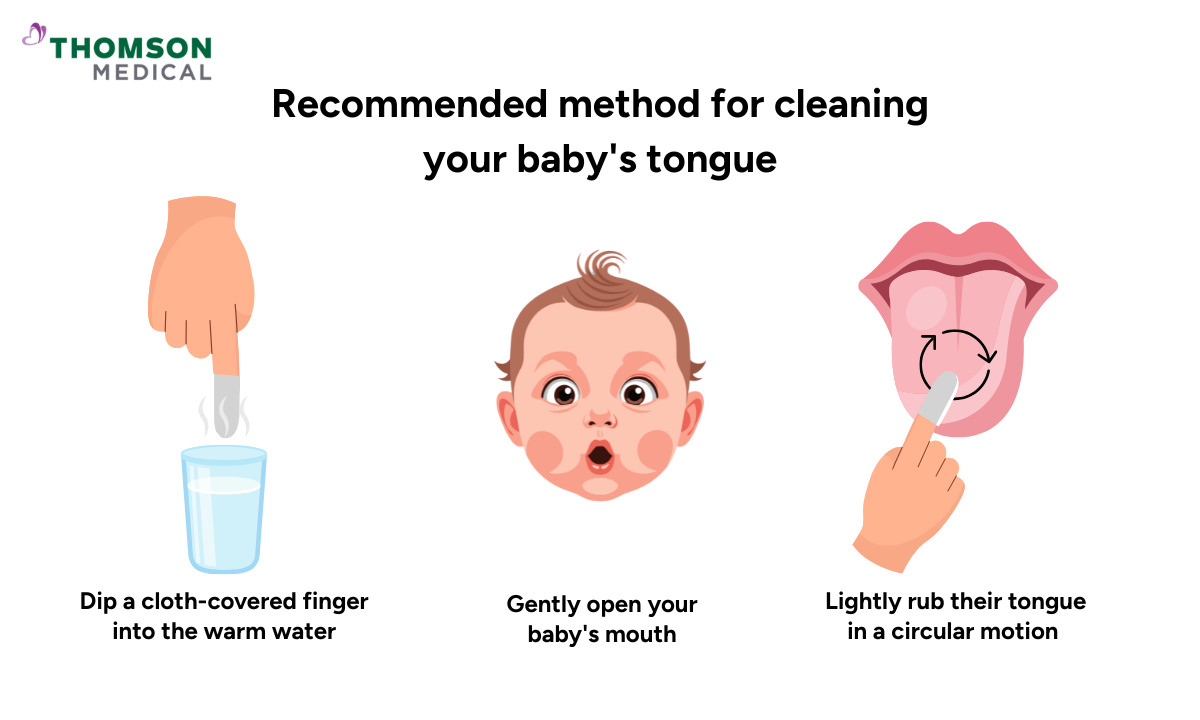
Cleaning your baby's tongue is a relatively simple process, and you don't need a lot of preparation. The only things you'll need are warm water and a soft cloth or a piece of gauze.
First, thoroughly wash your own hands with soap and water. Then, to begin cleaning, lay your baby across your lap with their head cradled in your hand. Here's what to do:
Dip a gauze- or cloth-covered finger into the warm water
Gently open your baby's mouth, and then lightly rub their tongue in a circular motion using the cloth or gauze
Softly rub your finger over your baby's gums and on the inside of their cheeks too
You can also use a soft silicone finger brush or baby tongue cleaner designed to gently massage and scrub away milk residue from your baby's tongue and gums. Ideally, you should clean their tongue at least twice a day, particularly after each breastfeed and before bedtime.
If you’d like guidance on caring for your newborn’s oral health, request an appointment with Thomson Medical. Our specialist can show you the safest and gentlest techniques for cleaning your baby's tongue regularly.
How can parents tell if it's milk residue or thrush?
Milk residue and thrush can appear similar, but the key difference is you can wipe away milk residue, but you can't wipe away thrush.
Oral thrush is a fungal infection caused by oral candidiasis. It leaves white patches on the tongue, gums, inside of the cheeks, and on the roof of the mouth. Thrush requires treatment with antifungal medications to stop the infection from spreading.
If that white coating doesn't wipe away when you clean your baby's tongue, contact your baby's dentist. Early treatment helps your baby feel more comfortable and prevents the infection from worsening. Thrush is very common and highly treatable, so there's no need to worry.
Our paediatric dentist in Singapore
Loading...
When can you start using a toothbrush on your little one?
Once your baby reaches 6 months old and you spot that first little tooth breaking through, it's time to introduce a soft-bristled toothbrush along with toothpaste. You'll use this to clean any teeth that have emerged, while also gently scrubbing your baby's tongue and gums.
If your baby isn't quite ready for a toothbrush yet, that's perfectly fine. You can continue using a soft finger brush, gauze, or washcloth until they're a little older and more comfortable with the new sensation.
How much toothpaste should I use?
When you first introduce toothpaste to your baby at 6 months old, you only need a tiny amount (about the size of a rice grain). Yes, that small. Don't worry if they swallow it because that's completely normal at this age.
Once your child reaches 3 years old, you can increase the amount to pea-size. Using fluoride toothpaste in these small amounts helps protect their developing teeth while keeping them safe.
When should you take your baby to the dentist for the first time?
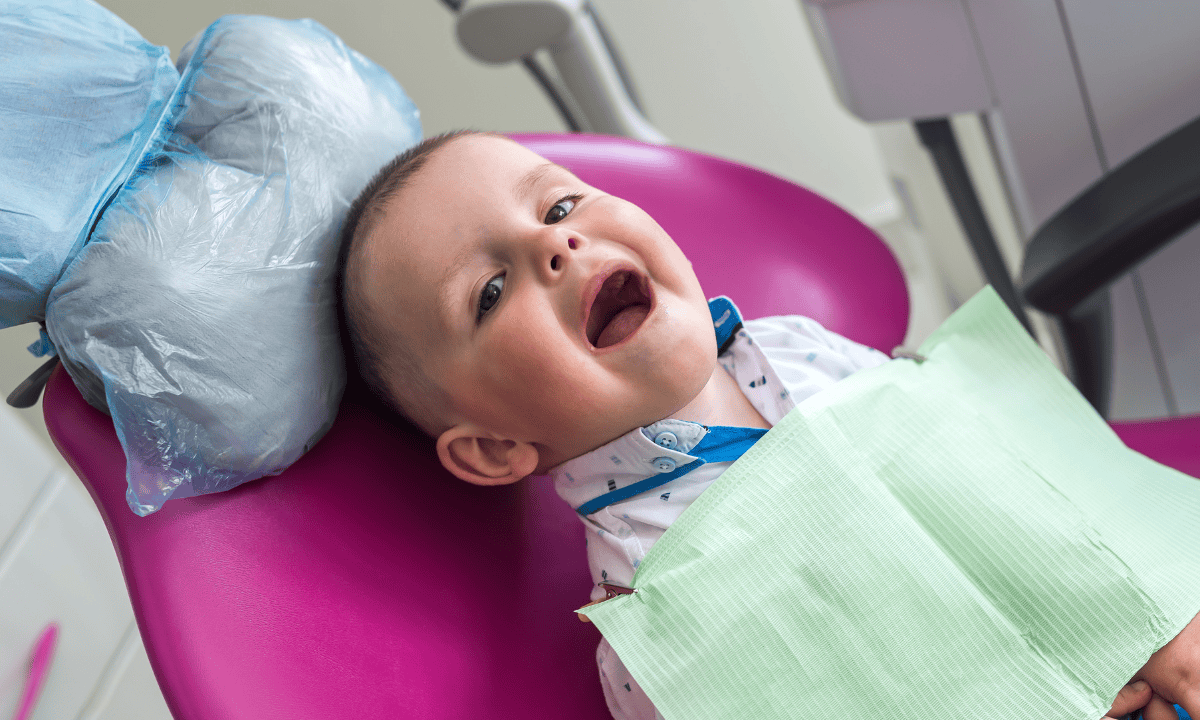
Along with daily oral care at home, regular check-ups with a paediatric dentist play an important role in your baby's oral health journey.
Schedule your child's first dental visit within 6 months of getting their first tooth, or by their first birthday, whichever comes first. This early visit helps create a "dental home" where your baby can get to know their doctor and feel comfortable receiving care from them.
During this first dental appointment, the dentist will check the overall health of their teeth, jaw, and gums, while also assessing oral motor development and watching for any early signs of tooth decay. These early visits are typically quick and positive experiences and they're about building familiarity and trust.
If your baby has just gotten their first tooth, request an appointment with Thomson Medical. Our specialists will check their teeth, gums, and jaw while helping your child feel comfortable at the dentist.
FAQ
When should you start oral care for your baby?
Oral care can start almost immediately after birth. Even though your newborn doesn't have visible teeth, early oral hygiene helps build good habits and keeps their mouth clean and healthy.
Do newborns need their gums cleaned?
Yes, cleaning your newborn's gums is important for maintaining oral health and preventing bacteria buildup and microbial growth that could lead to infections or gum disease. You should clean their gums to remove any milk residue after each breastfeed.
What are the oral restrictions for newborns?
To protect your newborn's oral health, avoid putting your baby to bed with a bottle, giving sugary drinks, dipping pacifiers in sweet substances, or neglecting to clean their mouth regularly.
What happens if parents don't brush their baby's teeth?
Neglecting oral care could lead to gum issues and make it harder to establish good dental habits. Additionally, when healthy habits aren't started early, new baby teeth face increased risk of tooth decay and other dental problems.
How do I get the white stuff off my baby's tongue?
Use a clean, damp washcloth or gauze wrapped around your finger to gently rub your baby's tongue in circular motions. If the white coating doesn't wipe away, it may be thrush rather than milk residue, and you should contact your baby's paediatrician.
Is it necessary to clean a baby's tongue?
Yes. Cleaning your baby's tongue removes milk residue and prevents bacteria buildup. It also introduces your baby to oral care early, making the transition to toothbrushing easier as they grow. Think of it as preventive care that protects their smile from the very beginning.
The information provided is intended for general guidance only and should not be considered medical advice. For personalised recommendations and tailored advice, please request an appointment with Thomson Dental Centre today.
Reference:
Corrêa, F. N. P., Vilela, T., Bönecker, M., Salete, M., & Corrêa, N. P. (2012). Effectiveness of tooth wipes in removing babies' dental biofilm. Oral Health Prev Dent, 10, 319-326.