

Learning you have uterine polyps, or that they have returned after removal, can be unsettling, especially if you are trying to conceive. It is natural to wonder what is happening and whether there is anything you can do to prevent them.
While no single change can prevent uterine polyps completely, there are steps you can take to support your hormonal health and reduce your risk. Understanding what contributes to their development is a helpful first step.
What are uterine polyps?
.png?branch=production)
Uterine polyps are small, soft growths that develop on the inner lining of the uterus.
Most are benign, but they can sometimes cause symptoms or affect fertility. They form when endometrial tissue overgrows, creating fleshy growths attached to the uterine wall.
Some things that may raise your risk include:
Age:
Polyps are more common in women in their 40s and 50s.
Excess body weight:
Fat tissue produces oestrogen, which can raise overall levels.
High blood pressure:
There is an observed link, though it is not yet fully understood.
PCOS or thyroid disorders:
Both can affect your hormonal balance.
Tamoxifen use:
This medication can have an oestrogen-like effect on your uterus.
Many women have polyps without any symptoms at all, often only discovering them during a routine scan. Having one or more of these risk factors does not mean polyps are inevitable, but it is worth keeping them in mind when speaking with your doctor.
Hormone balance: The key to understanding uterine polyp risk
Your hormones do a remarkable amount of work behind the scenes. When they are in balance, your uterine lining grows and sheds in a predictable rhythm. When they are not, that rhythm can be disrupted, and over time, this may create conditions where polyps are more likely to form.
How oestrogen dominance contributes to polyp growth
Oestrogen stimulates the growth of your uterine lining each month. Progesterone helps slow that growth down and prepares the lining to shed.
When oestrogen is consistently higher than progesterone (sometimes known as oestrogen dominance), the uterine lining may grow unevenly. Over time, this can create areas of overgrowth that may develop into polyps.
This imbalance does not always have an obvious cause. It can be related to body weight, age, certain medical conditions, or simply the natural hormonal shifts that come with perimenopause.
Signs your hormones may be out of sync
Hormonal imbalance does not always cause obvious symptoms. Some women notice changes, while others do not.
A few signs worth paying attention to include:
Bloating or breast tenderness before your period
Mood changes or low energy in the second half of your cycle
Irregular cycles that are difficult to predict
These symptoms can have many causes, but if they are new or changing, it is worth discussing them with your doctor.
If you have been noticing changes in your cycle or suspect your hormones may be out of balance, schedule an appointment with Thomson Medical. Our doctors can assess your hormone levels and help you understand whether these changes may be affecting your uterine health.
Lifestyle changes that may help lower your risk of uterine polyps
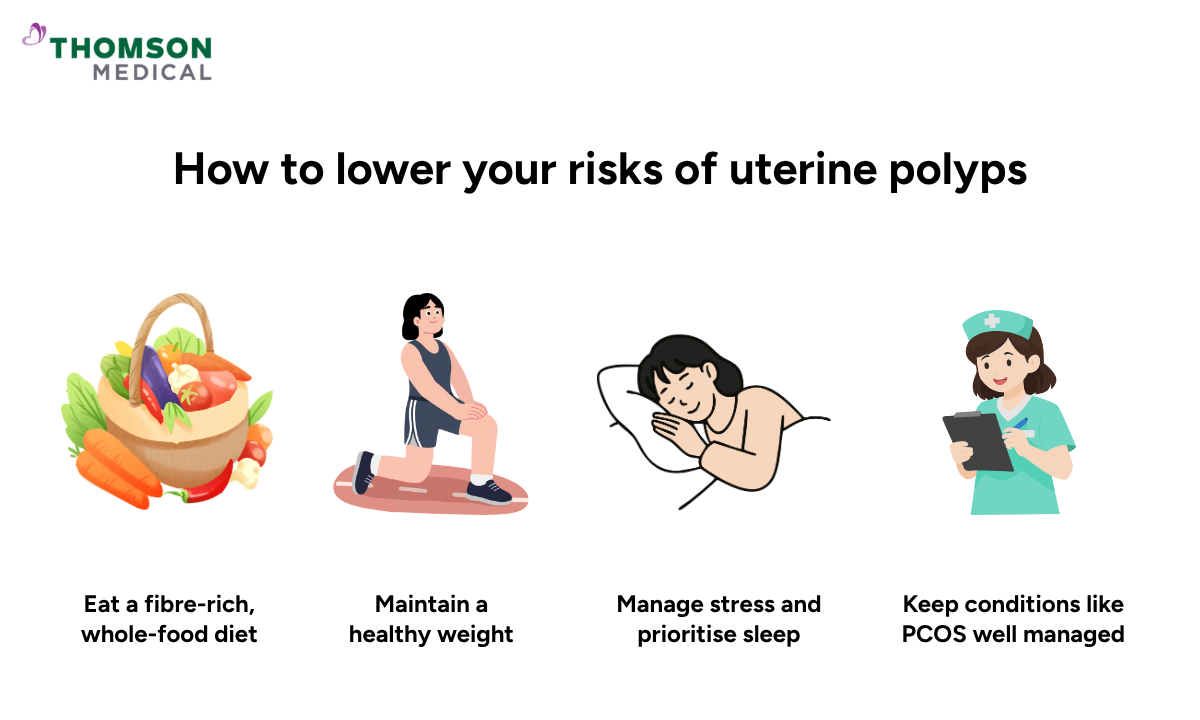
There is no single lifestyle change that prevents uterine polyps entirely. But certain habits may support a healthier hormonal balance, and that is where your uterine health starts.
Diet and foods that support uterine health
What you eat can influence how your body produces and processes oestrogen.
Some helpful diet tips include:
Eat plenty of fibre:
Vegetables, fruits, legumes and wholegrains help your body clear excess oestrogen.
Include cruciferous vegetables:
Broccoli, cauliflower, cabbage and kale support the liver in metabolising oestrogen.
Limit processed foods and added sugar:
These can contribute to inflammation and weight gain, both of which may affect hormone levels.
Reduce alcohol intake:
Alcohol can raise circulating oestrogen levels.
Choose healthy fats:
Avocado, nuts, seeds and oily fish support hormonal function and reduce inflammation.
A balanced diet does not prevent polyps on its own, but it helps create a hormonal environment that may lower risk.
Exercise, weight management and their role
Regular movement helps regulate hormones and reduce inflammation.
Since fat tissue produces oestrogen, maintaining a healthy weight may help keep hormone levels more balanced over time.
Activities such as walking, swimming or cycling can be effective. The focus is consistency rather than intensity.
Stress, sleep and hormone regulation
Chronic stress raises cortisol, your body's primary stress hormone. When cortisol stays elevated for long periods, it can interfere with the balance between oestrogen and progesterone.
Sleep deprivation compounds this further, disrupting the hormonal rhythms your body relies on overnight.
A few things that may help:
Aim for seven to eight hours of sleep whenever possible
Build small moments of rest into your day – even short breaks can help
Consider gentle practices like walking, breathwork or mindfulness to help manage stress levels
These changes will not eliminate polyp risk on their own. But supporting your nervous system is a meaningful part of caring for your hormonal health overall.
If you are unsure where to start or would like guidance on how lifestyle changes can work alongside medical care, schedule an appointment with Thomson Medical. Our team can help you put together a practical plan that supports your hormonal health.
Gynaecologists at Thomson Medical
Loading...
Medical conditions that can raise your risk of uterine polyps
Some medical conditions affect hormone levels in ways that may increase the likelihood of polyps in the uterus. If any of the following apply to you, managing them well is an important part of supporting your uterine health.
High blood pressure and uterine polyps
Researchers have observed a link between high blood pressure and a higher risk of uterine polyps, though they have not yet fully understood the exact reason.
Keeping your blood pressure within a healthy range is worth prioritising for your overall health. This might include dietary changes, regular movement, reducing salt intake, or medication prescribed by your doctor.
PCOS, thyroid disorders and hormonal disruption
.png?branch=production)
Both polycystic ovary syndrome (PCOS) and thyroid disorders can disrupt the hormonal balance that keeps your uterine lining stable:
PCOS:
Irregular ovulation means progesterone is often too low to balance oestrogen, leaving the uterine lining without its usual counterweight.
Thyroid disorders:
Even subtle imbalances in thyroid hormone can affect how oestrogen is produced and processed in your body.
If you have either condition, it is worth working closely with your doctor to keep it well managed.
When to see a doctor about uterine polyps
Uterine polyps do not always cause symptoms, but some signs are worth paying attention to.
Consider speaking with a doctor if you notice:
Unusually heavy or prolonged bleeding
Bleeding between periods or after sex
Spotting after menopause
Difficulty conceiving despite trying for some time
These symptoms can have many causes, and experiencing them does not mean you have polyps. But they are worth investigating, particularly if they are new, persistent, or affecting your quality of life.
If you have known risk factors such as PCOS, high blood pressure, or a history of uterine polyps, it is also reasonable to ask your doctor about monitoring, even without obvious symptoms. Catching changes early gives you more options and more peace of mind.
FAQ
How do you prevent polyps in the uterus naturally?
No single natural remedy has been proven to prevent uterine polyps.
That said, certain habits may help support your hormonal balance and reduce your risk:
Eat a fibre-rich, whole-food diet
Maintain a healthy weight
Move regularly
Manage stress and prioritise sleep
Keep conditions like PCOS or thyroid disorders well managed
Can uterine polyps go away on their own without treatment?
In some cases, yes. Small polyps occasionally resolve on their own, particularly in younger women or following a menstrual cycle. However, this is not predictable, and polyps that are causing symptoms or affecting fertility are generally recommended for removal. Your doctor can advise on the right approach for your situation.
What foods should I avoid if I have uterine polyps?
No specific food has been proven to directly cause uterine polyps. That said, a diet high in processed foods, added sugar, and alcohol may contribute to hormonal imbalance and inflammation – both of which can affect uterine health. Reducing these and focusing on whole, nutrient-rich foods is a sensible approach.
Does losing weight help prevent uterine polyps?
It may. Fat tissue produces oestrogen, so excess body weight can raise circulating oestrogen levels over time. Reaching and maintaining a healthy weight through balanced eating and regular movement may help support a more stable hormonal environment.
Are uterine polyps a sign of cancer?
Most uterine polyps are benign. However, in a small number of cases, polyps can contain precancerous or cancerous cells, which is why they are often recommended for removal and sent for testing. If you have been told you have polyps, try not to worry, but do follow up with your doctor so the appropriate steps can be taken.
How often should I get checked for uterine polyps?
There is no universal screening schedule for uterine polyps. If you have symptoms, known risk factors, or a history of polyps, your doctor may recommend more regular monitoring. Otherwise, raising any concerns at your routine gynaecological check-up is a good starting point.
Can uterine polyps come back after they are removed?
Yes, they can. Recurrence is possible, particularly if the underlying hormonal factors that contributed to their growth are not addressed. Managing conditions such as PCOS or high blood pressure and supporting hormonal balance through lifestyle may help reduce the likelihood of polyps returning.
The information is intended for general guidance only and should not be considered medical advice. For personalised recommendations and advice based on your unique situation, please consult a specialist at Thomson Medical. Request an appointment with Thomson Medical today.
For more information, contact us:
Thomson Specialists (Women's Health)
Thomson Women's Clinic (TWC)
- Novena:
6592 6686 (Call), 8611 8986 (WA) - Bukit Batok:
6569 0668 (Call), 8686 3525 (WA) - Choa Chu Kang:
6893 1227 (Call), 8282 1796 (WA) - Jurong:
6262 8588 (Call), 6262 8588 (WA) - Katong (female doctor):
6970 2272 (Call), 8611 9020 (WA) - Punggol:
6243 6843 (Call), 8811 0328 (WA) - Sembawang: 6753 5228
- Sengkang: 6388 8125
- Serangoon (female doctor): 6382 3313
- Tampines: 6857 6266
- Tiong Bahru: 6276 1525
Notice
The range of services may vary between TWC/TS locations. Please contact your preferred branch directly to enquire about the current availability.
Request an Appointment