

Sleep after laparoscopic surgery can often be harder than people expect. Lying flat can pull on the abdominal muscles; the usual roll onto your side wakes you, and the trapped gas used during the procedure can cause referred pain in the shoulders that may be worse than lying down.
Most people find that sleeping on your back with the upper body slightly raised, or on their side with a pillow held against their abdomen, is the most comfortable in the first week or so. Here’s what tends to help, how sleep usually settles as recovery progresses, and which symptoms are worth reporting rather than sleeping through.
Why sleeping position matters after laparoscopic surgery

After laparoscopic surgery, you may face some temporary challenges that could affect your sleep pattern, including:
Mild pain or soreness: as the small incision sites, abdominal muscles, and tissues treated during the procedure need time to heal.
Discomfort when moving: rolling over, sitting up, or getting out of bed could temporarily cause pulling or soreness around the abdominal surgical site, especially during the first few days.
Bloating or shoulder-tip discomfort: which comes from the carbon dioxide gas used to inflate your abdominal cavity during laparoscopy. Small amounts of the gas may remain afterwards and may cause bloating, abdominal discomfort, or shoulder-tip pain for a few days.
That’s why finding well-supported sleep positions may make it easier to rest while your incisions and abdominal muscles are healing. The aim is not to find one ideal position but to avoid positions that could stretch or put direct pressure around the surgical area.
A comfortable, well-supported sleeping position may help to:
Reduce discomfort around the surgical incisions
Ease movement during the night
Relieve nighttime pain
When pain is better controlled and you are more comfortable, sleeping may feel more manageable, especially during the early stages of recovery.
What positions could help you to sleep more comfortably
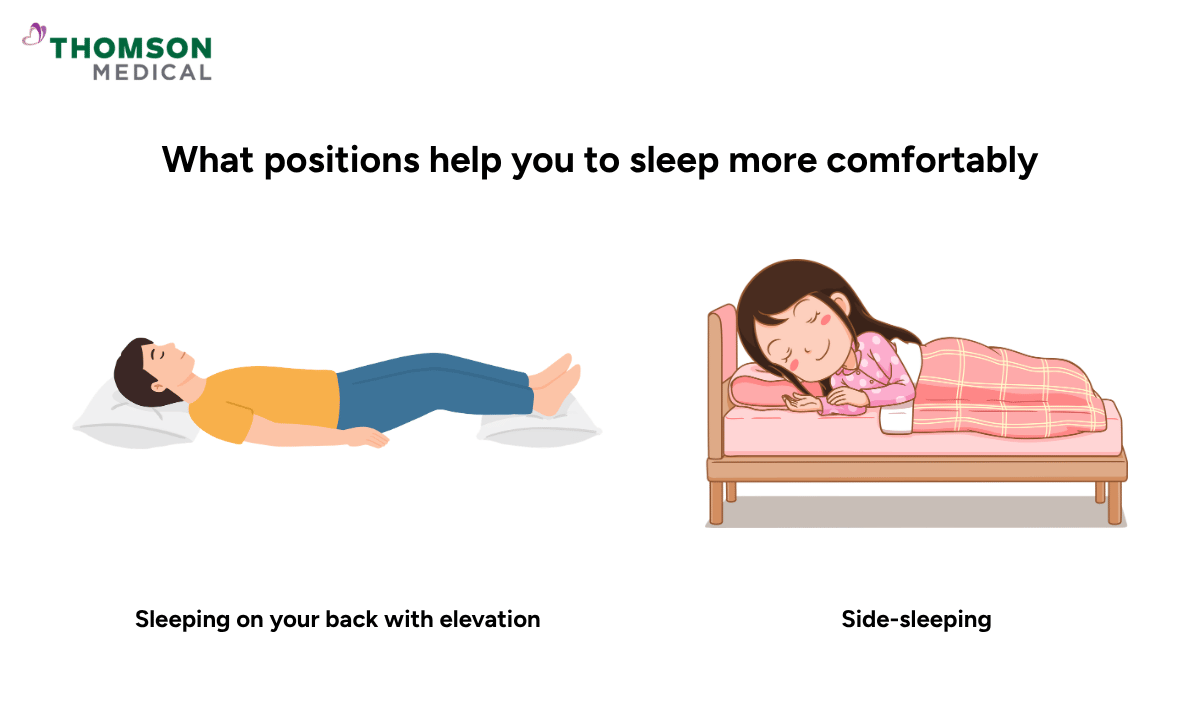
Finding a comfortable position after undergoing a minimally invasive procedure may take some trial and error. To help, you may try the options below and use the one that feels the most comfortable for you.
Sleeping on your back with elevation
Lying on your back may reduce direct pressure on the abdominal surgery incision sites. Additionally, a slightly raised upper body may also feel more comfortable since it helps avoid bloating or soreness in your abdominal muscles.
You may find this position more comfortable in the first few days after the surgery. To set it up:
Place a supportive pillow under your head and upper back to keep your torso gently elevated.
Tuck a pillow under your knees to relieve lower-back tension.
Place pillows alongside your torso to prevent accidentally rolling onto uncomfortable positions.
It may take some adjustment for you to find the arrangement that feels most comfortable.
Side-sleeping
Side-sleeping may be comfortable if it does not cause pressure, pulling, or worsening pain around your incision sites. So, you might try to sleep on the side that feels least painful and avoid any position that causes discomfort around the surgical site.
To try a side-sleeping position, you could follow these steps:
Place a pillow between your knees or behind your back to improve support and reduce rolling during sleep.
Go with whichever side feels less uncomfortable, and switch if that changes from night to night.
As soreness settles, you may find it easier to return gradually to your usual sleeping position.
Our specialists
Loading...
Sleeping positions you want to avoid
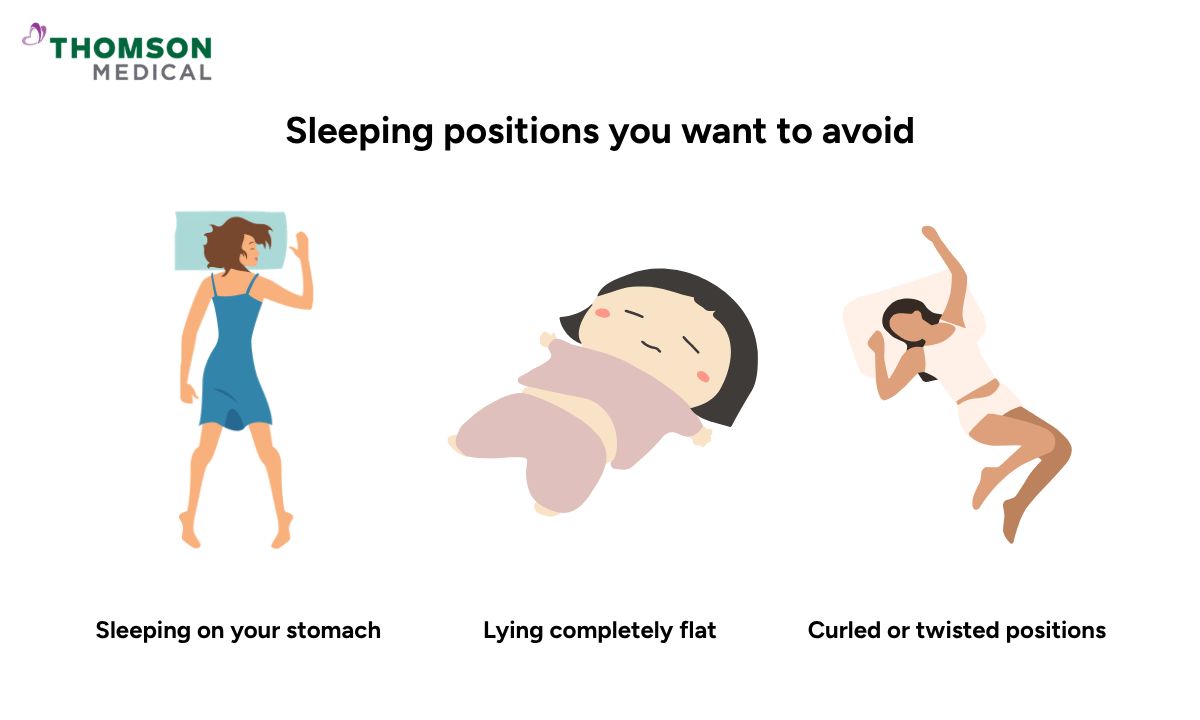
There are several positions that you should try to avoid, as they could cause discomfort. These positions are:
Sleeping on your stomach:
Avoid this position during early recovery, as the position may place direct pressure on your healing incisions and worsen abdominal discomfort.
Lying completely flat:
Lying flat stretches abdominal tissues, which may worsen the soreness from residual surgical gas. To avoid lying completely flat, you could adjust the position by elevating your upper torso up with pillows instead.
Curled or twisted positions:
Tightly curling your body or twisting your torso may also strain your healing abdominal wall muscles and pull at incision lines.
If you're experiencing pain that doesn't seem to ease regardless of how you position yourself when sleeping, see a doctor to identify whether your discomfort is a normal part of the recovery process or something that needs attention. Schedule an appointment with Thomson Medical.
Tips for better sleep during laparoscopic surgery recovery
Good sleep after surgery isn't just about position, but it also involves setting yourself up well before the night begins. A few practical adjustments may help you feel more comfortable at bedtime.
Creating a comfortable sleep environment
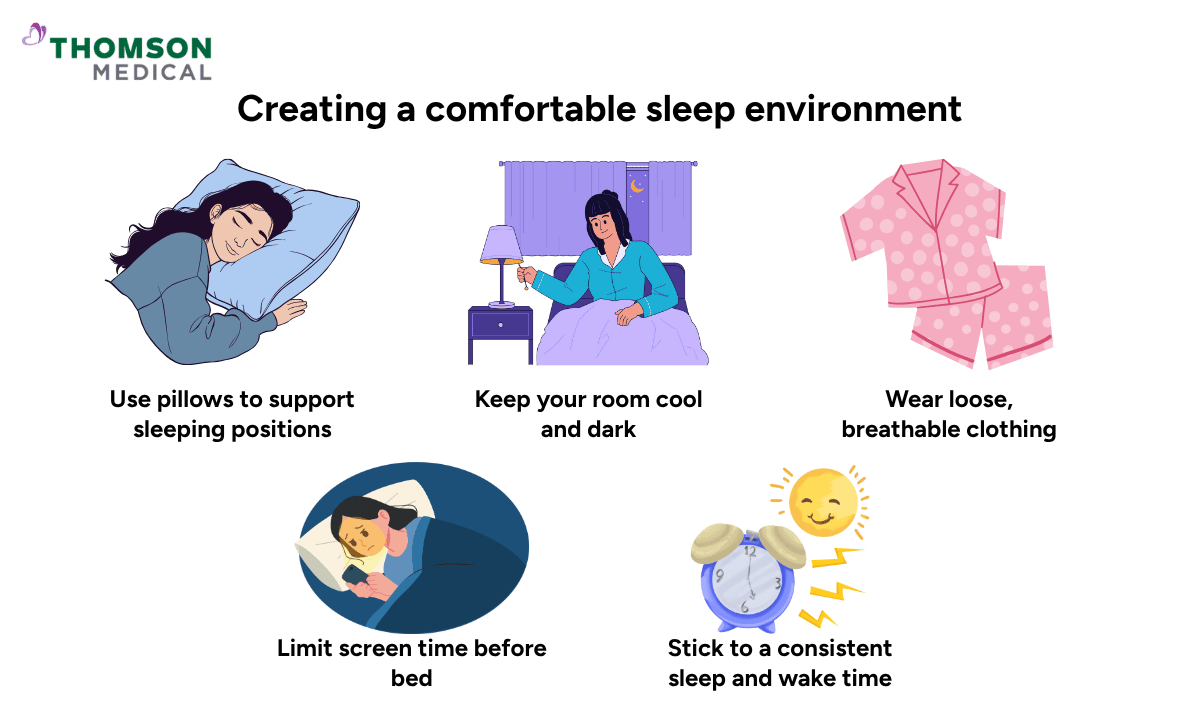
Small changes in your bedroom and sleeping habits may have an impact on how well you sleep during recovery. Here’s what you could try to create a comfortable sleep environment:
Use pillows to support your sleeping positions
Keep your room cool and dark
Wear loose and breathable clothing to avoid friction near the incision area
Limit screen time in the hour before bed
Stick to a consistent sleep and wake time, where possible
A calm, comfortable sleep environment may make it easier to wind down and rest.
Managing pain and discomfort at night
Pain may sometimes feel worse when you lie down at night. Here are a few simple measures before bedtime that may help your pain management:
Take pain medication as prescribed, and don't wait until discomfort wakes you
Avoid heavy meals in the evening, as bloating tends to worsen abdominal discomfort
Try slow, deep breathing to relax the abdominal area before sleep
When to see a doctor
A short period of mild abdominal discomfort, tiredness, bloating, and shoulder-tip pain could be common after this minimally invasive procedure, and these symptoms usually ease over time. However, you may need to see a doctor if you have:
Increasing abdominal pain that is not controlled by prescribed pain relief
Signs of infection, such as redness, warmth, swelling, bleeding, discharge, or pus around the incision site
An incision site that starts to open or separate
A painful and bloated abdomen
Persistent nausea or vomiting
Fever or chills
Difficulty urinating
If persistent pain or poor sleep patterns are making your postoperative recovery feel hard, consider a consultation with a doctor who could review your symptoms and suggest an approach to help you get comfortable rest. Schedule an appointment with Thomson Medical.
FAQ
When can you return to normal sleeping positions?
There is no fixed timeline, and it depends on the procedure you had, the number and location of the incisions, and how quickly your pain settles. Unless your doctor has advised otherwise, you can gradually return to your usual sleeping position when it feels comfortable.
Is it normal to feel pressure inside your abdomen when you change your sleeping position?
Mild pressure, tightness, or a tugging sensation in the abdomen when changing sleeping position can be normal in the first few days after this keyhole surgery. The small incisions and deeper tissues can be sore as they heal, and movement may briefly stretch the abdominal muscles.
However, if the sensation becomes severe, sharp, persistent, or progressively worse, it is best to see a doctor to check your condition. This is because normal postoperative soreness should gradually settle, not become increasingly intense or persistent.
What can you do if pain around the incision keeps waking you up at night?
If pain around your incision sites keeps waking you at night, try to follow the pain-relief plan provided by your healthcare provider. You may also find it helpful to adjust your sleeping position to avoid pressure or pulling around the incisions and try to move slowly when turning in your sleep or getting out of bed.
How do I get out of bed after laparoscopic surgery without straining my abdomen?
To get out of bed more comfortably after laparoscopic surgery, you can try these steps:
- Bend your knees while lying on your back
- Gently turn onto your side without twisting at the waist
- Slide both of your legs over the edge of the bed
- Use your hands and arms to push yourself into a sitting position
- Sit for a moment before standing
- Stand up slowly and ask someone to help if you feel dizzy or unsteady
Can doing physical activities help your recovery?
Light physical activity can support the recovery process when it is safe for you to begin and you follow your doctor’s instructions.
In the early days, these light activities include getting out of bed, walking short distances, and moving your legs and ankles while resting. These activities can support blood flow, help reduce the risk of blood clots, and may encourage your bowels to return to their usual function.
The information provided is intended for general guidance only and should not be considered medical advice. For personalised advice based on your unique conditions, schedule an appointment with Thomson Medical.
For more information, contact us:
Thomson Medical Concierge
- 8.30am - 5.30pm
- WhatsApp: 9147 2051
Need help finding the right specialist or booking for a group?
Our Medical Concierge is here to help you. Simply fill in our form, and we'll check and connect you with the right specialist promptly.
Notice:
The range of services may vary between Thomson clinic locations. Please contact your preferred branch directly to enquire about the current availability.
Get In Touch