

If you've noticed dark patches or spots appearing on your skin, you might feel frustrated or even a bit self-conscious about them. It's natural to wonder what's causing these changes and whether they'll fade.
Hyperpigmentation is one of the most common skin concerns, affecting people of all ages and skin types. The good news is that there are ways to manage them effectively, and knowing what’s happening beneath your skin is the first step to finding the right solution for you.
What is hyperpigmentation?
Hyperpigmentation happens when certain areas of your skin produce more melanin - the natural pigment that gives your skin its colour - than usual.
When melanin concentrates in specific areas, it creates darker patches that you may see on your face, hands, or other parts of your body. There is no need to worry, these spots are usually harmless and don’t pose any health risks.
It’s normal to feel concerned about changes in your skin. The truth is, hyperpigmentation is actually more common than you might think, and many women experience it at some point in their lives. The good news is that there are effective ways to manage and reduce these dark spots.
What causes hyperpigmentation?
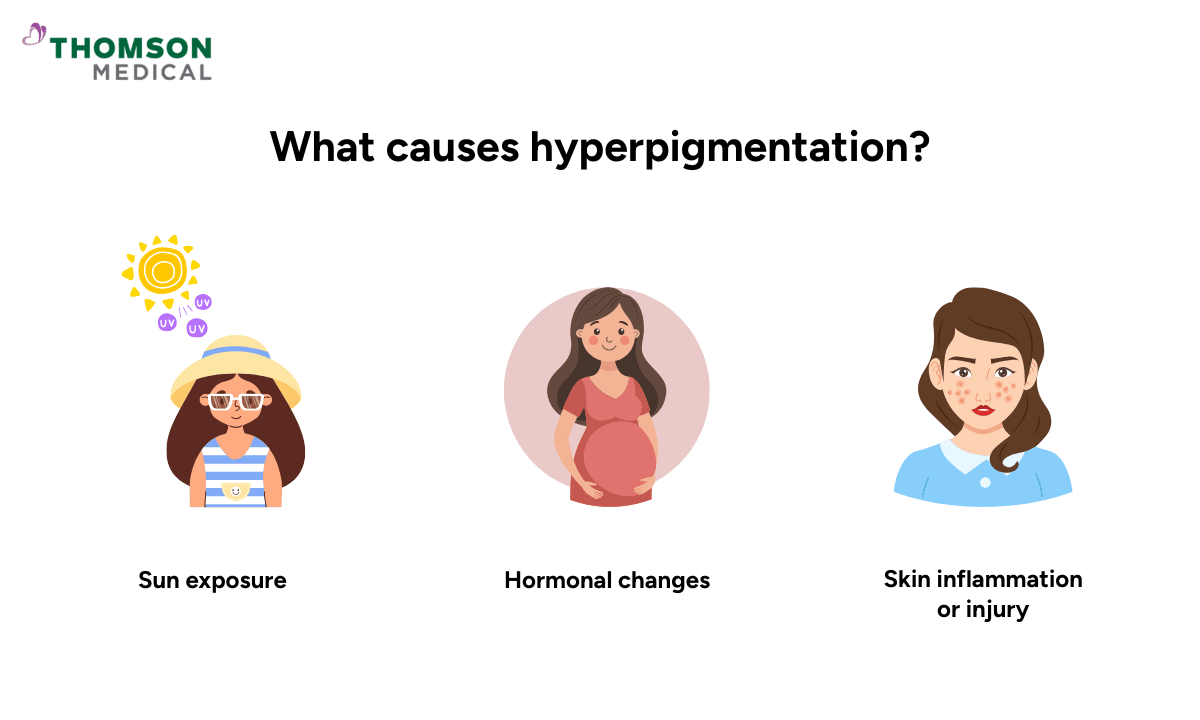
Several factors can trigger your skin to produce extra melanin, and knowing these can help you and your doctor choose the right care and treatment approach.
The trigger can be:
- Sun exposure:
- It’s the most common cause. When your skin is exposed to ultraviolet (UV) rays, it produces more melanin as a protective mechanism. Over time, this sun damage can lead to visible dark spots.
- Hormonal changes:
- If you’re pregnant, taking birth control pills, or going through hormonal fluctuations, you might notice pigmentation changes.
- Skin inflammation or injury:
- If you have acne, a cut, or any skin irritation, the healing process sometimes triggers extra pigment production in that area.
Using certain medications or having health conditions can also contribute to your hyperpigmentation. If you’re unsure what’s behind your dark spots, your dermatologist will help identify what’s causing them.
Common types of hyperpigmentation
Not all dark spots are the same. Let’s take a closer look at different types of hyperpigmentation so you can better understand what your skin is going through.
Freckles
Freckles are light brown, small, flat spots that tend to appear on sun-exposed areas, especially on your cheeks and nose.
They usually show up at a young age and may become more noticeable after long-term sun exposure. When you stay out of the sun for a while, these spots may fade a bit - and that’s normal.
Freckles are harmless. Using regular sunscreen can help you prevent new ones from forming and lighten existing ones.
Age spots (solar lentigines)
Because of the name, many people think age spots are caused by ageing. However, they are actually caused by years of sun exposure.
Age spots, also called sun spots or solar lentigines, are brown spots or patches that usually show up on areas that get a lot of sun, such as your face, arms, and legs. Age spots start to appear after the age of 30 and can slowly increase over time.
Like freckles, age spots are harmless and won’t turn into skin cancer. They may thicken over time and develop into a benign growth called seborrhoeic keratosis. This isn’t something to worry about, but you may want to consult your doctor to receive the right care.
Melasma
If you see brownish patches spreading across your cheeks, forehead or upper lips, this might be melasma.
This type of pigmentation is especially common in Asian skin and affects more women than men. The patches don’t have clear edges, they look more faded and spread out compared to freckles or age spots.
Melasma usually appears or worsens during pregnancy, that’s why it’s sometimes called “mask of pregnancy”. It’s one of the more challenging types of pigmentation to treat because it can recur. However, with the right and consistent care, you can manage it effectively.
Hori’s naevus
This type mainly affects Asian women between the ages of 30 and 50. It appears as discrete brown-to-greyish spots, usually on your upper cheek and the bridge of your nose.
Both genetic and hormonal factors contribute to Hori’s naevus. The pigmentation is darker than melasma and sits deeper within your skin layers, so topical creams alone aren’t enough. Instead, your doctor will suggest laser therapy, which is quite effective in lightening these spots.
If you're unsure which types of pigmentation you’re dealing with, schedule an appointment with Thomson Medical. Our dermatologist will examine your skin, identify the type, and create a personalised treatment plan that's right for you.
Our skin specialist in Singapore
Loading...
How is hyperpigmentation treated?
Hyperpigmentation is treatable, and there are several treatment options that can help you manage it. Your doctor will assess your skin condition to find the approach that best suits your skin type, pigmentation conditions, and lifestyle.
Treatment may include topical creams, laser therapies, or a combination of both to address concerns such as melasma, age spots, and freckles. Alongside treatment, it’s equally important to prevent sun spots by protecting your skin from daily sun exposure.
Your treatment plan may include:
- Sunscreen:
- It’s an important part of any treatment plan.
- To protect your skin against both UVA and UVB radiation, you should choose a broad-spectrum sunscreen with an SPF of 30 or higher.
- Lightening creams:
- Topical therapies like lightening creams usually contain ingredients such as arbutin and hydroquinone that help reduce pigmentation from within the skin.
- Your doctor will help you choose the right products for your needs. These creams need time to work, so patience is key.
- Intense Pulsed Light (IPL) therapy:
- This therapy uses broadband light to target pigmented areas.
- The improvement is subtle, and you’ll usually need 4 to 6 treatment sessions spaced 4-6 weeks apart.
- Laser treatment:
- Pigment laser treatment can be really helpful because it targets specific concerns, and each type of laser addresses different issues.
- You may feel a quick snapping sensation during treatment and have some redness and mild scabbing afterward. However, these heal within a few days.
- Chemical peels:
- Chemical peels are especially effective for melasma and surface-level pigmentation.
- Your doctor will suggest the peel strength based on your skin’s needs.
These treatments take time, usually 3 to 6 months to see improvement, so don’t give up if you don’t see changes right away. Your doctor will monitor your progress and adjust your treatment plan to help you achieve the best results.
How to prevent hyperpigmentation
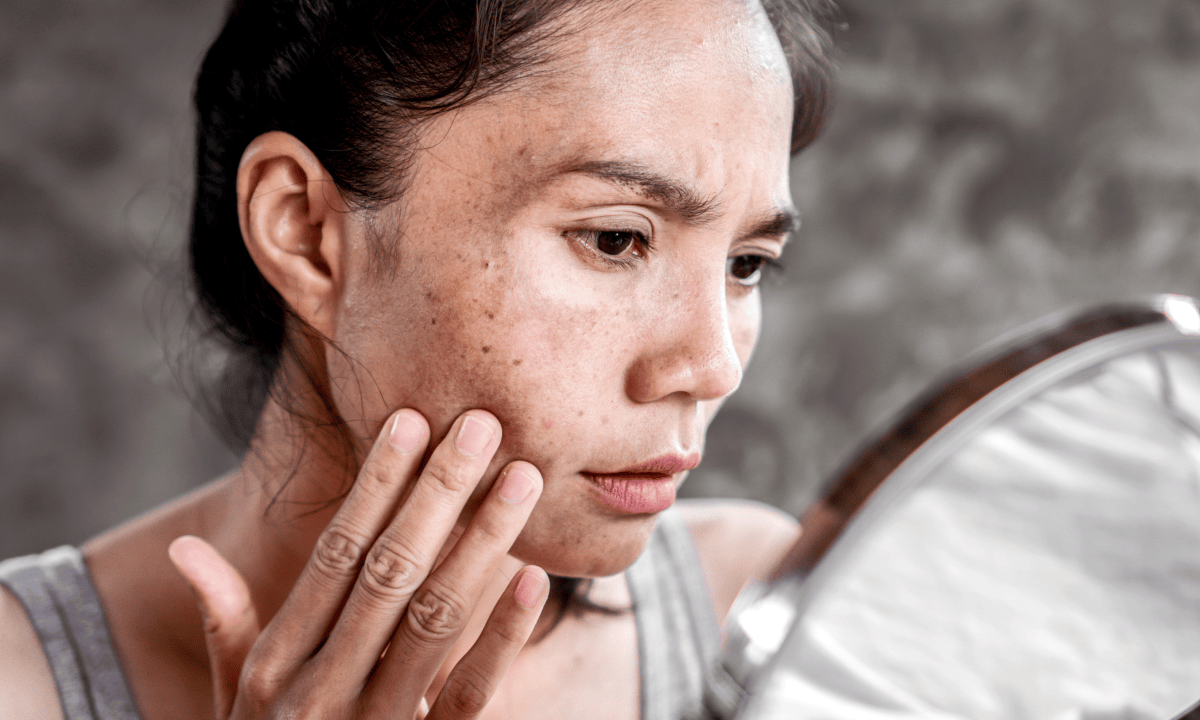
When it comes to dark spots, prevention is always the best approach. Here are some effective ways you can do to protect your skin:
- Apply sunscreen daily:
- Try to make it a routine, even on rainy days.
- Avoid peak sun hours:
- UV rays are strongest from 10 AM to 4 PM, so if you need to go outside at this time, make sure you wear hats and sunglasses.
- Be gentle with your skin:
- Picking at acne or scratching irritated areas can lead to post-inflammatory pigmentation, so it’s better to avoid it.
- Use gentle skincare products:
- Choose products that won’t irritate or inflame your skin. If you're unsure which products suit your skin, consult your dermatologist for advice.
If you notice new or changing spots, or if you're feeling uncertain about what you're seeing, schedule an appointment with Thomson Medical. Our dermatologist can assess your skin, determine what type of hyperpigmentation you have, and create a personalised treatment plan that works for you.
FAQ
How can I reduce existing pigment spots?
To reduce existing pigment spots, your doctor may suggest a combination of consistent care and the right treatment approach, including:
- Daily sunscreen:
- This prevents your spots from getting darker while you're treating them.
- Lightening creams:
- They work gradually to fade pigmentation over several weeks to months.
- Professional treatments:
- For more stubborn spots, you’ll be advised to try IPL therapy, chemical peels, or laser therapy sessions for faster and more noticeable results.
The key is to be patient and consistent. Your dermatologist will help you choose the most effective option based on your skin type and the severity of your pigmentation.
Can I treat hyperpigmentation at home?
Yes, you can take some steps at home to manage hyperpigmentation. Applying broad-spectrum sunscreen every day and using over-the-counter lightening creams with ingredients like vitamin C, niacinamide, or kojic acid can be very helpful.
However, home treatments work best for mild pigmentation. If you're not seeing improvement after a few months or if your pigmentation is moderate to severe, it's best to see your dermatologist.
How long will I have hyperpigmentation?
The duration will depend on what type of hyperpigmentation you have and how you treat it.
- Freckles and age spots:
- They can persist for years but often lighten with consistent use of sunscreen and topical treatments.
- Melasma and Hori's naevus:
- These types tend to be more long-lasting and may require ongoing management to keep them under control.
It's understandable to feel frustrated when spots don't disappear quickly, but with the right treatment plan, most types of hyperpigmentation can be significantly improved. Your doctor will provide you with a realistic timeline based on your specific situation.
Does hyperpigmented skin go away?
In many cases, yes. Hyperpigmented skin can fade or even disappear completely, although this depends on the type and depth of the pigmentation within your skin.
- Surface spots:
- Surface-level spots, like those left behind after acne, can resolve naturally over time, especially with consistent sun protection.
- Deeper pigmentation:
- Melasma or Hori's naevus may not go away on their own but can be lightened with the appropriate treatments.
Some types of hyperpigmentation, particularly melasma, may recur even after successful treatment, so ongoing prevention and maintenance are important.
Does vitamin C help hyperpigmentation?
Yes, vitamin C can be quite effective for hyperpigmentation. It works by interfering with melanin production, helping to prevent new dark spots and gradually lighten existing ones. However, to see a noticeable improvement, you'll need to use it consistently for at least 8 to 12 weeks.
What can be mistaken for hyperpigmentation?
There are some conditions that can look similar to hyperpigmentation, including:
- Birthmarks (café-au-lait spots)
- Skin cancers like melanoma
- Fungal infections such as tinea versicolor
- Post-inflammatory hypopigmentation
Some medications and systemic diseases can also cause skin discolouration. If you notice any spot that's changing rapidly, has irregular borders, bleeds, or simply doesn't look right to you, it's important to see your dermatologist right away.
The information is intended for general guidance only and should not be considered medical advice. For personalised recommendations and advice based on your unique situation, please consult a specialist at Thomson Medical. Request an appointment with Thomson Medical today.
For more information, contact us:
Thomson Specialist Skin Centre
Address: 8 Sinaran Drive, #06-04, Novena Specialist Centre, Singapore 307470
Operating Hours:
Monday - Friday: 8am - 5pm
Saturday: 8am - 12pm
Sunday & PH: Closed
Telephone: +65 6397 6006
Request an AppointmentDr Tan Hiok Hee
Dermatology (Skin)
Thomson Specialist Skin Centre (Novena Specialist Center)
English, Mandarin
.png%3Fbranch%3Dprod&w=640&q=75)