

A hysterectomy is a major operation. While recovery looks different for everyone, what you eat in the weeks that follow plays a crucial role in how quickly and comfortably you heal.
Food alone is not a cure, but it does offer a form of support during a time when your body is healing. As your recovery moves forward, your nutritional needs will shift too, and what served you in the first few days may look different from what your body eats by week three or four.
Knowing what to eat at each stage, what to avoid, and how to build your diet back up can help you feel more in control of your recovery.
What to eat in the first week after hysterectomy surgery
In the first week after surgery, it is common for your digestion to slow down because anaesthesia can affect how your gut works. Aside from that, pain medications like opioids slow gut motility, making it harder to pass stools, and you may be moving less than usual. This is completely normal.
During this phase, the goal is gentle nourishment through a nutrition-rich diet of foods that are easy to digest, light on your stomach, and still packed with nutrition.
Here's what tends to help most in those early days:
Small, frequent meals rather than large portions
Plenty of fluids to stay hydrated and keep things moving
Foods that are soft and easy to break down
Your digestive system and your immune system are both working hard right now. The less strain you put on digestion, the more energy your body can direct towards recovery.
Key nutrients that support wound healing
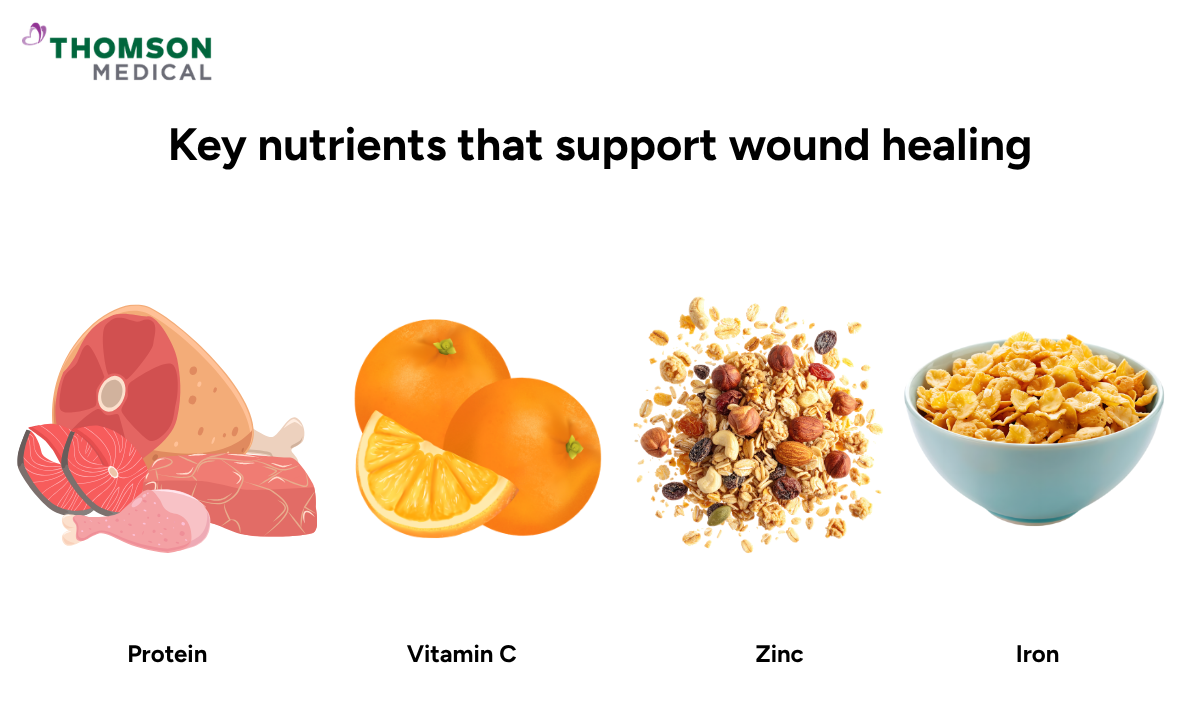
Once you're past the first few days, specific nutrients become important for tissue repair and infection prevention. Getting enough of these key nutrients can genuinely support how quickly and comfortably you recover.
Nutrient | Why it helps | Good food sources |
Protein | Repairs tissue and helps prevent muscle loss | Chicken, fish, eggs, Greek yogurt, beans, lentils, tofu |
Vitamin C | Supports collagen formation and your immune system | Oranges, strawberries, kiwi, bell peppers, broccoli |
Zinc | Aids wound healing | Nuts, seeds, whole grains, eggs, lean meat |
Iron | Helps replace blood lost during surgery | Lean red meat, lentils, beans, tofu, fortified cereals |
Vitamin A | Supports skin and tissue repair | Sweet potatoes, spinach, carrots, kale |
Water | Keeps digestion moving, aids nutrient absorption, and supports wound healing | Plain water, herbal teas, broths, diluted juices |
If your appetite is low during the first week or two, that’s completely okay. When eating feels difficult, prioritising protein, even in small amounts, can still help support tissue repair.
How to manage constipation after a hysterectomy
Constipation is one of the most common concerns after a hysterectomy. For most women, it is temporary, but it can feel uncomfortable and frustrating. Adjusting your food and drink can really help. Building up your fibre intake is one of the most effective steps you can take.
Some fibre-rich foods to add to your meals:
Oatmeal
Chia seeds and flaxseeds
Whole grain meals such as brown rice and wholemeal bread
Lentils and beans
Fruits and vegetables like pears, apples with skin, berries, broccoli, carrots, Brussels sprouts, and sweet potatoes with skin
Try to add fibre gradually over a few days rather than all at once. Along with fibre, make sure you drink at least 8 to 10 cups of water daily to keep your digestion moving smoothly.
Beyond fibre, certain foods are known to naturally encourage regularity:
Prunes or prune juice
Kiwifruit
Pears
Papaya
Warm herbal tea or warm water with lemon
If constipation persists for more than three days despite these changes, or if you experience severe abdominal pain or bloating, do reach out to your doctor. They can recommend appropriate laxative medication or examine other causes.
Our hysterectomy specialists in Singapore
Loading...
Foods and drinks to limit during recovery
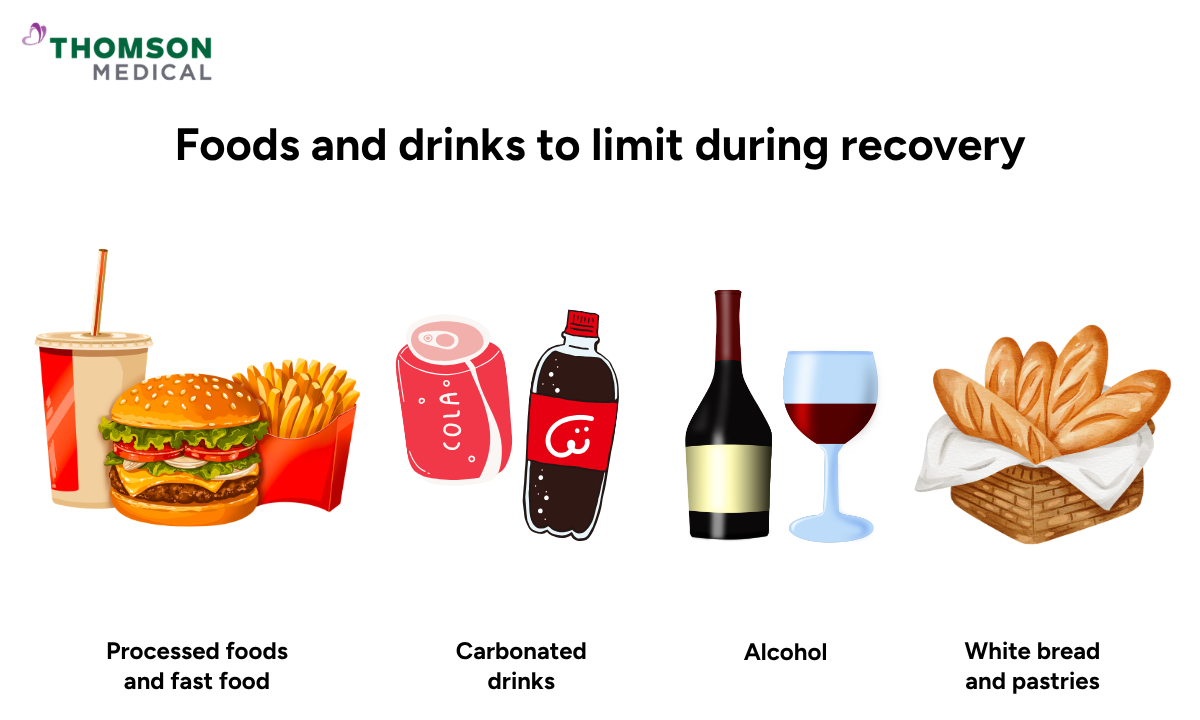
Recovery eating is not about being restrictive, but it's about giving your body what it needs to heal. While focusing on nourishing foods is important, some foods are worth limiting in the first two to three weeks, as they can worsen bloating, constipation, inflammation, or nausea.
Food or drink | Why avoid it |
Fried and greasy foods | Hard to digest and may worsen nausea |
Processed foods and fast food | High in sodium and low in the nutrients your body needs to heal |
Carbonated drinks | Can cause bloating and gas discomfort |
Alcohol | May interact with medications and slow healing |
Foods with added sugar | May contribute to inflammation when consumed in excess, and offers little nutritional value |
White bread and pastries | Low in fibre and may worsen constipation |
Very spicy foods | May irritate the digestive system, especially early on |
Large amounts of cheese and other dairy products | Can be constipating when eaten in excess |
Natural sugars, like those in the recommended fruits, are beneficial, so you don't have to refrain from eating fruit.
By around week three, most women find they can start reintroducing these foods gradually. Starting with small amounts and paying attention to how your body responds is the gentlest approach.
If you are just recovering from surgery, request an appointment with Thomson Medical. Our specialists can provide personalised advice on nutrition and lifestyle changes, helping you understand which foods and drinks to limit for smoother healing and how to reintroduce them safely as you recover.
A sample meal plan for the first month
Recovery looks different for every woman, and so does your appetite. This sample plan provides a starting point. You may adjust it freely based on your appetite and what you have at home.
Week 1
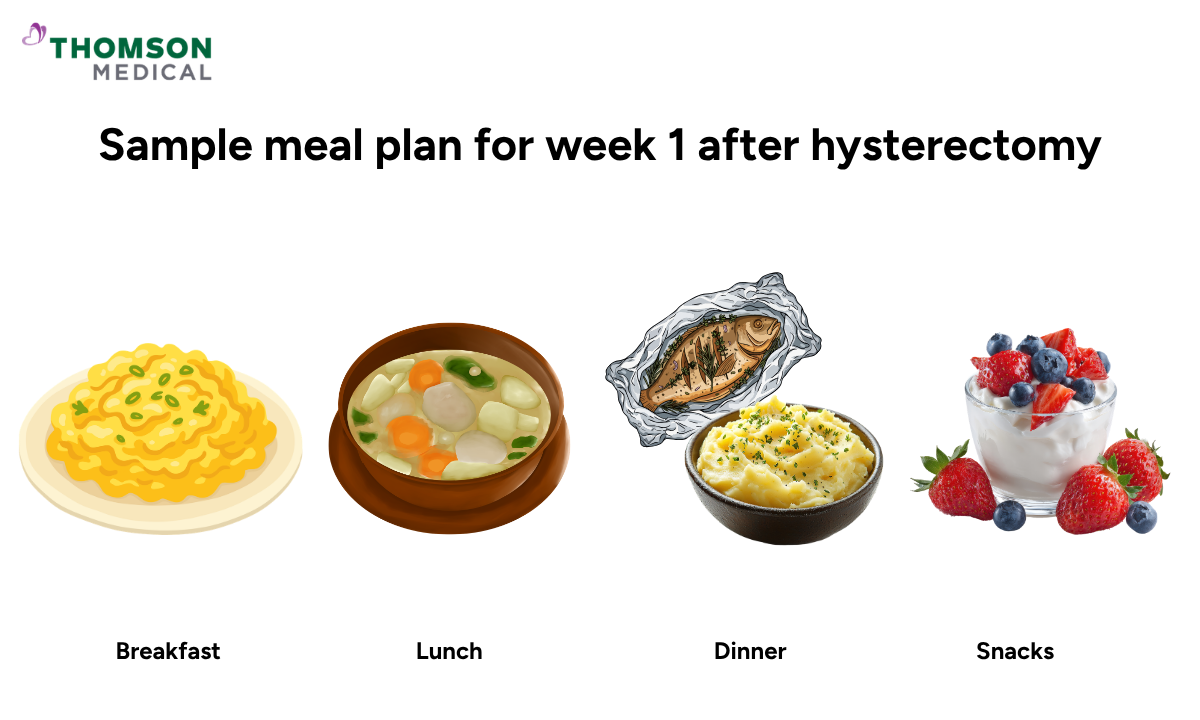
Choosing the right foods in the first week is less about strict rules and more about supporting your recovery with gentle options. These foods are easier to digest, feel comfortable on your stomach, and still give your body the protein and nutrients it needs to heal.
For breakfast, you may start your day with:
Food | Why it works at this stage |
Oatmeal or cream of wheat | Warm, filling, and very easy on the stomach |
Scrambled or soft-boiled eggs | A soft source of protein to support tissue healing |
Greek yogurt or plain yogurt with live cultures | Kind to your gut microbiome and easy to digest |
Soft fruits like bananas, melon, or applesauce | Easy to eat and gentle on digestion |
Starting your day with a protein-rich option can help keep your energy more steady, which you may find helpful in the early days of recovery.
For lunch, suitable options include:
Food | Why it works at this stage |
Bone broth, chicken soup, or vegetable soup | Easy to digest, hydrating, and gentle on a slow gut |
Mashed potatoes or sweet potatoes | Soft, comforting, and nourishing |
Well-cooked vegetables | Soft enough not to strain your digestive system |
If your appetite is still low at lunchtime, soups and broths are a practical choice, as they keep you hydrated while still giving your body some nutrients.
For dinner, the options below are well-tolerated during recovery:
Food | Why it works at this stage |
Baked fish with mashed potatoes | Soft, nourishing protein with a comforting side |
Rice with well-cooked vegetables | Gentle on the digestive system and easy to tolerate |
Lentil soup | Warm, soft, and easy on digestion |
Pairing a soft protein with a gentle carbohydrate at dinner gives your body the nutrients it needs to support repair while you rest overnight.
For snacks, light options that support recovery include:
Food | Why it works at this stage |
Applesauce | Easy to eat and gentle on digestion |
Crackers | Light and easy on the stomach |
Yoghurt | Kind to your gut microbiome and easy to digest |
Low-sugar protein shakes | A practical way to maintain nutrition between meals |
If larger meals feel like too much right now, small snacks spread throughout your day can help you meet your protein and calorie needs without overloading your stomach.
By the end of the week, you may notice your appetite returning and be able to enjoy a wider variety of soft foods, which is a sign that your digestive system is recovering.
Weeks 2 to 4: Slowly expanding your diet
As your digestion improves and your energy starts to return, your body is ready for a little more variety. Your body will give you cues. If something causes discomfort, give it a little more time before trying again.
Suitable options to reintroduce slowly include:
Raw vegetables and salads
Whole grains in larger amounts
Beans and legumes
Lean red meat
Once you're eating a wider variety, thinking about balance can help you feel nourished and energised throughout the day.
A simple way to think about your plate:
A quarter of your plate is protein
A quarter of your plate is whole grains
Half of your plate is vegetables and fruit
Recovery timelines can vary depending on the type of hysterectomy you had. If you had an open abdominal procedure, your digestive system may take a little longer to adjust, so introduce raw vegetables and larger portions more gradually than someone who had a laparoscopic procedure.
By week four, many women can return to a normal, varied diet, though they may still find very spicy foods, carbonated drinks, or large portions a little uncomfortable. Keep prioritising protein and fibre as your body continues healing.
Early nutrition support can make a big difference in healing. Request an appointment with Thomson Medical to find out which foods and meal strategies are right for you and get a tailored plan for the first month of recovery.
FAQ
How long after a hysterectomy can I eat normally?
Most people can return to a normal diet within 2 to 4 weeks, though recovery time can vary depending on how your digestion is recovering, your pain levels, and the type of surgery you had. It is always worth following the specific guidance your surgeon provides you.
What foods should I eat after hysterectomy surgery for the first day of recovery?
On the first day, clear liquids are usually the safest starting point. This includes broth, water, and gelatine. As you start to feel more comfortable, you can progress to soft foods such as soup, yoghurt, eggs, and oatmeal. Take it slowly and let your body guide you.
Can I drink coffee after a hysterectomy?
Small amounts of coffee are often fine after the first few days. However, caffeine can contribute to dehydration and may worsen constipation, which is already common after surgery. If you do have coffee, make sure you are balancing it with plenty of water throughout the day.
What foods help with bowel movements after a hysterectomy?
Some of the most helpful options include high-fibre foods, prunes or prune juice, kiwi fruit, and warm liquids. Prebiotic foods and probiotic supplements may also support a healthy gut microbiome, which can aid regularity. Staying well hydrated is equally important, as fluids help keep things moving through your digestive system.
How long does constipation last after a hysterectomy?
Constipation after a hysterectomy is usually temporary and tends to improve within the first one to two weeks as the effects of anaesthesia and pain medication wear off and your movement increases. Adjusting your diet and fluid intake can help. If constipation persists more than three days without improvement, consult with your doctor.
Can I eat spicy food after a hysterectomy?
It is generally a good idea to avoid spicy foods for the first one to two weeks. Spicy foods can irritate your digestive system and may make bloating or heartburn worse at a time when your gut is still sensitive. You can gradually reintroduce them as you feel more comfortable during recovery.
What are the recommended foods to reduce bloating after surgery?
Bloating is very common in the early weeks of recovery. Limiting gas-producing foods during this time can help significantly. These foods may help ease the discomfort:
- Peppermint tea
- Ginger tea
- Bananas
- Rice
- Yogurt with live cultures
- Cooked vegetables rather than raw
The information provided is intended for general guidance only and should not be considered medical advice. For personalised recommendations and advice based on your unique situation, please consult a specialist at Thomson Medical. Request an appointment with Thomson Medical today.
For more information, contact us:
Thomson Specialists (Women's Health)
Thomson Women's Clinic (TWC)
- Novena:
6592 6686 (Call), 8611 8986 (WA) - Bukit Batok:
6569 0668 (Call), 8686 3525 (WA) - Choa Chu Kang:
6893 1227 (Call), 8282 1796 (WA) Jurong:
6262 8588 (Call), 6262 8588 (WA)- Katong (female doctor):
6970 2272 (Call), 8611 9020 (WA) - Punggol:
6243 6843 (Call), 8811 0328 (WA) - Sembawang: 6753 5228
- Sengkang: 6388 8125
- Serangoon (female doctor): 6382 3313
- Tampines: 6857 6266
- Tiong Bahru: 6276 1525