

After several months of back pain that has not improved with physiotherapy or medication, your doctor may recommend keyhole spine surgery as part of your treatment. Naturally, you may be wondering whether this treatment is right for you.
Let's go through what a keyhole spine surgery involves, what conditions it's used for, and the factors that influence the cost in Singapore.
What is keyhole spine surgery?
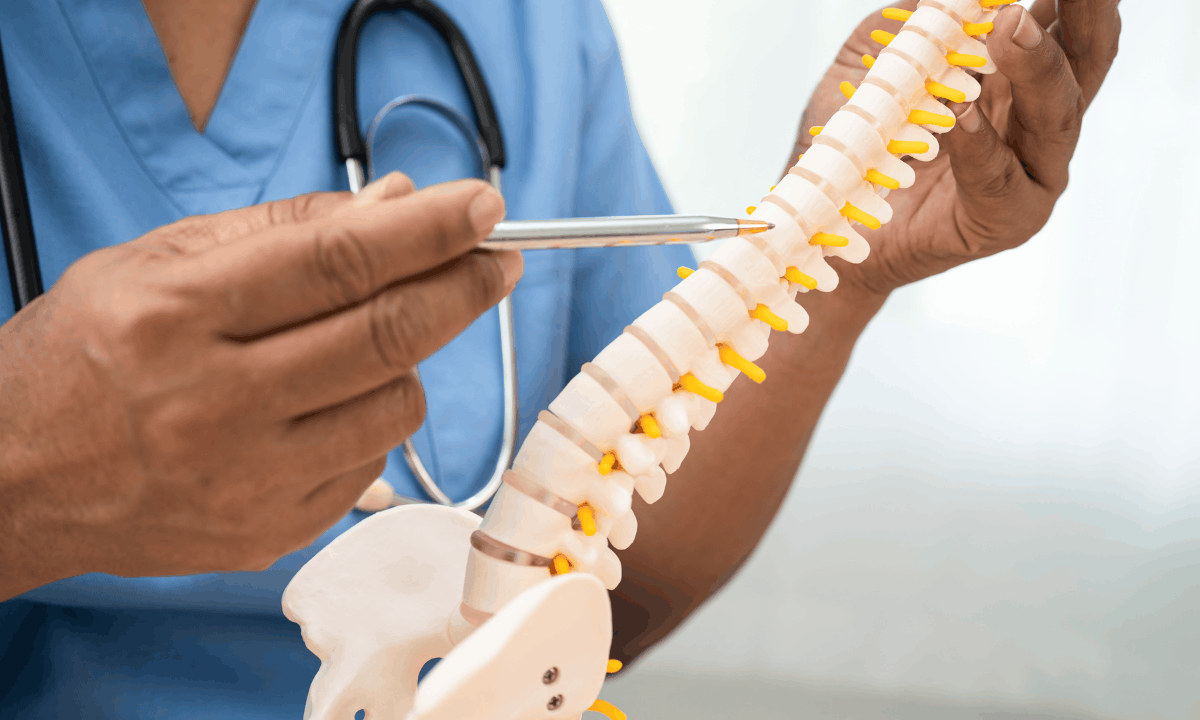
Keyhole spine surgery, also known as minimally invasive spine surgery, uses small incisions to treat spinal conditions. Rather than cutting through your back muscles, the surgeon gently separates the muscle fibres with specialised instruments to reach your spine. This approach allows them to treat the problem while causing less damage to the surrounding tissues.
In traditional open surgery, the surgeon makes a larger incision and may need to move more muscle and soft tissue to reach the spine. This could lead to more postoperative pain and a longer recovery. Meanwhile, keyhole spine surgery uses one or more small incisions, which usually causes less damage to the muscles, skin, and surrounding tissues.
This minimally invasive spine surgery is available in Singapore at selected public hospitals and private hospitals. Public hospital services may offer assessment and treatment through orthopaedic or neurosurgical spine teams, while private hospitals and specialist clinics may provide access to surgeons with experience in keyhole, endoscopic, or other minimally invasive techniques.
What are the advantages of keyhole spine surgery?
Keyhole spine surgery may offer several benefits compared to the open surgery approach, including:
- Faster recovery
- Less blood loss
- Less postoperative pain
- Smaller scars
- Lower risk of infection
- Shorter hospital stay
What conditions require keyhole spine surgery?
Your doctor may recommend minimally invasive spinal surgery for certain spinal conditions, depending on the cause of your symptoms and the severity of your condition. These may include:
Scoliosis: which is a side-to-side curve of the spine.
Kyphosis: which is an excessive forward curve of the upper spine.
Herniated disc (also called a slipped or ruptured disc): which occurs when the soft cushion between two vertebrae bulges or breaks open and presses on spinal nerves.
Cervical spondylosis: which is age-related wear and tear in the neck.
Degenerative disc disease: which occurs when the spinal discs wear down over time.
Spinal stenosis: which occurs when the space around the spinal cord or nerve roots is narrowing.
Spinal tumours: which occur when there are abnormal growths in or around the spine.
Vertebral compression fractures: which happen when one of the spinal bones collapses or breaks.
Our orthopaedic specialists in Singapore
Loading...
Common keyhole spine surgery procedures
Keyhole spine surgery procedures come in different types depending on the spinal conditions being treated. Each of these types also has different procedures, such as:
Discectomy
A discectomy removes part or all of a damaged spinal disc that is pressing on a nerve. It could help relieve pain, numbness, or weakness caused by a herniated disc. The surgeon usually reaches the disc through a small incision using specialised instruments.
Laminectomy
A laminectomy is a surgery that removes part of the spinal bone called the lamina to relieve pressure on the spinal cord or nerves. Spine surgeons often use it to treat spinal stenosis in the lower back. By creating more space in the spinal canal (narrow, fluid-filled space in the spinal column), it may help ease symptoms such as pain, tingling, numbness, or weakness in the legs.
Spinal fusion
Minimally invasive spinal fusion joins two or more vertebrae using smaller incisions than open surgery. It is often used for conditions such as degenerative disc disease or spinal instability. The surgeon gently separates the muscle fibres and places a bone graft or other material between your spines. They may also use screws and rods to help stabilise your spine while the bones fuse over time.
Keyhole spine surgery step-by-step
Before undergoing the procedure, knowing what to expect from the keyhole spine surgery process may help you to prepare yourself better.
Before the surgery
Before the keyhole surgery, your doctor may ask you to:
Fast, which prevents stomach contents from entering your lungs when you have anaesthesia.
Adjust certain medicines to prevent excessive bleeding, avoid delayed bone healing, and ensure a safe response to anaesthesia.
Complete blood tests or other health checks to make sure it is safe for you to undergo the procedure and to reduce the risk of complications.
During the surgery
During the procedure, your surgeon will typically take the following steps:
Anaesthesia and positioning:
Administer general anaesthesia so you sleep through the operation.
Position you carefully (usually face down on a special frame) to keep your spine stable.
Planning and marking the entry point:
Uses a type of live X‑ray (fluoroscopy) to check the exact level of your spine they need to operate on.
Mark your skin over the spot to guide where they will make the small cut.
Making small skin incisions:
Make small incisions in your skin over the marked area.
Gently move the skin and soft tissue aside so they could reach the back muscles.
Creating the keyhole:
Instead of cutting through the muscle, they insert a series of small tubes into place to slowly separate the muscle fibres.
A slightly larger tube (called a tubular retractor) is then left in place to hold the muscle open and create a narrow tunnel down to your spine.
Visualising inside the spine:
They then use a microscope or a tiny camera (endoscope) attached to the tube to get a clear, magnified view of your spine through the small opening.
Removing bone or ligament (if needed):
If you have spinal stenosis or a pinched nerve, they may shave away a small amount of bone or thickened ligament.
This helps to create more space around the nerves and reduce pressure.
Removing disc material (for a herniated disc):
If you have a slipped or herniated disc, they find the piece of disc pressing on the nerve.
They remove only the part causing the pressure, while leaving as much of the healthy disc as possible.
Additional steps for fusion (if needed):
If you need a spinal fusion, they first clear out the damaged disc between two bones of the spine.
They then place a bone graft or a small cage between the bones and insert screws and rods through other small cuts to hold everything steady while the bones fuse.
Closing the incision:
After the procedure, your surgeon will remove the tube that holds the muscles apart, close the small incision with stitches or staples, and cover it with a surgical dressing.
After the surgery
Right after the procedure, you are moved to a recovery area where staff monitor your vital signs and pain. If you are stable, nurses and physiotherapists will help you to sit up and walk the same day or the next day.
Keyhole spine surgery costs in Singapore
Keyhole spine surgery costs in Singapore may vary based on the type of procedure and whether it is a public or private hospital. Below is an overview of typical costs for common keyhole spine surgeries in Singapore:
Discectomy:
Public hospital (subsidised): around SGD 3,700-6,500
Private hospital: SGD 36,300-58,000
Laminectomy:
Public Hospital (subsidised): around SGD 10,000-18,000
Private hospital: around SGD 20,100-33,800
Spinal fusion:
Public hospital (subsidised): around SGD 10,500-60,800
Private hospital: SGD 68,500-103,300
Available insurance
Singapore residents may be able to use MediSave, MediShield Life, and Integrated Shield Plans to help cover part of the costs. The exact claim amount depends on your ward type and your insurance plan, so the figures below are intended as estimates only.
MediSave:
According to the CPF website, common keyhole spine surgery procedures such as discectomy, laminectomy, and spinal fusion are classified under tables 6 and 7, with a claim limit up to SGD 5,290.
MediShield Life:
MediShield Life helps you pay for large medical bills, so you may save more in your MediSave account or in cash.
For common keyhole spine surgery procedures, the MediShield Life classification follows the same one as MediSave, as set out in tables 6 and 7, with a claim limit of up to SGD 3,900.
Additionally, you may use integrated shield plans (IPs), which are private insurance policies that sit on top of MediShield Life and offer additional coverage beyond what is provided by MediShield Life.
Please note that these are estimated costs based on the information available at the time of writing, and they may have changed since then. These costs may also vary depending on the required treatment, hospital, and location of care.
If you are considering treatment, please contact our medical concierge team at Thomson Medical, who could discuss your specific situation with you and provide personalised cost guidance.
Risks and considerations of keyhole spine surgery
Although keyhole spine surgery offers benefits such as smaller incisions and a faster recovery, it still carries some risks. These may include:
Bleeding or infection
Nerve injury, which may lead to numbness, tingling, or weakness
Dural tear (a leak of spinal fluid), which may cause headaches
Recurrence of herniated disc or return of symptoms
Your doctor will also consider several factors before recommending this surgery, including:
Your general health, as several conditions like diabetes and obesity may increase the risk of complications and affect healing.
Your bone quality, because weakened bones (such as from osteoporosis) could make it harder to place spinal implants securely.
Recovering from keyhole spine surgery
After the surgery, you may need a short hospital stay. For most minimally invasive spine surgeries, you will be hospitalised for around 1 to 2 days before being discharged.
Tips to help you recover faster at home
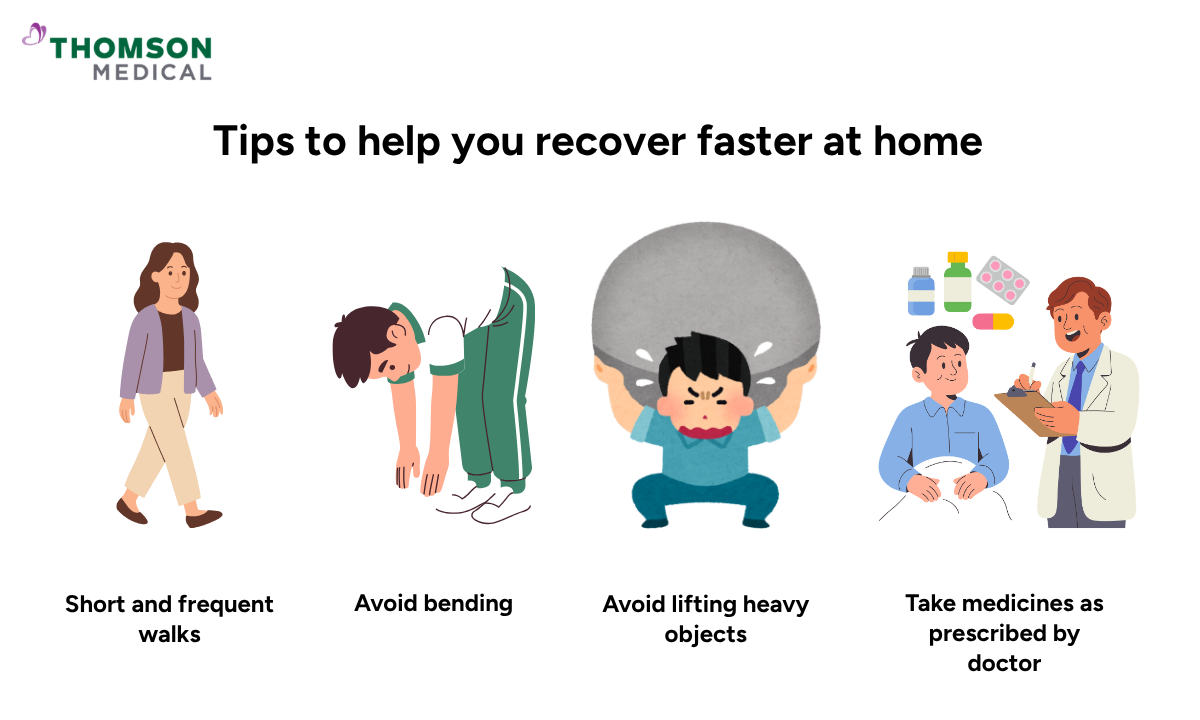
Since you are most likely to be home soon after the surgery, these steps could help support your recovery:
Take short and frequent walks to improve blood flow and reduce stiffness.
Avoid bending down, as it may strain the healing tissues, incision, and spinal structures. Kneel to pick up items, and keep everyday items, such as water, medicine, and your phone, at waist or chest height so you do not need to bend down.
Avoid lifting heavy objects to protect the healing tissues, reduce the risk of complications, and prevent re-injury.
Pay attention to your posture. Sitting or standing in a neutral, well-supported position helps reduce strain on the incision and surrounding tissues.
Take your pain medicines as prescribed by your doctor.
If you have any difficulties in your post-surgery recovery or experience any unusual symptoms, consider a consultation with our orthopaedic specialist to examine your condition. Schedule an appointment at Thomson Medical.
FAQ
How long does a minimally invasive spine surgery take?
Minimally invasive spine surgery usually takes less than an hour to a few hours, depending on the type of procedure and how complex it is. For instance, a simple decompression or discectomy often takes around 30 to 90 minutes, while minimally invasive spinal fusion usually takes around 2 to 4 hours and may take longer if the case is more complex.
When can you start walking again after the surgery?
You can usually start walking on the same day or the next day after surgery, depending on the procedure and your surgeon’s advice. Early movement helps reduce stiffness, improve blood flow, and lower the risk of complications, so you are usually encouraged to walk within 24 hours if it is safe to do so.
How big are the scars from a minimally invasive spine surgery?
Minimally invasive spine surgery usually leaves one or more small scars, often around 1 to 2 cm long. The exact size depends on the procedure and the number of entry points needed by your surgeon. These scars are usually much smaller than the scar from open spine surgery.
How long can you fully recover after minimally invasive spine surgery?
Recovery after minimally invasive spine surgery varies. If you have simpler procedures like discectomy or decompression, you can return to most normal activities in about 6 weeks. Meanwhile, more complex operations such as minimally invasive spinal fusion may take 3 to 6 months for full recovery times.
It also depends on other factors like your overall health and how closely you follow rehabilitation advice.
Is it possible to change from minimally invasive to open spine surgery?
In some cases, a surgeon may need to change a planned minimally invasive procedure to open spine surgery if complications arise or the minimally invasive approach does not provide safe or adequate access to the affected area. This decision is made to prioritise your safety and does not necessarily mean the operation has failed.
The information provided is intended for general guidance only and should not be considered medical advice. For personalised advice based on your unique conditions, schedule an appointment with Thomson Medical.
For more information, contact us:
Thomson Specialists (Thomson Medical Centre) — Orthopaedic
Request an Appointment