

Keyhole and open surgery differ mainly in how the surgeon reaches the area being operated on. Keyhole surgery, also called laparoscopic or minimally invasive surgery, uses several small incisions and a camera, while open surgery uses a single larger incision that allows direct access and a wider field of view.
Which approach is used isn’t usually a matter of preference. It depends on what’s being operated on, the size and position of what needs removing, previous surgery, and what the surgeon needs to be able to see and reach. Here’s how each procedure is performed, what recovery typically involves, the potential risks that come with both, and why one may be recommended over the other.
What is keyhole surgery?
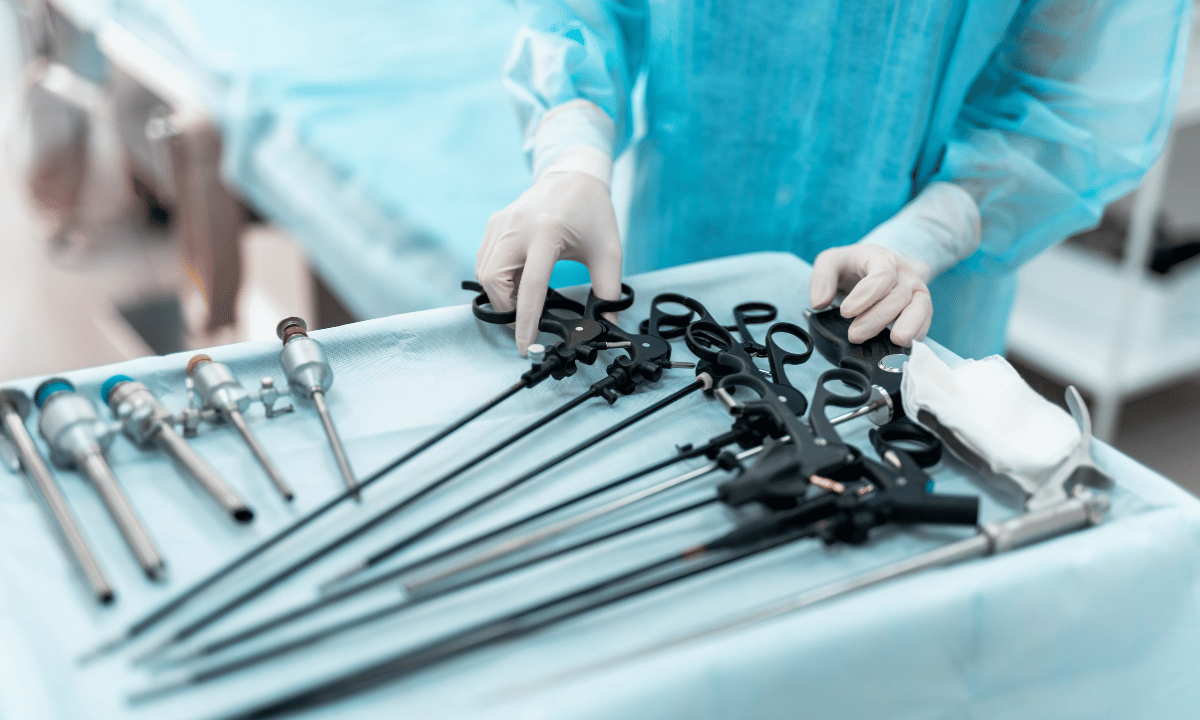
Keyhole surgery, also known as minimally invasive or laparoscopic surgery, is a surgical technique that uses small incisions instead of larger ones. It is commonly used to diagnose or treat conditions affecting organs in the abdomen (tummy) or pelvis.
Even though this is a minimally invasive surgery, it is still usually performed under general anaesthesia to keep you comfortable and allow the surgeon to work. During the procedure, the surgeon makes a few small incisions through which a laparoscope (a thin tube with a light and tiny camera) is inserted.
The camera sends clear images of the surgical area to a monitor, allowing them to view the internal organs without making a large opening. They may also insert specialised surgical instruments through the other small incisions to carry out the procedure.
What is open surgery?
Open surgery is a traditional surgical approach that involves making a larger incision through the skin to give the surgeon direct access to the area being operated on. The size of the incision can vary depending on the type and complexity of the procedure.
The surgeon can then directly see and access the affected organ or tissue through this incision. Specialised surgical instruments may be used to perform various treatments, such as repairing an organ, cutting or removing damaged tissue, or closing tissues using sutures (stitches). The procedure is also performed under general anaesthesia that puts you into a temporary sleep during the procedure.
Differences between keyhole and open surgery
The table below highlights the differences between these two surgical approaches.
| Keyhole surgery | Open surgery | |
|---|---|---|
Scarring | Generally results in smaller scars because the surgeon uses small incisions. In some cases, the scars may be less noticeable once healed. | Usually leaves a larger or more noticeable scar because a larger incision is required to access the surgical site. |
Post-operative pain | Often less painful after surgery because there is less damage to the surrounding tissues. However, you may still experience some discomfort during recovery. | It is generally more painful because the incision is larger and more tissue is disturbed. Your surgical team will provide a pain relief plan tailored to your recovery after the procedure. |
Hospital stay | Depending on the procedure, some patients may be able to go home on the same day or after a shorter hospital stay. For example, laparoscopic gallbladder surgery commonly requires about one night in the hospital. | Hospital stays are often longer. For example, open gallbladder surgery may require around several nights, although this varies according to the procedure and recovery. |
Recovery time | Recovery may be faster depending on your conditions. You may return to light activities within a few days, with full recovery taking around a few weeks. | Recovery generally takes longer because of the larger incision. So it usually takes several weeks or more to return to work, exercise and normal activities. |
If you are unsure which approach is right for you, a consultation with a general surgeon can help you understand your options and decide on the suitable surgery for your condition. Schedule an appointment with Thomson Medical.
Our surgeons in Singapore
Loading...
How do surgeons decide which approach to use?
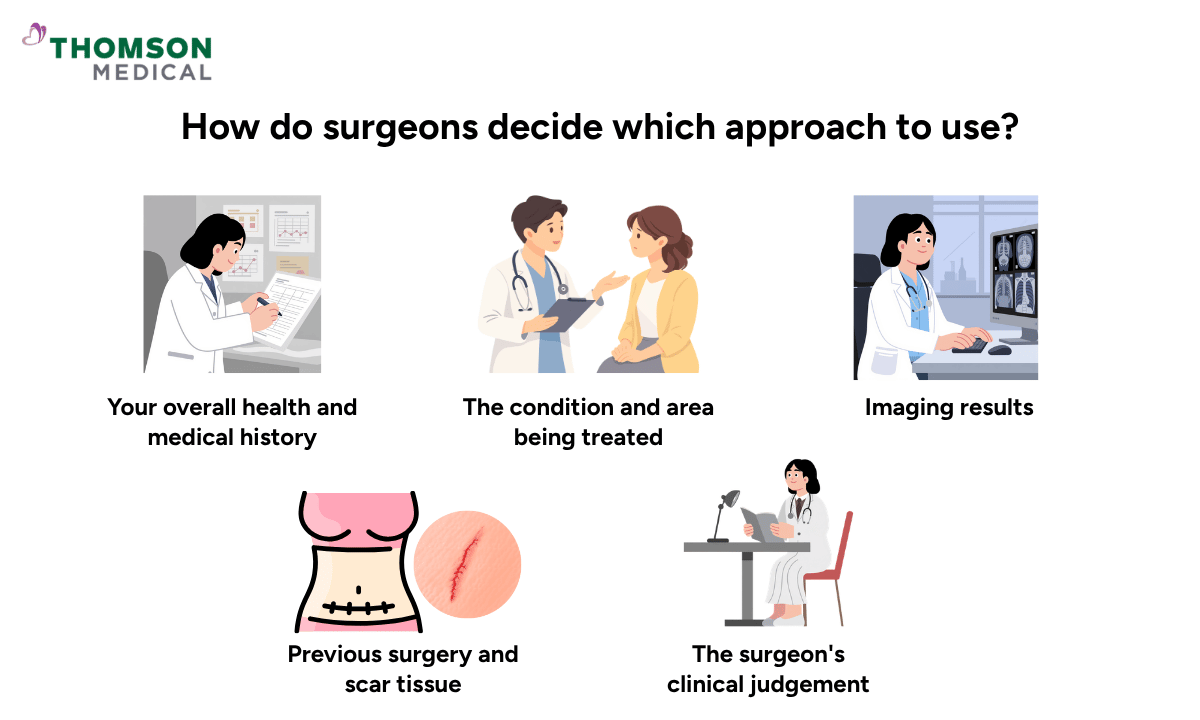
The choice between keyhole and open surgery depends on several factors. Although keyhole surgery is suitable for many procedures, open surgery can sometimes provide more direct access to the surgical site. When deciding which surgical technique to use, your surgeon will typically consider the following:
Your overall health and medical history:
This includes any previous operations you have had, any existing medical conditions you have, and whether you can safely undergo general anaesthesia.
The condition and area being treated:
The type, location, size, severity, and complexity of the condition can affect whether keyhole surgery or open surgery is more suitable.
More complex conditions do not always require open surgery, but they may require an approach that gives the surgeon safe access and a clear view of the area.
Some areas of the body may also be easier to reach through an open approach, depending on the procedure.
Imaging results:
Previous surgery and scar tissue:
Previous abdominal or pelvic surgery can lead to adhesions (internal scar tissue), which may affect accessibility during keyhole surgery.
However, having had previous surgery does not automatically mean that open surgery will be mandatory.
When might each approach be more suitable?
Both keyhole and open surgery approaches are equally effective. However, the most appropriate option depends on the condition being treated, your overall health, and what the surgeon discovers during the procedure.
Keyhole surgery
Keyhole surgery may be suitable when:
The affected area can be accessed through small incisions.
The condition can be treated without needing to remove large sections of tissue or organs.
The surgical area can be clearly viewed using a laparoscope, a light and tiny camera that allows the surgeon to view the area on a monitor.
Open surgery
Open surgery may be more suitable when:
The condition is complex or extensive and requires larger access to the surgical area.
The surgeon needs to treat severe inflammation, infection, tissue damage, or bleeding that cannot be managed safely through small incisions.
The scar tissue or adhesions from previous surgery or inflammation make it difficult to see or safely reach the area using keyhole instruments.
Additionally, unexpected findings may occur during keyhole surgery, such as bleeding, dense adhesions, or difficulty identifying the anatomical structures. In these situations, the surgeon may convert to open surgery to complete the procedure safely.
What is the potential complication of each approach?
Keyhole surgery and open surgery both carry similar complication risks, such as blood loss, wound infection, and rare cases of hernia (when tissue pushes through the scar of the incision site).
But the likelihood and severity of complications depend on the procedure, the part of the body being treated, and your overall health. Your surgeon will explain postoperative complications that are relevant to your procedure.
Complications of keyhole surgery
Even though keyhole surgery uses smaller incisions, potential complications can still occur, such as:
Injury to nearby organs or blood vessels:
In rare cases, surgical instruments can damage surrounding structures such as the bowel, bladder, ureters, or blood vessels.
Shoulder-tip pain or bloating:
Carbon dioxide gas is often used during abdominal keyhole surgery to create space for the surgeon to operate. This may cause temporary bloating or shoulder-tip pain, which usually improves within a few days.
Complications of open surgery
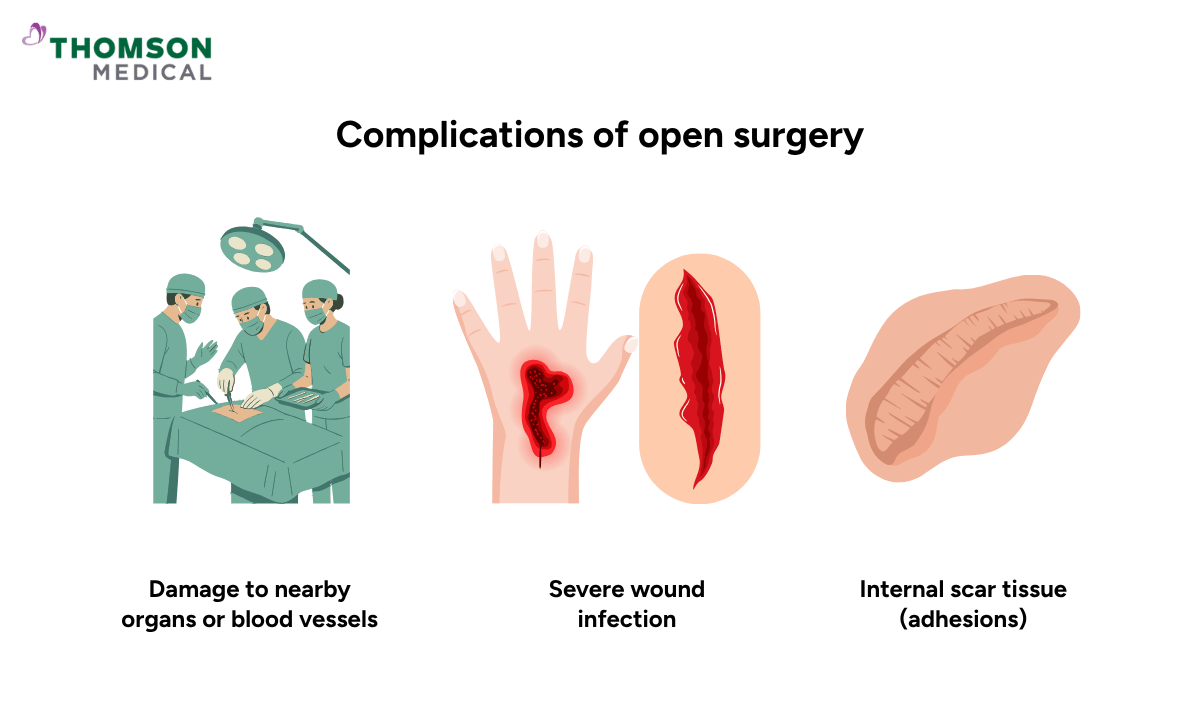
Because open surgery uses a larger cut, there's a slightly higher chance of complications. These can include:
Damage to nearby organs or blood vessels:
Structures close to the surgical site, such as organs, nerves, or blood vessels, may be accidentally injured. In some cases, further treatment may be needed to repair the damage.
Severe wound infection:
The incision may take longer to heal, and blood or fluid may collect underneath the skin. In rare cases, the wound may open again after surgery.
Internal scar tissue (adhesions):
Bands of scar tissue may form between internal organs and tissues after surgery in the abdomen or pelvis. These usually do not cause symptoms but may occasionally lead to pain or bowel blockage.
If you have any concerns about the risks or complications mentioned above, speaking with a general surgeon can help you decide on the suitable surgical approach. Schedule an appointment with Thomson Medical.
FAQ
What should you avoid after keyhole surgery?
Follow the instructions from your surgical team, as recovery advice varies depending on the procedure. Avoid driving, drinking alcohol, doing strenuous exercise, and heavy lifting until your surgeon advises that it is safe to resume these activities. Light walking is usually encouraged to support circulation and reduce the risk of blood clots.
What can you do if pain around the incision keeps waking you up at night?
If pain around your incision sites keeps waking you at night, try to follow the pain-relief plan provided by your doctor. You may also find it helpful to adjust your sleeping position to avoid pressure or pulling around the incisions and move slowly when turning in your sleep or getting out of bed.
How many hours after laparoscopic surgery can you eat?
The timing depends on the type of surgery and how quickly you recover from anaesthesia. Usually, your doctor will keep you off food and drink for several hours after surgery until you are fully awake and free of nausea.
Clear liquids are often started within a few hours, and food is given as soon as you can tolerate it. This waiting period allows the anaesthesia to wear off and helps reduce the risk of nausea and vomiting.
How to sleep after laparoscopic surgery?
After keyhole surgery, sleep in the position that feels most comfortable and does not put pressure on your incision sites. Many people find it more comfortable to sleep on their back with a pillow under their knees or with their upper body slightly raised using extra pillows. This can reduce strain on the abdomen and make it easier to get in and out of bed.
The information provided is intended for general guidance only and should not be considered medical advice. For personalised advice based on your unique conditions, schedule an appointment with Thomson Medical.
For more information, contact us:
Thomson Medical Concierge
- 8.30am - 5.30pm
- WhatsApp: 9147 2051
Need help finding the right specialist or booking for a group?
Our Medical Concierge is here to help you. Simply fill in our form, and we'll check and connect you with the right specialist promptly.
Notice:
The range of services may vary between Thomson clinic locations. Please contact your preferred branch directly to enquire about the current availability.
Get In Touch