
.png%3Fbranch%3Dprod&w=3840&q=75)
Kidney pain often starts as a dull, easy-to-dismiss ache that blends into the background of a busy day. It can take a while before the discomfort feels significant enough to act on.
Once you know what kidney pain actually feels like and what tends to cause it, the picture becomes a lot clearer. Knowing the signs to watch for, the common causes, and when to see a doctor can help you feel more informed about what your body is telling you.
What does kidney pain actually feel like?
.png?branch=production)
That deep, nagging ache below your ribcage can be hard to ignore. Kidney pain usually sits on one or both sides of your spine, just below your ribcage and above your waist. Unlike a pulled muscle, it tends to feel internal and persistent.
It may feel like a dull throb, a sharp cramp, or a sensation that comes and goes in waves. Sometimes it radiates forward towards your lower abdomen or groin.
It can be easily mistaken for back pain, but the two differ in a few ways. Muscular back pain usually shifts when you move or stretch. Kidney pain generally doesn't – and it may come alongside other signs like changes in your urine, a fever, or feeling generally unwell.
Common causes of kidney pain
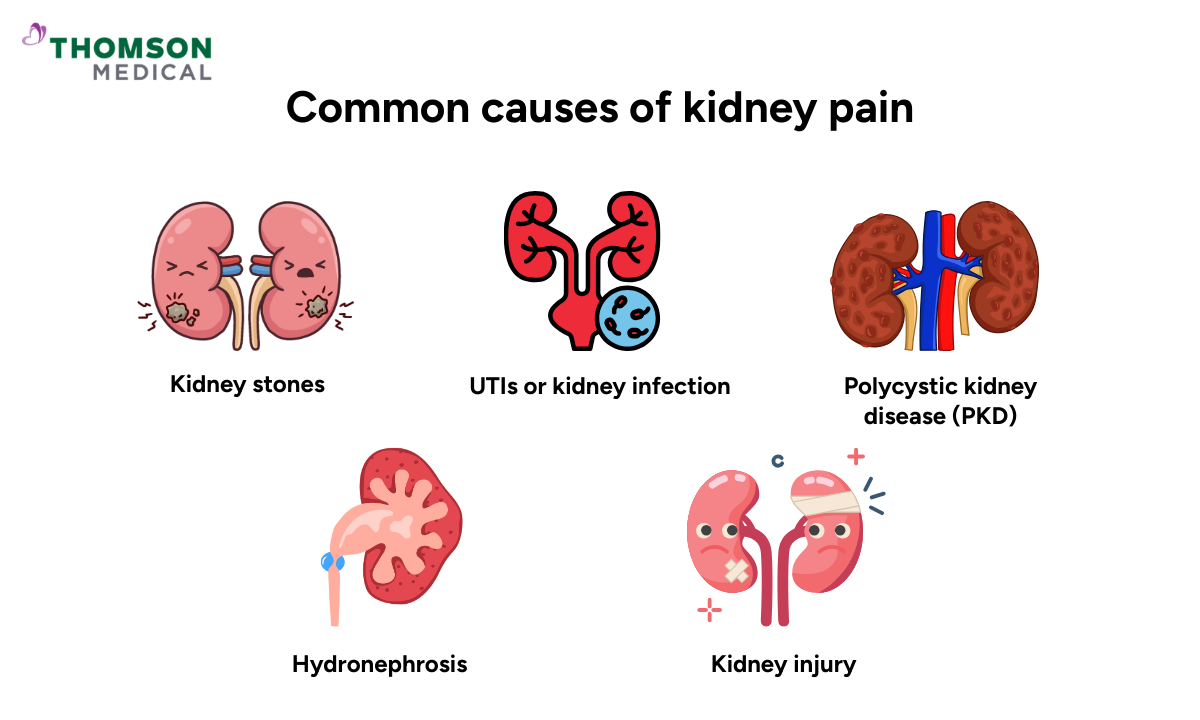
Kidney pain has several possible causes, and identifying the right one is key to getting the right care.
Kidney stones
Kidney stones are small, hard deposits that form when minerals and salts crystallise inside your kidneys. They're one of the most common causes of sudden, severe kidney pain.
When a stone is still sitting in the kidney, you may feel a dull, constant ache. The pain tends to become sharp when the stone begins moving through your ureter (the narrow tube connecting your kidney to your bladder).
Other signs that may point to kidney stones include:
Pain that comes in waves and varies in intensity
Nausea or vomiting alongside the pain
Pink, red, or brown urine
A persistent need to urinate
Kidney stones vary in size, and this plays a significant role in how they affect the body. Smaller stones may sit quietly in the kidney for some time, while larger ones are more likely to cause intense, disruptive pain as they move through the urinary tract.
Urinary tract infections (UTIs) and kidney infections (pyelonephritis)
UTIs are a common condition affecting Singaporeans that can be resolved, however, when a UTI is left unaddressed, the infection may travel up to the kidneys – a condition known as pyelonephritis.
A kidney infection tends to feel more intense than a typical UTI. You may notice flank pain or tenderness, a high fever, chills, or a general feeling of being run down. Nausea and vomiting can also occur.
Women are more susceptible to UTIs due to the anatomy of the urinary tract. Early signs like a burning sensation when urinating or needing to go more frequently than usual can sometimes be the first indication that an infection is developing. If left unaddressed, it can progress to the kidneys.
Other possible causes
Kidney stones and infections are the most common culprits, but they aren't the only ones.
Other conditions that may cause kidney pain include:
Polycystic kidney disease (PKD):
A genetic condition where fluid-filled cysts develop on your kidneys over time
Hydronephrosis:
A condition where urine builds up in the kidney because something is blocking its normal flow, causing the kidney to swell
Kidney injury:
A direct blow or trauma to the flank area can cause pain in your kidney region
These conditions are less common, but worth ruling out – especially if your pain is persistent or keeps returning without a clear cause.
Kidney pain can stem from many different conditions, and the symptoms don't always make it easy to tell them apart. If you're experiencing ongoing or worsening flank pain, seeing a doctor is the right thing to do for your peace of mind and your health.
Our urologists
Loading...
When should you see a doctor?
Kidney pain isn't something you should push through or hope will resolve on its own. While not every ache signals something serious, some symptoms do need attention. Knowing the difference can help you feel more confident about when to act.
Symptoms that warrant urgent medical attention
If you experience any of the following, it’s recommended to seek medical care the same day or go to your nearest A&E or Urgent Care Centre:
A high fever accompanied by flank pain
Visible blood in your urine
Severe pain that comes on suddenly and doesn't ease
Inability to urinate or significantly reduced urine output
Flank pain following a physical injury or trauma
Vomiting that prevents you from keeping fluids down
These symptoms may indicate a kidney infection, a blocked urinary tract, or another condition that needs timely medical attention. It's always better to get checked early than to wait and see.
Symptoms to monitor and discuss at your next appointment
If your discomfort is mild and you have none of the symptoms above, it's still worth bringing up with your doctor at your next appointment.
Let them know if you've been experiencing:
A dull, intermittent ache in your flank that comes and goes
Mild changes in your urine, such as a slight change in colour or odour
A low-grade fever without other concerning symptoms
Increased frequency of urination without pain
Keep a simple note of when the pain occurs, how long it lasts, and anything that seems to trigger it. This will help your doctor build a clearer picture and guide next steps.
If you've been experiencing any of the symptoms above and aren't sure what to do next, schedule an appointment with Thomson Medical. Our doctors can evaluate your symptoms and give you a clearer sense of what's causing your kidney pain and the next appropriate steps.
How is kidney pain diagnosed?
Finding the cause of kidney pain usually involves a few steps, and your doctor will guide you through each one. Understanding what to expect can help you feel more at ease before your appointment.
Physical examination and medical history
Your doctor will likely begin by asking about your symptoms – where the pain is located, how long you've had it, and whether you've noticed any changes in your urine or other accompanying signs.
They will then gently examine the area by applying light pressure to your flank to check for tenderness. This assessment helps your doctor get an initial sense of whether the kidneys may be involved and what further tests, if any, are needed.
Urine and blood tests

These are usually the first tests your doctor will order. A urine test can reveal signs of infection, blood, or other markers that point to what may be affecting your kidneys. A blood test helps assess how well your kidneys are functioning and whether there are any signs of inflammation or infection in your body.
Together, these results give your doctor a much clearer picture of what's going on.
Imaging studies
If your doctor needs a closer look, they may recommend an imaging test such as a kidney ultrasound, X-ray, or CT scan. An ultrasound can detect swelling or cysts, while a CT scan is particularly useful for identifying kidney stones or blockages.
Your doctor will recommend the appropriate option based on your symptoms and test results. Most imaging procedures are quick and non-invasive.
Reaching a diagnosis can feel like a lot to navigate, but each step is there to help your doctor understand your situation more fully and get you the right care sooner.
Treatment options for kidney pain
The treatment depends on what's causing your pain. Once a diagnosis is made, your doctor will walk you through the treatment options that suit your situation. Most causes of kidney pain can be managed with appropriate care.
Managing kidney stones
Treatment depends on the size of the stone. Smaller stones can often pass on their own with plenty of fluids and pain relief medication to keep you comfortable. Your doctor may also prescribe medication to help relax the urinary tract and ease the stone's passage.
Larger stones may require a procedure such as extracorporeal shock wave lithotripsy (ESWL), which uses sound waves to break the stone into smaller fragments, or ureteroscopy to remove it directly. Your doctor will discuss which approach suits you best based on the size and position of the stone.
Treating kidney infections
Kidney infections are usually treated with antibiotics. Your doctor will prescribe the antibiotic type based on your test results. Most people start to feel better within a few days, though it's important to complete the full course even if your symptoms improve early.
In more severe cases of kidney infections, you may need to receive treatment in hospital through a drip to support your body recovery. This is to make sure you're getting the right level of support throughout.
Lifestyle adjustments to support kidney health
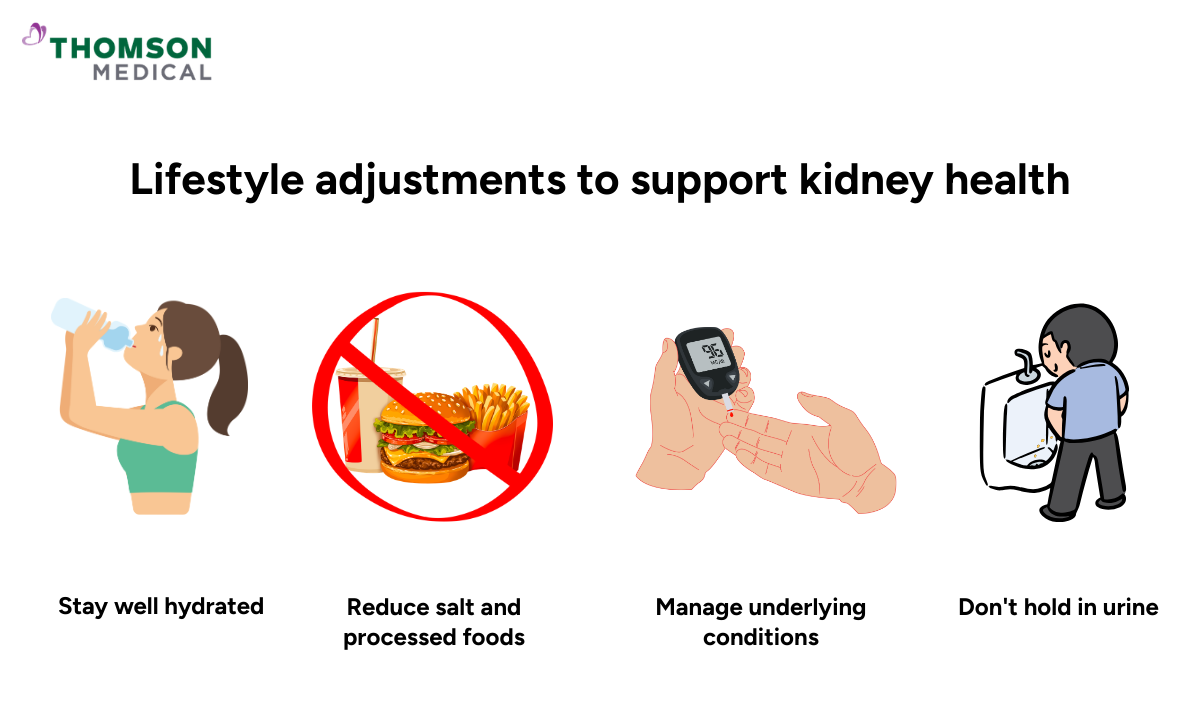
Alongside medical treatment, a few simple habits can go a long way in supporting your kidneys and reducing the risk of future issues:
Stay well hydrated:
Drinking enough water helps flush out bacteria and prevent mineral build-up
Reduce salt and processed foods:
A lower sodium diet eases the workload on your kidneys
Manage underlying conditions:
Keeping blood pressure and blood sugar levels in check is important for long-term kidney health
Don't hold in urine:
Emptying your bladder regularly helps prevent bacterial growth
Kidney pain can feel unsettling, but in most cases it's treatable with the appropriate care. If something doesn't feel right, don't hesitate to speak with your doctor.
If you've been diagnosed with kidney stones or a kidney infection and want to understand your options, schedule an appointment with Thomson Medical. Our doctors can walk you through what your diagnosis means and recommend an approach that fits your situation.
FAQ
Can kidney pain go away on its own?
It depends on the cause. Mild discomfort from a small kidney stone may resolve with rest and hydration. However, pain caused by an infection will need medical treatment.
Is kidney pain always serious?
Not always, but it shouldn't be ignored. Some causes are minor, while others require prompt attention. If you're unsure, it's always worth checking with your doctor.
What does it mean if my kidney pain comes and goes?
Intermittent pain can be a sign of a kidney stone shifting or an early infection. Keep track of when it occurs and speak to your doctor.
Can stress or posture cause kidney pain?
Stress and posture are more likely to cause muscular back pain than kidney pain. If you're unsure which it is, a doctor can help distinguish between the two.
How is kidney pain different in pregnancy?
Pregnant women are more prone to UTIs and kidney infections due to changes in the urinary tract. Any flank pain during pregnancy should be assessed by a doctor promptly.
When should I go to A&E or Urgent Care Centre vs. see my GP for kidney pain?
Go to A&E or Urgent Care Centre if you have severe pain, high fever, blood in your urine, or cannot urinate. For milder, persistent symptoms, a GP appointment is a good starting point.
The information is intended for general guidance only and should not be considered medical advice. For personalised recommendations and advice based on your unique situation, please consult a specialist at Thomson Medical. Request an appointment with Thomson Medical today.
For more information, contact us:
Thomson Medical Concierge
- 8.30am - 5.30pm
- WhatsApp: 9147 2051
Need help finding the right specialist or booking for a group?
Our Medical Concierge is here to help you. Simply fill in our form, and we'll check and connect you with the right specialist promptly.
Notice:
The range of services may vary between Thomson clinic locations. Please contact your preferred branch directly to enquire about the current availability.
Get In Touch