

If you've been experiencing sharp pain in your side or a burning feeling when you urinate, it is natural to feel concerned. These symptoms can be difficult to ignore, and many people want to understand what might be causing them.
Kidney stones could be a possible explanation. In many cases, kidney stones can be treated effectively, especially when identified early. Understanding what kidney stones are and how they are treated can help you decide when it may be time to seek medical advice.
What are kidney stones?
Your kidneys filter waste from your blood and remove it through urine. Most of the time this process happens without you noticing.
However, when certain minerals such as calcium, oxalate, or uric acid build up faster than your urine can dilute them, tiny crystals can begin to form. Over time these crystals may stick together and form a hard deposit known as a kidney stone.
Kidney stones can range quite a bit in size. Some are as small as a grain of sand and may pass through your body without you even noticing. Others can grow larger and may need more attention.
There are different types of kidney stones, including:
Calcium oxalate: The most common type
Uric acid: More common in people with gout
Struvite: Often linked to urinary tract infections
Cystine: Rare, but tends to run in families
Knowing your stone type is important. It gives your doctor a clearer picture of what's going on in your body and how to support you going forward.
What causes kidney stones?
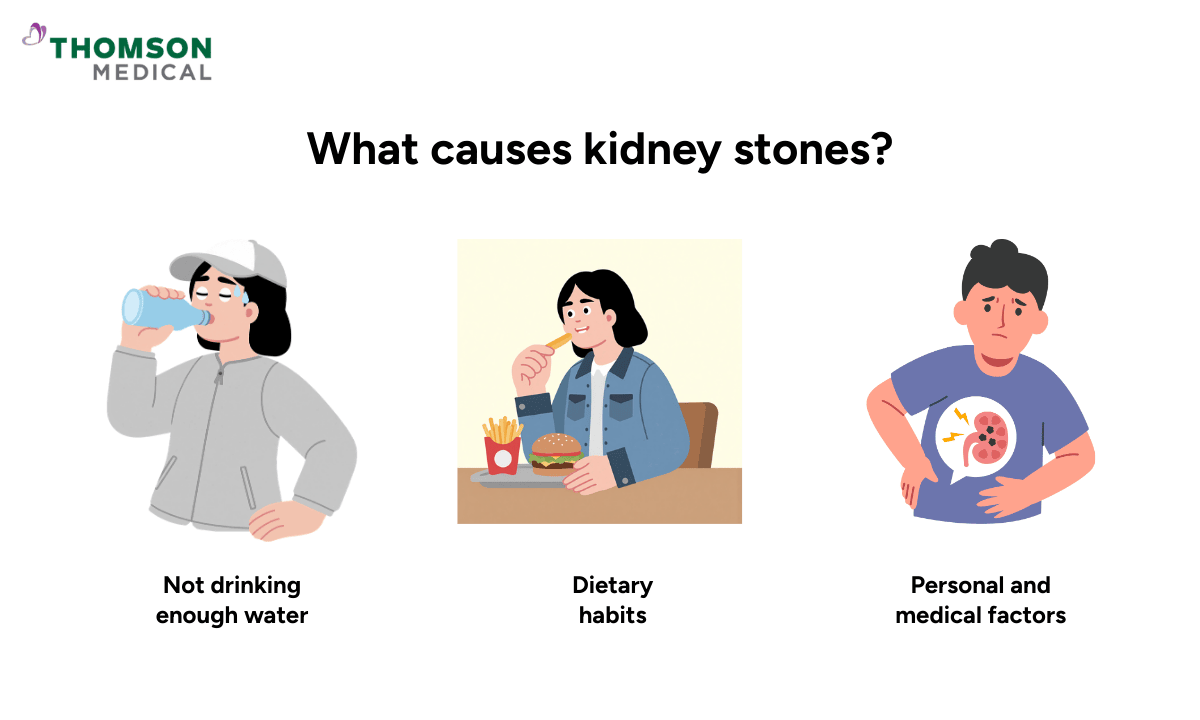
Kidney stones don’t usually appear out of nowhere, and they rarely have just one cause. Instead, it’s a combination of everyday habits and personal risk factors that slowly build up over time.
Kidney stones can be caused by:
Not drinking enough water:
When you don't drink enough fluids, your urine becomes more concentrated. Minerals don’t have enough liquid to stay dissolved.
Dietary habits:
Foods high in oxalate, such as spinach, nuts, and chocolate, can contribute to calcium oxalate stones.
A diet heavy in salt can raise calcium levels in your urine.
Too much animal protein also increases uric acid levels.
Personal and medical factors:
You may have a higher risk if you have a family history, metabolic conditions, or recurrent urinary tract infections (UTIs).
If you've had a kidney stone before, your chances of forming another one can be higher than average. But it doesn’t guarantee it will happen.
Kidney stones are more common than you may think. Learning what contributes to your stones can give you clarity and help you take steps to prevent more kidney stones in the future.
How do you know if you have kidney stones?
Kidney stone pain is often the first sign, and it’s hard to mistake for anything else. It usually starts in your side or back, just below your ribs, and can spread down toward your groin or inner thigh as the stone moves.
The pain often comes and goes in waves, sometimes easing off for a moment, then hitting hard again. Many people describe it as some of the worst pain they've ever experienced.
Beyond pain, you may notice:
Blood in the urine, which may look pink, red, or brownish
Burning or pain when urinating
Feeling the urge to urinate more often, even when little comes out
Nausea or vomiting, especially when the pain is severe
Cloudy or foul-smelling urine
If you develop a fever or chills alongside any of these symptoms, don’t hesitate to see your doctor. A fever can be a sign of an infection in the urinary tract or kidney, which usually needs urgent care.
Being aware of these signs allows you to recognise something off and get support early. Your doctor can help you understand what’s going on and figure out the right next steps for you.
If you're experiencing any of these symptoms and are unsure what's causing them, schedule an appointment with Thomson Medical for a proper assessment.
Our urology specialist
Loading...
How are kidney stones diagnosed?
If you’re experiencing symptoms, your doctor will guide you through a few tests to confirm if you have kidney stones.
The process is usually straightforward. Your doctor will start by asking about your symptoms and medical history.
From there, they may recommend:
Urine test:
This is usually the first test. It helps your doctor check for blood, crystals, or signs of infection in your urine.
Blood test:
Your doctor uses it to check your kidney function and mineral levels.
CT scan:
CT scans are usually the most reliable way to confirm a stone and locate exactly where it is.
Ultrasound:
If you need to avoid radiation from a CT scan, this is a safe and effective alternative.
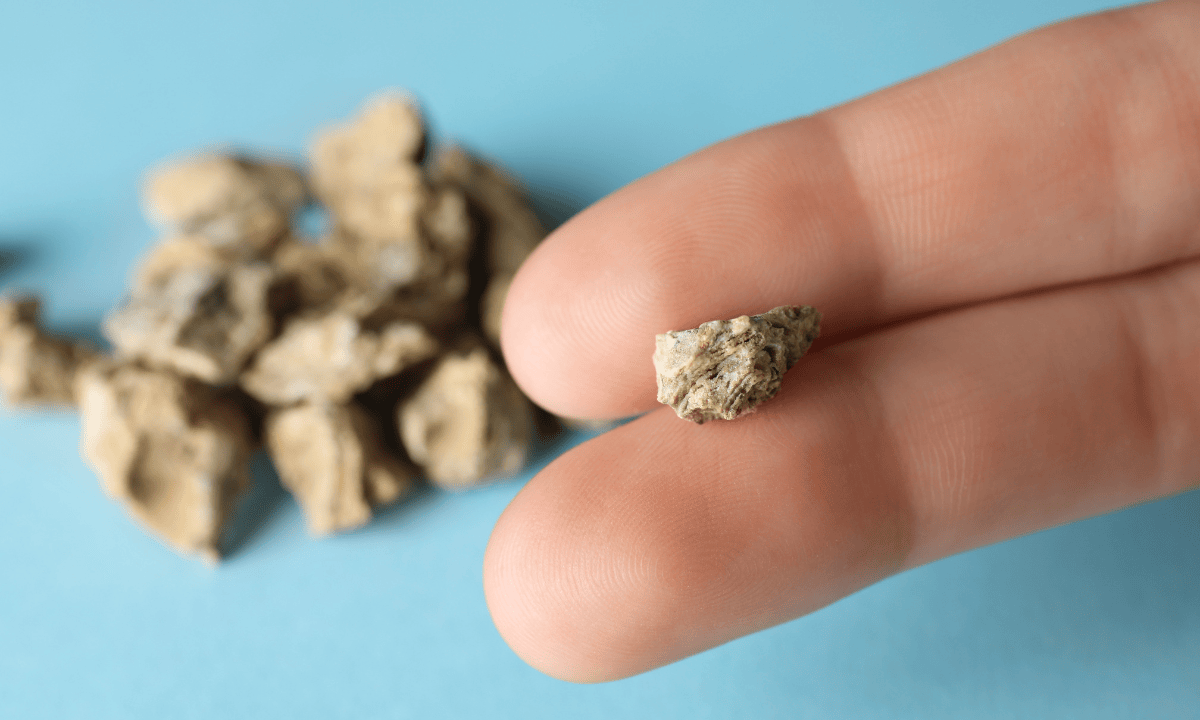
If you pass a stone naturally, your doctor may ask you to catch it and send it for analysis. This helps identify what type of stone you have, so your doctor can tailor advice to help you prevent the next one.
Every step of this process brings you closer to answers. If you have any concerns about any of them, feel free to bring them up. Your doctor is there to help you feel more at ease throughout the process.
How are kidney stones treated?
If treatment is needed, the approach depends largely on the size and position of the stone.
Small stones may pass on their own, while larger stones may require medical procedures to break them up or remove them safely.
Small stones
Stones smaller than 5 mm can pass on their own. If you have one, your doctor may suggest:
Drinking plenty of water – around 2-3 litres a day
Taking pain relief to keep you comfortable while you wait
Taking a medication to help the stone move through more easily
Larger stones
Larger stones need more help. Your treatment options can include:
Extracorporeal shock wave lithotripsy (ESWL):
This procedure uses shock waves from outside your body to break the stone into smaller pieces that can pass through your urine naturally.
Ureteroscopy:
Your doctor will gently pass a thin camera through your urethra and bladder to reach the stone.
The stone is then either removed or broken up using a laser.
Percutaneous nephrolithotomy (PCNL):
For very large or complex stones, your doctor may recommend a small incision in your back to remove the stone directly. This is highly effective for stones that other methods can't reach.
No matter the size or type of stone, the goal of treatment is the same: to help you feel better and reduce the risk of it happening again.
Your doctor will take the time to walk you through the plan and explain what each step involves. They'll monitor how you're responding to make sure the approach is working for you.
If you've been diagnosed with a kidney stone and would like to discuss your treatment options, schedule an appointment with Thomson Medical. Our specialists can help you understand your options and what each one involves, so you can make a decision that feels right for you.
FAQ
Do kidney stones go away on their own?
Yes, small stones do. Stones under 5 mm can often pass on their own if you stay well-hydrated. Larger ones usually need medical help.
What should I avoid eating with kidney stones?
It depends on the stone type, but generally it’s best to:
Reduce salt
Limit foods high in oxalate (spinach, nuts, chocolate)
Cut back on animal protein
Avoid sugary drinks
Your doctor can give you specific guidance based on your stone composition.
What happens if kidney stones go untreated?
A stone that stays stuck can block urine flow, which puts pressure on the kidney. Over time, this can cause infection and kidney damage.
What size of kidney stone requires surgery?
Stones larger than 10 mm are unlikely to pass on their own and usually need medical intervention.
Stones between 5-10 mm may or may not pass. Your doctor will weigh the options and recommend a suitable care plan for your situation.
What can I do to prevent kidney stones from coming back?
A few simple habits can help lower your risk:
Drink more water, enough that your urine stays pale yellow throughout the day
Cut back on salt
Limit animal protein
Reduce high-oxalate foods like spinach, nuts, and chocolate
When to go to the hospital for kidney stones?
It’s best to see your doctor or go to the hospital if you have:
Fever or chills
Unbearable pain that won't respond to pain relief
No urine output at all
Persistent vomiting
Blood in urine
The information provided is intended for general guidance only and should not be considered medical advice. For personalised recommendations and advice based on your unique situation, please consult a specialist at Thomson Medical. Request an appointment with Thomson Medical today.
For more information, contact us:
Thomson Medical Concierge
- 8.30am - 5.30pm
- WhatsApp: 9147 2051
Need help finding the right specialist or booking for a group?
Our Medical Concierge is here to help you. Simply fill in our form, and we'll check and connect you with the right specialist promptly.
Notice:
The range of services may vary between Thomson clinic locations. Please contact your preferred branch directly to enquire about the current availability.
Get In Touch