
.png%3Fbranch%3Dprod&w=3840&q=75)
That dull, persistent ache beneath your right rib cage is easy to dismiss. You might assume it is a pulled muscle, trapped wind, or simply the result of a long day. But when it keeps coming back, it's worth pausing to understand what your body might be telling you.
Liver pain often develops quietly rather than suddenly. Many people live with it for months before seeking help. Knowing what to look out for, what commonly causes it, and when to see a doctor can help you tell whether your symptoms need attention and what to do next.
What does liver pain feel like?
.png?branch=production)
Liver pain is most often felt as a dull, aching pressure in the upper right side of your abdomen, just beneath your rib cage. It can range from a mild, nagging soreness to a heavier, more persistent discomfort. Some people also feel it radiating into their right shoulder or upper back.
Because the liver itself has no pain receptors, the discomfort usually comes from its outer lining stretching due to inflammation or swelling. This is why liver pain tends to build gradually rather than strike suddenly.
It's easy to confuse liver pain with other conditions, such as a pulled muscle, gallbladder pain, or even trapped wind. If you notice a persistent ache in that area, especially alongside other symptoms, it's recommended to seek medical attention.
Common causes of liver pain
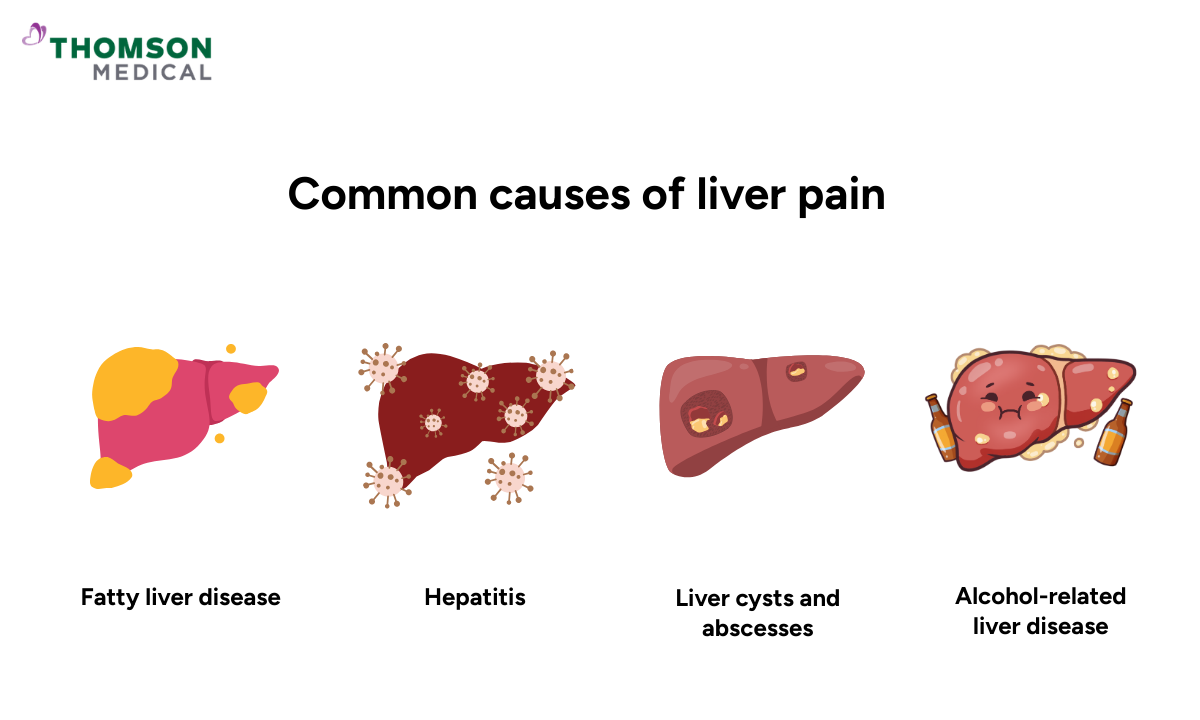
Liver pain can stem from a range of conditions, some more common than others. Understanding what might be behind your discomfort is the first step towards getting the right care.
Fatty liver disease
Fatty liver disease occurs when excess fat builds up in your liver over time. It is commonly associated with obesity, type 2 diabetes, or a diet high in processed foods.
In the early stages, many people feel no symptoms at all. As the condition progresses, you may notice a dull ache or a sense of heaviness on the right side of your abdomen.
In many cases, fatty liver disease is often manageable with lifestyle changes. A balanced diet and regular physical activity can make a meaningful difference to your liver health.
Hepatitis
Hepatitis is inflammation of the liver, most often caused by a viral infection. The main types are hepatitis A, B, and C, and each spreads differently. Infections can occur through contaminated food or water, contact with infected blood, or sexual transmission.
You may experience symptoms such as liver tenderness, fatigue, nausea, or yellowing of the skin and eyes (known as jaundice). Some types of hepatitis clear up on their own, while others may require medical treatment to protect your liver in the long term.
Liver cysts and abscesses
Liver cysts are fluid-filled sacs that can form within your liver. They are common and, in most cases, cause no discomfort at all. Many people only discover them incidentally during a routine scan.
Larger cysts, however, may produce a dull ache or a feeling of fullness in your upper right abdomen.
A liver abscess is a separate condition, where a pocket of pus forms in your liver as a result of a bacterial, parasitic, or fungal infection. Unlike cysts, abscesses usually cause more noticeable symptoms, such as fever and tenderness, and often require prompt medical treatment.
Alcohol-related liver disease
Alcohol-related liver disease develops when your liver is damaged by long-term or excessive alcohol consumption. It can range from a mild fatty liver to more serious conditions such as alcoholic hepatitis or cirrhosis.
In the earlier stages, symptoms may be subtle. You may experience a mild ache, fatigue, or a general sense of being unwell. Over time, more noticeable signs can develop, including liver pain, abdominal swelling, and jaundice.
Serious causes of liver pain you should not ignore
Not all liver pain is a reason to panic, but some conditions do require timely medical attention. Being aware of the more serious causes can help you act sooner rather than later.
Liver cirrhosis
Cirrhosis occurs when healthy liver tissue is gradually replaced by scar tissue, reducing your liver's ability to function. It is most commonly caused by long-term alcohol use, chronic hepatitis, or untreated fatty liver disease.
In the early stages, cirrhosis may cause little to no pain.
As scarring progresses, you may notice:
Persistent discomfort in your upper right abdomen
Fatigue
Unexplained weight loss
Swelling in your legs or abdomen
While the scarring from cirrhosis cannot be undone, timely medical care can help control its progression.
Liver cancer
Liver cancer can develop within the liver itself or spread from another part of the body. It is more likely to occur in people with an existing liver condition such as cirrhosis or chronic hepatitis B or C.
Symptoms can include persistent liver pain, unexplained weight loss, loss of appetite, and jaundice. These signs can be subtle and easy to attribute to other causes, which is why any persistent or worsening discomfort in the upper right abdomen should not be left unchecked.
Our specialist
Loading...
Liver pain symptoms to watch out for
Liver pain rarely occurs in isolation. Paying attention to what comes alongside it can give you and your doctor a clearer picture of the underlying cause.
Symptoms that come with liver pain
Alongside the ache or pressure in your upper right abdomen, you may also notice:
Nausea or a general loss of appetite
Bloating or a feeling of fullness after small meals
Pale or clay-coloured stools, or dark urine
Itchy skin without an obvious cause
Mild fever or night sweats
These symptoms alone are not always cause for alarm, but taken together with persistent liver pain, they are worth discussing with your doctor.
Signs your liver pain needs urgent attention
.png?branch=production)
Certain symptoms alongside liver pain require prompt medical attention.
You should seek care as soon as possible if you experience:
Sudden, severe pain in your upper right abdomen
Yellowing of the skin or whites of the eyes that appears quickly
High fever with chills and shaking
Vomiting blood or passing black, tarry stools
Confusion, disorientation, or difficulty staying alert
Significant abdominal swelling that develops rapidly
If any of these apply to you, it is better to act promptly rather than wait. Getting assessed early gives doctors a better opportunity to understand what is happening and provide the appropriate care.
If you've been noticing these symptoms alongside discomfort in your upper right abdomen, schedule an appointment with Thomson Medical. Our doctors can help identify what may be causing your symptoms and recommend the suitable next steps.
How is liver pain diagnosed?
Diagnosing the cause of liver pain usually involves a combination of physical assessment and investigations. The process is straightforward, and your doctor will guide you through each step.
Physical examination and blood tests
Your doctor will normally begin by examining your abdomen to check for tenderness, swelling, or an enlarged liver. They will also ask about your symptoms, medical history, and lifestyle.
Blood tests are usually the next step. These include liver function tests (LFTs), which measure enzyme and protein levels in your blood to assess how well your liver is working. If the results fall outside the normal range, they can point towards inflammation, infection, or damage and help your doctor identify the most likely cause.
Imaging scans
If blood tests suggest an issue, imaging scans provide a more detailed picture of your liver's structure.
Common options include:
Liver ultrasound scan, which is the most common first-line screening to detect fatty liver, cysts, or abnormalities in liver size
CT scan, which provides a more detailed cross-sectional view, useful for identifying tumours, abscesses, or cirrhosis
MRI scan, which offers the most detailed soft tissue imaging and is often used when earlier scans do not fully explain your symptoms.
In some cases, a liver biopsy may also be recommended to examine liver tissue directly and confirm a diagnosis.
Liver pain can have many different causes, ranging from mild and manageable to conditions that benefit from early attention. If your discomfort is persistent, worsening, or accompanied by other symptoms, getting a proper assessment is the first step towards better understanding of your liver health.
If you're unsure what's causing your liver pain or want to get a clearer picture of your liver health, schedule an appointment with Thomson Medical. Our doctors can walk you through the right evaluation processes and help you understand your results.
FAQ
Can liver pain come and go, or is it usually constant?
It can do both. Some people experience a persistent dull ache, while others notice discomfort that comes and goes. Intermittent pain does not necessarily mean the cause is minor. If it keeps recurring, it is worth getting checked.
Is it possible to have liver disease without feeling any pain?
Yes, and it is quite common. Many liver conditions, including fatty liver disease and early hepatitis, cause no noticeable pain in the early stages. This is why routine blood tests and health screenings can be valuable even when you feel well.
Can stress or anxiety cause liver pain?
Stress does not directly damage the liver, but it can heighten your awareness of physical sensations. That said, persistent pain in the upper right abdomen should not be attributed to stress without ruling out an underlying cause first.
What does it mean if my liver pain is accompanied by jaundice?
Jaundice alongside liver pain suggests the liver may not be processing bilirubin (a waste pigment produced when your body breaks down old red blood cells) properly. This combination can point to hepatitis, cirrhosis, or a bile duct obstruction and warrants prompt medical evaluation.
Can I drink alcohol if I have liver pain?
It is best to avoid alcohol until you have a clear diagnosis. Alcohol places additional strain on the liver and can worsen many conditions associated with liver pain, including fatty liver disease and hepatitis.
Is liver pain the same as a side stitch after exercise?
No. A side stitch is a sharp, cramping sensation during exercise that resolves quickly with rest. Liver pain tends to be a duller, more persistent ache in the upper right abdomen and is not linked to physical exertion.
How long does liver pain usually last?
This depends on the underlying cause. Pain from a mild condition may ease within days, while chronic conditions may cause longer-lasting discomfort. Any pain persisting for more than a few days without a clear explanation should be assessed.
The information is intended for general guidance only and should not be considered medical advice. For personalised recommendations and advice based on your unique situation, please consult a specialist at Thomson Medical. Request an appointment with Thomson Medical today.
For more information, contact us:
Thomson Medical Concierge
- 8.30am - 5.30pm
- WhatsApp: 9147 2051
Need help finding the right specialist or booking for a group?
Our Medical Concierge is here to help you. Simply fill in our form, and we'll check and connect you with the right specialist promptly.
Notice:
The range of services may vary between Thomson clinic locations. Please contact your preferred branch directly to enquire about the current availability.
Get In Touch