

Discovering a lump on your neck can be worrying. You might notice it while washing your face, applying lotion, or someone points it out to you. It is natural to have questions and wonder whether it is something that needs attention.
In most cases, neck lumps are caused by common, treatable conditions. Knowing what these lumps are, why they develop, and when to seek medical care can help you feel more reassured and confident about your next steps.
What is a neck lump?
A neck lump is an abnormal swelling, bump, or mass that can be felt or seen in your neck area. These lumps can vary in size, shape, and texture. They can appear unexpectedly or develop gradually over time.
Your neck contains many important structures packed into a small area. A lump can originate from lymph nodes, the thyroid gland, salivary glands, skin, soft tissue, or even muscle.
While painless lumps may be associated with benign cysts or nodules, painful lumps often develop from infections or inflammation.
What might be causing lumps on your neck?
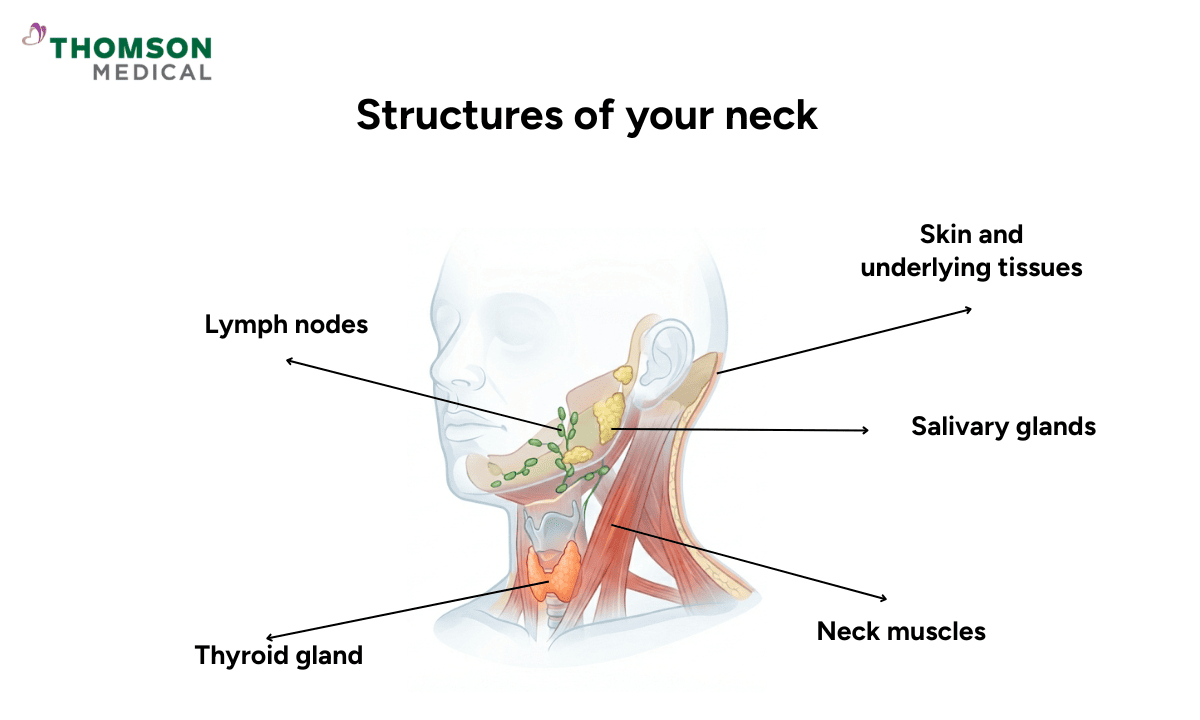
Neck lumps can develop from different parts of your neck, including lymph nodes, glands, skin, or muscle. Knowing where the lump is coming from is often the first step in understanding what might be causing it.
Lymph nodes
Your lymph nodes are small bean-shaped structures that filter harmful substances travelling through your neck. They play an important role in your immune system, as they help your body fight infections.
When you are unwell, you may develop enlarged lymph nodes. This is a healthy sign that your body is actively battling the illness.
Your lymph nodes may be swollen due to:
Viral infections:
Common illnesses such as a cold, flu, or upper respiratory tract infection can cause temporary swelling.
Certain viral infections, including glandular fever caused by the Epstein-Barr virus, can also lead to swollen glands.
Bacterial infections:
Infections such as ear infections, strep throat, or skin infections can cause tender lumps on your neck.
These may need antibiotics to clear the infection.
Autoimmune diseases:
Sometimes, when your immune system works too much, it can lead to chronic lymph node swelling.
Rare conditions:
A rare inflammatory issue like Kikuchi disease can cause tender nodes.
These lumps will usually shrink once the underlying infection has completely cleared from your system.
Blood-related cancers, such as Hodgkin lymphoma and non-Hodgkin lymphoma, can also cause lymph nodes to stay swollen for a long time. However, these conditions are much less common than swelling caused by infections.
If your lymph nodes remain swollen for more than a few weeks or continue to enlarge, it is advisable to seek medical advice. You may schedule an appointment with our specialists at Thomson Medical Centre for further assessment.
Thyroid gland

The thyroid gland is a small, butterfly-shaped organ located at the base of your neck, just below your Adam's apple. It is responsible for producing hormones that regulate your metabolism. Lumps in this area are quite common and are usually not serious.
Potential causes include:
Benign thyroid tumours or nodules, which are solid or fluid-filled lumps that form within the gland
A goitre, which is a general swelling of your thyroid
Thyroid cancer, though most thyroid nodules are not cancerous
Thyroid lumps often move slightly when you swallow. Many thyroid nodules only require monitoring rather than active treatment.
Salivary glands
You have several salivary glands in your cheeks and under your jawline. These glands produce saliva to keep your mouth moisturised and help you digest food.
If you notice a swelling just under your jaw or in front of your ears, it might be coming from these glands.
Common causes include:
A bacterial or viral infection causing temporary swelling in the glands
A blocked salivary duct, often caused by a small calcium stone
Salivary gland tumours, which usually grow slowly and cause no harm
Eating can sometimes feel uncomfortable when a salivary gland is swollen. However, in many cases, these lumps may improve with simple measures like drinking enough water, using warm compresses, or taking medication prescribed by your doctor.
Skin and soft tissues
Sometimes, a lump is simply a skin cyst that sits just beneath the surface of your skin and is not related to your deeper neck organs. These surface lumps are usually non-cancerous and very easy for your doctor to identify.
Potential causes in the skin and soft tissues include:
A sebaceous cyst, which is a harmless, slow-growing bump filled with keratin (a protein that protects your skin)
Dermoid cysts, which are small, benign sacs that form under your skin
Lipomas, which are soft, painless lumps formed when fat cells grow more than usual
Congenital cysts present from birth, such as a branchial cyst, thyroglossal cyst, or cystic hygroma
These soft tissue lumps are generally harmless and may only be a cosmetic concern. They can often be left alone without treatment unless they become painful, infected, or start to grow quickly.
Strained neck muscles
Muscles on your neck can help you move and hold up your head. However, they can form small, tender bumps in the muscle tissue itself if they become strained or overworked.
This may happen if you have been:
Feeling stressed
Sitting at a desk for long hours
Sleeping in an uncomfortable position
These are commonly known as muscle knots or trigger points. They may feel tender when pressed and are usually harmless.
Taking the time to relax and care for your posture can work wonders for these muscular bumps. Doing some neck stretches and massage will usually help the tension melt away.
Could a neck lump be cancerous?
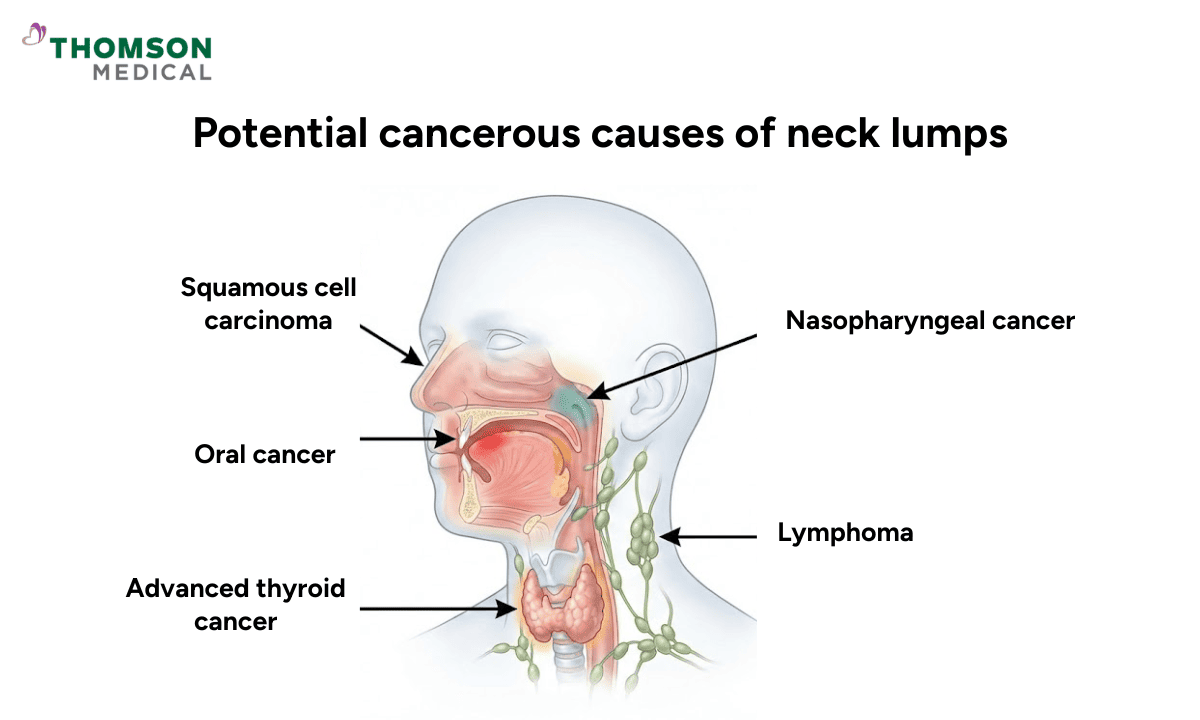
While most neck lumps are benign, some may be linked to cancer of your head and neck region.
Potential cancerous causes include:
Squamous cell carcinoma:
Starts in the thin, flat cells lining your mouth, throat, or skin
Oral cancer:
Develops in parts of your mouth such as your tongue, gums, or inner cheeks
Nasopharyngeal cancer
Begins in the upper part of your throat located behind your nose
Advanced thyroid cancer:
Starts in your thyroid gland, a small gland that controls your body’s hormones
Lymphoma:
Develops in your lymphatic system, part of your immune system that includes your lymph nodes
Keep in mind that these conditions are much less common than infection-related causes.
In rare cases, a neck lump can also develop from blood vessel structures, such as a carotid body tumour. These are uncommon and usually grow slowly, but they do require assessment by your specialist to determine the appropriate care.
If you are worried, getting your lump checked can help you understand what it is and give you peace of mind. You may schedule an appointment with our specialists at Thomson Medical Centre for a thorough assessment and appropriate guidance.
How is a neck lump diagnosed?
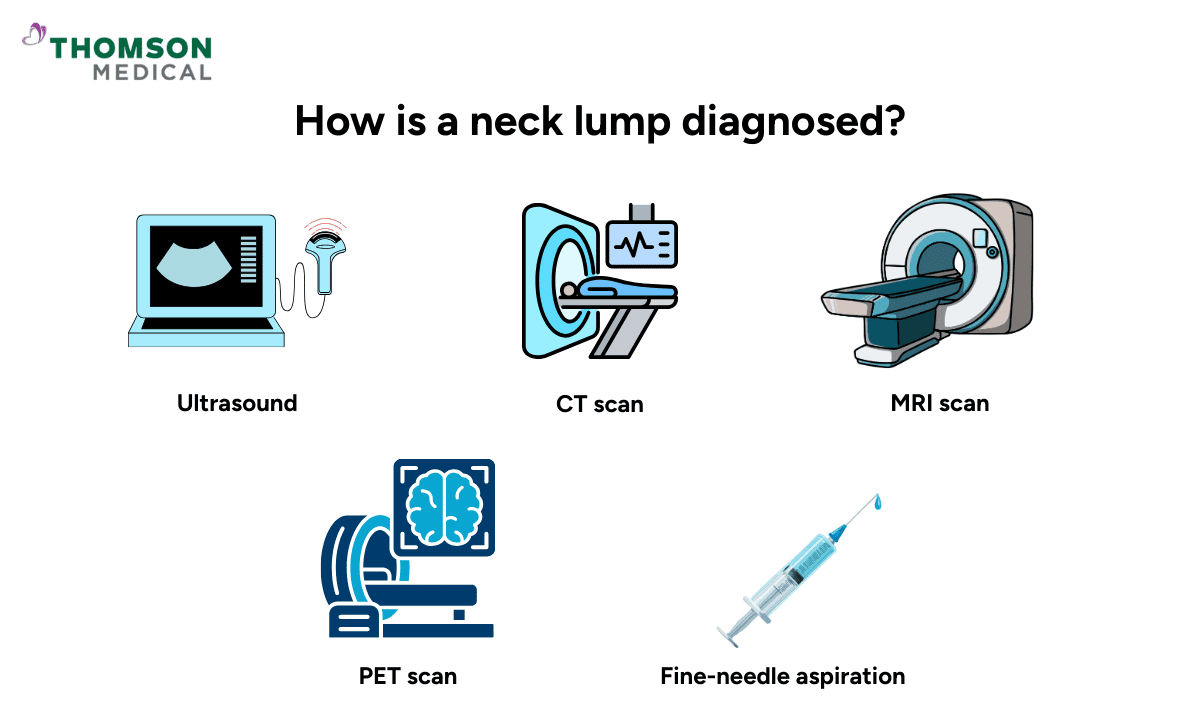
If your lump lasts longer than two to three weeks, your doctor will likely recommend some simple tests. They help your doctor figure out what is causing the lump and decide whether any treatment is needed.
Your doctor will first examine your neck carefully and ask about your symptoms. Depending on what they find, they may recommend imaging tests.
Common tests include:
An ultrasound scan, which uses gentle sound waves to take a picture of the inside of your neck
A computed tomography (CT) scan, which provides a detailed image of your neck structures
A magnetic resonance imaging (MRI) scan, which uses magnets to look closely at soft tissues
A positron emission tomography (PET) scan, which might be used in certain cases to look for unusual activity in your body
A fine-needle aspiration (FNA), where a tiny needle is used to collect a few cells from the lump for testing
These tests are usually quick and straightforward. When the results are ready, your doctor will go through them with you in detail, explain whether the lump is harmless or needs treatment, and outline the specific options available based on your diagnosis.
What are the treatment options for a neck lump?
Your treatment depends on what is causing the lump. In many cases, you may not need medical treatment, as many neck lumps resolve on their own without treatment. However, if treatment is required, your doctor will suggest a plan based on your diagnosis.
Your treatment plan might include:
A short course of antibiotics to treat bacterial infection
Monitoring if the lump is harmless and not causing problems
Minor procedures like surgical removal for cysts that are bothering you
Specialist referral, including oral & maxillofacial surgery, if needed
Your doctor will walk you through each treatment option step by step, explaining how it works, how long recovery may take, and what results you can expect.
They will also discuss possible side effects or risks, even if they are uncommon. This helps you understand your choices clearly and decide on the option that feels right for you.
When to seek urgent care
Even though most neck lumps are harmless, some symptoms should not be ignored.
You should seek urgent care or immediate medical attention if you notice:
A lump that feels very hard or is growing very quickly
Changes in your voice, such as ongoing hoarseness
Any difficulty swallowing your food or catching your breath
A sore throat that will not go away
A painful ulcer in your mouth that does not heal
Unexplained weight loss
Night sweats
Most neck lumps are related to infection or inflammation. However, any lump that persists beyond two to three weeks should be evaluated to rule out more serious conditions. Seeking medical advice early can help identify the cause and ensure you receive the right care without delay.
Our ENT specialist
Loading...
FAQ
What do cancer lumps feel like on the neck?
A cancerous neck lump is often:
Firm or hard
Painless
Gradually increasing in size
Fixed (not easily moved under the skin)
However, not all hard lumps are cancer, and not all cancerous lumps feel the same. Imaging and sometimes a biopsy are needed for a clear diagnosis.
Is a cancerous lump hard or soft?
Cancerous lumps are more commonly firm or hard and may feel fixed to surrounding tissues. Soft, tender lumps are more often linked to infection. However, texture alone cannot confirm whether a lump is cancerous.
What percentage of neck lumps are cancerous?
Most neck lumps are not cancerous. In primary care settings, the majority are caused by infections or benign conditions.
In adults over 40, the likelihood of malignancy increases, particularly if the lump is persistent. Exact percentages vary depending on age, smoking history, and other risk factors, but overall, cancer remains less common than infection-related causes.
Can stress cause neck lumps?
Stress does not directly cause swollen lymph nodes or cancerous lumps. However, stress can lead to muscle tension. Tight muscles can form small, tender bumps called muscle knots or trigger points, which may feel like a lump in the neck.
What is first-stage neck cancer?
“First-stage neck cancer” usually refers to early-stage head and neck cancer. At this stage:
The cancer is small
It is limited to one area
It has not spread widely
Early-stage cancers are generally more treatable and have better outcomes, which is why early evaluation of persistent lumps is important.
Can you tell if a neck lump is cancerous just by feeling it?
No. While doctors may look for certain features such as hardness, size, or fixation, it is not possible to confirm cancer simply by touch. Imaging tests and sometimes a fine-needle biopsy are needed for an accurate diagnosis.
Is it normal to feel a ball in your neck?
Yes, it can be normal to feel small lymph nodes, especially when you have a cold or infection. These may feel like small, movable “balls” under the skin.
If the lump is small, soft, and reduces in size over time, it is usually not a cause for concern. Persistent, growing, or hard lumps should be evaluated.
The information provided is intended for general guidance only and should not be considered medical advice. For personalised recommendations and tailored advice based on your unique situations, please consult a specialist at Thomson Medical. Request an appointment with Thomson Medical today.
Reference
Kshirsagar, R. S., Anderson, M., Boeckermann, L. M., Gilde, J., Shen, J. Y., Meltzer, C., & Wang, K. H. (2021). The Adult Neck Mass: Predictors of Malignancy. Otolaryngology--head and neck surgery : official journal of American Academy of Otolaryngology-Head and Neck Surgery, 165(5), 673–681. https://doi.org/10.1177/0194599821996293
For more information, contact us:
Thomson Medical Concierge
- 8.30am - 5.30pm
- WhatsApp: 9147 2051
Need help finding the right specialist or booking for a group?
Our Medical Concierge is here to help you. Simply fill in our form, and we'll check and connect you with the right specialist promptly.
Notice:
The range of services may vary between Thomson clinic locations. Please contact your preferred branch directly to enquire about the current availability.
Get In Touch