

Hearing that you need a lumpectomy can bring up a lot of emotions. It is completely understandable to feel anxious or unsure about what comes next, and many people find themselves with more questions than answers in those first few days.
While every person's experience is different, having a clearer picture of what the procedure involves and what recovery looks like can help ease some of that uncertainty.
Knowing what to expect at each stage, from preparing for surgery to life afterwards, can help you feel more prepared and more at ease throughout your care.
What is a lumpectomy?
A lumpectomy is a surgical procedure to remove a breast tumour while keeping as much of your breast as possible. It is sometimes called breast-conserving surgery or a wide local excision.
Unlike a mastectomy, which removes the entire breast, a lumpectomy only removes the tumour and a small margin of surrounding tissue.
Why is a lumpectomy performed?
A lumpectomy is most often performed to treat early-stage breast cancer, but it is not limited to cancer alone.
Your doctor may suggest a lumpectomy to:
Remove a tumour that looks suspicious but not yet confirmed as cancer
Treat certain non-cancerous (benign) breast conditions
The reason it is so commonly recommended is that for many people, removing just the affected area is as effective a treatment as more extensive surgery, with less impact on the body.
Most people find their breast shape is largely preserved after surgery, can carry on wearing their usual bras, and notice far fewer physical changes than they expected.
Who may be a candidate for a lumpectomy?
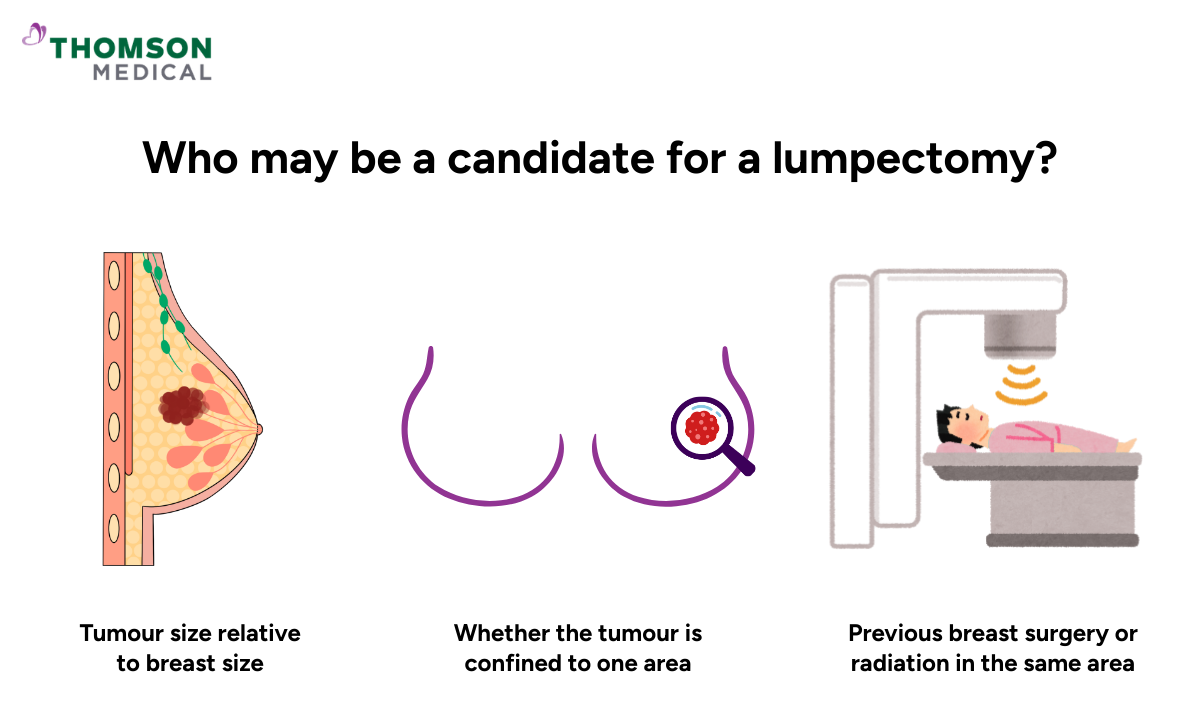
Whether a lumpectomy is suitable for you depends on a number of factors that your doctor will carefully assess.
These include:
The size of the tumour relative to your breast size
Whether the tumour is contained in one specific area of the breast
Your overall health and medical history
Whether you have had previous breast surgery or radiation in the same area
A lumpectomy is often suitable when the tumour is small and has not spread to other parts of the body. If the tumour is larger or found in multiple areas of the breast, your doctor may discuss a different surgical approach with you.
How to prepare for a lumpectomy
Preparing well for your surgery can help things go more smoothly, both on the day and in the days that follow.
Before your surgery, your doctor may ask you to:
Have blood tests or imaging scans such as a mammogram or ultrasound
Stop taking certain medications, especially blood thinners
Avoid eating or drinking for several hours before the procedure
Arrange for someone to drive you home afterwards
At home, small practical steps can make your return more comfortable:
Have loose, comfortable clothing ready, especially tops that are easy to put on, including a post-surgical bra for support
Stock up on anything you may need during the first few days, such as ice packs or mild pain relief
Before your surgery, your doctor or nurse will usually walk you through what to expect on the day. This is a good time to ask about your anaesthetic, how long the procedure will take, and when you are likely to be discharged.
Proper preparation can make your lumpectomy and recovery smoother and more manageable. Request an appointment with the Thomson Breast Centre to discuss what steps you should take before your surgery so you can plan ahead.
What happens during a lumpectomy?
A lumpectomy is usually performed under general anaesthetic, so you will be asleep throughout. The procedure often takes between one and two hours, though this can vary depending on your situation.
During the operation:
The surgeon makes a small incision over the tumour area
The tumour and a small margin of surrounding tissue are removed
The edges are checked to ensure they are clear of cancer cells. If cancer cells are found at the edges (called positive margins), further surgery may be needed to remove more tissue
The incision is closed with stitches and covered with a dressing
In some cases, one or two lymph nodes from your armpit may also be removed to check whether the cancer has spread beyond the breast. Your surgeon will talk you through whether this is part of your procedure before the day.
Our breast cancer specialists in Singapore
Loading...
What is recovery like after a lumpectomy?
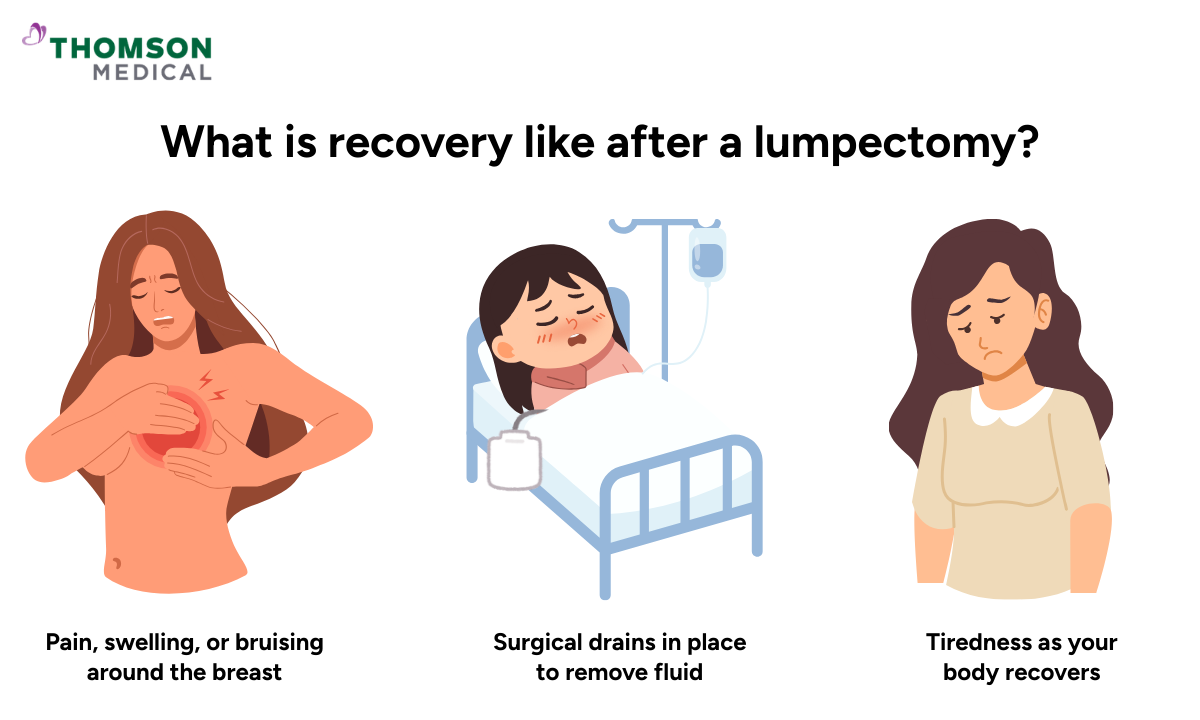
When you wake up, most people feel groggy and sore, which are completely normal. The recovery period after a lumpectomy is generally quicker than after more extensive breast surgery. You may go home the same day or the next day.
In the first few days after surgery, you may notice:
Some pain, swelling, or bruising around the breast
Surgical drains in place to remove fluid, which are usually taken out within a few days
Some tiredness, as your body recovers from surgery
These symptoms are normal and should gradually improve with proper home care.
To support your recovery at home:
You can usually return to light activities within one to two weeks
Avoid heavy lifting or strenuous exercise until your doctor says it’s safe
Keep your wound clean and dry as directed
Most people can return to work and daily activities within two to four weeks, although this depends on your job and how your body heals.
If lymph nodes were removed, gentle arm and shoulder exercises recommended by your care team can help restore movement in the weeks after surgery.
What are the possible risks and complications of lumpectomy?
Every surgical procedure carries some level of risk, and a lumpectomy is no different. For most people, surgical complications are uncommon, but it is still helpful to know what signs to be aware of.
You may experience:
Temporary pain or discomfort around the breast
Swelling and bruising
Changes to the shape or feel of the breast
A build-up of fluid near the surgical site (seroma)
In less common cases, more significant complications can occur, such as:
Infection at the surgical site
A collection of blood under the skin (haematoma), which usually resolves on its own or can be drained
Swelling in the arm (lymphoedema), which can occur if lymph nodes from your armpit have been removed
Some of these side effects, such as swelling or changes to breast shape, may continue to improve for several months after surgery. If you are ever unsure whether what you are experiencing is normal, getting it checked sooner rather than later is always the right thing to do.
Additional treatments after a lumpectomy
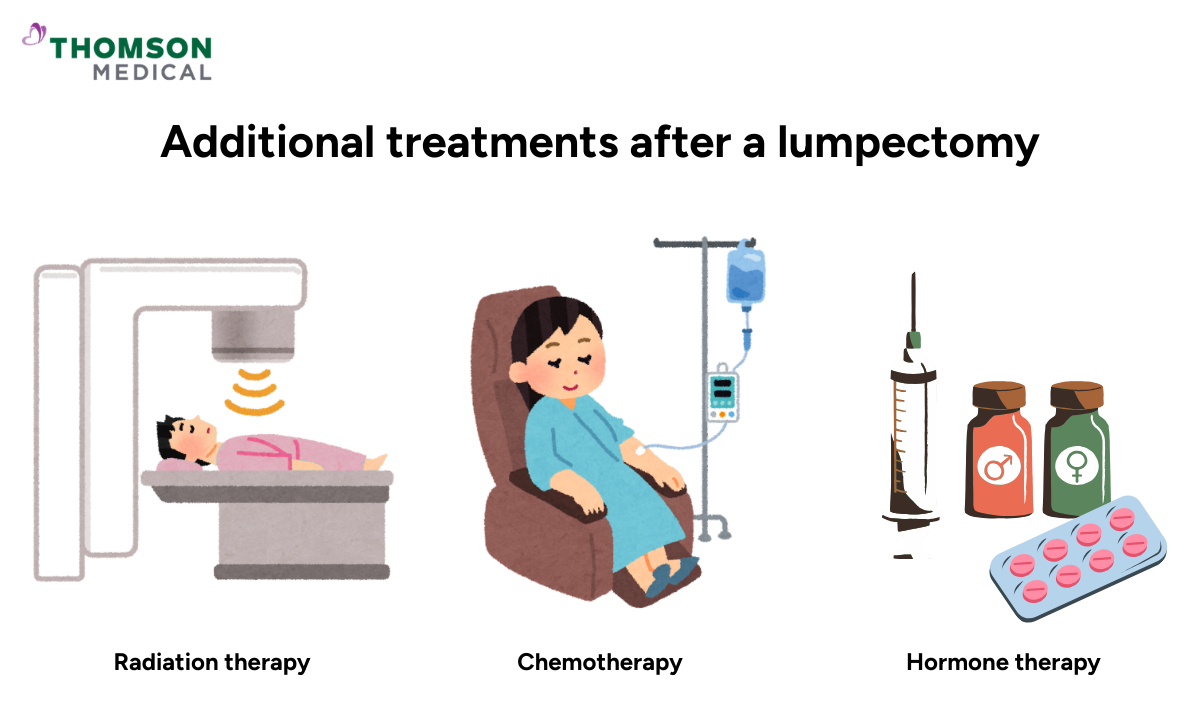
For most people with breast cancer, the lumpectomy is followed by additional treatment. This combination approach significantly reduces the risk of cancer returning.
Radiation therapy
After your lumpectomy, you will most likely be recommended to have radiation therapy. This treatment uses focused energy to target and destroy any remaining cancer cells in your breast.
During treatment, you might notice some skin redness, irritation, or tiredness. These feelings are a sign that your body is responding to treatment, and they often ease once the treatment is finished.
Chemotherapy
Chemotherapy after a lumpectomy is not recommended for everyone, and many people will not need it at all. Your doctor will carefully consider your individual situation before suggesting it as part of your treatment plan.
It may be suggested if:
The cancer has spread to the lymph nodes
The tumour was larger or faster growing
There is a higher risk of the cancer spreading elsewhere in the body
Chemotherapy works throughout your whole body, which is what makes it effective at targeting cancer cells beyond the breast area. It is given in cycles, with planned rest periods in between so your body has time to recover between treatments.
Hormone therapy
Some breast cancers are influenced by hormones like oestrogen. If your cancer is hormone receptor positive, your doctor may recommend hormone therapy to lower the chances of it coming back.
Hormone therapy works by reducing oestrogen levels in your body or blocking its effect on cancer cells. You usually take it as a daily tablet for several years, including tamoxifen and aromatase inhibitors. You might experience hot flushes, joint discomfort, or tiredness, but your doctor will work with you to manage any side effects.
Additional treatments after a lumpectomy can help reduce the risk of cancer returning. Request an appointment with the Thomson Breast Centre to discuss whether additional treatment is appropriate for you and to create a personalised treatment plan that supports your recovery.
How effective is a lumpectomy for treating breast cancer?
For many people with early-stage breast cancer, a lumpectomy followed by radiation offers survival rates comparable to full breast removal. You don't have to choose the more extensive surgery to give yourself the best chance.
There is a small chance that the cancer could come back in the same breast, which is why doctors often recommend additional treatments after surgery. How well a lumpectomy works for you depends on your cancer’s type, size, and stage, and your doctor can explain what this means for your situation.
How much does a lumpectomy cost in Singapore?
Understanding the costs involved ahead of time can help you feel more prepared and less stressed going into surgery.
At public hospitals in Singapore, a subsidised lumpectomy typically costs around SGD 1,929 to SGD 4,809. At private hospitals, the typical bill for a lumpectomy ranges from SGD 23,760 to SGD 36,159.
On top of the hospital bill, fees may include:
Surgeon fee: SGD 6,322 to SGD 11,009
Anaesthetist fee: SGD 1,417 to SGD 2,071
Daily doctor attendance: SGD 230 to SGD 450 per day
These figures are based on standard procedure estimations in 2026. Costs may be higher depending on the complexity of your surgery, whether lymph nodes are removed at the same time, and the length of your hospital stay.
If you have health insurance, your policy may help cover a portion of the costs. It is worth checking with your insurer or your surgeon for a personalised cost estimate.
Bill amounts are intended as a general guide by the Ministry of Health (MOH) Singapore. Actual costs may vary depending on your condition, treatment plan, and choice of hospital. Please check with your hospital for a more accurate estimate.
FAQ
Is a lumpectomy considered major surgery?
A lumpectomy is classed as a minor to moderate surgical procedure. It is performed under general anaesthetic, but most people go home within a few days and recover relatively quickly compared to more extensive breast surgery.
How long does it take to recover from a lumpectomy?
Most people return to light daily activities within one to two weeks. Full recovery, including any residual soreness or swelling, can take several weeks longer depending on the individual.
Can breast cancer come back after a lumpectomy?
There is a small chance of cancer returning in the same breast. This is why additional treatments such as radiation therapy, chemotherapy or hormone therapy are often recommended after surgery.
Is a lumpectomy better than a mastectomy?
Neither is better. For many people with early-stage breast cancer, both options offer similar survival outcomes. The suitable choice depends on your individual diagnosis, preferences, and circumstances.
How painful is a lumpectomy?
Most people experience some pain and discomfort in the days following surgery, which is generally manageable with mild pain relief. If you are having significant pain, it should be checked by your doctor.
Can the appearance of my breast be improved after a lumpectomy?
In many cases, yes. If you are concerned about the cosmetic outcomes after your lumpectomy, speak to your doctor. Oncoplastic breast surgery, which is performed at the time of your lumpectomy, can help preserve the appearance of your breast during the removal process.
The information provided is intended for general guidance only and should not be considered medical advice. For personalised recommendations and tailored advice based on your unique situations, request an appointment with Thomson Breast Centre today.
References:
Breastcancer.org. (2022, December 19). Lumpectomy plus radiation offers better survival rates than mastectomy for early breast cancer. https://www.breastcancer.org/research-news/lumpectomy-plus-radiation-offers-better-survival-rates-than-mastectomy-for-early-breast-cancer
Ministry of Health Singapore. (2023). SA823B - Breast, tumor (malignant), wide excision/lumpectomy/segmental mastectomy/partial mastectomy, with axillary clearance, with/without sentinel node biopsy https://www.moh.gov.sg/managing-expenses/bills-and-fee-benchmarks/cost-financing/tosp-sa823b-bill-information/