

After a hysterectomy, it's natural to have questions about how your body might change. Many women wonder whether they'll still have periods or if their menopause will come earlier than expected.
The answer depends largely on whether your ovaries were removed during the procedure. In some cases, menopause begins shortly after surgery. In others, it may still happen naturally years down the line.
Knowing what to expect can help you feel more prepared and less anxious about the changes ahead.
Do you experience menopause after a hysterectomy?
Menopause after hysterectomy happens when your body’s oestrogen levels begin to fall and menopausal symptoms appear. When this happens and how it feels depends mainly on whether your ovaries were removed during surgery.
If your ovaries were removed
When the ovaries are removed ("hysterectomy with oophorectomy"), menopause usually begins straight away. This is known as surgical menopause because the ovaries, which produce oestrogen and progesterone, are no longer there.
When hormone levels drop suddenly, menopause symptoms can appear quickly and may feel more intense than they would during a natural menopause transition.
If your ovaries were left in place
If your ovaries were kept, they carry on producing hormones even without the womb. This means menopause may still happen naturally later in life. However, some women do experience earlier ovarian decline after a hysterectomy.
Because periods stop after hysterectomy, it can be harder to tell when menopause actually begins. Instead, you may begin to recognise it through the symptoms youexperience.
Symptoms of menopause after hysterectomy
As hormone levels shift after a hysterectomy, you may start to notice changes in how your body feels from day to day. Some women experience only mild shifts, while others find the symptoms harder to ignore.
Hot flushes and night sweats
Hot flushes are among the most common menopause symptoms. You may feel a sudden wave of warmth move through your upper body, often with sweating or a faster heartbeat.
They can happen at any time of day. When they occur at night, they're called night sweats and can disrupt your sleep, leaving you drained the next day.
Mood and emotional changes
Hormonal changes can also affect how you feel emotionally. You might notice you're more sensitive to stress, reacting more strongly to things that didn't used to bother you, or finding it harder to concentrate.
These experiences are common during menopause, especially if you go through surgical menopause.
Vaginal dryness
As oestrogen levels fall, the vaginal tissues can become thinner and less lubricated. You may notice dryness, irritation, or discomfort, particularly during intercourse.
For many women, this can be frustrating or worrying, especially if it makes you feel less comfortable with intimacy.
Changes in sexual desire
You may find that your interest in sexual activities decreases or that intimacy feels different from before. Some women feel concerned about how these changes might affect their relationship with their partner.
In many cases, these changes are linked to hormonal shifts, vaginal dryness, sleep disturbances, or fatigue.
Sleep trouble
Falling asleep or staying asleep can become harder. Some women wake during the night, rise too early, or feel their sleep is lighter and less refreshing than before. Night sweats can make this worse, but even without them, hormonal changes can affect sleep quality on their own.
When sleep suffers, everything feels heavier – your mood, your energy, and even your ability to focus.
While these changes can feel overwhelming, understanding what your body is going through can help you approach it with more patience.
If menopause symptoms are affecting your comfort, sleep, or emotional wellbeing, request a consultation with Thomson Medical. Our gynaecologists can evaluate your symptoms and recommend personalised strategies to help you feel better and regain balance.
Our gynaecologists in Singapore
Loading...
How to manage menopause symptoms
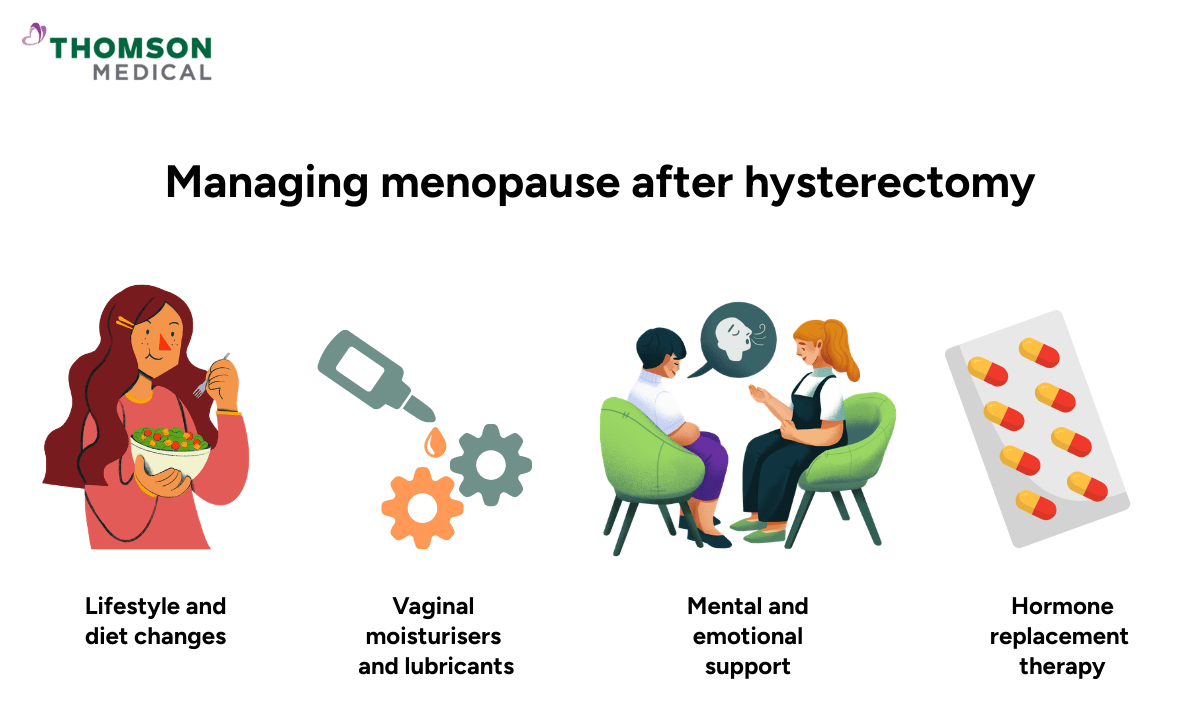
If menopause symptoms appear after hysterectomy, you may feel unsure about what to do next. Some women try to push through the discomfort, while others worry that these changes will continue affecting their sleep, mood, or daily life.
The reassuring news is that many menopause symptoms can be managed effectively with the right combination of medical guidance and lifestyle adjustments.
Lifestyle and diet changes
For many women, small lifestyle changes are a good place to start.
Some adjustments that may help:
Stay active:
Gentle movement, such as walking, yoga, swimming, or stretching, can lift your mood, improve sleep, and support a healthy metabolism.
Eat well:
A balanced diet with plenty of vegetables, fruit, whole grains, lean protein, and healthy fats helps with energy and overall hormonal health.
Notice your hot flush triggers:
Caffeine, alcohol, spicy food, or warm environments can make hot flushes worse for some women. Paying attention to your own patterns may help you manage them better.
Drink enough water:
Staying hydrated through the day can help your body regulate its temperature.
Keep your bedroom cool:
Breathable clothing, light bedding, and a cooler room at night can all help reduce night sweats and improve sleep.
Stick to a sleep routine:
Going to bed and waking up at roughly the same time each day gives your body a rhythm to settle into.
These daily steps can support your wellbeing and help your body adjust more comfortably to hormonal changes.
Vaginal moisturisers and lubricants
If vaginal dryness is affecting your comfort, moisturisers and lubricants can help.
Vaginal moisturisers help keep the vaginal tissue hydrated and can be used as part of your regular routine. Lubricants are often useful during sexual intercourse to reduce friction and discomfort.
Using these products can make intimacy more comfortable and help rebuild confidence if dryness has been making you reluctant to be sexually active.
Mental and emotional support
As your body adjusts during menopause, it’s also important to care for your emotional wellbeing.
Some women find it helpful to:
Speak with a counsellor
Join support groups
Learn stress-management techniques such as mindfulness or breathing exercises
These can ease mood changes and take the edge off the emotional weight that sometimes comes with hormonal shifts.
It also helps to be open with your doctor about how you're feeling – physically and emotionally – so they can point you towards the right support.
Hormone replacement therapy
Not all women need hormone replacement therapy. However, it can be an effective option for relieving hot flushes, night sweats, vaginal dryness, and sleep problems by replacing the oestrogen your body no longer produces.
Hormone therapy comes in several forms, such as:
Tablets: Taken once a day – a straightforward option if you prefer a simple daily routine.
Skin patches: A small patch applied to the skin and changed on a set schedule. Patches release oestrogen gradually, keeping hormone levels more consistent.
Gels or sprays: Applied to the skin once a day – a good option if tablets or patches don't appeal to you.
If vaginal dryness, irritation, or discomfort during sex is your main concern, your doctor may suggest local oestrogen instead, such as a vaginal cream, tablet, or ring.
Your doctor will take your overall health, medical history, and personal preferences into account before recommending what's right for you.
If you are unsure whether hormone therapy is right for you, a consultation with our doctors can help you explore safe and suitable options. Request an appointment with Thomson Medical today.
FAQ
What is the most common type of hysterectomy surgery?
The most common type is a total hysterectomy, which removes the uterus and cervix.
In some cases, a partial hysterectomy is performed, in which the uterus is removed but the cervix is left in place.
A radical hysterectomy is less common and is usually performed to treat certain gynaecological cancers, as it involves removing the uterus, cervix, and surrounding tissues.
Why do doctors recommend hysterectomy?
Hysterectomy is often recommended to treat:
Benign gynaecological conditions, such as fibroids, heavy menstrual bleeding, or uterine prolapse
Gynaecological cancers, including endometrial cancer, cervical cancer, or ovarian cancer in certain cases
Severe or complicated pelvic inflammatory disease that does not respond to other treatments
How long do menopause symptoms last?
The duration varies from person to person. Some women experience symptoms for a few months, while others may notice them for several years. When menopause happens suddenly after surgery, symptoms are often strongest during the first one to two years.
Do I need hormone therapy?
Some women manage their symptoms with lifestyle adjustments or non-hormonal treatments. However, menopausal hormone therapy can be very effective in relieving hot flushes, mood changes, and vaginal dryness, particularly if the ovaries were removed.
Can menopause affect sexual life?
Yes, menopause can influence sexual comfort and desire. Vaginal dryness, changes in libido, and mood shifts may affect intimacy, but many of these symptoms can be managed with appropriate treatments and support.
Is surgical menopause more intense than natural menopause?
In many cases, yes. Because hormone levels drop suddenly after the ovaries are removed, symptoms such as hot flushes or mood changes may appear more abruptly and feel stronger than during natural menopause.
The information provided is intended for general guidance only and should not be considered medical advice. For personalised recommendations and advice based on your unique situation, please consult a specialist at Thomson Medical. Request an appointment with Thomson Medical today.
For more information, contact us:
Thomson Specialists (Women's Health)
Thomson Women's Clinic (TWC)
- Novena:
6592 6686 (Call), 8611 8986 (WA) - Bukit Batok:
6569 0668 (Call), 8686 3525 (WA) - Choa Chu Kang:
6893 1227 (Call), 8282 1796 (WA) Jurong:
6262 8588 (Call), 6262 8588 (WA)- Katong (female doctor):
6970 2272 (Call), 8611 9020 (WA) - Punggol:
6243 6843 (Call), 8811 0328 (WA) - Sembawang: 6753 5228
- Sengkang: 6388 8125
- Serangoon (female doctor): 6382 3313
- Tampines: 6857 6266
- Tiong Bahru: 6276 1525