

After an in vitro fertilisation (IVF) procedure, it’s understandable to feel disheartened and emotionally drained if you experience a miscarriage. Even more after investing so much time and effort into the process and having been picturing the milestones you will reach.
As you begin to heal, you may find yourself searching for reasons as to why the pregnancy ended or wondering if you did something wrong. However, there are many factors that may lead to a miscarriage post-IVF procedure.
What is a miscarriage after in vitro fertilisation (IVF)?
A miscarriage after an IVF pregnancy is the loss of a pregnancy after implantation but before 20 weeks, with most occurring during the first trimester.
Although IVF helps to increase the chance of pregnancy and transferring embryos into the uterus (womb), the embryo still needs to grow, form a placenta, and establish a healthy blood supply. A miscarriage may occur if this process does not progress as expected.
Symptoms of miscarriage after IVF
.png?branch=production)
IVF pregnancies are closely monitored, you may learn about issues earlier than you would in a natural pregnancy. Your doctor will often pick up signs through blood tests before you notice anything yourself.
However, there are physical signs to be aware of:
Vaginal bleeding that may range from light spotting to heavier bleeding with clots or tissue.
Cramping or pelvic pressure that feels like strong menstrual cramps as the uterus contracts to expel pregnancy tissue.
Falling or stagnant beta-hCG levels, which may indicate a non-viable pregnancy even before other physical symptoms develop.
What are the common causes of miscarriage after IVF?
The most common cause of miscarriage after the IVF process is a chromosomal abnormality in the embryo, such as aneuploidy (extra or missing chromosomes). These abnormalities usually occur randomly during egg or sperm formation, meaning the embryo may implant briefly but cannot sustain normal development. Such chromosomal errors tend to become more common as you get older because egg quality naturally changes with age.
Other factors that may contribute to a miscarriage include:
Conditions affecting the womb: such as fibroids, polyps, or scar tissue, which may influence embryo implantation or placenta development.
Low progesterone levels: which could make it harder for the womb lining to support an early pregnancy.
Immune system factors or blood clotting disorders: such as antiphospholipid syndrome, where the body mistakenly attacks proteins in the blood, which may raise the risk of clots that affect the placenta.
If you have experienced a miscarriage after IVF, knowing the underlying cause may help you and your doctor to plan your future IVF cycle. Request an appointment with Thomson Medical for a fertility consultation with a specialist and explore your options.
Our fertility doctors in Singapore
Loading...
How to heal after an IVF miscarriage?
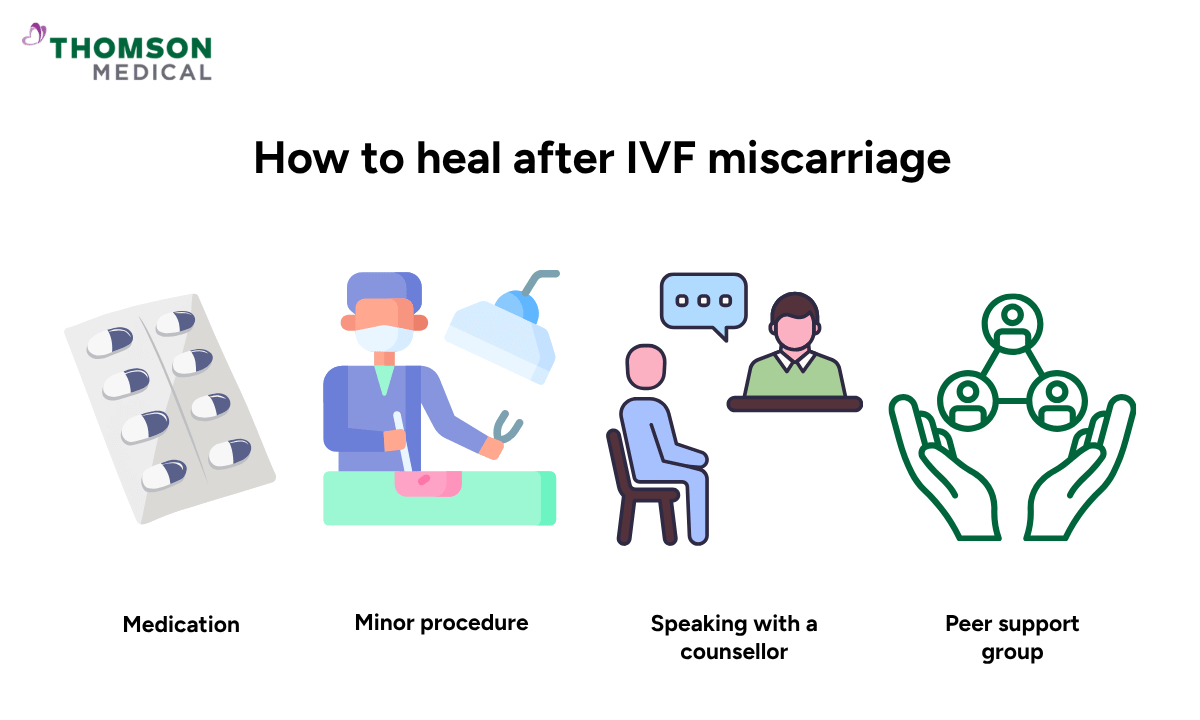
After a miscarriage, it’s important to give yourself time to process your emotions. Here are a few steps you may take to support your healing journey:
Physical recovery
After a miscarriage, your pregnancy hormone levels, known as hCG, will gradually fall over days to weeks. Your body will shed the uterine lining, which could feel like a heavier period with some cramping.
In some cases, not all the tissue passes naturally. If this happens, your doctor may recommend:
Medication to help your womb pass the remaining tissue
A minor procedure to gently remove the remaining tissue, known as an evacuation of retained products of conception (ERPC)
Your doctor will monitor your beta-hCG levels until they return to zero, which confirms that your body has fully cleared the pregnancy tissue.
Emotional recovery
Feeling grief, guilt, or even a sense of emotional numbness is a completely normal response to losing a pregnancy. Although these feelings are normal, please be assured that this loss is not your fault and that it was not caused by anything you did.
Some things that may help you through this time include:
Speaking with a counsellor who has experience in fertility and pregnancy loss
Connecting with a peer support group for people who have experienced pregnancy loss after IVF
Being open with your partner, close friends, or family about how you are feeling
Taking adequate time to recover emotionally before returning to treatment, based on your own circumstances and your doctor's advice
Could miscarriage after IVF be prevented?
Not every miscarriage could be prevented, particularly those caused by chromosomal abnormalities. However, there are steps that may help reduce the risk. To help with embryo selection, your doctor may suggest:
Growing embryos to the blastocyst stage before transfer, as this may improve the chances of selecting a more viable embryo.
Preimplantation genetic testing for aneuploidy (PGT-A), which screens embryos for chromosomal abnormalities before transfer.
In addition to embryo selection, taking steps to support your overall health and uterine environment may also help reduce the risk. Your doctor may focus on:
Hormonal support:
Progesterone supplements are routinely given after embryo transfer to support the uterine lining and early pregnancy.
Treating uterine conditions:
Fibroids, polyps, or scar tissue inside the womb may often be treated before IVF begins, which may help create a better environment for the embryo.
Lifestyle factors:
Stopping smoking, maintaining a healthy body weight, and managing conditions such as thyroid disease or diabetes may all help support a healthy early pregnancy.
When to seek more support
Moving forward after an IVF miscarriage is a journey that encompasses both your physical healing and your emotional well-being. Seeking support could help you understand what happened, plan your next steps, and access the care you need during recovery.
Medical advice
On the medical side, your doctor will review your IVF cycle after a miscarriage. This may involve:
Assessing embryo quality and hormone levels during stimulation
Reviewing your early pregnancy blood results
Checking the uterine cavity with imaging if needed
A single miscarriage may be considered an isolated event and doesn’t necessarily affect your chances in a future cycle. Your doctor will usually advise waiting for your beta-hCG to stabilise and after you have had at least one natural period before starting another transfer. This gives your body time to reset and helps with the timing of your next cycle.
Emotional and psychological support
On the emotional side, speaking to a mental health professional or counsellor is recommended if you are finding it difficult to deal with your emotions. Options that may be helpful include:
One-to-one counselling, including cognitive behavioural therapy (CBT)
Fertility-focused mental health services that specialise in IVF and pregnancy loss
Peer support groups for those who have experienced pregnancy loss after IVF
Healing after pregnancy loss takes time, and the right support could help you through the process. Request an appointment with Thomson Medical for a consultation with a doctor to consult with a doctor about your fertility treatment and find out about the emotional support resources available to you.
FAQ
How common is miscarriage after IVF treatment?
Miscarriage after IVF happens at rates similar to those of natural conception when adjusted for age. Under age 35, the rate is generally around 10% to 12%. This rises to about 20% to 25%, or higher, over age 40. Maternal age is one of the biggest factors affecting miscarriage risk, because egg quality declines over time and raises the chance of chromosomal abnormalities.
How can I reduce the risk of miscarriage after IVF?
Although miscarriage cannot be completely prevented, certain measures may help improve your overall pregnancy success. These include ensuring your uterine health is assessed, following your prescribed progesterone support, managing any underlying medical conditions, and using embryos that have undergone a chromosomal test when appropriate.
Can you have a successful IVF pregnancy after a miscarriage?
Yes, it is possible for women to go on to have a successful pregnancy after a miscarriage. Your fertility specialist may recommend further checks or adjustments to your treatment plan, depending on your age, medical history, embryo quality, and any cause that has been identified.
Do I need to take time off before trying IVF again after a miscarriage?
You will usually be advised to wait until your hormone levels have returned to normal and you have had at least one period before starting another IVF cycle or embryo transfer. This allows your body time to recover and helps your doctor plan your next cycle.
What tests can be done after an IVF miscarriage to find out what went wrong?
After a miscarriage, your doctor may suggest a few checks to help you understand what may have happened. These can include testing the pregnancy tissue for chromosomal changes, having a detailed ultrasound scan or hysteroscopy to look at the shape of your womb, and blood tests to check for hormonal imbalances or clotting conditions.
Will having a miscarriage affect the success of my remaining frozen embryos?
No, a miscarriage does not damage or lower the quality of your remaining frozen embryos. Each embryo is unique, so one loss does not affect the others. If you have embryos in storage, your care team will look closely at your previous cycle to plan the right timing and hormonal support for your next frozen embryo transfer (FET).
The information provided is intended for general guidance only and should not be considered medical advice. For personalised recommendations and tailored advice based on your unique conditions, request an appointment with Thomson Medical.
For more information, contact us:
Thomson Fertility Centre
- Paragon: 6252 7766
- Novena: 6399 3758, 8811 0358 (WA)