

Being diagnosed with uterine fibroids can bring up many questions, and it’s completely understandable to feel uncertain about what to do next. You might be concerned about your symptoms, overwhelmed by medical terminology, or unsure about which treatment path is right for you.
If your doctor has mentioned myomectomy or hysterectomy as possible treatment options, you're likely weighing a significant decision. Many women find themselves comparing these two procedures, trying to understand what each surgery involves and how it may affect their health, fertility, and daily life.
Learning about these options can help you better understand which option may align with your needs and personal goals.
What are fibroids?
Fibroids, sometimes referred to as uterine fibroids, are benign growths that form in your womb's muscular wall. They are very common, especially during a woman's reproductive years.
Some women have fibroids without noticing any symptoms, while others may experience changes, such as:
Prolonged and heavy menstrual bleeding
Pelvic pressure or discomfort
Frequent urination
Pain during intercourse
Difficulty becoming pregnant
Your doctor might suggest treatment to help ease discomfort and enhance your quality of life when fibroids begin to cause bothersome symptoms. In some cases, surgery becomes one of the options to consider.
Myomectomy and hysterectomy are two surgical procedures that are frequently discussed.
What is a myomectomy?
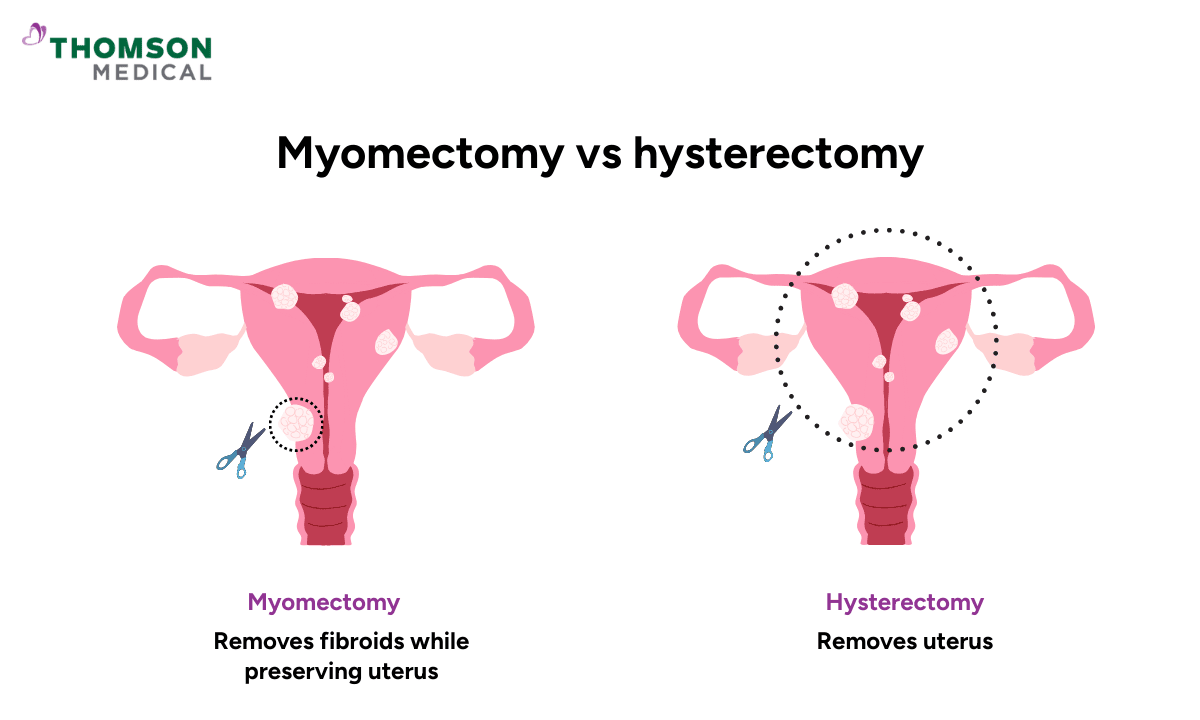
A myomectomy is a surgical procedure that removes fibroids while leaving your uterus in place. This means you keep the possibility of pregnancy in the future.
The exact type of myomectomy depends on the size, number, and location of the fibroids. Your surgeon may recommend one of the following approaches:
Hysteroscopic myomectomy: Used for fibroids that have grown inside the uterine cavity
Robotic or laparoscopic myomectomy: Carried out through abdominal incisions using specialised tools
Open abdominal myomectomy: Recommended when uterine fibroids are large or numerous
The approach your surgeon chooses aims to remove your fibroids effectively while giving you the smoothest recovery possible.
What to expect during myomectomy
During a myomectomy, your surgeon carefully removes fibroids from the uterine wall while preserving the surrounding healthy tissue.
Since general anaesthesia is usually used for the procedure, you will be asleep the entire time.
Recovery time varies depending on the surgical technique used:
Minimally invasive procedures may allow you to go home the same day or after a short hospital stay.
Open surgery usually requires a longer recovery period.
What are the advantages and limitations of myomectomy?
If you're hoping to have children in the future, or if keeping your uterus feels important to you, myomectomy addresses fibroid symptoms while preserving these possibilities. Many women experience significant relief from symptoms after treatment.
Because your womb remains, new fibroids can develop over time. This doesn't happen to everyone, but it does mean some women may need additional treatment in the future.
What is a hysterectomy?
A hysterectomy is a surgical procedure that removes your womb.
Depending on your condition, different types of hysterectomy may be performed, such as:
Total hysterectomy: Removal of the uterus and cervix
Partial (subtotal) hysterectomy: Removal of the uterus while the cervix remains
Radical hysterectomy: Removal of the uterus, cervix, and surrounding tissues (usually performed for cancer treatment)
In most cases, a total or partial hysterectomy is performed for fibroids. The type recommended depends on your specific situation and whether other issues need addressing at the same time.
What to expect during hysterectomy
A hysterectomy can be performed through several surgical approaches, including:
Laparoscopic surgery: Your surgeon removes the uterus through small incisions in the abdomen using specialised instruments and a camera.
Vaginal hysterectomy: Your womb is removed through the vagina without any abdominal incisions.
Open abdominal hysterectomy: Your surgeon removes the uterus through a larger incision in the abdomen.
Recovery usually takes several weeks, and your care team will guide you through the healing process and your gradual return to daily activities.
What are the advantages and limitations of hysterectomy?
A hysterectomy provides a permanent solution because fibroids can’t recur once the uterus is removed. Many women experience complete relief from fibroid-related symptoms after the surgery.
Knowing that fibroids will never return can feel like a relief, especially if you've been managing symptoms for years. At the same time, the permanence of this choice can bring up complicated feelings, especially if you're still processing what it means to no longer have your uterus.
After a hysterectomy, you will no longer have menstrual periods and pregnancy is no longer possible. If the ovaries are also removed during surgery, you may experience surgical menopause, which involves a longer emotional and physical adjustment for some women.
Key differences between myomectomy and hysterectomy
While both surgeries aim to relieve symptoms caused by fibroids, they approach the problem in different ways.
The table below highlights some of the key differences between the two procedures.
Feature | Myomectomy | Hysterectomy |
Purpose | Removes uterine fibroids | Removes the uterus |
Uterus preserved | Yes | No |
Future pregnancy | Possible | Not possible |
Fibroid recurrence | Uterine fibroids may return | Uterine fibroids can't recur |
Menstrual periods | Continue | Stop |
Treatment goal | Symptom relief while preserving the uterus | Definitive treatment |
Both myomectomy and hysterectomy have their own advantages and limitations, and knowing these differences can help you feel more prepared when discussing treatment with your doctor.
If you would like to better understand these procedures and which option may be most suitable for your condition, schedule a consultation with Thomson Medical. Our specialists will listen to your concerns, answer your questions, and help you make an informed decision about your care.
Our gynaecologists in Singapore
Loading...
Myomectomy or hysterectomy: Which one is right for you?

Choosing between myomectomy and hysterectomy is a deeply personal decision. What feels like the right option for one woman may not be the same for another.
For some women, preserving the uterus is an important part of their decision. Others may feel more comfortable choosing a treatment that removes fibroids permanently.
Your doctor will usually consider several factors when discussing fibroid treatment with you, including:
Your age and general health
Whether you plan to have children in the future
The size, number, and location of your uterine fibroids
How much your symptoms are affecting your daily life
Your personal preferences and priorities
Taking time to understand your options and discussing them openly with your doctor can help you make a decision that feels right for both your health and your future plans.
If fibroids are affecting your quality of life, a consultation with a gynaecologist can help you understand which treatment may suit your needs and personal goals. Request an appointment with Thomson Medical today.
FAQ
Which operation is better for uterine fibroids?
There is no single best operation for fibroids. Myomectomy preserves the uterus and fertility, while hysterectomy offers a permanent solution when symptoms are severe or fibroids are extensive.
Does a hysterectomy prevent fibroids from coming back?
Yes, because a hysterectomy removes the uterus, fibroids can’t recur. This makes it a definitive treatment for fibroids.
Can fibroids return after myomectomy?
Since the uterus remains after a myomectomy, new fibroids may develop over time. The risk of recurrence can vary depending on the number and size of fibroids before surgery.
Is pregnancy still possible after myomectomy?
Yes, myomectomy preserves the uterus, so pregnancy is still possible. Your doctor may recommend waiting several months before trying to conceive to allow your womb to heal properly.
What are the long-term risks of hysterectomy?
Most women recover well after hysterectomy. However, if the ovaries are removed, surgical menopause may occur, which can cause symptoms such as hot flushes or vaginal dryness. Some women may also experience pelvic floor changes over time.
Should I choose myomectomy or hysterectomy?
The right option depends on your symptoms, fertility plans, fibroid size, and personal preferences. Discussing these factors with your doctor can help you choose the treatment that best fits your health goals.
The information provided is intended for general guidance only and should not be considered medical advice. For personalised recommendations and tailored advice based on your unique situations, please consult a specialist at Thomson Medical. Request an appointment with Thomson Medical today.
For more information, contact us:
Thomson Specialists (Women's Health)
Thomson Women's Clinic (TWC)
- Novena:
6592 6686 (Call), 8611 8986 (WA) - Bukit Batok:
6569 0668 (Call), 8686 3525 (WA) - Choa Chu Kang:
6893 1227 (Call), 8282 1796 (WA) Jurong:
6262 8588 (Call), 6262 8588 (WA)- Katong (female doctor):
6970 2272 (Call), 8611 9020 (WA) - Punggol:
6243 6843 (Call), 8811 0328 (WA) - Sembawang: 6753 5228
- Sengkang: 6388 8125
- Serangoon (female doctor): 6382 3313
- Tampines: 6857 6266
- Tiong Bahru: 6276 1525