

Choosing nasal polyp removal surgery often comes after months of blocked breathing and disrupted sleep. While it can bring hope for relief, it’s also completely normal to have questions about your recovery – how long it takes, what it feels like, and what you should expect day to day.
Having a clear idea of the healing process, including timelines, care, and small lifestyle adjustments, can help you feel more prepared and in control as you recover.
What to expect after nasal polyp removal?
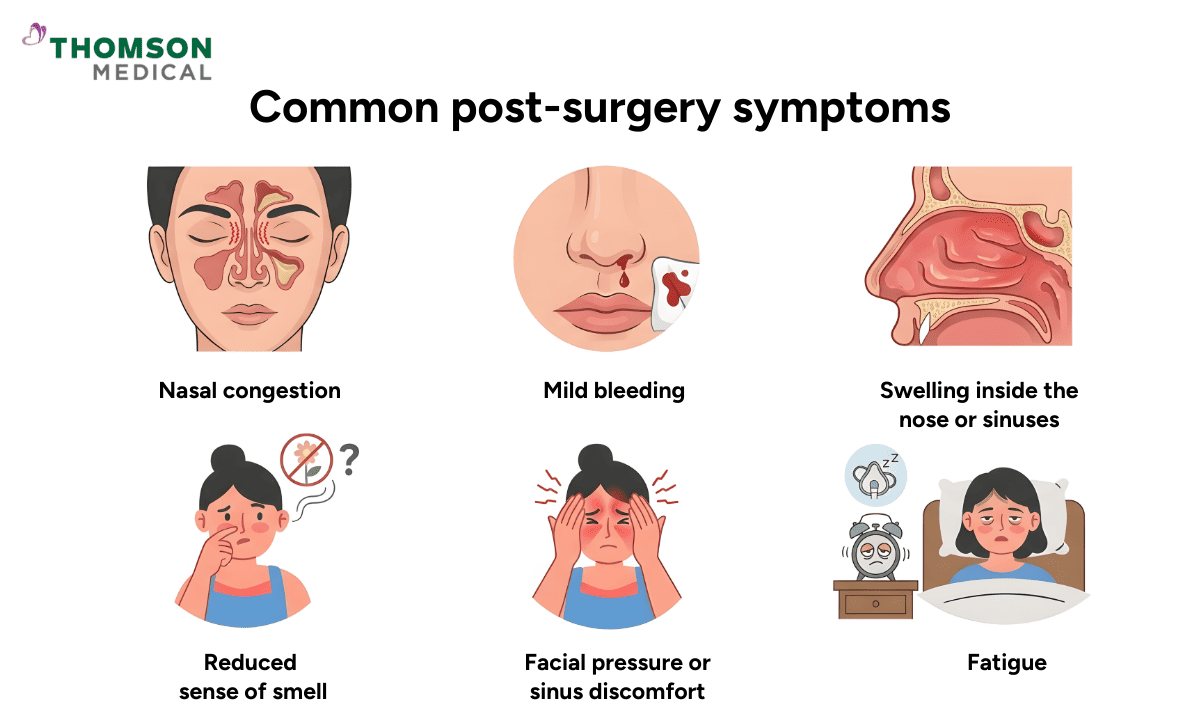
It is normal to experience mild to moderate discomfort right after nasal polyp surgery as your nasal passages begin to heal.
During this early recovery period, you may notice several common symptoms, including:
Nasal congestion or a feeling of blockage
Mild bleeding or blood-tinged discharge
Swelling inside the nose or sinuses
A temporarily reduced sense of smell
Facial pressure or sinus discomfort
Fatigue due to the anaesthesia or disrupted sleep
In some cases, your doctor may place nasal packing or dissolvable materials inside your nose to control bleeding. These usually dissolve on their own or are removed after a few days.
You may go home the same day since nasal polyp removal is typically a day procedure done under general or local anaesthesia.
How long does nasal polyp removal recovery take?
Recovery time varies depending on the extent of your surgery and your individual healing capacity. Most people recover fully within four to six weeks.
Here is what you can expect as the days and weeks go by:
First 1 to 3 days:
You may notice swelling, congestion, and mild bleeding. Make sure to rest as much as possible during this time.
Within 1 week:
Discomfort usually improves a lot. You may feel ready to return to light daily activities.
1 to 2 weeks:
Breathing becomes easier as the swelling goes down. Any crusting inside your nose will slowly clear.
3 to 4 weeks:
You may feel almost back to normal, with better airflow and far fewer sinus symptoms.
4 to 6 weeks:
Your nose is usually fully healed inside. You may still have follow-up visits to make sure everything is recovering well.
Throughout your recovery, your doctor may recommend regular saline rinses and follow-up endoscopic cleanings to help your nose heal and keep your nasal passages clear.

What are some tips for recovering after nasal polyp removal?
Proper aftercare plays an important role in your recovery after nasal polyp removal. The following tips can help ease discomfort and support the healing process.
Diet
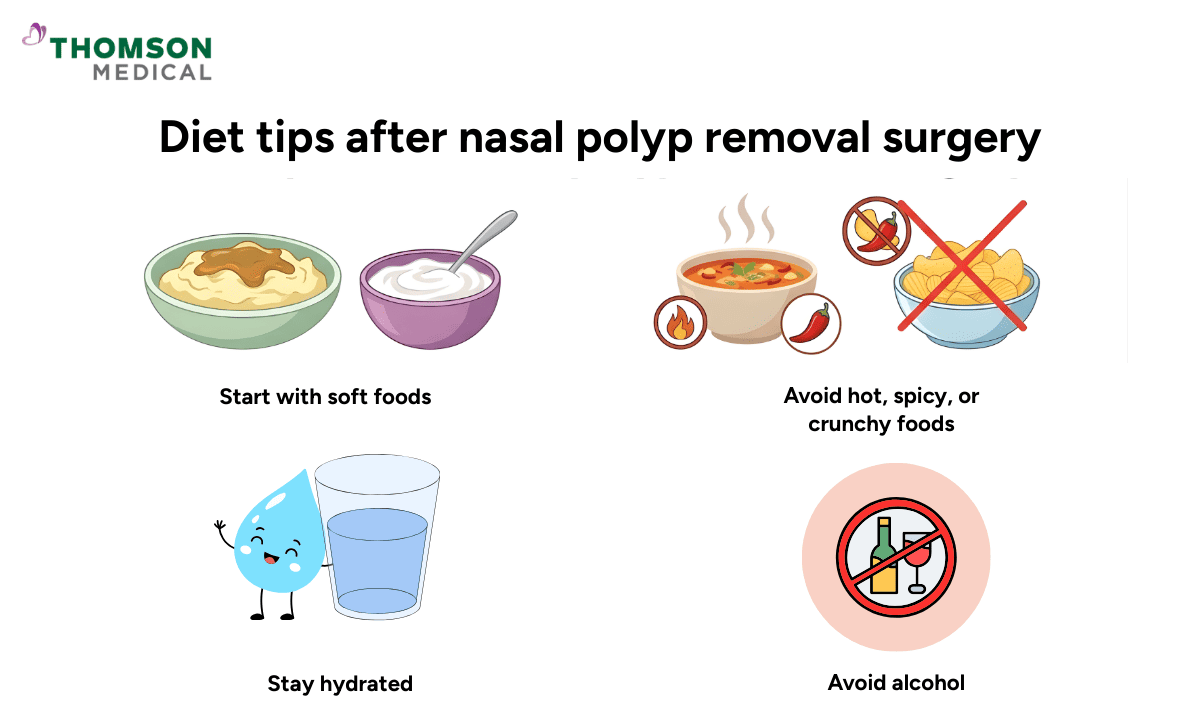
In the first few days after surgery, your nasal passages are especially sensitive to what you eat and drink. Choosing the right foods and staying hydrated can help you heal faster and stay comfortable.
During this time, it helps to:
Start with soft, easy-to-swallow foods on the first day after your surgery
Avoid hot, spicy, or very crunchy foods initially, as they may increase your nasal blood flow and cause bleeding
Drink plenty of fluids to stay hydrated and support your body's healing process
Avoid alcohol for at least a few days, as it can increase swelling and bleeding
These adjustments are temporary, and you can return to your normal diet as your comfort allows, based on your doctor’s advice.
Rest
Rest is especially important in the first few days after surgery to support healing and minimise bleeding.
To support your recovery:
Rest as much as possible for the first 2 to 3 days after surgery
Avoid heavy lifting, bending forward, or intense exercise for at least 1 to 2 weeks
Elevate your head using extra pillows when resting or sleeping to reduce swelling and bleeding
Taking these precautions can help prevent unnecessary pressure in your nasal passages and support a smoother recovery.
Wound care
After surgery, the inside of your nose is still healing and can be sensitive. Gentle care helps prevent irritation and reduces the risk of bleeding.
Here is what you can do:
Perform saline nasal sprays or rinses exactly as prescribed to keep your nasal passages moist and clean.
Do not blow your nose forcefully for at least one week.
Avoid picking or touching the inside of your nose.
Use prescribed medications, such as nasal steroid sprays, only when advised by your doctor.
Keeping to this routine can help your nasal passages heal more comfortably over time.
When should you consult your doctor?
While most people recover without any issues, it is still important to monitor for any signs that may need medical attention.
Contact your doctor if you experience:
Heavy or persistent bleeding
Fever or chills
Increasing pain or swelling
Foul-smelling nasal discharge
Sudden worsening of breathing or changes in your vision
These symptoms may point to an infection or other complications, so it is best to reach out to your care team for advice and support.
Our ENT specialist
Loading...
How to manage nasal polyps and reduce recurrence
Most people experience good relief after nasal polyp removal, especially with proper follow-up care. However, in some cases, nasal polyps may return over time, particularly if you have underlying conditions such as chronic sinusitis, allergies, or asthma.
The good news is that with the right long-term care plan, recurrence can often be managed effectively.
Long-term management may include:
Regular use of intranasal corticosteroid sprays
Ongoing saline nasal rinses
Allergy management or immunotherapy, if recommended by your doctor
Treatment of underlying conditions, such as asthma or aspirin sensitivity
Regular follow-up appointments
In some cases, your doctor may also recommend newer biologic medications for recurrent or severe nasal polyps as part of a longer-term management plan.
With consistent care and monitoring, many people are able to keep symptoms well-controlled and maintain a good quality of life.
If you are managing nasal polyps or concerned about recurrence, you may schedule an appointment with Thomson Medical to discuss long-term management options suited to your condition.
FAQ
Do I need time off work after polyp removal?
Yes. Most patients take 3 to 7 days off work, depending on their job demands and how they feel after surgery. If you have a physically demanding job, you may require a longer rest period.
How many days should I rest after polyp removal?
You should rest at home for at least 2 to 3 days; it is encouraged to avoid any strenuous activities for up to 2 weeks to prevent bleeding.
Can I drive after nasal polyp surgery?
You should not drive for at least 24 hours after your surgery, especially if general anaesthesia or sedative medications were used to keep you comfortable.
How do I sleep after nasal polyp removal?
Sleep with your head elevated using extra pillows or a recliner. This tip helps reduce swelling and minimises the chance of nasal bleeding overnight.
Is nasal polyp surgery minor or major?
Nasal polyp removal is usually considered a minor to moderate procedure. It is minimally invasive but still requires time to recover and proper follow-up care.
How to keep the mouth moist after nasal polyp removal?
Because your nasal breathing may be limited at first, mouth dryness is common.
To help with this:
Sip water frequently throughout the day
Use a humidifier in your room while sleeping
Apply lip balm to prevent chapped lips
Avoid caffeine and alcohol during early recovery
The information provided is intended for general guidance only and should not be considered medical advice.
For more information, contact us:
Thomson Medical Concierge
- 8.30am - 5.30pm
- WhatsApp: 9147 2051
Need help finding the right specialist or booking for a group?
Our Medical Concierge is here to help you. Simply fill in our form, and we'll check and connect you with the right specialist promptly.
Notice:
The range of services may vary between Thomson clinic locations. Please contact your preferred branch directly to enquire about the current availability.
Get In Touch