

A sudden nosebleed may be unsettling, especially when it happens without an obvious reason. Naturally, you may feel confused or concerned about what may have caused it and whether you need medical attention.
Knowing what may trigger the bleeding, how to manage it safely, and when to seek medical advice may help you feel more prepared.
What is a nosebleed?

A nosebleed, also known as epistaxis, occurs when a small blood vessel in the nasal lining becomes irritated or breaks. This causes blood to flow from one or both nostrils. Most nosebleeds affect only one nostril and are usually not serious.
Nosebleeds are a common condition affecting both children and older adults, with around 6 in 10 people experiencing at least one during their lifetime. Most of them are mild and stop with simple first aid at home. However, bleeding that is heavy, prolonged, or happens frequently may require medical assessment to identify the underlying cause.
Types of nosebleed
There are two main types of nosebleeds, and they are classified based on where the bleeding starts.
Anterior nosebleed:
An anterior nosebleed starts near the front of the nose, usually from small blood vessels in the nasal septum, the wall separating the two nostrils.
This is the most common type of nosebleed, as the blood vessels are closer to the surface, and it is usually mild.
Posterior nosebleed:
A posterior nosebleed starts deeper inside the nose, where there are larger blood vessels. Although less common, bleedings may be heavier and may cause blood to flow towards the back of the throat.
Why does your nose start bleeding?
The inside of the nose contains many small blood vessels that sit close to the surface. These vessels help warm and moisten the air you breathe, but their exposed position also makes them more susceptible to irritation or injury.
In many cases, a nosebleed happens because the delicate lining inside the nose has dried out, or something has damaged it. Common causes include:
Dry or irritated nasal lining:
Air-conditioning, changes in humidity, smoke, fumes, and other irritants may dry out the inside of the nose and make it more prone to bleeding.
Nose picking or rubbing:
This may damage the delicate blood vessels and is particularly common in children.
Colds, sinus infections, and allergies:
Frequent sneezing, coughing, and nose blowing may irritate the nasal lining and make bleeding more likely.
Minor injuries:
A bump, fall, or sports injury may damage the blood vessels inside the nose. More significant injuries may need medical assessment to check for a fracture or other damage.
Nasal sprays and medicines:
Some nasal sprays, particularly if repeatedly directed towards the nasal septum, can irritate the lining and contribute to nosebleeds. When using a nasal spray, aim the nozzle slightly outwards, away from the septum.
Medicines such as aspirin, certain anti-inflammatory medicines, and blood thinners may also make bleeding easier to start or harder to stop.
Changes in the structure of the nose:
A deviated septum (a shift or bend in the wall separating the two sides of the nose) or previous nasal surgery may affect airflow and contribute to dryness or irritation in some people.
Certain health conditions, such as blood clotting disorders, liver disease, and high blood pressure, may be associated with recurrent or difficult-to-control nosebleeds, although it’s not usually a direct cause.
During pregnancy, hormonal changes and increased blood flow may also make the blood vessels in the nasal lining more swollen and sensitive, increasing the likelihood of nosebleeds during pregnancy.
How do you stop a nosebleed?
Most nosebleeds may be managed with first aid at home. The key is to apply firm, continuous pressure to the soft, fleshy part of your nose while leaning forward.
Steps for first aid at home
If your nose starts bleeding, try these steps:
Sit upright and lean forward, keep your head above your heart, and tip forward from the waist so blood drains out of your nose rather than down your throat.
Pinch the soft, fleshy part of your nose. Use your thumb and index finger to firmly pinch the soft fleshy part of both nostrils firmly against the septum, just below the hard bony bridge of the nose.
Hold for at least 10-15 uninterrupted minutes, breathing through your mouth.
If it has not stopped, repeat the pressure for another 10–15 minutes. If it remains heavy or does not stop after about 20 minutes of continuous pressure, seek medical attention
Common mistakes to avoid
Once you know the appropriate steps for first-aid, you should also be mindful of common mistakes. These include:
Tipping your head back, as it may cause blood to run down your throat instead of clotting.
Letting go every few seconds to check if the bleeding has stopped, which may interrupt the pressure and disturb the blood clot that is forming.
Pinching the hard bony bridge instead of the soft, fleshy part of the nose.
Packing tissue or cotton wool up your nostril, which may stick to the healing surface and cause the bleeding to start again when you pull it out.
Lying down, which may increase pressure in the blood vessels inside your nose and could allow blood to flow towards the back of your throat.
Blowing your nose or picking at the scab afterwards may cause the nosebleed to start again.
When should you go to a doctor for a nosebleed?

Most nosebleeds are mild and may be stopped with first aid at home. However, you should seek medical attention if:
The bleeding does not stop after around 20 minutes of firm, continuous pressure.
The bleeding is heavy and difficult to control, or you are swallowing a large amount of blood.
You are dizzy, fainting, struggling to catch your breath, or have a rapid heartbeat.
The bleeding occurs after a significant injury, fall, or accident, particularly involving the head or face.
You have frequent or recurrent nosebleeds, especially if they always occur from the same nostril.
You take blood-thinning medications or have a condition that affects blood clotting.
You develop symptoms such as persistent nasal blockage, blood-stained mucus, facial numbness, or a lump in the neck alongside recurrent bleeding.
If you have experienced any of the symptoms mentioned above, speaking with a doctor may help identify the possible cause and determine whether further assessment is needed. Schedule an appointment with Thomson Medical.
Our ENT specialist
Loading...
How are nosebleeds diagnosed?
Your doctor will usually begin by asking about your symptoms, such as how often the bleeding occurs, which nostril is affected, how long it lasts, and whether you take any medicine that may affect bleeding. They may also check your blood pressure and ask about any family history of blood disorder.
Depending on your symptoms and medical history, further assessment may include:
Nasal examination:
Your nose may be examined using a light or a small scope to identify the source of the bleeding.
A nasal endoscopy, which uses a thin camera to view deeper inside the nasal cavity (the hollow space inside your nose), may be recommended if the bleeding is recurrent or the source is difficult to identify.
Blood tests:
If bleeding is heavy, recurrent, or there is concern about an underlying bleeding disorder, blood tests may be performed.
These may include a full blood count to check for anaemia and platelet abnormalities, as well as clotting tests where appropriate.
Imaging scans:
A CT scan or other imaging may be recommended after a significant injury or if your doctor needs to investigate an unusual finding inside the nose.
How does a doctor treat nosebleeds?
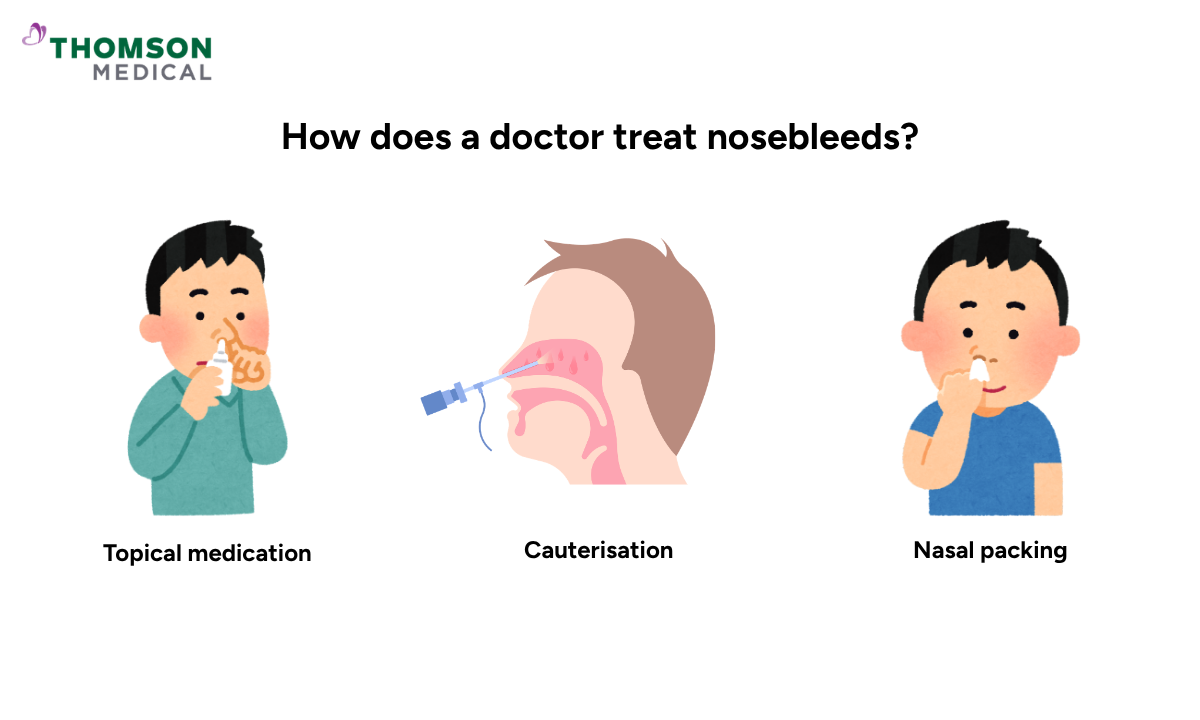
While most nosebleeds are manageable, persistent or recurrent nosebleeds may require further treatment. Your doctor will recommend treatment based on the severity and cause of the bleeding. The treatments include:
Topical medication:
Your doctor may apply a medication that constricts the blood vessels inside the nose to help slow or stop the bleeding.
Cauterisation:
If a specific bleeding point can be identified, it may be cauterised using a chemical such as silver nitrate or, in selected cases, electrical cautery. Local anaesthetic is usually applied beforehand.
Nasal packing:
If bleeding continues, a nasal dressing, sponge or inflatable nasal pack may be inserted to apply pressure to the bleeding site.
For severe or recurrent bleeding that does not respond to the treatments above, a surgical procedure may be needed to seal or block the blood vessel responsible for the bleeding. In some cases, surgery may also be used to address an underlying problem, such as a significant nasal injury or deviated septum.
If you need further treatment for a nosebleed, speaking with an ENT doctor may help identify and discuss the most suitable treatment options for your needs. Schedule an appointment with Thomson Medical.
FAQ
Why does my nose keep bleeding?
Recurring nosebleeds may happen when the nasal membrane lining becomes repeatedly dry, irritated, or injured, sometimes in the same area of the nasal septum. Common triggers include air-conditioning, allergies, frequent nose blowing, and picking at a healing scab.
If it is happening often, an ENT doctor may examine the inside of your nose, sometimes using a thin, flexible camera, to identify the source of the bleeding or check for other possible causes. If a specific bleeding point is found, cauterisation may be used to seal the blood vessel.
Can high blood pressure cause nosebleeds?
High blood pressure has been associated with a higher likelihood of nosebleeds, but it is not generally considered a direct cause. Your blood pressure may also rise temporarily during a nosebleed because of stress or anxiety.
If you have high blood pressure, continue taking your prescribed medicines and arrange regular follow-up with your doctor. If you have not had your blood pressure checked recently, you may also consider taking a health screening.
Are nosebleeds common in children?
Yes, nosebleeds are common in children and are usually not serious. They often occur when the delicate nasal lining is irritated by nose picking, dry air, colds, allergies, or minor injuries. Using a saline nasal spray or applying a nasal gel may help keep the nasal membrane lining moist and reduce irritation. However, do follow your doctor’s advice on the appropriate product and how to use it.
Should I go to the emergency department for a nosebleed?
Most nosebleeds may be managed at home. However, you should go to the emergency department (A&E) if:
- The bleeding continues after around 20 minutes of firm, uninterrupted pressure.
- The bleeding is very heavy.
- You feel faint, weak, or experience shortness of breath.
- You are swallowing a large amount of blood.
- The nose starts bleeding following a significant head or facial injury.
The information provided is intended for general guidance only and should not be considered medical advice. For personalised recommendations and advice based on your individual circumstances, schedule an appointment with Thomson Medical.
Reference
Seikaly H. (2021). Epistaxis. The New England Journal of Medicine, 384(10), 944–951. https://doi.org/10.1056/NEJMcp2019344
For more information, contact us:
Thomson Medical Concierge
- 8.30am - 5.30pm
- WhatsApp: 9147 2051
Need help finding the right specialist or booking for a group?
Our Medical Concierge is here to help you. Simply fill in our form, and we'll check and connect you with the right specialist promptly.
Notice:
The range of services may vary between Thomson clinic locations. Please contact your preferred branch directly to enquire about the current availability.
Get In TouchDr Alex Tham Chengyao
Otorhinolaryngology (ENT)
English, Mandarin, Hokkien
Prudential (Other Hospitals), Singlife, Great Eastern, Adept and 3 others
