

You've been meaning to do something about your teeth for a while now, but between the cost, the commitment, and the sheer number of options, it's hard to know where to start.
Here's a straightforward look at the different teeth straightening methods available, what each one costs, and what you can realistically expect from start to finish.
What is teeth straightening?
Teeth straightening refers to a range of dental treatments designed to correct misaligned teeth and improve bite function. While many people pursue treatment for cosmetic reasons, proper tooth alignment also plays a role in oral hygiene, jaw comfort, and long-term dental health.
Treatment works by applying gentle, consistent pressure to shift teeth gradually into better positions over time. Depending on the nature and severity of your misalignment, your dentist may recommend one of several approaches — from traditional braces to removable clear aligners.
Common types of dental misalignment
Misalignment can present in different ways. Understanding the type you have can help you have a more informed conversation with your dentist.
Crossbite:
A crossbite occurs when some upper teeth sit behind your lower teeth when you bite down, rather than in front of them.
Diastema:
Commonly known as a tooth gap, diastema refers to a space between two teeth (most often the upper front teeth).
Open bite:
An open bite occurs when the upper and lower teeth do not meet properly when the mouth is closed, leaving a visible gap between them.
Overbite:
An overbite occurs when the upper front teeth significantly overlap the lower front teeth when biting together.
Underbite:
An underbite is when the lower front teeth or jaw protrudes beyond the upper front teeth or jaw.
Overcrowding:
Overcrowding happens when there is insufficient space in the jaw for teeth to grow straight, causing them to overlap or twist.
Overjet:
Sometimes called buck teeth, an overjet refers to upper front teeth that protrude noticeably forward.
Benefits of straightening your teeth
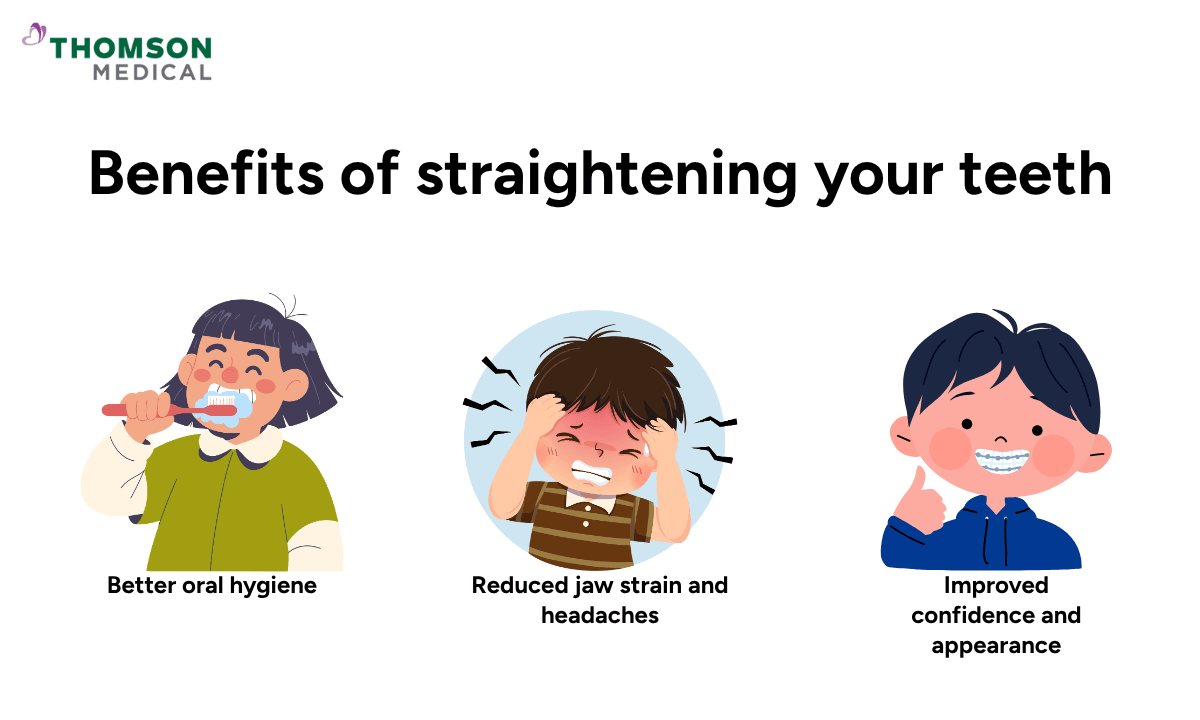
Addressing dental misalignment can have benefits that go beyond aesthetics. Here are some of the ways straighter teeth may support your overall health and comfort.
Better oral hygiene
Crooked or crowded teeth can create areas that are difficult to clean thoroughly with a toothbrush or floss. Straighter teeth tend to be easier to maintain, which may help reduce the build-up of plaque and lower the risk of gum disease over time.
Reduced jaw strain and headaches
A misaligned bite can place uneven pressure on the teeth, jaw muscles, and surrounding structures. For some people, correcting the bite may help alleviate associated discomfort, including jaw tension and headaches. This will vary from person to person.
Lower risk of dental injury
Teeth that protrude significantly are more exposed to impact and may be more vulnerable to chipping or cracking. Bringing them into better alignment can reduce this risk.
Improved confidence and appearance
For many people, concerns about their smile affect how comfortable they feel in social or professional situations. Addressing visible misalignment can contribute to greater self-confidence – though this is a personal and individual experience.
Positive impact on overall health
Good oral hygiene is considered an important part of general health. Well-aligned teeth can be easier to clean, which may support gum health and reduce the risk of plaque build-up in areas that are difficult to reach. However, orthodontic treatment is only one part of maintaining good oral health.
Teeth straightening options in Singapore
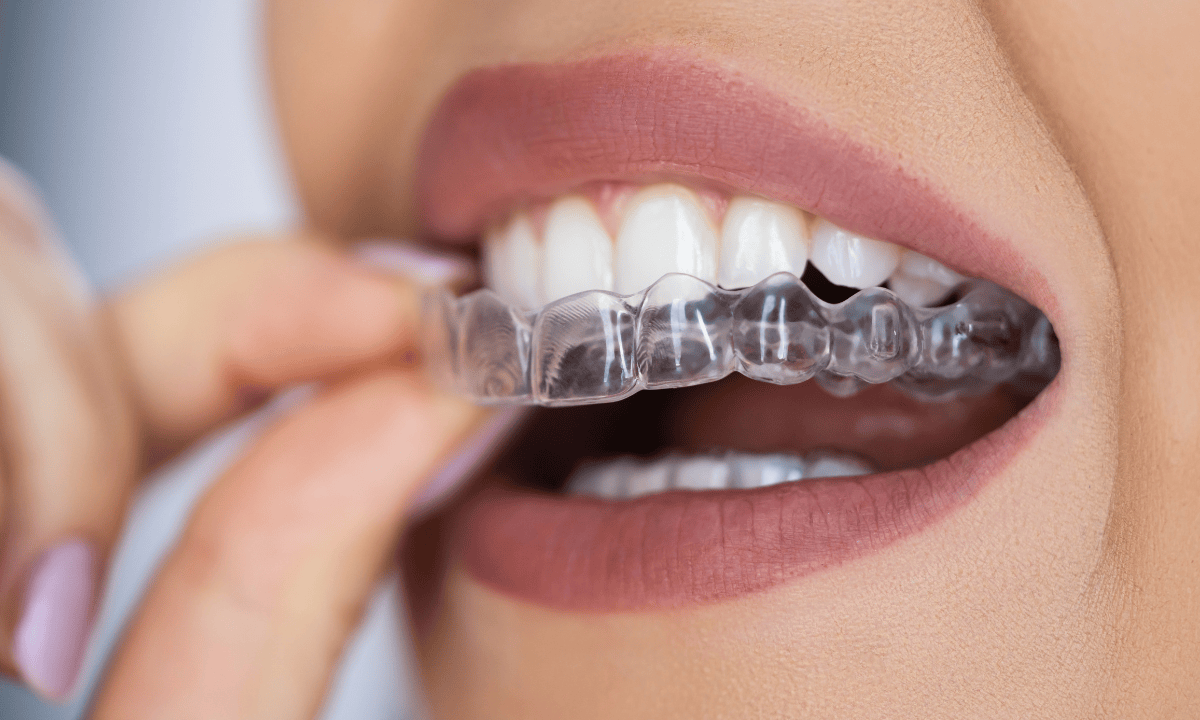
There is no single treatment that suits everyone. The right approach depends on the type and degree of your misalignment, your lifestyle, your age, and your budget. The options below cover the main treatments currently available.
Traditional metal braces
Traditional metal braces use stainless steel brackets and metal alloy wires to move teeth gradually into alignment. They remain one of the most reliable and versatile options, particularly for moderate to complex cases.
Modern brackets are smaller and more comfortable than earlier versions. Treatment typically takes 18 to 24 months, followed by a period of retainer wear to maintain results.
Ceramic braces
Ceramic braces work in the same way as metal braces but use tooth-coloured or clear ceramic brackets, making them less noticeable.
They are a popular choice for those who want the reliability of fixed braces with a more discreet appearance. Note that ceramic brackets can be more prone to staining, so dietary habits may need some adjustment during treatment.
Lingual braces
Lingual braces are fitted to the back surfaces of the teeth rather than the front, making them invisible when you smile. They are custom-made for each patient and tend to cost more than traditional braces. There is often an adjustment period as the tongue adapts to the new hardware.
Damon braces
Damon braces use self-ligating brackets – a sliding mechanism that holds the wire without rubber bands. This design can reduce friction and may shorten overall treatment time in some cases, though outcomes vary. They are generally more expensive than standard metal braces.
Clear aligners (in-clinic)
Clear aligners are removable, custom-made plastic trays that gradually shift teeth into position. Each set of aligners is worn for approximately two weeks before being replaced with the next in the series.
Treatment typically takes 12 to 18 months, though this varies. This option is well-suited to mild to moderate misalignment and is popular among adults who prefer a discreet, removable solution. Aligners must be worn consistently (usually 20 to 22 hours per day) for treatment to be effective.
At-home clear aligners
Some direct-to-consumer aligner services offer remote impression or scan options. These may appear more convenient, but they may not include regular in-person assessment or monitoring by a dentist or orthodontist.
This can make them unsuitable for complex bite issues, gum disease, active dental problems, or cases requiring close supervision. If you are interested in using at-home clear aligners, it’s important to speak with a dental professional before starting any treatment.
If you have questions about dental misalignment or are unsure which treatment might suit you, schedule an appointment with Thomson Medical to speak with a dental professional. A consultation gives you the opportunity to discuss your concerns, understand your options, and make an informed decision at your own pace.
Our dental specialists near you
Loading...
How much does teeth straightening cost in Singapore?
The cost of teeth straightening in Singapore varies considerably depending on the type of treatment, the complexity of your case, and the clinic you visit.
As a general guide:
-
Traditional metal braces tend to be the most affordable fixed option and generally start from SGD 3,400.
-
Ceramic and lingual braces are typically priced higher due to the materials and customisation involved. It generally starts from SGD 4,000.
-
Clear aligners vary widely in cost depending on the brand, clinic, and length of treatment. It generally starts from SGD 6,200.
-
At-home aligners are generally the most budget-friendly option, though they are not suitable for all cases. It’s generally between SGD 520–720.
Some dental insurance plans in Singapore may cover a portion of orthodontic treatment. Your dentist or clinic can advise on payment options and financing plans if cost is a consideration.
It is worth noting that these cost estimates are from May 2026. Schedule an appointment with Thomson Medical to get more up-to-date information about orthodontic treatment prices.
How to choose the right treatment
Deciding which treatment to pursue is best done in consultation with a dentist or orthodontist who can assess your specific situation. That said, there are a few general factors worth thinking through beforehand.
-
Severity of misalignment:
-
More complex cases – such as significant overcrowding or bite issues – may require fixed braces rather than aligners.
-
-
Lifestyle and preference:
-
Removable aligners offer flexibility but require discipline. Fixed braces work continuously without the need to remember to wear them.
-
-
Age:
-
While there is no upper age limit for orthodontic treatment, the timing may matter for younger patients whose jaws are still developing. Your dentist can advise on the most appropriate time to begin.
-
-
Budget:
-
Cost differences between options can be substantial. It is worth discussing the full cost of treatment (including follow-up care and retainers) up front.
-
A dental consultation is the most reliable way to understand which options are clinically appropriate for your situation.
What to expect after treatment
Some discomfort is normal in the days following the fitting or adjustment of braces, or when transitioning to a new set of aligners. This typically settles within a few days as your teeth begin to adjust.
Regardless of the treatment you choose, wearing a retainer after completing treatment is essential. Without a retainer, teeth can gradually drift back towards their original positions over time. Your dentist will advise on how long and how often the retainer should be worn.
Regular dental check-ups during and after treatment allow your dentist to monitor progress and make adjustments where needed.
If you have questions about dental misalignment or are unsure which treatment might suit you, request an appointment with Thomson Medical to explore your options and make an informed decision at your own pace.
FAQ
What is the best method to straighten teeth?
There is no single best method. The most suitable option depends on the nature and severity of your misalignment, your lifestyle, and your budget.
Clear aligners are a popular choice for many adults seeking a discreet option for mild to moderate cases, while fixed braces tend to be more appropriate for complex misalignment. A dentist or orthodontist can recommend the most appropriate treatment after an assessment.
How long does teeth straightening take?
Treatment length varies depending on the method and the complexity of your case. Clear aligners typically take 12 to 18 months, while traditional braces often take 18 to 24 months. Simpler cases may be completed more quickly. Your dentist will be able to give you a more accurate estimate based on your specific situation.
Is teeth straightening painful?
Most people experience some discomfort – especially in the first few days after braces are fitted or adjusted, or when switching to a new set of aligners. This tends to ease as the teeth begin to move. Over-the-counter pain relief and soft foods can help during these periods. If discomfort is persistent or severe, contact your dentist.
Can adults straighten their teeth, or is orthodontic treatment only for children and teenagers?
Orthodontic treatment is not limited to younger patients. Adults can and do undergo teeth straightening with good results. The process may take slightly longer in adults, as the jaw has stopped growing, but this does not prevent successful treatment. Clear aligners in particular have become increasingly popular among adults.
What is the difference between braces and clear aligners?
Braces are fixed appliances bonded to the teeth, working continuously throughout treatment.
Clear aligners are removable trays that are changed every one to two weeks.
Braces are generally considered more suitable for complex cases, while aligners offer greater flexibility and discretion for mild to moderate misalignment. Both approaches require wearing a retainer after treatment is complete.
Will my teeth stay straight after treatment?
Teeth can shift over time without ongoing retention. Wearing a retainer as directed by your dentist is the most effective way to maintain your results after treatment. Some patients wear their retainer nightly long-term; your dentist will advise on what is appropriate for your situation.
The information provided is intended for general guidance only and should not be considered medical advice. For personalised recommendations and tailored advice based on your unique situations, please consult a specialist at Thomson Medical. Request an appointment with Thomson Medical today.
References:
All About Braces | National Dental Centre Singapore. (2026). Ndcs.com.sg. https://www.ndcs.com.sg/our-specialties/orthodontics/all-about-braces