

If you have recently had a hysteroscopy or are preparing for one, you may be wondering how it will affect your next period. After all, this procedure involves inserting medical instruments into the uterus (womb).
For some women, their period arrives almost as expected; for others, the timing changes, or they experience spotting between cycles, causing uncertainty as to whether what they are experiencing is normal or something they should mention to their gynaecologist.
What is a hysteroscopy?
A hysteroscopy is a procedure that allows your doctor to examine the inside of your uterus using a thin, lighted tube called a hysteroscope. It comes in two forms:
Diagnostic hysteroscopy:
A diagnostic hysteroscopy is commonly used to investigate symptoms or identify problems such as abnormal uterine bleeding, polyps, or fibroids without removing any tissues.
Operative hysteroscopy:
An operative hysteroscopy is used to treat conditions identified during examination or a previous diagnostic hysteroscopy procedure.
During the procedure, your doctor will use specialised instruments to remove any detected abnormalities, such as polyps, fibroids, adhesions, or abnormal tissue
Diagnostic procedures often cause little period disruption, while operative ones – like polyp removal – may bring spotting or cycle shifts in your next 1-2 periods.
Can a hysteroscopy affect your period?
Yes, a hysteroscopy can temporarily affect your menstrual cycle. This is because the procedure involves examining and sometimes treating the inside of your uterus directly, so your body needs time to recover and readjust. Common reasons why your period may change after a hysteroscopy include:
Mechanical disturbance of the uterine lining:
The procedure involves inserting instruments into your uterus, which can disturb the endometrial lining that sheds during your period.
Tissue removal:
If polyps, fibroids, or other tissue were removed during the procedure, your uterine lining will need time to heal before returning to its normal cycle.
Hormonal responses:
Your body's hormonal balance can temporarily shift in response to the procedure, affecting the timing and flow of your next period.
Physical stress on the body:
Any medical procedure causes a degree of physical stress, which can temporarily disrupt your hormonal cycle.
These changes are usually temporary and resolve within one to two menstrual cycles. Most women notice their cycle stabilising by the second period, often with a lighter or less painful flow if polyps or fibroids were causing heavy bleeding before.
What can you expect immediately after a hysteroscopy?
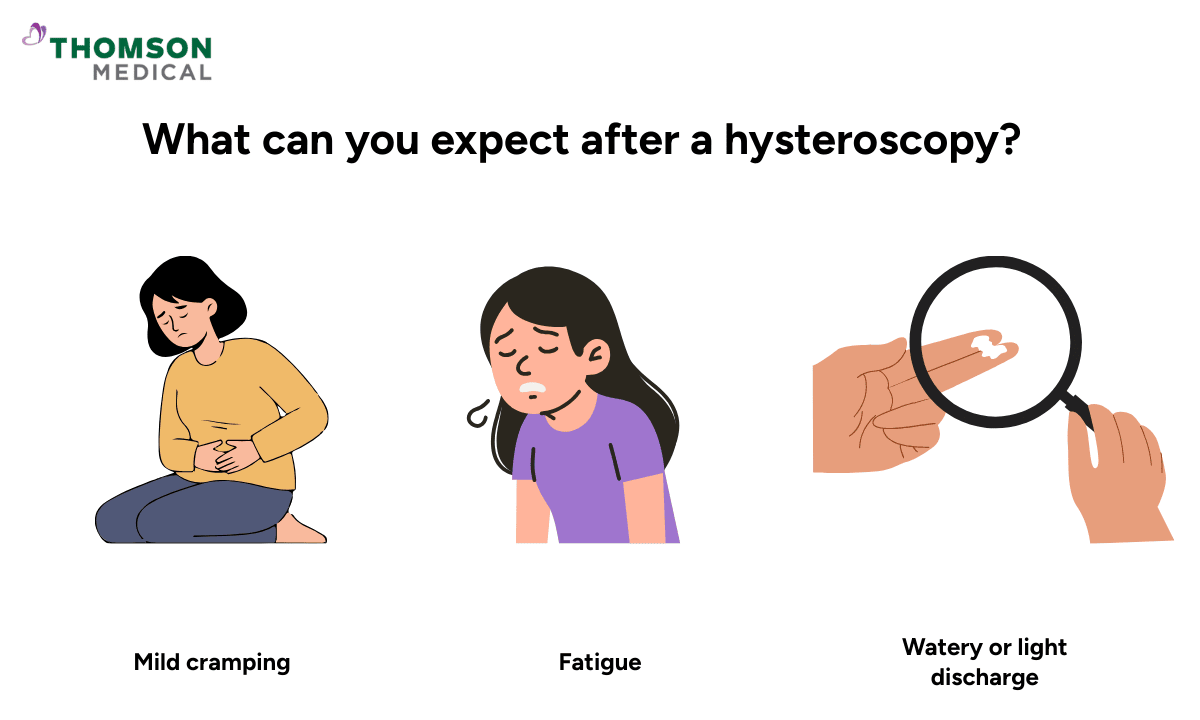
In the first 1-2 days after your procedure, it’s completely normal to experience some mild symptoms. These are a sign that your body is healing as it should:
Mild cramping:
Similar to period pain, it’s usually manageable with over-the-counter pain relief such as paracetamol or ibuprofen.
Fatigue:
Feeling tired for the rest of the day or the day after is normal, particularly if anaesthesia or sedation was used.
Watery or light discharge:
You may notice a small amount of clear, pink, or slightly blood-tinged discharge in the hours immediately following the procedure.
Most women return to normal activities within one to two days, especially after a diagnostic hysteroscopy. If you had an operative procedure with tissue removal, recovery may take slightly longer. Any changes to your menstrual cycle beyond these initial symptoms are covered in the sections below.
If you have concerns about your recovery, unusual symptoms, or changes in your menstrual cycle after a hysteroscopy, it’s important to seek medical advice. You can contact Thomson Women’s Clinic to arrange a consultation and receive guidance tailored to your needs.
Our gynaecologist in Singapore
Loading...
When will your period return after hysteroscopy?
Your next period may not arrive exactly on schedule after a hysteroscopy. When it returns – and how it looks – depends on several factors:
Where you were in your cycle at the time of the procedure:
If the procedure was performed early in your cycle, your period may arrive close to its expected date
If it was performed later in your cycle, a timing shift is more likely
Type of hysteroscopy performed:
Diagnostic hysteroscopy usually has minimal impact on cycle timing
Operative hysteroscopy – where tissue is removed – is more likely to cause noticeable temporary changes
Individual variation:
Every woman's body responds differently; some experience minimal disruption, while others notice more significant changes
You may specifically notice your period:
Arriving earlier or later than expected
Being skipped for one cycle entirely while the uterine lining regenerates
Gradually returning to its normal pattern as healing completes
Your cycle will gradually stabilise as your uterus heals. Track any changes and consult your hysteroscopy specialist if concerns persist.
How long will bleeding last after a hysteroscopy?
This largely depends on the type of hysteroscopy you had. Unlike the watery or light discharge mentioned earlier, this refers specifically to how long any form of bleeding – spotting or otherwise – continues during your recovery:
After a diagnostic hysteroscopy:
Since the procedure only involves examination with no tissue removal, vaginal bleeding typically clears within 1 to 7 days.
After an operative hysteroscopy:
When tissue such as polyps or fibroids has been removed, your uterus requires more healing time and bleeding may continue for up to 10 or 14 days.
Bleeding should gradually decrease over time. Sudden worsening or heavy bleeding after initial improvement needs prompt medical attention.
What other factors influence period changes?
Beyond the type of procedure, two additional factors can affect how your cycle responds:
Use of anaesthesia or medications
Hormonal medications:
Medications used to prepare your womb before the procedure may temporarily delay ovulation, pushing your next period off schedule
Anaesthesia:
The physical stress of anaesthesia can briefly disrupt the hormonal signals that regulate your cycle, particularly if you are sensitive to hormonal fluctuations
Pre-existing gynaecological conditions
Certain conditions can slow your cycle's return to normal, including:
PCOS:
Polycystic ovary syndrome (PCOS) may make pre-existing irregular periods even more unpredictable during recovery
Endometriosis:
Existing inflammation and hormonal imbalances can intensify post-procedure changes
Uterine fibroids:
If fibroids remain after the procedure, they may continue to influence your cycle
Hormonal imbalances:
Any pre-existing hormonal irregularity can amplify the body's response to the procedure
How can you manage your symptoms after a hysteroscopy?
As your body heals, a few simple steps can help you feel more comfortable and confident.
Use sanitary pads instead of tampons at first, as advised by your doctor
Keep track of your cycle for the next few months so you can notice any patterns or changes
Stay well-hydrated and give yourself time to rest – your body has just been through a procedure
Take any prescribed pain relief if you need it
Avoid intercourse until your doctor says it’s safe to resume
Follow all post-procedure instructions carefully to support proper healing
Most changes are temporary, and with a little patience, your routine should feel normal again soon.
When should you call your doctor?

While mild bleeding and cramping are normal, you should speak to a gynaecologist if you notice:
Heavy bleeding (soaking a pad every hour)
Bleeding that lasts longer than two weeks
Severe abdominal or pelvic pain
Fever or chills
Foul-smelling discharge
Missed periods for more than two cycles
These symptoms aren’t common, but they can signal infection or other complications and should be checked promptly.
FAQ
Is it normal for my period to be delayed after a hysteroscopy?
Yes, a delay of 1 to 2 weeks is common, especially after operative procedures. Most cycles normalise within 1 or 2 menstrual cycles.
Can a hysteroscopy make my period heavier or lighter?
Yes, your next 1-2 periods may be heavier or lighter depending on uterine tissue removal. Many women notice lighter flow afterward if polyps or fibroids were causing heavy bleeding.
Can a hysteroscopy affect my fertility?
Diagnostic hysteroscopy does not affect fertility. Operative hysteroscopy can actually improve it by removing polyps, fibroids, or adhesions blocking conception.
Can I use tampons after a hysteroscopy?
No, you should use sanitary pads instead of tampons for at least the first two weeks after your procedure. This reduces the risk of infection while your body heals. Wait until your doctor gives you the all-clear before using tampons or menstrual cups again.
Will I need medication to regulate my period afterwards?
Most women don't need medication. If irregular cycles persist beyond 2 cycles, your gynaecologist may discuss hormonal options.
Can my period return to normal immediately after the procedure?
Yes, some women experience a normal period right away, while others need one to two cycles to fully normalise.
The information provided is intended for general guidance only and should not be considered medical advice. For personalised recommendations and tailored advice, arrange a consultation with Thomson Women’s Clinic today.
For more information, contact us:
Thomson Specialists (Women's Health)
Thomson Women's Clinic (TWC)
- Novena:
6592 6686 (Call), 8611 8986 (WA) - Bukit Batok:
6569 0668 (Call), 8686 3525 (WA) - Choa Chu Kang:
6893 1227 (Call), 8282 1796 (WA) Jurong:
6262 8588 (Call), 6262 8588 (WA)- Katong (female doctor):
6970 2272 (Call), 8611 9020 (WA) - Punggol:
6243 6843 (Call), 8811 0328 (WA) - Sembawang: 6753 5228
- Sengkang: 6388 8125
- Serangoon (female doctor): 6382 3313
- Tampines: 6857 6266
- Tiong Bahru: 6276 1525