

You wake up tired, push through the day on willpower alone, and collapse into bed wondering why rest never seems to be enough. That persistent exhaustion you're carrying isn't just about needing more sleep – it might be your body asking for a different kind of attention. Traditional Chinese Medicine (TCM) sees fatigue not as a single problem to push through, but as a signal that your vital energy – your Qi– needs rebalancing.
What is fatigue in TCM?

In TCM, persistent fatigue often points to Qi deficiency – your body's vital energy running low. Your Qi powers everything from clear thinking to proper digestion, and when it's depleted or blocked, the effects ripple through your entire system.
Think of Qi like electrical current moving through your body along pathways called meridians. When that flow weakens or gets blocked, you don't just feel tired – you feel stuck. You might rest for hours but never feel restored. You might catch every cold that goes around. Your motivation vanishes.
TCM doesn't just look at your energy levels in isolation. It examines how your whole system works together, identifying where the imbalance started and why your body can't restore itself naturally.
Causes of fatigue according to TCM
TCM identifies several underlying patterns that may contribute to chronic tiredness. Each pattern has distinct characteristics that point to different imbalances in your body.
Qi deficiency: A common cause of fatigue
Qiis your body's vital energy that supports all physical and mental functions. When your Qibecomes depleted, even simple daily activities can feel exhausting.
Common signs of Qideficiency include:
Feeling too tired to exercise or complete daily tasks
Shortness of breath or shallow breathing
A weak or soft voice
Poor appetite and digestive issues
Catching colds or infections frequently
Qideficiency often develops from chronic stress, overwork, inadequate nutrition, or prolonged illness. When this happens, your body's energy reserves become insufficient to support your daily needs.
Blood deficiency and persistent tiredness
In TCM, blood does more than carry oxygen – it also nourishes your organs and tissues, supporting mental clarity and physical wellbeing. When your blood becomes deficient, you may experience a distinct type of fatigue.
You might notice these common symptoms:
Dizziness or light-headedness
Pale complexion or pale lips
Dry skin or brittle nails
Poor memory or difficulty concentrating
Light or irregular menstrual periods (for women)
Blood deficiency can develop from inadequate nutrition, chronic illness, or ongoing heavy menstrual bleeding. This pattern often leaves you with both mental fog and physical tiredness.
How Yin and Yang imbalance affects your energy
Yinand Yangrepresent opposing but complementary forces in your body. Yinis cooling and restorative, while Yangis warming and energising. When these forces become imbalanced, you may experience fatigue.
Yindeficiency may present as restless exhaustion – you feel tired but struggle to sleep well, experience night sweats, or feel warm in the afternoon.
Yangdeficiency may present as heavy fatigue – you feel constantly cold, lack motivation, and notice slower digestion.
Your TCM practitioner will work with you to identify which pattern may be affecting you and develop a personalised approach to support your body's balance.
If you're struggling to identify which pattern is causing your fatigue, schedule an appointment with Thomson Chinese Medicine. Our TCM practitioners can assess your individual condition and help pinpoint the underlying imbalances that affect your energy levels.
Our physicians in Singapore
Loading...
How TCM diagnoses chronic fatigue
TCM practitioners take a holistic approach to understanding the root patterns behind your fatigue. Rather than relying solely on laboratory tests, they assess your body's overall balance through traditional methods that have been refined over centuries.
During your consultation, your practitioner will conduct several assessments, such as:
Tongue examination:
Tongue diagnosis reveals your internal health through your tongue's colour, texture, and coating.
A pale tongue might indicate blood deficiency, while a red tongue with minimal coating could suggest yin deficiency.
Health inquiry:
Your practitioner will learn about your sleep quality, digestion, stress levels, menstrual cycle (for women), and when you feel most tired during the day. These details help identify patterns that may explain your fatigue.
Pulse diagnosis:
This method involves feeling the pulse at different positions on both wrists. Each position corresponds to different organs and may reveal information about your Qi, Blood, Yin, and Yangbalance.
This thorough assessment helps your practitioner understand the underlying patterns that may be contributing to your fatigue.
TCM treatment for fatigue
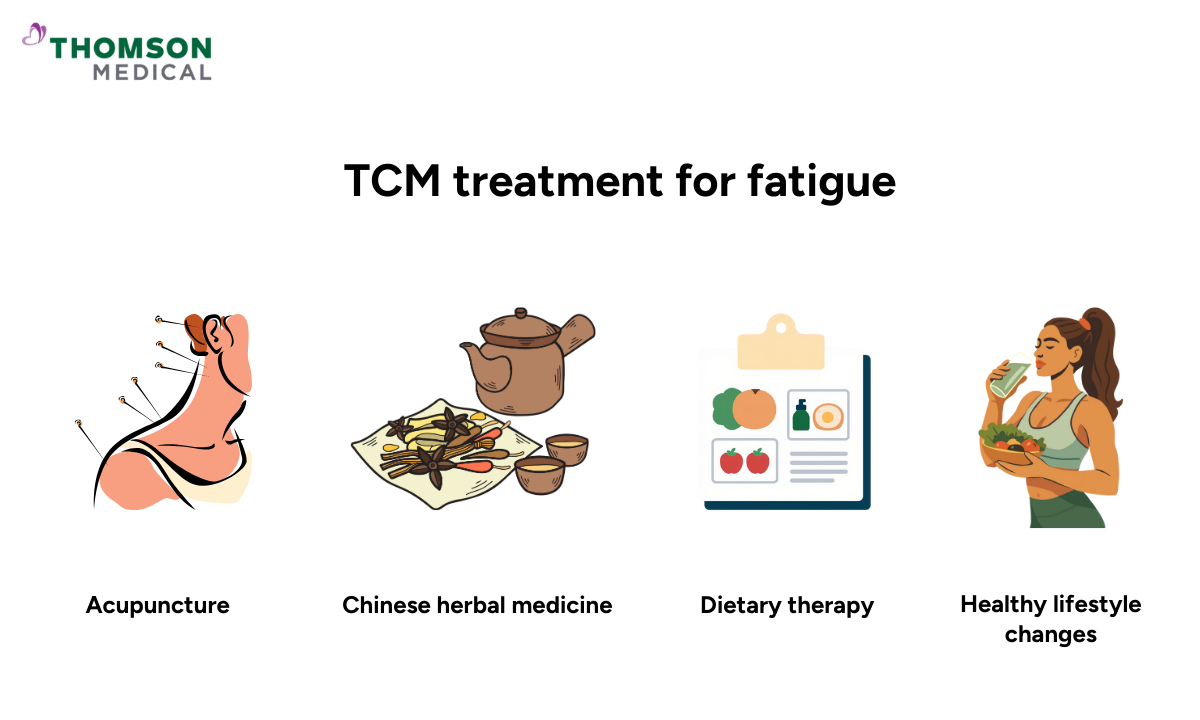
Once your practitioner identifies the underlying cause of your tiredness, they'll create a treatment plan that is tailored to your specific needs. TCM offers several approaches that aim to support your body's natural balance and energy.
Acupuncture for energy restoration
Acupuncture involves inserting fine needles into specific points along your body's meridians. This will stimulate Qiproduction, improve blood circulation, balance Yinand Yangenergies, and reduce stress.
Most people find acupuncture relaxing. You might feel slight tingling or heaviness around the needle sites, which indicates your Qiis responding to the treatment. With regular sessions, many people notice improved energy levels and better sleep, though the timeline varies by individual.
Chinese herbal medicine for fatigue
Herbal formulas are a key part of TCM treatment. Your practitioner will prescribe a combination of herbs tailored to your individual constitution.
Common herbs that may be used for fatigue include:
Ginseng (Ren Shen) for Qideficiency
Astragalus (Huang Qi) to support energy and immunity
Angelica root (Dang Gui) for Blood deficiency
Rehmannia (Shu Di Huang) to nourish Yin
These herbs work together to address underlying imbalances in your body. They usually come as teas, powders, or capsules. Your practitioner may adjust the formula as they monitor your progress.
Dietary therapy and lifestyle changes
In TCM, what you eat plays an important role in supporting your energy levels. Your practitioner will recommend dietary adjustments based on your individual needs.
For Qideficiency, you may be guided towards these foods:
Root vegetables and whole grains like rice and oats
Warm, cooked foods that are easier to digest
Moderate amounts of meat or fish
For Blood deficiency, nourishing foods may include:
Leafy greens and beetroot
Eggs and black sesame seeds
Foods rich in iron and nutrients
Your practitioner may also suggest lifestyle adjustments such as prioritising rest, practising gentle exercises liketai chi, and maintaining regular sleep schedules. These changes work alongside your treatment to support your body's natural processes.
If persistent fatigue is affecting your daily life, schedule an appointment with Thomson Chinese Medicine. Our TCM practitioners can work with you to develop a treatment approach as per your health conditions.
When to seek TCM doctor for fatigue
If you've been feeling persistently tired despite getting enough sleep, TCM may help address the underlying imbalance. Consider reaching out when:
Your fatigue has lasted for several weeks or months
Rest and lifestyle changes haven't helped restore your energy
Your tiredness is affecting your daily activities or work
You're experiencing other symptoms like poor digestion, frequent illness, or difficulty concentrating
TCM can work alongside your existing care to support your overall wellbeing. If you're currently under medical care, it's important to inform both your doctor and TCM practitioner so they can coordinate to support your health.
FAQ
How long does TCM take to treat fatigue?
TCM treatment duration varies based on how severe your fatigue is and how long you've had it. Some people notice improvements within 2 to 4 weeks, while chronic cases may take several months. Your practitioner will monitor your progress and adjust treatment as needed.
Can TCM help with chronic fatigue syndrome?
TCM can help manage chronic fatigue syndrome by addressing underlying imbalances in your body's energy systems. While it may not cure the condition, many patients experience reduced symptoms and improved quality of life through regular treatment.
What herbs does TCM use for fatigue?
Common herbs include ginseng for Qi deficiency, astragalus for energy and immunity, angelica root for blood deficiency, and rehmannia for yin nourishment. Your practitioner will prescribe a formula tailored to your specific type of fatigue.
Is acupuncture effective for tiredness?
Yes, acupuncture helps restore your energy flow, improve your sleep quality, and reduce stress, all of which contribute to better energy levels. Many patients report feeling more energised after consistent treatment.
Can I combine TCM with Western medicine for fatigue?
Yes. TCM can complement Western medical treatments. However, inform both your TCM practitioner and doctor about all treatments you're receiving to make sure they work safely together.
How many acupuncture sessions do I need for fatigue?
Most people need 6 to 10 sessions to see significant improvement, usually scheduled once or twice weekly. Your practitioner will recommend a treatment plan based on your specific condition and your response to therapy.
The information provided is intended for general guidance only and should not be considered medical advice. For personalised recommendations and advice based on your unique conditions, schedule an appointment with Thomson Chinese Medicine today.
Physician Seah Ai Wei
Traditional Chinese Medicine
Thomson Chinese Medicine (TCM United Square) and 1 other
English, Mandarin
Alliance MediNet
