

If you have been reading about polycystic ovary syndrome (PCOS), you may have come across a newer term, polyendocrine metabolic ovarian syndrome (PMOS). Your doctor may have started using it too, which naturally raises the question of whether something about your diagnosis has changed.
PMOS and PCOS are the same condition, but the name was formally changed in May 2026, after a global consensus process. This is because “polycystic” was misleading: the condition isn’t defined by ovarian cysts, and you don’t need to have them be diagnosed. The new name reflects what it actually involves, which is a set of hormonal and metabolic changes affecting the ovaries and the rest of the body. Here’s where the new name came from, what it means for your diagnosis, and what stays the same in how the condition is managed.
What is PMOS?
Polyendocrine metabolic ovarian syndrome (PMOS) is the newly adopted term for polycystic ovary syndrome (PCOS). It is a hormonal and metabolic condition that may affect the ovaries, menstrual cycle, fertility, and overall health.
The proposed name of PMOS aims to better reflect the wider effects of the condition, which encompass:
Polyendocrine: this implies that the condition may impact multiple hormone systems in the body, not just the hormones involved in reproduction.
Metabolic: highlights how the condition could affect insulin processing and blood sugar management, potentially increasing the risk of conditions such as type 2 and gestational diabetes.
Ovarian: acknowledges that the ovaries continue to be a significant component of the condition.
Why is the name change important?
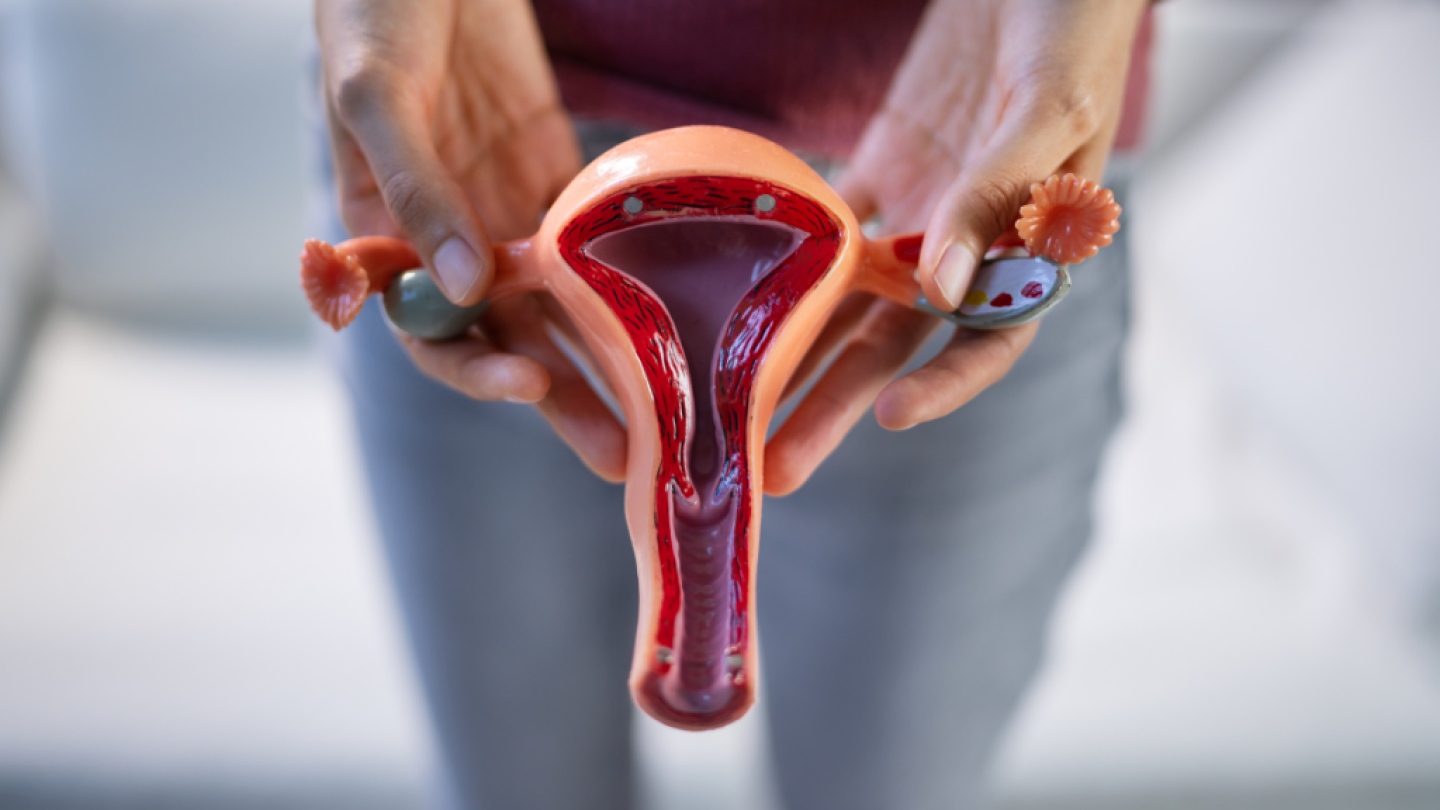
The name “polycystic ovary syndrome” may give the impression that the condition is mainly about having cysts on the ovaries. However, PCOS is actually a broader condition that could affect various aspects of a woman’s health, including hormones, metabolism, menstrual cycle, and fertility, as well as the skin and hair.
Despite its name, the “cysts” seen in PCOS are not traditional ovarian cysts. The small structures that may appear on an ultrasound are follicles (small, fluid-filled sacs that contain developing eggs). In PCOS, some follicles may stop developing normally, which may result in multiple small follicles being seen on an ultrasound.
This distinction is important because these follicles are not harmful cysts that need to be removed. Some women with PCOS may also have no polycystic or cyst appearance of the ovaries at all.
Healthcare professionals and researchers have therefore argued that the name should better reflect the wider hormonal, metabolic, and ovarian features of the condition. So the name change to PMOS is intended to reduce confusion, highlight the broader effects of the condition, and encourage a more thorough approach to care.
Is there a difference between PMOS and PCOS?
PMOS and PCOS refer to the same underlying condition, so the proposed name change does not mean that you have developed a new condition or that your existing diagnosis is no longer valid.
The main difference is how the condition is described. PMOS aims to better reflect that the condition may affect more than the ovaries, including hormonal, metabolic, and reproductive health.
What stays the same?
The symptoms and clinical features doctors look for remain the same, including:
Irregular periods or menstrual cycle.
Polycystic-looking ovaries on an ultrasound scan in some women.
Higher androgen levels (hormones that are present in both men and women, but typically at higher levels in men), which may cause acne, excess hair growth, or hair thinning.
What may change?
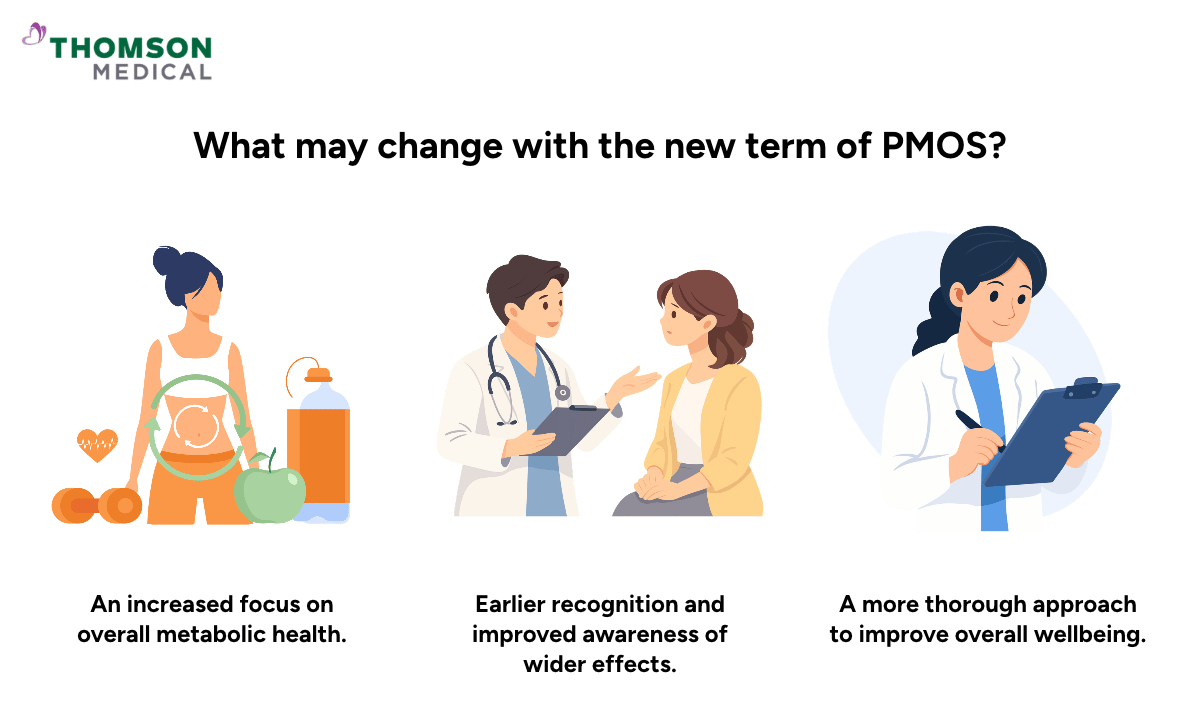
The broader understanding reflected in the PMOS name may encourage healthcare professionals to adopt a more comprehensive approach to care. This may include:
Increased focus on metabolic health:
Regular monitoring of blood sugar, blood pressure, and other factors linked to long-term cardiovascular health may become more important.
Earlier recognition and management:
Improved awareness of the condition’s wider effects could help some women receive appropriate assessment and care earlier.
A more thorough approach to treatment:
Care will address not only periods and fertility but also metabolic health and other symptoms that may affect quality of life.
Our gynaecologists in Singapore
Loading...
How is PMOS diagnosed?
PMOS is diagnosed using the same clinical approach previously used for PCOS. Your doctors may consider making a diagnosis if at least two of the following three features are present. These are commonly known as the Rotterdam criteria, which include:
Irregular, infrequent, or absent periods:
This may indicate that ovulation (the release of an egg from the ovary) is not happening regularly.
Higher androgen levels or signs of androgen excess:
This may be identified through blood tests or through symptoms such as excess facial or body hair, acne, or thinning hair on the scalp.
Polycystic ovarian appearance:
An ultrasound scan may reveal the presence of multiple small follicles (fluid-filled sacs containing developing eggs) in the ovaries. These follicles are not the same as harmful ovarian cysts.
A diagnosis does not require all three features, and an ultrasound is not always necessary if the other two criteria are met.
What tests are used to diagnose PMOS?
Your doctor may recommend further tests to evaluate your symptoms, assess your general health, and eliminate other potential causes of your symptoms. Depending on your symptoms and medical history, these may include:
Androgen tests:
These check hormone levels associated with symptoms such as acne, excess hair growth, or thinning of the scalp hair.
Thyroid and prolactin tests:
These tests may rule out thyroid problems or high prolactin levels, which may affect menstrual cycles.
Other hormone tests:
These may be recommended to rule out other possible causes of irregular periods or excess androgens.
Metabolic screening tests:
Blood sugar, cholesterol, and blood pressure may be checked, as PMOS could be associated with insulin resistance and an increased risk of metabolic and cardiovascular problems.
If you are experiencing symptoms that may be linked to PMOS, speak with an O&G doctorto discuss your symptoms and find out whether further assessment or diagnostic tests may be appropriate. Schedule an appointmentwith Thomson Medical.
Does treatment change under the new name?
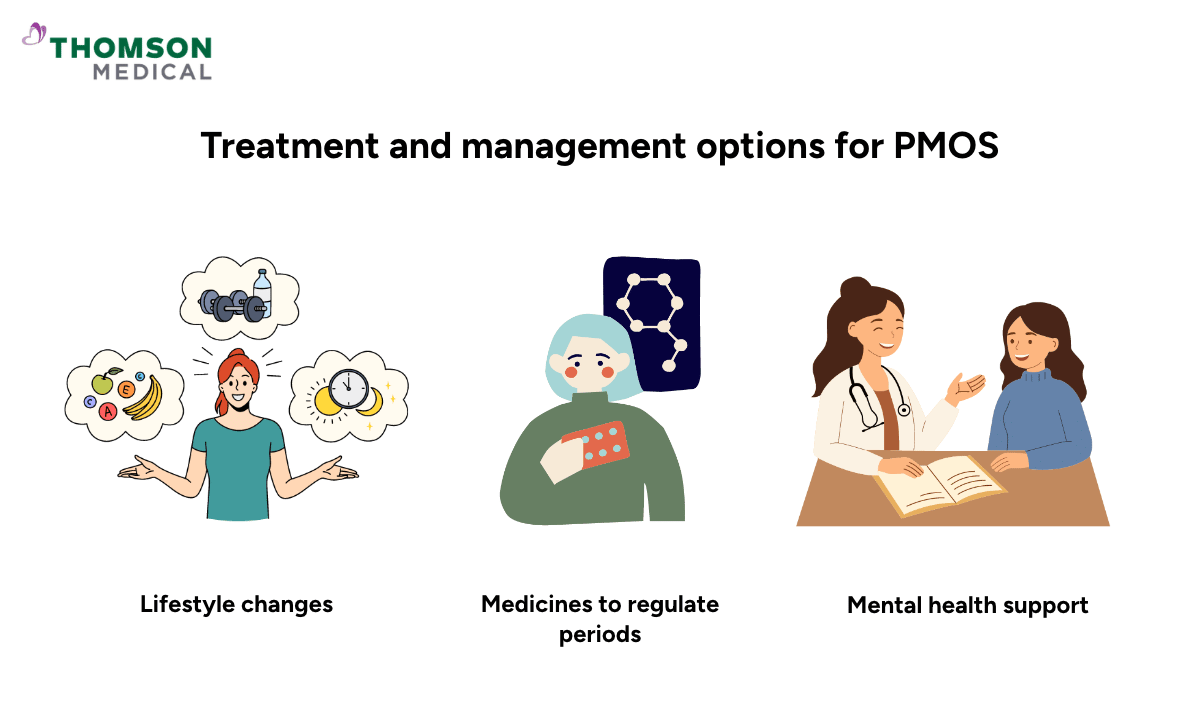
Changing the name from PCOS to PMOS does not mean that a completely new treatment plan is required. PMOS and PCOS refer to the same condition, so treatment will still depend on your symptoms, overall health, personal priorities and whether or not you are trying to conceive.
Your doctor may recommend hormonal birth control to regulate your periods and manage symptoms associated with higher androgen levels, such as acne and excess hair growth. This is commonly considered for women who are not trying to conceive.
If you have metabolic concerns, such as insulin resistance or an increased risk of type 2 diabetes, your doctor may consider insulin-sensitising medicines. These medicines could help improve the way your body responds to insulin and support metabolic health.
Anti-androgen medicine may also be considered if symptoms such as excess facial or body hair persist despite other treatments. This medicine works by reducing the effects of androgens (hormones that may contribute to excess hair growth and acne) on the skin and hair follicles.
Additional treatment and management options for PMOS recommended by your doctor may include:
Lifestyle changes:
Healthy eating and regular physical activity are an important part of care for women with PMOS. These habits may support metabolic health, improve the body’s response to insulin, and help with weight management.
Mental health support:
Anxiety and depression are more common among women with PMOS, so emotional wellbeing may also be an important part of care.
If you are feeling consistently anxious, low, or overwhelmed, speak with your doctor. They may recommend counselling, psychological support, or referral to a mental health professional where appropriate.
When should you go to the doctor?
The symptoms of PMOS may be easy to overlook, especially when they appear gradually. However, it is generally recommended that you see a doctor if you experience several of the following symptoms:
Irregular or missed periods:
Missed or irregular periods may indicate that you are not ovulating regularly. However, they may also be caused by other factors, so it is worth arranging an assessment.
Difficulty becoming pregnant:
Consider seeking fertility advice if you have been trying to conceive for 12 months without success, or for 6 months if you are over 35. You could speak to a doctor earlier if your periods are very irregular or absent.
Signs of metabolic changes:
PMOS may be associated with metabolic changes, including insulin resistance, which occurs when the body does not respond to insulin as effectively.
Dark, velvety skin patches on the neck, armpits or groin may indicate insulin resistance, while weight changes or difficulty managing your weight may also occur alongside these metabolic changes.
Excess facial or body hair:
Coarser or darker hair growth in areas such as the chin, upper lip, chest or abdomen may indicate hormonal changes, such as higher levels of androgens.
Persistent acne:
Ongoing acne, particularly around the jawline and lower face, especially if it does not improve with usual skincare or topical treatments.
Thinning hair or increased hair loss:
Noticeable thinning around the crown or hairline could sometimes occur alongside hormonal changes associated with PMOS.
If you are experiencing any of the mentioned symptoms above, you may consider speaking with an O&G doctor to discuss and find out whether a further assessment is appropriate. Schedule an appointment with Thomson Medical.
FAQ
Does PMOS mean that I no longer have PCOS?
PMOS is a new term for PCOS; it is not a different condition. If you have already been diagnosed with PCOS, this diagnosis remains valid, and you do not need to be diagnosed again just because the name has changed.
You can continue with your current medications, follow-up appointments and treatment plan as recommended by your doctor. The change in terminology alone does not mean that you need to make immediate changes to your care.
Can PMOS affect fertility?
PMOS can affect ovulation, meaning that an egg may not be released regularly each month. This can make it harder to predict fertile days and may make it more difficult for some women to conceive. However, fertility can be affected by many factors, so seeking a diagnosis may help to identify the most appropriate support.
Can I still get pregnant with PMOS?
Yes, women with PMOS may be able to conceive naturally. However, if the condition is making conception difficult, your doctor may recommend various management options, such as making lifestyle changes, taking medication to support ovulation, or undergoing fertility treatment.
The suitable approach will depend on factors such as your age, your menstrual cycle, how long you have been trying to conceive, and whether any other fertility issues are present.
Can PMOS get mistaken for PCOS?
PMOS and PCOS refer to the same underlying condition, so they are not conditions that can be mistaken for one another. However, you may continue to see both terms in medical records, research, and patient information as the new terminology is introduced. While the name may change, the symptoms, diagnostic approach, and treatment options will remain the same.
The information provided is intended for general guidance only and should not be considered medical advice. For personalised advice based on your unique conditions, schedule an appointment with Thomson Medical.
Reference
Teede, H., Khomami, M., Morman, R., et al. (2026). Polyendocrine metabolic ovarian syndrome, the new name for polycystic ovary syndrome: A multistep global consensus process. The Lancet, 407, 2329-2339.
For more information, contact us:
Thomson Specialists (Women's Health)
Thomson Women's Clinic (TWC)
- Novena:
6592 6686 (Call), 8611 8986 (WA) - Bukit Batok:
6569 0668 (Call), 8686 3525 (WA) - Choa Chu Kang:
6893 1227 (Call), 8282 1796 (WA) Jurong:
6262 8588 (Call), 6262 8588 (WA)- Katong (female doctor):
6970 2272 (Call), 8611 9020 (WA) - Punggol:
6243 6843 (Call), 8811 0328 (WA) - Sembawang: 6753 5228
- Sengkang: 6388 8125
- Serangoon (female doctor): 6382 3313
- Tampines: 6857 6266
- Tiong Bahru: 6276 1525