
.png%3Fbranch%3Dprod&w=3840&q=75)
You might have heard the words "polyps" and "fibroids" during a gynaecologist visit or while searching online about symptoms like irregular bleeding or pelvic pain. At first, they may sound similar, and you might question if they are the same thing, which one is more serious, and what they might mean for your health.
Polyps and fibroids are both common conditions in the female reproductive system, and they are usually non-cancerous and very manageable with the right care. Understanding the difference between the two can help you feel more confident in conversations with your doctor and more informed to decide on the right next steps for your health.
What is a fibroid?
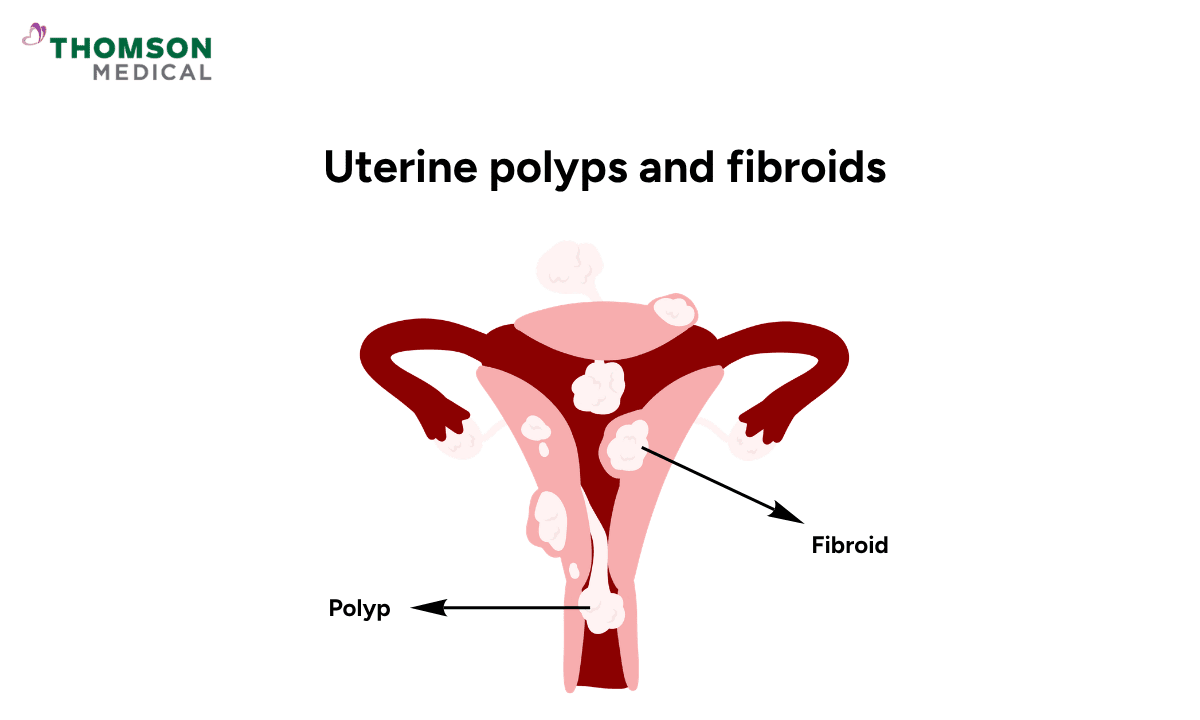
A uterine fibroid is a growth of muscle tissue that forms in or around your uterus and is benign (non-cancerous).
Fibroids can vary in terms of
Size: from a few millimetres to several centimetres
Number: a single fibroid or multiple
Location: inside the uterine cavity, within the uterine wall, or on the outer surface of the uterus
Hormones, especially oestrogen and progesterone, often affect them, and they are more common during your reproductive age.
Common signs of fibroids may include:
Heavy or prolonged periods
Pelvic pressure or fullness
Frequent urination
That said, many women live with fibroids and experience no symptoms at all. Fibroids are often discovered incidentally during a routine scan or pelvic examination.
What is a polyp?
A uterine polyp is an overgrowth of the endometrial lining. This condition is quite common, especially in women in their 30s to 50s and around the time of perimenopause. Many women may have them without realising it, as they often do not cause obvious symptoms.
Compared to fibroids, polyps are typically:
Usually smaller and softer
Often attached to the uterine lining by a thin stalk
Affected by hormones, especially oestrogen
Polyps can lead to:
Irregular bleeding
Bleeding between periods
Difficulty with implantation in some cases
While it can feel worrying to hear that you have a uterine polyp, it is important to know that many polyps are benign and grow slowly and often manageable. With the right assessment and follow-up from your doctor, you can better understand your condition and feel more reassured about your next steps.
Key differences between polyps and fibroids
Polyps and fibroids can cause similar symptoms, but they are different in how they develop and behave. Knowing these differences can help you feel clearer about what your condition means.
Here's a simple way to compare:
Feature | Polyps | Fibroids |
Origin | Lining of the uterus (endometrium) | Muscle layer of the uterus |
Structure | Soft tissue growth | Firm, solid muscle growth |
Size | Usually small | Can vary from small to large |
Shape | Often on a stalk | Usually round, embedded in tissue |
Symptoms | Irregular bleeding, spotting | Heavy periods, pressure symptoms |
Hormonal influence | Primarily oestrogen-driven | Oestrogen and progesterone |
Because symptoms can overlap, your doctor may recommend certain tests, such as an ultrasound or hysteroscopy, to get a clearer picture of what is happening and tailor the right care plan for you.
How does your doctor tell the difference between polyps and fibroids?
You might be wondering how your doctor can identify the difference since the symptoms can be the same.
Your doctor will usually start by asking about your medical history and symptoms and conducting a pelvic examination.
To confirm the diagnosis, they might recommend these tests:
Transvaginal ultrasound is usually the first step
Hysteroscopy lets your doctor see directly inside your uterus
Sonohysterography is a specialised ultrasound that uses saline to better visualise the uterine cavity
MRI is used when more detailed imaging is needed
These tests help your doctor determine:
The exact location of the growth
Its size and structure
Whether it is a polyp or a fibroid
With the right imaging and evaluation, your doctor can accurately diagnose your condition and guide you toward appropriate care.
If you’re experiencing symptoms such as irregular bleeding or pelvic discomfort, request an appointment at Thomson Medical. Our medical professionals can help assess whether they may be related to a polyp or fibroid.
Which is more serious, polyps or fibroids?
It's normal to ask which of these two terms is more serious and if you should be worried when you hear them. The answer usually depends on your own situation and not on the condition itself.
For many women, both polyps and fibroids are benign and do not cause significant problems. That said, their impact can vary from person to person.
With polyps, most are harmless and may resolve on their own. However, in a small number of cases, some polyps can develop atypical cells, which is why your doctor may recommend monitoring or removal as a precaution to make sure everything stays that way.
With fibroids, symptoms are influenced by both size and location within the uterus. A single larger fibroid positioned near the uterine cavity can cause more noticeable symptoms, such as heavy periods or pelvic discomfort, than multiple smaller ones in other locations.
Instead of worrying about which condition is more serious, it might be helpful to know how your condition is affecting you and to consult your doctor about what to do next.
Our gynaecologists in Singapore
Loading...
What are the treatment options for polyps and fibroids?
You might be wondering whether you need treatment if you've been told you have a polyp or fibroid. The good news is that not all cases need immediate treatment.
Your doctor will consider several factors, such as:
Your symptoms
The size and location of the growth
Your age
Your plans for having children in the future
These factors will help your doctor decide if you need treatment and what type of treatment could be best for you.
Monitoring
If your fibroid or polyp is small and not causing any problems, your doctor may recommend monitoring, such as:
Regular ultrasound scans to track any changes in size
Keeping note of your symptoms, such as the frequency or severity of bleeding or pelvic discomfort
Many growths remain stable over time, and this method lets you stay safe while avoiding unnecessary intervention.
Medication
Medications are often used to help manage symptoms rather than remove the growth itself.
Your doctor may suggest the following, depending on your condition:
Hormonal therapies to help control your period and lessen the amount of bleeding
Medicine to make fibroids smaller
Pain relief if you have cramps or other symptoms
If your symptoms are mild to moderate, this approach may be suitable if your symptoms are mild to moderate.
Minimally invasive procedures
Many of today's treatment options are minimally invasive.
These might include:
Hysteroscopic removal of polyps, in which your doctor eliminates the polyp using a small camera and specialised instruments that is inserted into the uterus
Depending on the size and location of the fibroids, minimally invasive therapies for them may include:
Uterine artery embolization to cut off blood flow and shrink the fibroids
Radiofrequency ablation to treat the fibroid tissue
Laparoscopic procedures to take out the fibroids
These methods make it possible to treat the area with as little damage to the surrounding tissue as possible.
Surgery
If other treatments have not provided sufficient relief or if your symptoms are severe or significantly affecting your quality of life, surgery may be an appropriate option. For instance, your doctor may recommend a myomectomy to remove fibroids while keeping your uterus intact.
Your doctor will take the time to walk you through the benefits and risks, helping you choose an appropriate treatment option.
If you’ve been told you may have a uterine polyp or fibroid, or you’re unsure what your symptoms mean, request an appointment with Thomson Medical. Our doctors can help you understand your condition and decide whether monitoring or treatment is appropriate for you.
FAQ
How do you know if you have polyps or fibroids?
You may notice symptoms such as the following:
Heavy or irregular bleeding
Pelvic pressure
Difficulty conceiving
However, symptoms alone are not enough to tell the difference. Imaging tests, such as ultrasound, are needed to confirm the diagnosis.
Do polyps and fibroids need to be removed?
Removal is usually recommended if you have symptoms, abnormal bleeding, or difficulty conceiving or if there is concern about the nature of the growth. Your doctor will advise based on your situation.
Can you tell if a polyp is cancerous on ultrasound?
Ultrasound can provide helpful clues about the appearance of a polyp, but it cannot definitively determine whether it is cancerous. A confirmed diagnosis usually requires tissue testing after removal or biopsy.
What happens if you don’t remove polyps or fibroids?
If the polyp or fibroid is small and not causing symptoms, nothing may happen.
However, large fibroids may occasionally affect nearby organs and, in rare cases, impact kidney function. Polyps, especially after menopause, may present with bleeding that should be evaluated to avoid missing other conditions.
What are signs you may need surgery?
Your doctor may recommend surgery if you have:
Persistent heavy bleeding
Anaemia
Infertility
Rapid growth of the lesion
Significant pain or pressure that does not improve with medication
What foods affect polyps and fibroids?
No specific food directly causes polyps or fibroids. However, diets high in sugar, processed foods, red meat, or alcohol may contribute to hormonal imbalance. A balanced diet with fibre, fruits, vegetables, and healthy fats can help support your overall health.
The information is intended for general guidance only and should not be considered medical advice. For personalised recommendations and advice based on your unique situation, please consult a specialist at Thomson Medical. Request an appointment with Thomson Medical today.
For more information, contact us:
Thomson Specialists (Women's Health)
Thomson Women's Clinic (TWC)
- Novena:
6592 6686 (Call), 8611 8986 (WA) - Bukit Batok:
6569 0668 (Call), 8686 3525 (WA) - Choa Chu Kang:
6893 1227 (Call), 8282 1796 (WA) Jurong:
6262 8588 (Call), 6262 8588 (WA)- Katong (female doctor):
6970 2272 (Call), 8611 9020 (WA) - Punggol:
6243 6843 (Call), 8811 0328 (WA) - Sembawang: 6753 5228
- Sengkang: 6388 8125
- Serangoon (female doctor): 6382 3313
- Tampines: 6857 6266
- Tiong Bahru: 6276 1525