

Seeing your baby vomit forcefully can be distressing, particularly when it happens repeatedly or soon after feeding. Many parents worry that something serious may be causing these episodes.
Projectile vomiting refers to forceful vomiting that travels a distance and may indicate feeding intolerance, reflux, or conditions that require medical evaluation, especially in young infants. While not every episode signals a serious problem, it is important to understand the pattern and associated symptoms.
Learning what projectile vomiting looks like, possible causes, and when to seek medical advice can help you respond calmly and ensure your baby receives appropriate care.
Is projectile vomiting normal in babies?
Because it looks so intense, projectile vomiting understandably worries parents. While it can happen occasionally in healthy babies, it's not regular reflux, and it’s best to consult a doctor, especially if it keeps happening.
Projectile vomiting doesn't necessarily mean that your baby is in danger. However, it's still worth getting it looked at to understand what's going on.
When milk comes back up, is it spit-up or projectile vomiting?
For many parents, it’s not always easy to know if what you’re seeing is normal spit-up or something to worry about.
Here's how to tell the difference:
Spit-up | Projectile vomiting |
Effortless | Forceful |
Expected, usually after feeding | Sudden |
Small amounts of milk | Large in volume |
Gently dribble or flow out | Often shoots out rather than dribbles |
Spit-up is common in babies. It is usually linked to normal reflux – milk comes back up because their digestive system is still maturing. It's messy, but it's part of typical development and doesn't hurt your baby.
Projectile vomiting is different from normal spit-up, which is why it's so alarming when it happens.
When to see a doctor
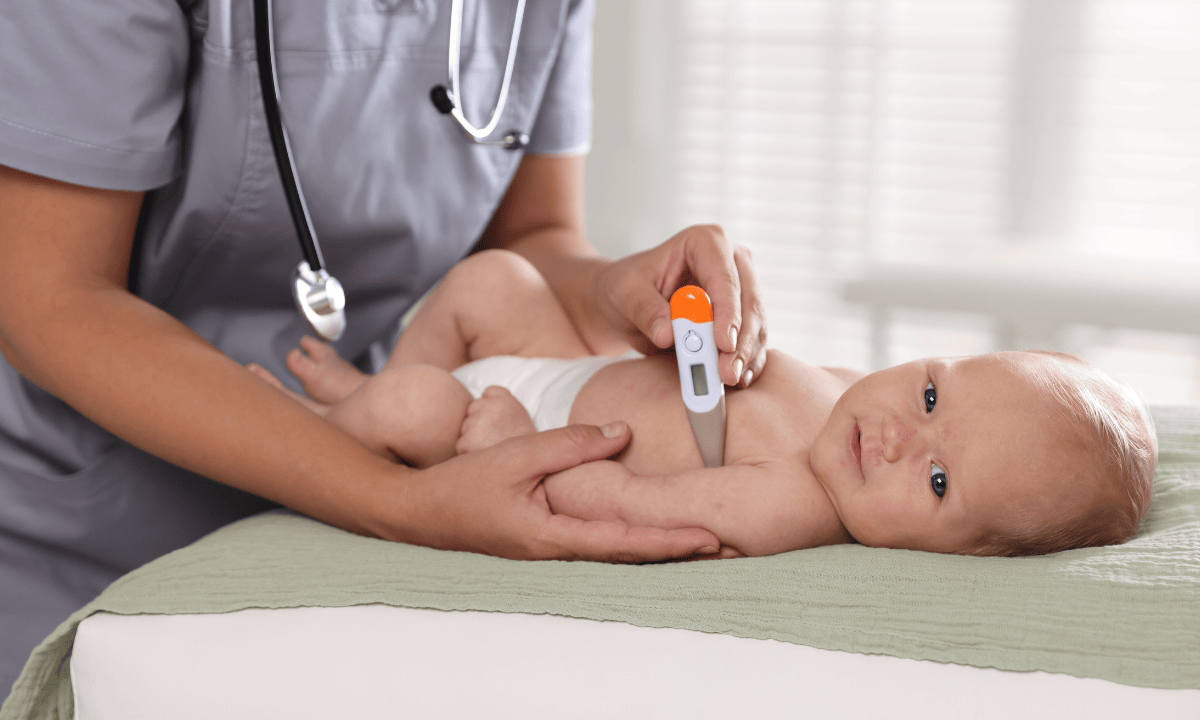
When your baby has projectile vomiting, not every case needs the same response. Some signs mean you should go to the hospital right away, some are best checked at urgent care, and others can wait for a regular doctor's appointment.
Emergency department
Go to A&E if your baby has projectile vomiting with any of the following symptoms:
Signs of severe dehydration (very few wet nappies, sunken eyes, dry mouth, weakness)
Lethargy or poor responsiveness
Bloody or green/yellow vomit
Projectile vomiting with high fever
Vomiting with poor feeding
These signs mean your baby may be seriously unwell and needs to be seen at the hospital now.
Urgent care centre (UCC) or a 24-hour paediatric clinic
Consider paediatric urgent care or a 24-hour paediatric clinic when you see:
Repeated projectile vomiting, but your baby is still responsive
Vomiting with mild to moderate dehydration
Vomiting with mild fever and no emergency signs
Vomiting that feels too concerning to wait
This is what urgent care is for – your baby isn’t in immediate danger, but you don’t have to carry this worry alone at home.
Regular GP or paediatric appointment
A regular GP or paediatric appointment may be appropriate when:
Vomiting is intermittent, not constant
Growth and weight gain are normal
Your baby is alert and settled between episodes
There are no red flag symptoms
These signs mean your baby is mostly stable, and a regular appointment lets the doctor check things properly without the stress of rushing to the A&E.

Our doctors for paediatric urgent care
Loading...
Common causes of projectile vomiting in babies
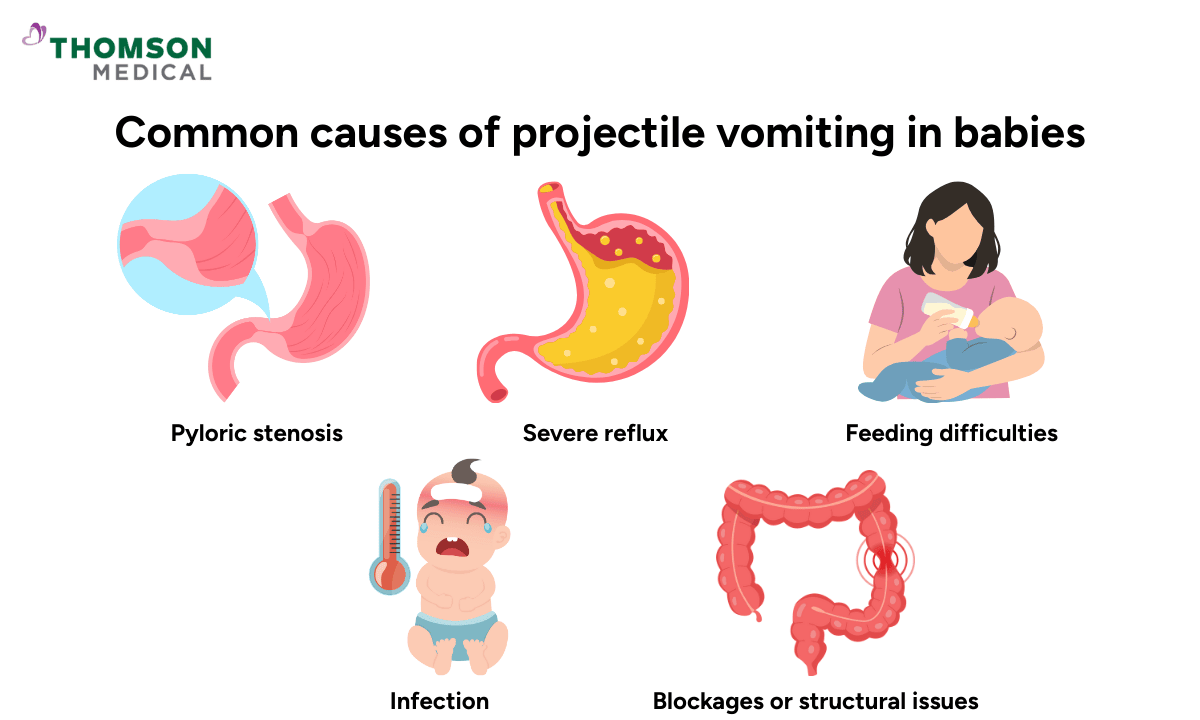
When projectile vomiting happens, many parents blame themselves – wondering if they fed incorrectly, picked the wrong bottle or formula, or missed something they should have caught. But this usually isn't about what you did. It's about your baby's body and how it's developing.
Here are some reasons why your baby may have projectile vomiting:
Severe gastro-oesophageal reflux
Most babies have some reflux, but some have stronger reflux that causes forceful vomiting instead of mild spit-up. In many cases, this improves naturally as your baby grows and their gastrointestinal system matures.
Pyloric stenosis
Infantile hypertrophic pyloric stenosis is one of the most common medical reasons for projectile vomiting in young babies. The muscle in the lower part of the stomach gets too thick, so milk can't move into the small intestine easily. It comes back up the food pipe (oesophagus) instead.
Pyloric stenosis is treatable,and if it's caught early, babies do well.
Feeding difficulties
Sometimes, forceful vomiting during feeding times is related to feeding itself rather than illness. It could be caused by the following issues:
Milk flows too fast
Difficulty with sucking and swallowing
Being fed too much or too quickly (especially with bottle feeding)
This is usually about coordination and how your baby's body is developing, not something you did wrong. It often gets better as your baby grows and feeding gets easier.
Infections
Stomach bugs and other infections can irritate your baby's digestive system and cause vomiting. These are often temporary and settle as your baby recovers, especially with proper care and monitoring.
Blockages or structural issues
Part of the digestive tract might be too narrow or blocked, so milk can't get through and comes back up forcefully instead. This sounds scary, but these issues are rare and can be fixed once identified.
Most of these causes are manageable, often harmless, and not caused by anything you did. Having your baby checked is about understanding what’s happening and making sure your baby is supported.
How to find out the cause
When your baby has projectile vomiting, you might worry that working out why means lots of tests or stressful procedures. But doctors usually take a gentle, step-by-step approach that focuses on understanding what's happening without putting your baby through anything unnecessary.
They'll usually start with simple checks, like:
Asking detailed questions about feeding, vomiting patterns, weight gain or weight loss
Examining your baby's tummy and checking how they seem overall
Making sure they're well hydrated and growing as expected
If the doctor needs more information, they might suggest some basic tests:
An ultrasound scan to look at your baby's stomach and digestive tract (especially if they suspect pyloric stenosis)
Blood tests to check hydration levels or signs of infection
Urine tests if they think infection might be involved
These tests are only used when needed and help rule out serious problems so the doctor can work out what's going on.
Treatment options
When you hear "treatment", it might sound scary or serious. But for projectile vomiting, treatment is usually gentle and gradual, based on what your baby specifically needs.
Treatment for projectile vomiting might include:
Changes to feeding, such as adjusting how much you give, the pace, or the technique
Ways to manage reflux so your baby feels more comfortable and vomits less
Medicine if needed
In some situations, surgical treatment (like for pyloric stenosis), which works very well and has good results when caught early
The exact approach depends on your baby. Sometimes, simple feeding changes might be all that's needed. Other times, your doctor might recommend medicine or specific treatment.
Whatever the plan, the aim is the same: helping your baby feed comfortably, grow well, and stay healthy while making sure you feel calm, supported, and confident.
Projectile vomiting may feel alarming, but it doesn’t last forever. Once the cause is understood, there is help, healing, and a way forward for your baby and your family.

FAQ
What does baby projectile vomit look like?
It is sudden, forceful vomiting that shoots out rather than gently dribbling, often in larger volumes than normal spit-up.
Will projectile vomiting hurt my baby?
The vomiting itself usually doesn’t cause harm, but the underlying cause may need assessment, which is why repeated projectile vomiting should always be checked.
Is projectile vomiting a symptom of teething?
Teething does not cause projectile vomiting. If a baby has forceful vomiting, another cause should be considered.
What are the signs of dehydration in babies?
The signs of dehydration in babies may include:
Fewer wet nappies
Dry mouth
Sunken eyes
Extreme sleepiness
Reduced tears when crying
In this situation, focus on keeping your baby hydrated with regular milk feeds. For babies over 6 months, oral rehydration solution can be used when medically advised.
Is projectile vomiting always a sign of pyloric stenosis?
Infantile hypertrophic pyloric stenosis is one cause of projectile vomiting, but not the only one. Many other conditions can cause projectile vomiting, such as blockages or structural issues, digestive infections, and severe reflux.
Will my baby outgrow projectile vomiting on their own?
It depends on the cause. Some babies improve as their digestive system matures, while others need medical treatment, such as surgery for pyloric stenosis or antibiotics for digestive infection.
The information provided is intended for general guidance only and should not be considered medical advice. For personalised recommendations based on your medical conditions, request an appointment with Thomson Medical.
For more information, contact us:
Thomson Paediatric Centre
- Thomson Medical Centre (TPC1), #03-06:
6258 3353 (Call) - Thomson Medical Centre (TPC4), #01-03:
6259 7667 (Call) - Jurong:
6665 1000 (Call) - Marine Parade:
6636 3808 (Call) - Punggol:
6341 6000 (Call) - Woodleigh:
8874 3970 (WhatsApp)
Thomson Medical 24-Hour Urgent Care Centre (Novena)
- Call: 6350 8812
Notice:
The range of services, vaccinations, and tests may vary. Please contact us directly to enquire about the current availability.
Request an Appointment