

You may be familiar with the sensation of a stiff neck, but a sudden sharp zap that travels down your arm or leg is a completely different experience altogether and can be concerning. This type of pain is called radicular pain, which means that the problem starts in the spine but sends painful signals to your limbs.
It’s natural to worry when your body sends these sharp, electric-like signals. However, knowing what’s causing the condition can help you find the right relief and allow the nerves to settle.
What is radicular pain?
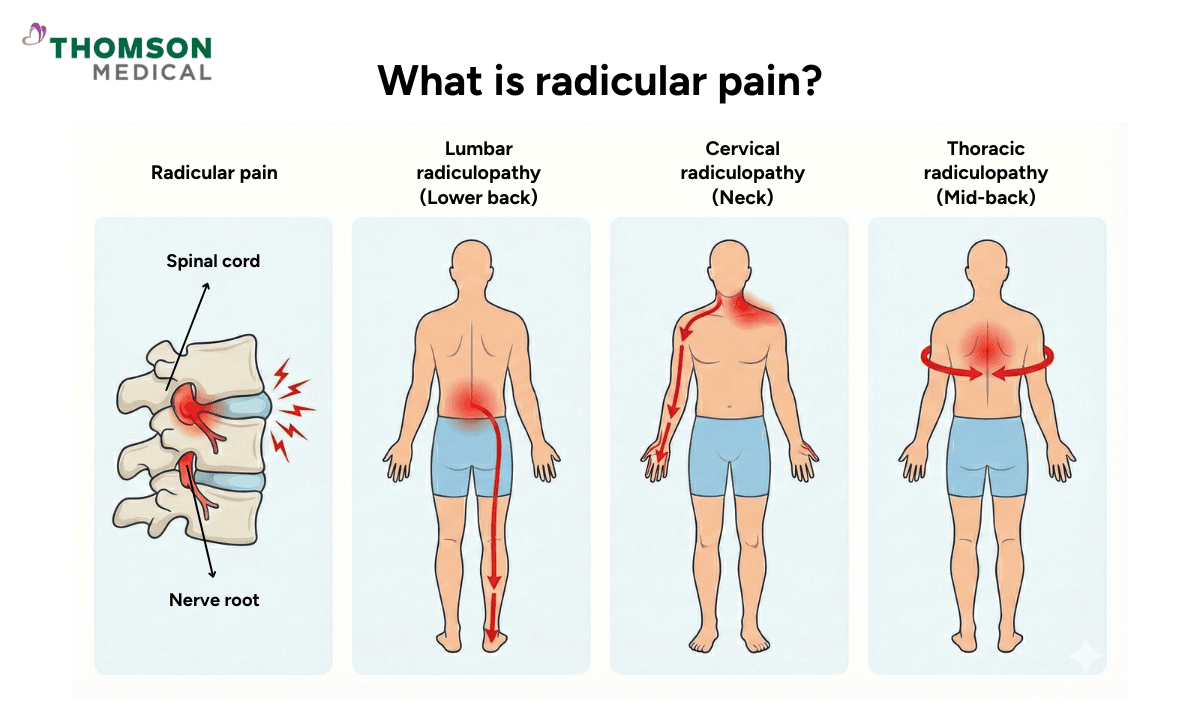
Radicular pain happens when a nerve root (where the nerve exits the spinal cord) in the spine gets irritated or compressed just as it leaves your spinal cord. This can lead to pain that travels from your spine into your arm or leg.
When a nerve near the spine is under pressure, it can affect how signals travel through your body. This can lead to pain, tingling, or numbness in areas further down, such as the hand or foot. Doctors refer to this condition as radiculopathy.
Depending on where the pinch happens in the back, you will feel symptoms in different places:
Lumbar radiculopathy:
This condition occurs in the lower back and can lead to pain, tingling, or weakness in the bottom, thigh, calf, or foot.
The most well-known type of this condition is sciatica, which is pain that travels from the lower back into the leg.
Cervical radiculopathy:
Cervical radiculopathy occurs in the neck, causing pain or numbness that travels down the shoulder, arm, and hand and may even affect specific fingers.
Thoracic radiculopathy:
This rare condition occurs in the middle of the back and can cause pain that wraps around your ribs or chest.
It helps to remember that even though the pain may spread, it usually starts from just one specific spot in the back or neck.
What are the symptoms?
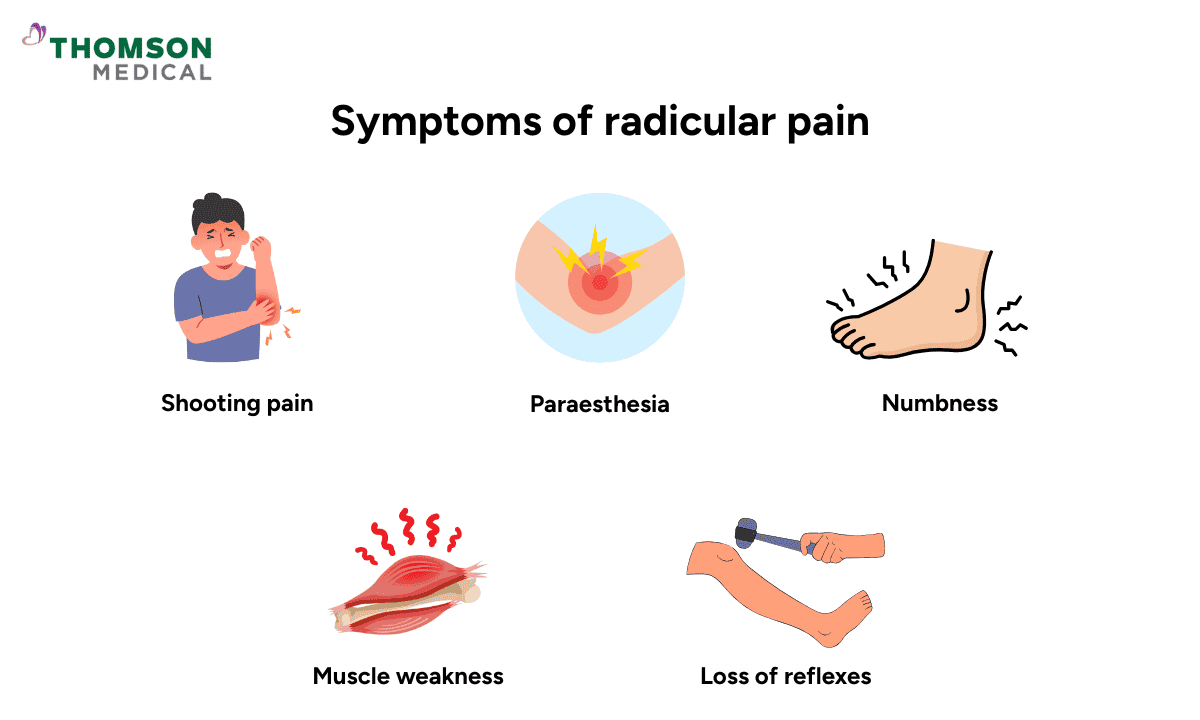
If you experience radicular pain, the symptoms usually radiate down to a specific area of the limb.
You might notice signs such as:
Shooting pain:
A sharp, shock-like sensation that travels from the neck to the arm or from the lower back to the leg.
Paraesthesia:
Some people experience a tingling or prickly feeling in the arm, leg, hand, or foot.
Numbness:
You might touch a spot on the arm or leg and realise you cannot feel it properly.
Muscle weakness:
Holding objects such as a coffee cup may become more difficult.
You may notice foot drop, where the foot drags a bit when walking.
Loss of reflexes:
You might tap the knee or elbow and find it does not jump as much as it should.
These symptoms can come and go. Sometimes, just standing up straight or looking down can make the shooting pain better or worse.
Our pain management specialist
Loading...
What causes radicular pain?

The spine is a strong stack of bones, rubbery discs, and nerves that work together to support movement and protect your body. Sometimes, the spaces where the nerves exit the spine get narrower. When this happens, it presses on your nerve root (nerve root compression) and causes swelling and pain.
Sudden movements like heavy lifting or twisting your back can trigger it. However, radicular pain often develops due to normal changes as your body ages.
Here are the most common reasons why that space gets narrower:
- Herniated disc (slipped disc):
- Happens when the soft jelly inside a spinal disc pushes out and touches a nearby nerve.
- Spinal stenosis:
- As your body ages, the tunnels inside your spine can get smaller, which leaves less room for the nerves.
- Degenerative disc disease:
- Over time, the discs can dry out and get thinner.
- This brings the bones closer together and can pinch the nerve.
- Spondylolisthesis:
- Sometimes one bone in the spine can slide forward over another, which may press on a nerve.
- Trauma or injury:
- A fall, sports injury, or car accident can cause sudden swelling that squeezes the nerve roots.
If you would like to better understand what may be causing your arm or leg pain, you may schedule an appointment with our specialists at Thomson Medical Centre for further assessment.
How is it diagnosed?
If you suspect a pinched nerve, it’s important to consult with a doctor. It starts with a simple chat about medical history and a physical check-up to see how the nerves are working.
To be sure of what is going on, your doctor might suggest:
Physical exam:
The doctor might ask you to lift a leg while lying down or tilt the head back.
This helps them see which movement causes the pain.
Imaging tests:
X-rays:
An X-ray takes pictures of the bones.
They can show if there are bone spurs or if the spine alignment is a bit off.
Electromyography (EMG):
This test checks the electrical signals in the muscles
Your doctor can see if the nerve is sending signals properly.
Getting a clear diagnosis is one of the most important steps for you. It helps your doctor rule out other concerns and ensures your treatment focuses on the exact nerve root compression causing your symptoms.
How to treat radicular pain?
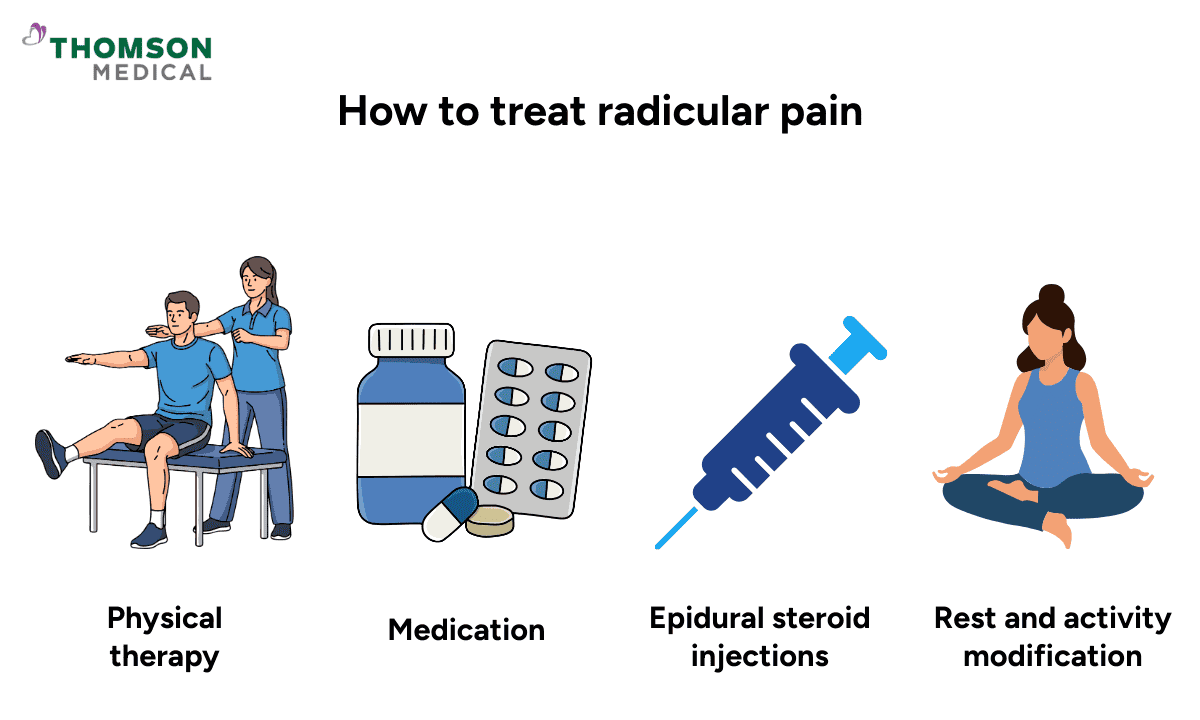
Although radicular pain can be concerning, the good news is that most people can get better without needing surgery. The main goal is to calm the inflammation and give the nerve the space and time it needs to heal.
Common ways to help you feel better include:
- Physical therapy:
- Helps open up the spaces in the spine and take pressure off the nerve through simple stretches.
- Medication:
- Your doctor may often prescribe anti-inflammatory medication (NSAIDs) or muscle relaxants.
- Helps bring down the swelling and lets your body relax.
- Epidural steroid injections:
- If the pain is really bad, your doctor can utilise this medicine right near the nerve root to calm it down for a longer time.
- Rest and activity modification:
- Taking a rest and avoiding heavy lifting or painful positions for a short time can help to prevent the nerve from becoming irritated again. Though complete bed rest is usually not necessary.
If your pain is not improving with home care or conservative treatment, a consultation may be helpful. You may consider scheduling an appointment with our specialists at Thomson Medical Centre for personalised guidance on managing radicular pain.
When to seek medical urgency
While radicular pain is rarely life-threatening, there are a few red flags that mean the pressure is serious. In these rare moments, you need to listen to the body and act fast.
You should go to your doctor immediately if you experience:
Cauda equina syndrome (CES):
This is a rare condition affecting the nerves at the very bottom of the spine.
Saddle anaesthesia:
You suddenly lose feeling in the inner thighs, bottom, and private parts (the area that would touch a saddle).
Bathroom trouble:
You suddenly cannot hold urine or control bowel movements.
Severe muscle weakness:
You suddenly cannot lift an arm or leg at all, or a foot feels totally heavy.
Worsening condition:
If the pain or numbness is spreading quickly even though you are resting.
Being aware of these warning signs helps you take care of your health. Although they are rare, getting medical help quickly can reduce the risk of long-term nerve damage and support recovery.
If your pain does not get better or if you start to notice muscle weakness, your doctor may discuss surgical options such as a discectomy, which removes the part of the disc pressing on the nerve.
How to prevent radicular pain
Although you cannot stop your spine from ageing, there are many ways to protect your back and neck. Keeping your muscles strong is one of the best ways to lower the risk of a pinched nerve.
Here are some simple habits that can help:
Build strong stomach and back muscles to support your spine and reduce disc pressure
Sit and stand with good posture to avoid putting extra strain on your spine
Hold your phone closer to eye level to reduce neck strain
Bend your knees and keep heavy objects close to your chest when lifting
Move regularly and stay active to keep your spine flexible and healthy
Small changes in daily routine can make a big difference. By being mindful of how you sit and moving the body, you are actively protecting the nerves and keeping your spine healthy.
FAQ
Is radicular pain the same as sciatica?
Sciatica is the most common type of radicular pain. It specifically refers to pain involving the sciatic nerve (a large nerve that runs from the lower back down the leg). So, while all sciatica is radicular pain; not all radicular pain is sciatica. For example, a pinched nerve in the neck can also cause radicular pain.
Will I need surgery?
Probably not. Most people with a herniated disc or nerve pain improve with physical therapy, medication, and time. Surgery is usually considered only if the pain is severe and does not improve, or if muscle weakness develops.
How long does it take to recover?
Recovery time varies for everyone. Pain from a mild injury may improve within a few weeks. However, if the cause is spinal stenosis (narrowing of spaces in the spine) or a more serious disc problem, it may take a few months of treatment to manage symptoms well.
Can I exercise with a pinched nerve?
Movement is usually helpful, but it needs to be the right type. Gentle walking and stretching are often safe. It is best to avoid jumping or heavy lifting until symptoms improve. Always check with a doctor or physiotherapist for a safe exercise plan.
Can radicular pain go away on its own?
Yes, many cases improve on their own with rest, gentle movement, and simple treatment. However, if symptoms last a long time or worsen, it is important to see a doctor.
What does radicular pain feel like?
Radicular pain often feels sharp, burning, or electric. The pain usually travels from the spine down the arm or leg and may be accompanied by tingling, numbness, or weakness.
The information provided is intended for general guidance only and should not be considered medical advice. For personalised recommendations and tailored advice based on your unique situations, schedule an appointment with Thomson Medical Centre today.
For more information, contact us:
Thomson Medical Concierge
- 8.30am - 5.30pm
- WhatsApp: 9147 2051
Need help finding the right specialist or booking for a group?
Our Medical Concierge is here to help you. Simply fill in our form, and we'll check and connect you with the right specialist promptly.
Notice:
The range of services may vary between Thomson clinic locations. Please contact your preferred branch directly to enquire about the current availability.
Get In Touch