

Pregnancy is one of the most transformative and physically demanding experiences you can go through. From conception to postpartum, your body undergoes many dramatic changes, both visible and invisible, to accommodate and nurture your developing baby.
In the midst of this journey, managing stress and maintaining your well-being becomes essential, not just for you, but also for your baby's healthy development. Traditional Chinese Medicine (TCM) offers a holistic approach to supporting pregnancy through natural methods that address both your body and mind. Let's explore how TCM can help you achieve a relaxing and healthy pregnancy.
What is stress?
Stress is your body’s physiological and psychological response to perceived threats or challenges. It is how your body naturally reacts to situations that it sees as demanding or dangerous, preparing you to either confront the stressor or move away from it.
When you experience stress, your body releases stress hormones, such as cortisol and adrenaline, triggering various physiological changes. These responses, which can include increased heart rate, elevated blood pressure, and a surge in energy, help you cope with the problem.
What causes stress during pregnancy?
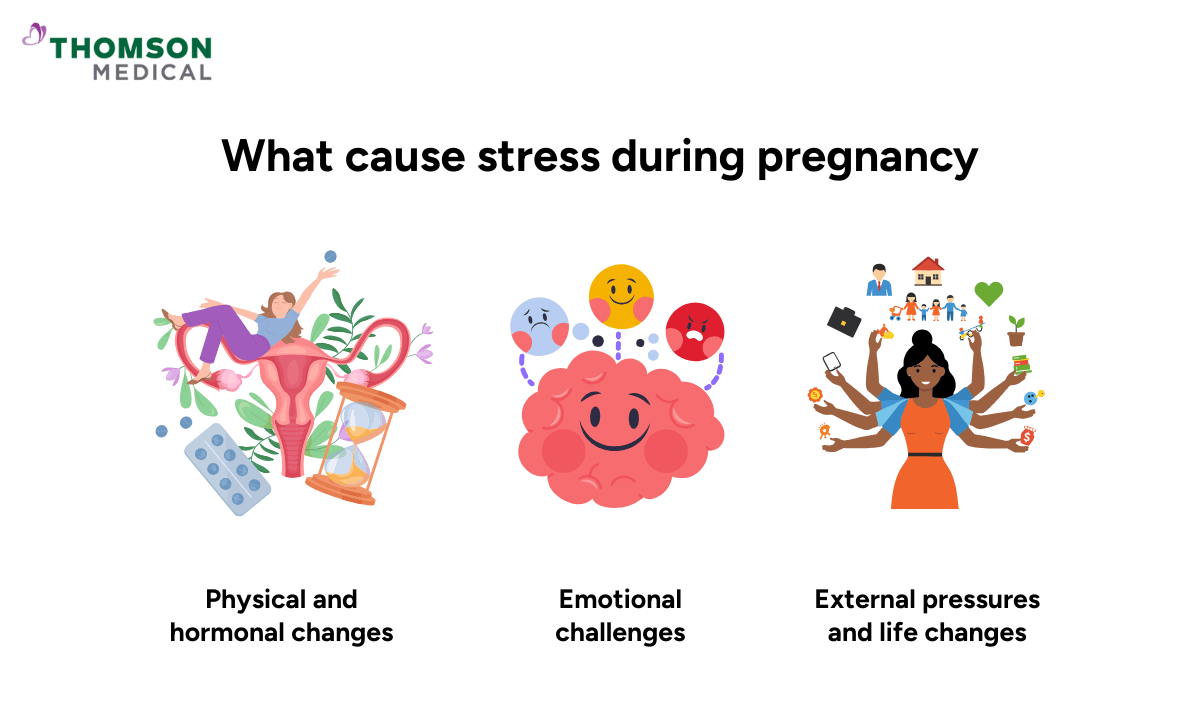
Stress can arise from various sources, including work, personal relationships, financial difficulties, health concerns, and major life changes. Pregnancy can amplify these stressors and also introduce additional sources of stress that can affect your health during this period. These include:
Physical and hormonal changes:
Hormonal fluctuations can cause heightened emotional sensitivity, making you more prone to feeling stressed.
Physical discomforts such as nausea, fatigue, and back pain can contribute to stress as you adapt to your changing body.
Emotional challenges:
Having a child and becoming a parent can create uncertainty and anxiety, especially if this is your first pregnancy.
Without support from your partner, family, or friends, you can feel isolated and overwhelmed.
Concerns about your health and your baby's development are natural.
External pressures and life changes:
Financial concerns about prenatal care, delivery costs, baby essentials, and taking time off from work can create stress.
Balancing work demands with physical changes can be challenging, especially if you have concerns about job security and workload.
Shifts in your relationships with your partner, family, and friends, as well as new expectations, can be stressful.
Pressures to meet certain standards about pregnancy and parenting can contribute to your stress and anxiety.
These stressors are common during pregnancy. The key is learning how to manage them effectively so they don't affect your health or your baby's development.
The impact of stress on maternal and foetal health
Some stress during pregnancy is normal, just as it is during other life stages. However, constant stress can affect you and your baby and potentially lead to complications.
Impact on maternal health
Stress during pregnancy can affect your health in several ways:
Increased risk of complications:
High stress levels during pregnancy are associated with risks of gestational hypertension and diabetes. Stress may also affect your body’s ability to go into labour and handle the physical demands of childbirth.
Weakened immune system:
Chronic stress can weaken your immune system, making you more susceptible to infections and illnesses.
Worsened pre-existing conditions:
If you have pre-existing health conditions, stress during pregnancy can make them worse.
Higher risk of postpartum depression:
Maternal stress is a known risk factor for postpartum depression. The emotional strain you experience during pregnancy can persist or intensify after childbirth, affecting your ability to care for yourself and your newborn.
Slowed postpartum recovery:
Stress can also affect how well your body heals and recovers after delivery.
Impact on baby’s health
Chronic stress during pregnancy may also impact your baby’s development and long-term health. Here’s how it affects your child:
Premature birth:
High stress levels during pregnancy are linked to an increased risk of premature birth. Babies born prematurely may face various health challenges, including respiratory issues, developmental delays, and other complications requiring specialised medical care.
Low birth weight:
Stress has been linked to lower birth weights in infants, which can increase your baby’s risk of health problems in the future.
Brain development concerns:
Stress during pregnancy may impact your baby’s developing brain, influencing their cognitive and emotional development. This can affect their learning, behaviour, and mental health beyond childhood.
Behavioural and emotional problems:
If you experience high stress during pregnancy, your baby may have difficulty regulating emotions and maintaining attention, with a higher risk of anxiety and depression. This can affect them even in adulthood.
Epigenetic changes:
Prenatal stress may also change how your baby’s genes function, which could affect their health and overall well-being throughout life.
By recognising how stress affects you and your baby, you can take proactive steps to manage it, and TCM offers gentle and effective ways to support you along the way.
Signs of stress during pregnancy

Identifying signs of stress during pregnancy is crucial for protecting both your health and your baby’s well-being. It allows you to take action and address any issues promptly.
Signs you should watch for include:
Physical symptoms:
Headaches
Muscle tension, particularly in the neck, shoulders, and back
Digestive problems such as indigestion, stomach cramps, or changes in bowel movements
Increased heart rate
Difficulty falling asleep or staying asleep
Emotional changes:
Heightened anxiety or excessive worries
Unexplained and intense mood fluctuations
Feeling more irritable or easily frustrated than usual
Behavioural changes:
Overeating or undereating
Rejecting social interactions or isolating yourself
Difficulty concentrating on tasks
Procrastinating or avoiding responsibilities
Nervous habits such as nail biting
If you’re experiencing these signs, schedule an appointment with Thomson Medical for a personalised TCM consultation focused on stress regulation and pregnancy support.
Our physicians
Loading...
How Does TCM View Stress?
TCM views stress as a disturbance in the balance of your body’s vital energies, known as Qi, Blood, Yin, and Yang. When you experience chronic stress, it can disrupt the harmonious flow of these energies and manifest in various physical and emotional forms.
One of the primary consequences of stress in TCM is the stagnation of Qi, which can lead to symptoms such as headaches, digestive issues, and mood imbalances.
Stress can also hamper Blood flow, which is particularly important during pregnancy. According to TCM principles, adequate blood circulation is crucial for the healthy development of your baby, and any disruption may affect your baby’s growth.
Stress can also impact the Yin and Yang balance in your body. Excessive stress may generate too much Yang, the active and warming aspect of your body, leading to symptoms like anxiety, palpitations, and high blood pressure. At the same time, it depletes Yin, which is the nourishing aspect of your body.
TCM also recognises how stress affects the Five Elements, each linked to your organ systems and physiological functions:
Wood (Liver and Gallbladder):
Excessive stress can cause emotional imbalances and trigger irritability, anger, frustration, and headaches.
Fire (Heart and Small Intestine):
Stress may lead to an overaccumulation of fire energy in the heart, manifesting as anxiety, palpitations, and sleep disturbances.
Earth (Spleen and Stomach):
Stress may result in symptoms such as worry, overthinking, and digestive problems.
Metal (Lung and Large Intestine):
Stress can worsen symptoms of grief and sadness associated with the Metal element, impacting respiratory health and weakening the immune system.
Water (Kidney and Bladder):
Stress may overstimulate the Water-element organs, leading to increased fear, insecurity, and urinary issues.
Your TCM physician can help identify which elements are most affected by stress in your body and create an appropriate treatment plan to restore your balance.
TCM approaches for stress management
If you’re worried about how stress affects your pregnancy and your baby’s health, TCM offers a number of gentle and natural approaches to help you manage stress and promote a healthy pregnancy.
Acupuncture

Acupuncture is a key component of TCM that involves inserting thin needles into acupoints on your body to balance the flow of Qi throughout your body.Acupuncture has many benefits for your health during pregnancy, including:
Stress and emotional support:
It stimulates the release of endorphins in your body, reducing feelings of anxiety and depression.
Physical support:
Acupuncture calms the nervous system, helping regulate sleep patterns, relieve any physical discomfort, boost your immune system, and alleviate symptoms such as nausea and bloating.
Labour preparation:
This gentle method also prepares your body for labour by promoting relaxation, optimising foetal position, and encouraging cervical ripening.
This is only done from 38 weeks onwards during your pregnancy.
Herbal medicine
TCM herbal remedies can be used throughout pregnancy to help your body cope with the numerous changes.
Common herbs prescribed during pregnancy include:
Adaptogenic herbs:
Ginseng (Ren Shen) and astragalus (Huang Qi) enhance your vital Qi energy to help you adapt to stressors while preserving your inner balance.
Calming herbs:
Albiziae bark (He Huan Pi), sour jujube seed (Suan Zao Ren), and spirit poria (Fu Shen) possess mild sedative properties that promote your relaxation and improve your sleep quality.
Liver-soothing herbs:
Bupleurum (Chai Hu) and chrysanthemum (Ju Hua) soothe your Liver to promote emotional balance, reducing irritability and frustration associated with stress.
Digestive herbs:
Ginger (Sheng Jiang) and peppermint (Bo He) enhance your overall comfort by alleviating digestive symptoms such as nausea, bloating, and indigestion.
Nourishing Yin herbs:
Goji berry (Gou Qi Zi) and rehmannia (Di Huang) replenish your Yin, providing nourishment to your body.
Antioxidant herbs:
Green tea (Lu Cha) and ginkgo biloba (Yin Xing Ye) combat oxidative stress to protect your body against oxidative damage, which is a contributor to hyperglycaemia, miscarriages, and many other issues.
If you're looking for herbal remedies to support your pregnancy or postpartum health, consult your TCM physician, who can recommend safe and effective herbs tailored to your specific needs.
Mind-body practices
TCM also offers simple mind-body practices that you can incorporate into your daily routine to balance your body’s energy, promote relaxation, and reduce stress. These include:
Tai Chi
This gentle and slow-moving martial art combines deep breathing with flowing movement to calm your mind and body.
During pregnancy, modified Tai Chi routines can help you stay active, improve balance, and reduce stress and anxiety. Practise slowly and avoid any movements that may cause discomfort to your abdomen.
Qigong and prenatal yoga
Qigong and prenatal yoga are two low-impact exercises that involve coordinated body movements, breath control, and meditation.
Qigong focuses on balancing your body’s energy and enhancing your Qi flow to promote relaxation and reduce stress, while prenatal yoga improves flexibility and encourages focused breathing.
As with Tai Chi, remember to avoid any actions that may cause discomfort to your abdomen.
Mindful eating
In TCM, food is not only a source of nourishment but also a means of supporting overall well-being. Mindful eating practices help enhance your digestive process and support your body in absorbing Qi from the food.
Mindful eating involves paying attention to the colours, textures, flavours, and aromas of the food and taking time to savour each bite. It is also important to listen to your body’s signals and respond to any hunger or fullness cues promptly.
Breathing exercises
Breathing exercises are a helpful way to balance your body’s energy and ease stress. Some breathing exercises you could try include:
Abdominal breathing:
This technique focuses on deep and intentional breaths that engage your diaphragm. Each inhale and exhale encourages the expansion and gentle contraction of your abdomen.
Four-fold breathing:
This rhythmic and balanced breathing pattern involves inhaling for a count of four, holding your breath for a count of four, exhaling for a count of four, and then pausing for four counts before repeating the cycle.
Calming breath:
The calming breath exercise helps calm your mind and soothe your nervous system. It involves inhaling slowly and deeply through your nose, holding your breath briefly, and exhaling slowly through pursed lips.
Chest and abdomen harmony:
Unlike abdominal breathing, this technique engages both your chest and abdomen. Breathe in to expand your chest, then exhale as your abdomen contracts. This creates a balanced rhythm between the two.
Acupressure
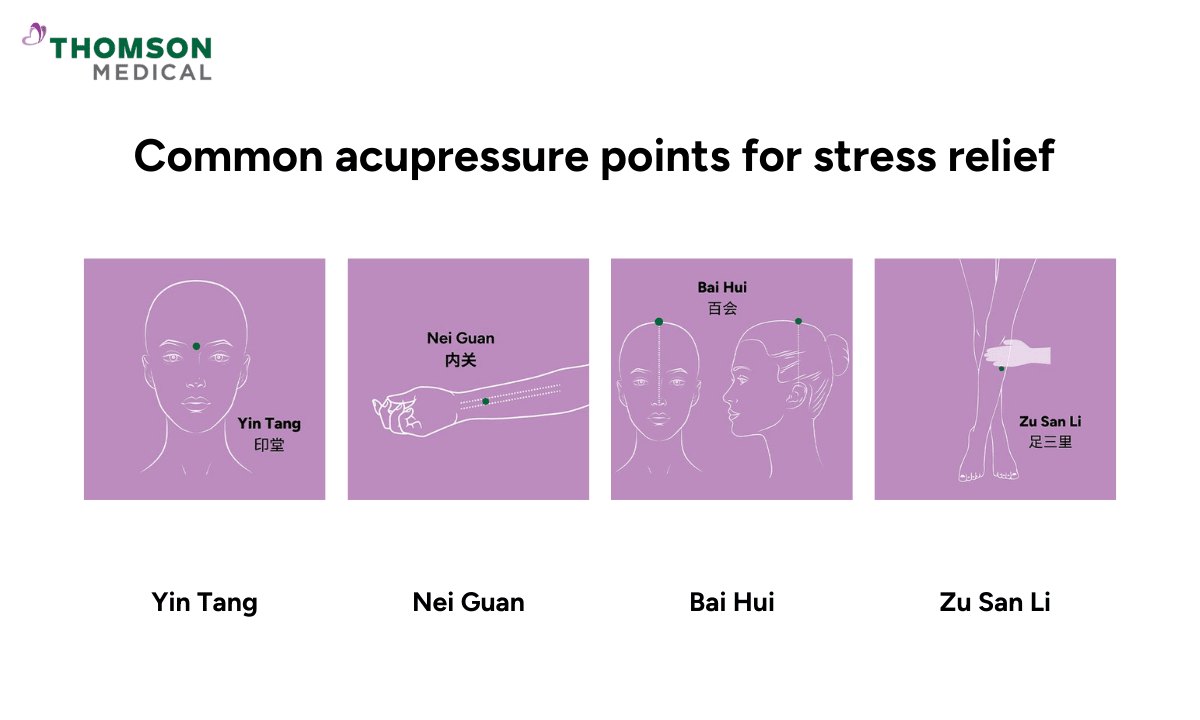
Acupressure is an ancient healing technique that involves applying gentle pressure to specific points on your body to stimulate the flow of Qi and to promote balance. It is different from TCM acupuncture, which requires the use of needles to stimulate meridian points.
During pregnancy, acupressure can be a gentle and effective way to alleviate stress and support your overall well-being.
Here are some acupressure points you can try:
Yin Tang (EX-HN3):
This point is located between the eyebrows. Applying steady and gentle pressure here for a few minutes while taking slow, deep breaths is believed to calm your mind and relieve stress.
Nei Guan (P6):
Located on the inner side of your forearm, about two inches above your wrist crease, this point helps alleviate nausea, reduce anxiety, and calm your mind.
Bai Hui (GV20):
Located at the top of your head, this point is believed to connect various energy channels in your body. Gentle pressure here may help alleviate stress and promote a sense of balance. Simply resting your hand on this area for a few minutes may work too.
Zu San Li (ST36):
Situated below your knee on the outer side of your leg, about four finger-widths down from your kneecap, this point is associated with promoting overall well-being. Gentle pressure on this point can boost energy and relieve stress.
Remember to use gentle pressure and stop if you feel any discomfort. If you have questions about which points are safe for you during pregnancy, reach out to your TCM physician for further guidance.
Diet and nutrition
TCM highlights the importance of diet and nutrition during pregnancy, viewing them as a crucial factor in maintaining your health and your baby’s development.
Dietary changes you can make to manage stress include:
Maintain a balanced diet:
In TCM, your body is a harmonious system of opposing Yin and Yang forces. To ensure equilibrium, it is recommended to consume both Yin foods, such as fruits and vegetables, and Yang foods, like meats and grains.
Consume warm, cooked foods:
Warm foods are gentler on your digestive system and help your body absorb nutrients more efficiently. This conserves the energy your body needs for digestion.
Choose nutrient-dense foods:
Prioritise a diet rich in nutrient-dense foods such as lean proteins, high-iron foods, and whole grains. They nourish both your Qi and Blood, helping you build resilience against stress.
Limit sugar and sweets:
Excessive processed sugar intake can lead to a TCM condition known as excess internal Dampness. This can lead to brain fog, water retention, and sluggish metabolism.
Balance flavours:
TCM recognises five flavours – sweet, salty, sour, bitter, and pungent. Balancing these flavours in your diet ensures harmony within your body, as each flavour corresponds to different organ systems.
Stay hydrated:
There is a misconception that you should limit water if you’re experiencing water retention. The truth is, your body needs water for optimal fluid metabolism. Drinking enough water can actually help reduce fluid accumulation.
Drink herbal teas:
Herbal teas can nourish your body and reduce stress. For example, Chinese red dates and ginger tea can support your digestive system.
These mindful diet choices not only help you better cope with stress but also give your body and your baby the nourishment needed throughout your pregnancy.
Benefits of TCM care during pregnancy
TCM offers a holistic and natural approach to various aspects of healthcare, and pregnancy is no exception. Incorporating TCM approaches into prenatal care can do wonders for both your health and your baby’s well-being.
Holistic and natural approach:
TCM considers the connection between your body, mind, and spirit. It addresses not only physical symptoms but also underlying issues that may affect your emotional and mental well-being.
TCM uses natural methods without artificial substances that can harm your body, reducing the risk of complications.
Strengthens your body constitution:
TCM helps boost your overall health and immunity for a smoother pregnancy and delivery and a faster postpartum recovery.
It’s especially effective in relieving common pregnancy conditions such as morning sickness, back pain, water retention, and constipation.
Complements Western prenatal care:
TCM modalities can work hand-in-hand with Western medicine to support you at every stage of your pregnancy journey.
If you're looking for natural ways to manage stress and support a healthier pregnancy, schedule an appointment with Thomson Medical. Our TCM physician can create a personalised treatment plan tailored to your unique needs.
FAQ
Is TCM safe during pregnancy?
Yes, TCM is safe and effective in addressing various concerns related to pregnancy, especially when it is administered by qualified TCM practitioners experienced in prenatal care.
Can TCM alleviate pregnancy discomforts like morning sickness?
Yes. TCM treatments such as acupuncture and carefully prescribed herbal remedies can help ease common pregnancy discomforts – particularly morning sickness, nausea, vomiting, poor appetite, and digestive discomfort.
How does TCM prepare the body for labour and childbirth?
TCM techniques like acupuncture help prepare your body by promoting cervical ripening and encouraging uterine contractions, which are crucial for dilation. These treatments are usually introduced only towards the end of pregnancy—typically from around 38 weeks onwards—assuming both mother and baby are well and there are no medical contraindications.
Can TCM support postpartum recovery?
Yes, TCM can support postpartum recovery by addressing fatigue, hormonal imbalances, lactation problems, and other post-birth concerns.
Can TCM be combined with conventional prenatal care practices?
Yes, TCM can work alongside other prenatal care practices to enhance your pregnancy journey. To determine the most suitable care practices for your specific needs, consult your TCM physician and your doctor for more advice.
Will I be able to breastfeed if I’m taking Chinese herbs during and after pregnancy?
Yes, TCM herbs prescribed by physicians are safe for breastfeeding. In fact, some of them can help ease the breastfeeding process by stimulating lactation and helping prevent mastitis.
The information provided is intended for general guidance only and should not be considered medical advice. For personalised recommendations and tailored advice based on your unique situation, please consult a specialist at Thomson Medical. Schedule an appointment with us today.
Physician Jun Negoro
Traditional Chinese Medicine
Thomson Chinese Medicine (TCM Paragon Medical Centre) and 1 other
English, Mandarin
Alliance MediNet
