

In an emergency, knowing who to call can help you act quickly and with confidence. When something serious happens, it is normal to feel unsure or overwhelmed, especially if you are worried about your own safety or that of someone you care about.
Understanding Singapore’s emergency numbers, including when to call 995, can help you get the right help without hesitation. This guide explains which numbers to use in different situations and when an urgent care centre may be appropriate for non-life-threatening concerns, so you can make informed decisions during stressful moments.
Singapore’s main emergency number: 995
When you're facing a medical emergency, knowing help is just a phone call away can bring tremendous relief.
In Singapore, 995 is the primary emergency number that connects you to the Singapore Civil Defence Force (SCDF) ambulance service. This number is available 24 hours a day, every day of the year.
When you call 995, trained operators will assess your situation and dispatch an ambulance if needed. The service is free for all Singapore residents and visitors.
When should you call 995?
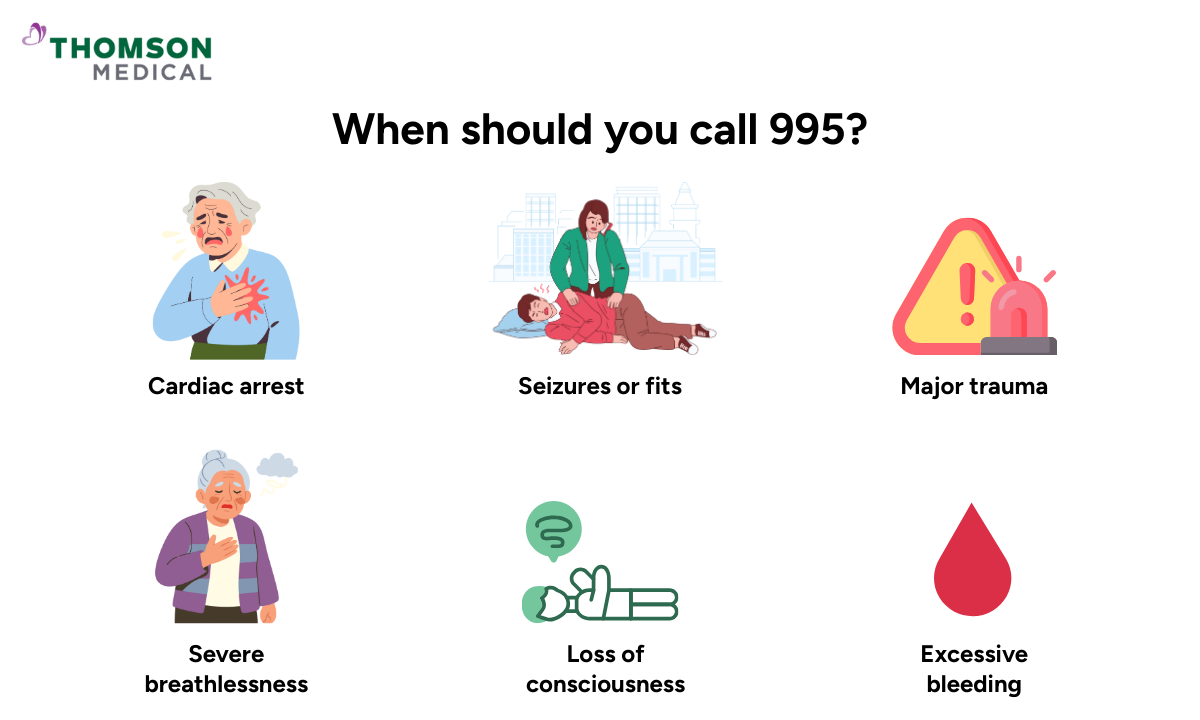
Call 995 immediately if you or someone around you experiences any of these life-threatening situations:
Cardiac arrest or not breathing normally.
Seizures or fits, especially if prolonged or repeated.
Severe breathlessness or difficulty breathing.
Loss of consciousness or unresponsiveness.
Excessive or uncontrolled bleeding.
Major trauma (e.g. serious accidents, major falls, severe injuries) or suspected stroke.
Suspected poisoning or drug overdose
Severe allergic reactions with swelling or breathing problems
Your body often signals when something isn't right. If you feel that a situation requires immediate attention, don't hesitate to call 995 or seek urgent care.
What to expect when you call 995
When you call, the 995 operations centre will guide you through the conversation.
Here's what they'll typically ask:
Your exact location:
Provide your full address, including block and unit number. If you're unsure, describe nearby landmarks or shop names
What happened:
Briefly explain the emergency ("My father collapsed", "Someone has chest pain", etc.)
The person's condition:
Is the person conscious? Breathing? Responsive?
Your contact number:
In case they need to call back or provide updates
Take a deep breath and stay as calm as possible. The operator may give you instructions on positioning the person or performing basic first aid whilst the ambulance is on its way.
While waiting for the ambulance
Waiting for help during a medical emergency can feel overwhelming.
Here's how you can support your loved one whilst help is on the way:
Stay with the person and monitor their condition
Keep your phone nearby in case the crew needs to contact you
Don't move the person unless they're in immediate danger
Send someone outside to guide the ambulance crew to your location
Unlock doors and clear the path for paramedics
Gather identification, medication lists, or medical records if possible
If the person's condition worsens, call 995 again to update them.
When not to call 995
Singapore's emergency ambulance service is designed for life-threatening situations where every minute counts. When 995 is used for less urgent matters, it can delay response times for people experiencing heart attacks, strokes, or severe injuries who need immediate intervention.
You might consider other options if you're experiencing:
Minor injuries:
Small cuts that have stopped bleeding, mild sprains where you can still walk
Common ailments:
Cold or flu symptoms, mild fever without other concerning signs, mild headaches
Routine concerns:
Prescription refills, follow-up questions about recent appointments, stable chronic conditions
Non-urgent dental issues:
Toothaches without severe swelling, breathing difficulty, or high fever
For these types of concerns, you can consider visiting an urgent care centre, calling your regular doctor during clinic hours, or using the non-emergency ambulance service (1777) if you need medical transport.
Other important medical emergency numbers in Singapore
Beyond 995, having a few other important contacts at your fingertips can bring peace of mind when medical or safety concerns arise:
Number | Service | When to call |
995 | Emergency ambulance (SCDF) | Life-threatening medical emergencies |
1777 | Non-emergency ambulance | Medical transport needed but condition is stable |
SMS 70995 | Emergency SMS service (SCDF) | When you're unable to make a voice call due to hearing, speech difficulties, or safety concerns |
999 | Police emergency | Crimes in progress, accidents with injuries, immediate safety threats |
1800-255-0000 | Police hotline (Non-emergency) | To report crimes that aren't in progress or urgent police matters |
6389-2222 | SOS 24-hour hotline | Emotional support and mental health crisis |
1800-221-4444 | National care hotline | General social and emotional support |
Consider saving these numbers in your phone contacts so that if you or a loved one ever needs help, you'll know exactly who to call. Knowing these numbers ahead of time can help you respond calmly and confidently if an urgent situation arises.
Understanding urgent care: When it's appropriate
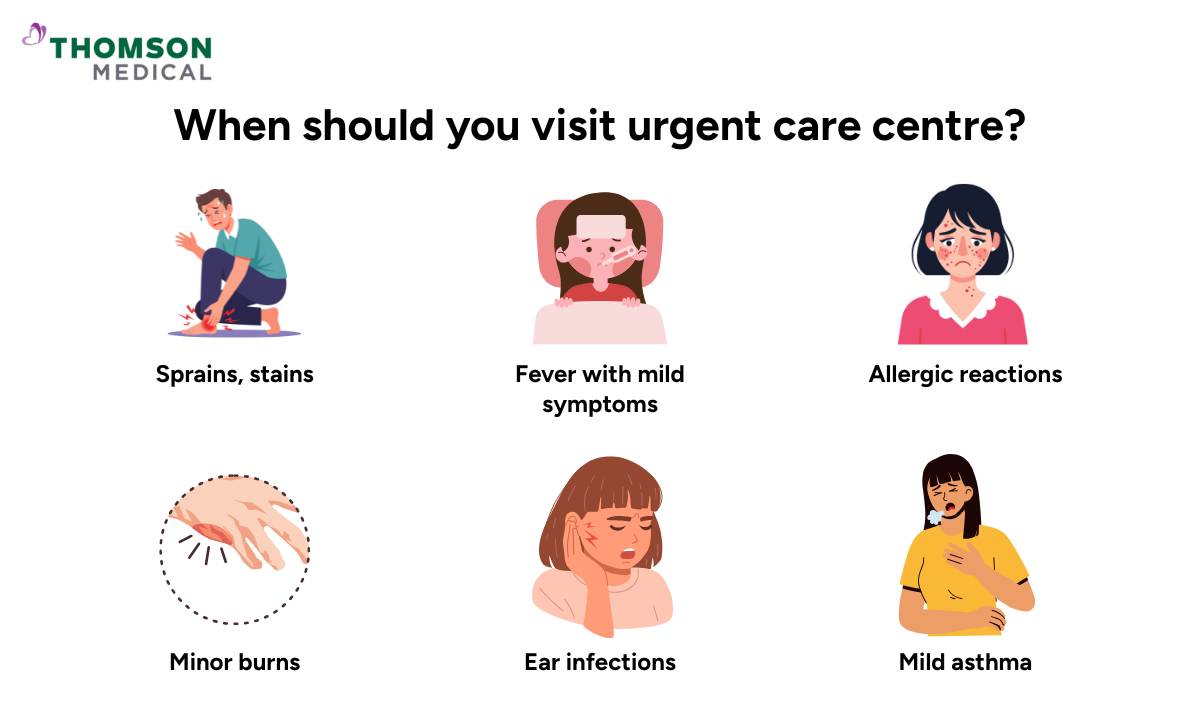
Sometimes, you may face a medical situation that needs prompt attention but isn't life-threatening. These urgent care needs fall somewhere between a routine doctor's appointment and a 995 emergency.
When urgent care is appropriate
Consider visiting an Urgent Care Centre (UCC) if you experience:
Minor injuries like sprains, strains, or small cuts
Fever with mild symptoms
Allergic reactions without breathing difficulty
Minor burns or scalds
Ear infections or sore throats
Urinary tract infections
Mild asthma symptoms
UCCs can assess and treat non-life-threatening conditions quickly and effectively, often with shorter waiting times than hospital emergency departments. Many UCCs operate extended hours, and some are even open 24/7, making them a reassuring option when you need prompt medical attention outside regular clinic hours. They're particularly helpful when your regular GP isn't available or when you need care for conditions that can't wait but aren't severe enough to require emergency services.
Urgent care options in Singapore
If you're looking for urgent care, several hospitals and clinics across Singapore offer walk-in services for non-emergency medical concerns. Most provide consultations without appointments, on-site laboratory and imaging services, and quick assessments for conditions that require prompt attention. When choosing a UCC, consider proximity to your location and whether they specialise in particular types of care relevant to your needs.
For example, Thomson Medical Centre operates a 24-hour urgent care centre that specialises in women's and family health concerns.
The centre can manage conditions that require prompt evaluation but don't necessitate emergency services, such as:
Pregnancy-related concerns that need timely assessment, such as persistent vomiting or abdominal pain
Symptoms that worry you and require urgent evaluation
Conditions that can't wait for your next scheduled appointment but aren't life-threatening
Health concerns outside regular clinic hours when your specialist isn't available
If you'd like more guidance on choosing between urgent care, A&E, your GP, or a 24-hour clinic for different emergency response situations, our detailed comparison guide can help you understand which option suits your specific needs.
How to prepare for medical emergencies
Being prepared helps you respond more effectively when emergencies happen. Here's what you can do:
Keep essential information accessible
Having key information organised and within easy reach can make all the difference in an emergency:
Save emergency numbers (995, 999, 1777) in your phone
Know your exact home address and nearest major landmark
Keep a list of your medications and allergies
Note any chronic conditions or past surgeries
Create a personal emergency plan
Thinking through potential scenarios now when you're calm and clear-headed means you'll know exactly what to do if something unexpected happens.
Your emergency plan should include:
Identify the nearest hospital or UCC to your home and workplace
Discuss emergency protocols with family members
Keep a basic first aid kit at home
Know the location of your nearest automated external defibrillator (AED)
Making the right choice for your situation
When you're feeling unwell or concerned about someone you care for, knowing where to turn for help can feel confusing.
Here's a gentle framework to help you assess your situation and choose the most appropriate path forward:
Call 995 if
The condition is life-threatening
Someone has stopped breathing or has no pulse
There's severe bleeding or major trauma
You suspect a heart attack or stroke
Call 1777 if
You need medical transport but it's not an emergency
You're travelling to a scheduled hospital appointment
The condition is stable but you need assistance getting to hospital
Visit a UCC if
You need prompt medical attention but it's not life-threatening
Your regular doctor isn't available
You want to avoid long emergency department waits
The condition requires assessment but isn't immediately dangerous
Knowing when to use each service ensures you receive the right level of care at the right time. Whether you need emergency medical services or urgent care, Singapore's healthcare system provides multiple pathways to support your health and wellbeing.
FAQ
Are there any charges for the 995 ambulance service?
The 995 emergency ambulance service is completely free for everyone in Singapore, including residents and visitors. You'll never be charged for calling 995 or receiving emergency ambulance transport during a life-threatening situation.
However, if the SCDF ambulance crew assesses your situation as non-emergency (such as a toothache, mild diarrhoea, cough, or headache), they may not be able to transport you, as SCDF has not conveyed non-emergency cases since April 2019. In the rare instances where a non-emergency case is still transported to hospital, a charge of SGD 274 may be applied.
What's the difference between 995 and 1777?
995 is for life-threatening emergencies where immediate medical intervention could save a life, such as heart attacks, severe injuries, difficulty breathing, or loss of consciousness. This service is free and prioritised for critical cases.
1777 is for non-emergency medical transport when you need to get to a healthcare facility but your condition is stable. You might use 1777 if you have mobility issues, need transport to a scheduled hospital appointment, or require medical assistance during travel but aren't in immediate danger.
Is the 1777 ambulance service free?
No, the 1777 non-emergency ambulance service charges fees based on the distance travelled. Unlike 995 (which is free for emergencies), 1777 is a paid transport service designed for situations where you need medical assistance getting to a healthcare facility but your condition is stable.
How to use SMS 70995?
If you're unable to make a voice call due to hearing or speech difficulties, or if you're in a situation where speaking isn't safe, you can reach emergency services by text message. Send an SMS to 70995 (no additional charges) with the following information:
What's happening:
Briefly describe the emergency (e.g., "Person collapsed", "Medical emergency", "Fire")
Where you are:
Your exact address, including block and unit number, or the nearest prominent landmark
Help needed:
Specify whether you need fire services or an ambulance
Example message:
"Medical emergency/Ambulance. Blk 123 Orchard Road #05-67. My father has fainted."
Unless you have a speech disability, you are highly encouraged to call 995 to speak to SCDF operators.
What if I'm not sure whether my situation is an emergency?
If you're uncertain whether a situation requires 995, consider whether the condition is life-threatening or could become life-threatening without immediate intervention. When in doubt, it's better to call 995 and let trained operators assess the situation rather than delay potentially critical care.
For concerns that clearly aren't life-threatening but need prompt attention, you can call 1777 and they will assess your condition and provide appropriate transport to the nearest hospital if needed.
Will the ambulance take me to the hospital of my choice?
In life-threatening emergencies, SCDF ambulances transport patients to the nearest appropriate hospital equipped to handle the emergency. The priority is getting you to medical care as quickly as possible, rather than accommodating hospital preferences.
However, if your condition allows and the requested hospital is nearby and appropriate for your medical needs, paramedics may consider your preference.
The information is intended for general guidance only and should not be considered medical advice. For personalised recommendations and advice based on your unique situation, please consult a specialist at Thomson Medical. Request an appointment with Thomson Medical today.
For more information, contact us:
Thomson Medical 24-Hour Urgent Care Centre (Novena)
- Call: 6350 8812
Notice:
The range of services, vaccinations, and tests may vary. Please contact us directly to enquire about the current availability.
Request an Appointment