

Pain or discomfort on the left side of your abdomen can be unsettling, especially when you are not sure what is causing it. The spleen sits in this area, and while spleen problems are not common, they can cause pain that is easy to confuse with other conditions.
With the right assessment, most spleen concerns can be addressed. Understanding what the spleen does, what symptoms to watch for, and when to seek medical advice can help you feel more confident about your health.
Where is your spleen?
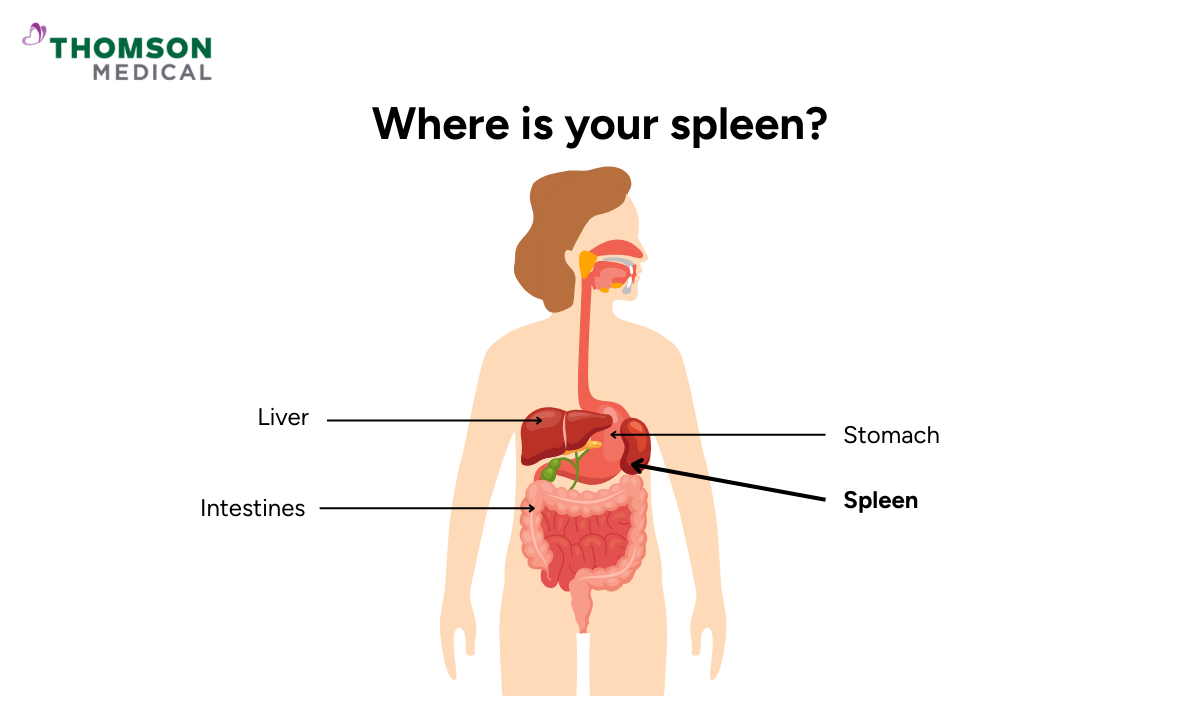
Your spleen is a small, fist-sized organ in the upper left side of your abdomen, just beneath your rib cage. It works quietly and continuously to keep you healthy by filtering your blood, supporting your immune system, and storing reserves your body may use when needed.
Pain and discomfort in the area may become noticeable when certain inflammations occur, letting you know that your body requires attention.
What does spleen pain feel like?
Spleen pain is often felt as a dull, aching discomfort in your upper left abdomen. In some cases, the pain may also travel to your left shoulder. This can be a helpful detail to share with your doctor.
You might notice the pain:
Gets worse when you breathe in deeply
Feels heavier or more noticeable after eating, especially if your spleen is enlarged
Feels like a constant, heavy pressure rather than a sharp or stabbing sensation
If your pain came on suddenly after an injury or accident, this may be a sign of a ruptured spleen. Seek immediate care rather than waiting to see if the pain settles.
Our specialist
Loading...
What are the common causes of spleen pain?
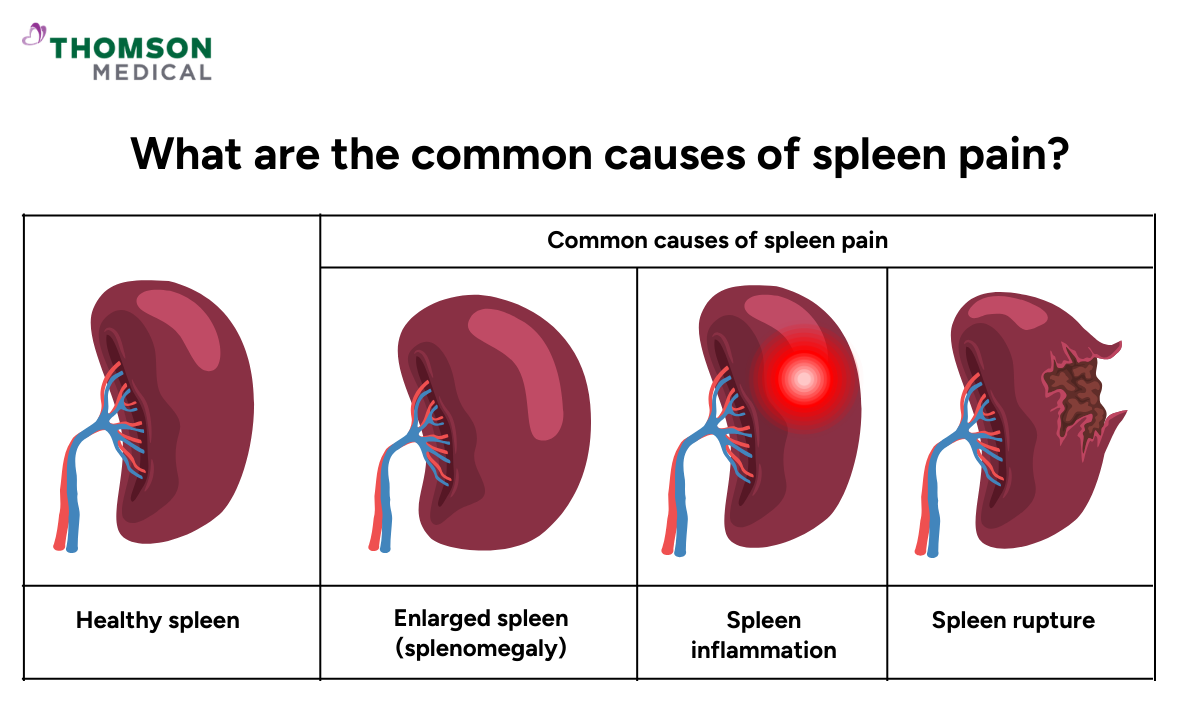
Spleen pain can stem from several different conditions. Certain conditions are manageable with the right care, while others require medical attention.
Enlarged spleen (splenomegaly)
An enlarged spleen is one of the most common reasons for spleen pain. Your spleen swells when it's working harder than usual, often due to responding to infection or filtering damaged blood cells.
Several conditions can lead to this swelling, including:
Viral infections such as glandular fever (infectious mononucleosis)
Liver disease
Certain blood disorders
You may feel a sense of fullness or discomfort on your left side, even after eating only a small amount. This happens because the enlarged spleen takes up more space and can press gently against your stomach. It is a signal worth paying attention to, even if the discomfort feels mild.
Spleen infection and inflammation
Although it is not common, your spleen can sometimes become infected or inflamed. This may happen as part of a wider infection elsewhere in your body.
In rare cases, a bacterial infection can lead to a spleen abscess, which is a collection of infections that forms inside the organ. You may notice more persistent and worsening pain on your left side, along with a fever or unusual fatigue.
If you have left-sided abdominal pain along with these symptoms, please do not hesitate to speak to your doctor so you can be properly assessed and treated if needed.
Spleen injury or rupture
A ruptured spleen is a medical emergency. It most commonly occurs after a blow to the abdomen from incidents such as a road accident or a sports injury. Symptoms are usually severe and can develop rapidly.
Common symptoms include:
Sudden, severe pain in the upper left abdomen
Pain spreading to the left shoulder
Dizziness or feeling faint
A tender, rigid abdomen
Although a “ruptured spleen” could sound alarming, prompt treatment is highly effective. What matters most is seeking urgent medical care without delay. If you think you may have injured your spleen, contact your doctor immediately rather than waiting to see if the pain settles.
Blood disorders affecting the spleen
Some blood disorders can put extra strain on the spleen, causing it to enlarge or become damaged over time.
These include:
Sickle cell disease, where abnormally shaped red blood cells can block blood flow in the spleen
Leukaemia and lymphoma blood cancers that may cause the spleen to enlarge
Haemolytic anaemia, where red blood cells are destroyed faster than they can be made
If any of these conditions apply to you, your doctor can assess whether your spleen may be affected and guide you on the appropriate next steps.
If you have recently had a knock or injury to the abdomen and are experiencing pain, please do not wait. Request an appointment with Thomson Medical promptly so any concerns can be safely identified and addressed.
When should you see a doctor for spleen pain?

It's not always easy to know when spleen discomfort needs medical attention, especially if it comes and goes or seems mild.
See a doctor soon if you notice:
Persistent or worsening pain on the left side of your abdomen
Swelling or tenderness in that area
Fever alongside abdominal pain
Unexplained fatigue or weight loss
Feeling full very quickly when eating
Seek emergency care immediately if you have:
Sudden, severe abdominal pain, especially pain after an injury
Pain spreading rapidly to your shoulder
Dizziness, fainting, or signs of shock
The difference between these two situations is timing and severity. Gradual symptoms that persist or worsen need assessment, but these are not typically emergencies. Sudden, severe symptoms need immediate attention because they may indicate internal bleeding.
How is spleen pain diagnosed?
Your doctor will start by asking about your symptoms and medical history. They will also gently examine your abdomen to check for tenderness or swelling.
From there, they may recommend:
Blood tests to check for infection, anaemia, or blood disorders
Ultrasound scan to see the size and condition of your spleen
CT scan if a more detailed image is needed, particularly after an injury
These tests help identify whether the pain is due to infection, an enlarged spleen, injury, or a related blood condition. Identifying the cause early allows treatment to be planned safely and appropriately.
What is the treatment for spleen pain?
Treatment depends on what is causing the pain. Your doctor will work with you to find the right approach for your specific situation.
Depending on the diagnosis, your treatment plan may look different:
Viral infections such as glandular fever often improve with rest, fluids, and time
Bacterial infections are usually treated with antibiotics
An enlarged spleen may need monitoring, along with treatment of the condition causing it
A ruptured spleen may require surgery, which can sometimes involve removal of the spleen (splenectomy)
Blood disorders are managed with specialist care, which may include medication or other targeted therapies
It can sound daunting to learn that your spleen needs to be removed, but after the surgery most people go on to live active lives without significant limitations. However, you may be slightly more vulnerable to certain infections, so your doctor will advise you on steps to stay protected, such as staying up-to-date with certain vaccinations.
Spleen pain is not something to ignore, but it is also not something to panic about. If something feels wrong, request an appointment with Thomson Medical, as early checks can make a real difference.
FAQ
What causes pain in the spleen?
The most common causes are an enlarged spleen, infections such as glandular fever, a knock or injury to the abdomen, and certain blood conditions. Infections can cause the spleen to swell and become tender, while some blood conditions place it under ongoing strain over time.
How do I know if my spleen is enlarged?
The most common signs are a dull ache or a feeling of fullness in your upper left abdomen, sometimes spreading toward your left shoulder. You might also feel uncomfortably full after eating very little.
Some people have an enlarged spleen with no symptoms at all, which is why it is often picked up during a routine check or scan rather than through symptoms alone.
Can spleen pain go away on its own?
It depends on the cause:
- Pain linked to a viral infection (such as glandular fever) often eases as your body recovers over a few weeks
- Pain that is mild and gradually improving is usually a good sign
- Pain that stays the same, gets worse, or comes alongside a fever or unusual tiredness suggests something else may be going on and warrants medical attention
Is spleen pain serious?
Many causes are straightforward and respond well to treatment or simply time. A slow, dull ache is generally less urgent and often safe to monitor. It commonly points to conditions like an enlarged spleen or a recovering infection. Sudden, severe pain, on the other hand, is a warning sign that needs immediate medical attention, as it may indicate a ruptured spleen or internal bleeding.
Can stress cause spleen pain?
Not directly. Stress can affect your digestive system in ways that cause general stomach discomfort, and what feels like spleen pain may actually be muscle tension or an upset stomach. If the pain is persistent and sits specifically in your upper left abdomen, it is worth looking into further.
What should I avoid if I have spleen pain?
If your spleen is enlarged, avoid contact sports, heavy lifting, and intense physical activity. An enlarged spleen sits closer to the surface of the body than usual and is easier to injure. Avoid pressing or prodding the area, and follow any advice specific to your situation.
The information is intended for general guidance only and should not be considered medical advice. For personalised recommendations and advice based on your unique situation, please consult a specialist at Thomson Medical. Request an appointment with Thomson Medical today.
For more information, contact us:
Thomson Medical Concierge
- 8.30am - 5.30pm
- WhatsApp: 9147 2051
Need help finding the right specialist or booking for a group?
Our Medical Concierge is here to help you. Simply fill in our form, and we'll check and connect you with the right specialist promptly.
Notice:
The range of services may vary between Thomson clinic locations. Please contact your preferred branch directly to enquire about the current availability.
Get In Touch