

Noticing spotting after an in vitro fertilisation (IVF) embryo transfer can feel unsettling, particularly in the middle of the two-week wait when there’s no way to know yet how things are going. The first thought is usually the worst one.
Light spotting at this stage is common, and on its own it doesn’t tell you whether the cycle has worked. Here’s what can cause spotting after an IVF embryo transfer, what’s typical, and when it's worth calling your doctor.
What is spotting after an IVF transfer?
Spotting refers to light vaginal bleeding or light staining that you might notice when cleaning yourself or when checking on your underwear. Unlike a normal menstrual period, spotting is usually lighter and does not involve shedding the uterine lining.
After an IVF embryo transfer, spotting may occur during the two-week wait before your pregnancy test. Spotting may vary in appearance and colour, which includes:
Pink: occurs when a small amount of fresh blood mixes with normal vaginal discharge.
Brown: indicates older blood that has oxidised, as it takes longer to leave the body.
Red: indicates active, fresh bleeding from the cervix, vaginal wall, or uterine cavity.
What may cause spotting after an embryo transfer?
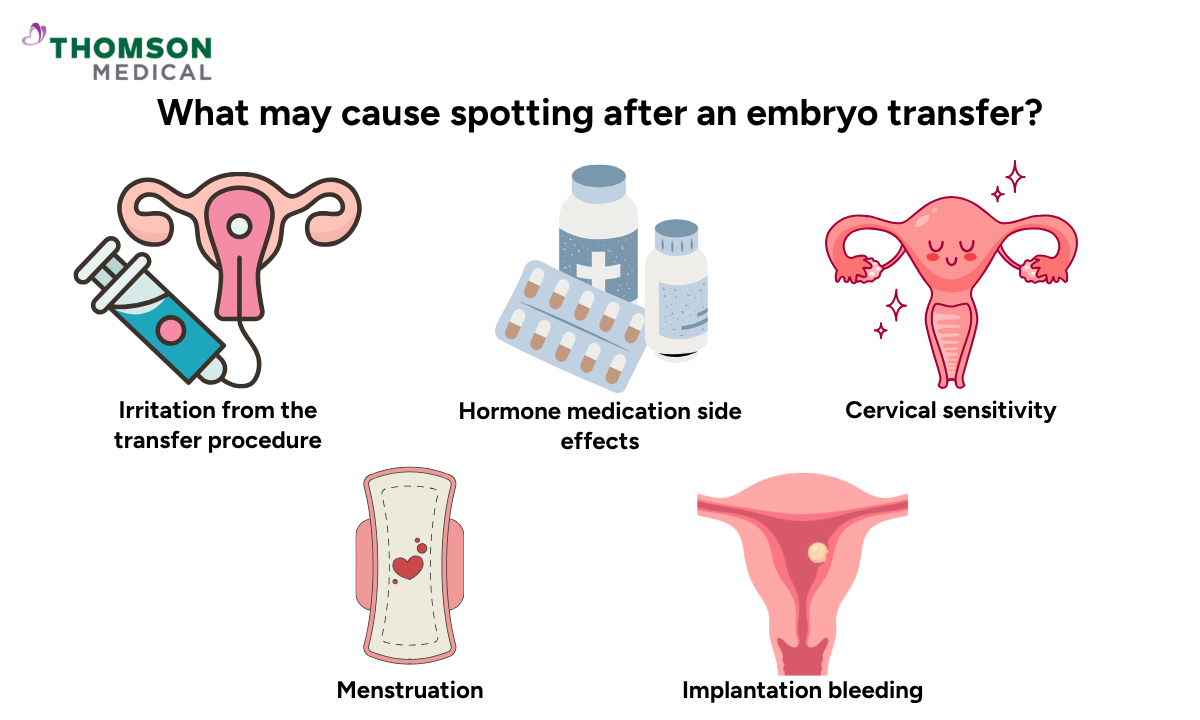
Light spotting after embryo transfer may have several possible causes, such as:
Irritation from the transfer procedure:
Passing the catheter through the cervix may cause mild and brief spotting in some women.
Hormone medication side effects:
Hormone medications used in the IVF treatment, such as progesterone medication or oestrogen supplementation, may affect the uterine lining.
For example, progesterone may cause cervical irritation and breakthrough spotting. Meanwhile, oestrogen fluctuations may also trigger light bleeding.
Cervical sensitivity:
During the IVF process, the cervix becomes more sensitive due to an increased blood supply and hormonal changes.
As a result, minor contact to the cervix, such as when applying vaginal medication, may cause spotting.
Spotting after an embryo transfer may also occur from other situations, such as menstruation and implantation bleeding.
If you have experienced spotting after your IVF embryo transfer, consult a doctor for a medical examination to check what may have caused it and whether it requires further assessment. Schedule an appointment with Thomson Medical.
Our fertility doctors in Singapore
Loading...
When does spotting occur after an IVF transfer?
Spotting may occur at different points after embryo transfer. If you notice spotting 1 to 2 days after embryo transfer, it may likely relate to irritation from the transfer procedure. Meanwhile, when the spotting occurs 3 to 5 days after the embryo transfer, it is more likely related to hormone medications or hormone level changes.
If you experience spotting around day 6 to 10 after the embryo transfer, it may be caused by possible implantation bleeding. On the other hand, if you notice it after more than 10 days post-transfer or around your scheduled pregnancy time, it may be a sign of an upcoming menstruation or implantation.
What to do if you experience spotting
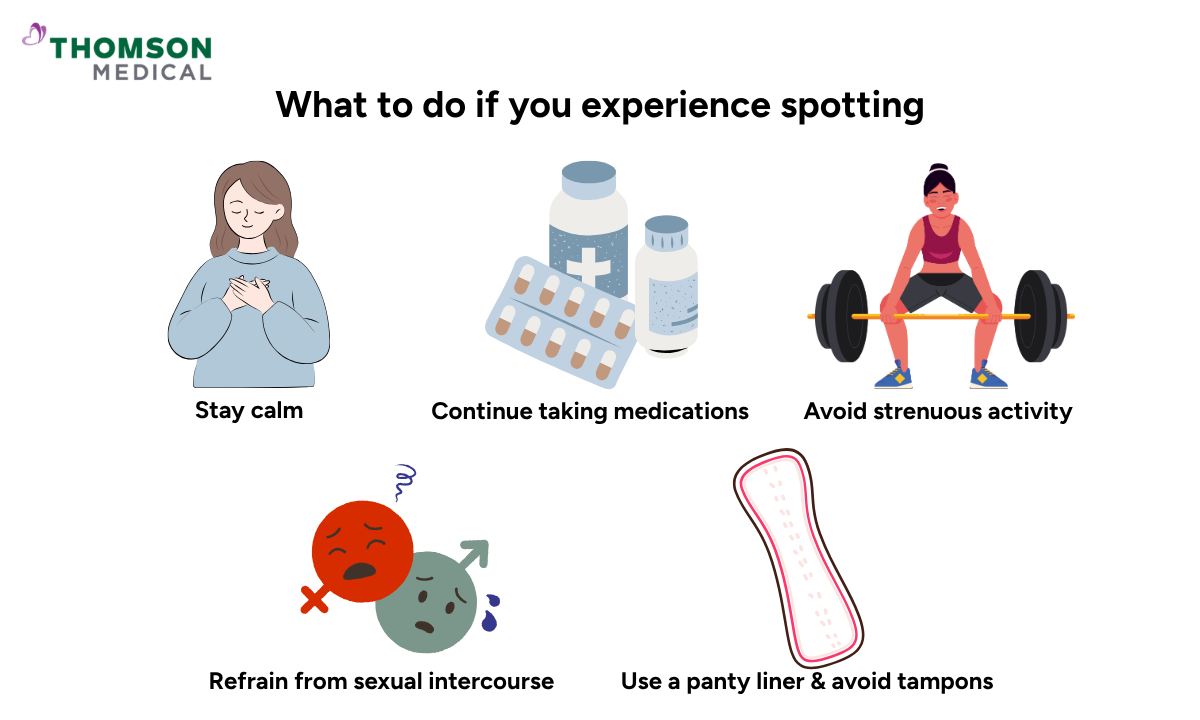
It is understandable if you are concerned or worried when you experience spotting after an IVF embryo transfer. To help you manage this situation, here are some practical steps you could try:
Stay calm:
Spotting might be worrying, but try to stay calm and monitor it closely. Note the colour, amount, duration, and whether it becomes heavier or is accompanied by pain or cramping.
Keeping track of these changes may help you give your doctor a clearer description and recognise when you may need prompt medical advice.
Continue all prescribed medications:
Continue taking every medication your clinic has prescribed, including the correct dosage and timing. Stopping progesterone or other hormone support without medical advice may affect your cycle.
Avoid strenuous activity:
Strenuous exercise may feel uncomfortable if you are experiencing spotting or cramping. Choose light daily activities instead, unless your doctor has advised you to rest or avoid particular activities.
Refrain from sexual intercourse:
Follow your doctor’s advice about sexual intercourse during the two-week wait. Your doctor may recommend avoiding intercourse temporarily, as it may irritate sensitive vaginal or cervical tissues and make spotting more noticeable.
Use a panty liner and avoid tampons:
Use a panty liner or sanitary pad to help you monitor the amount and colour of any spotting. However, you may need to avoid tampons, as these may irritate sensitive vaginal and cervical tissue.
Spotting during the two-week wait might feel worrying, but it does not necessarily indicate what the treatment outcome will be. Every woman’s experience might be different, so speak with your doctor if you have concerns or notice symptoms that feel unusual for you.
When to visit a doctor
Although spotting after an IVF transfer might not always indicate a serious issue, some symptoms still require medical assessment. Visit a doctor if you experience these symptoms:
Heavy bleeding, particularly if your pads are soaking quickly or passing large clots.
Severe, sudden, or one-sided abdominal or pelvic pain.
Shoulder-tip pain, dizziness, fainting, weakness, or feeling unwell.
Severe abdominal bloating, persistent nausea or vomiting, reduced urination, difficulty breathing, chest pain, or a rapid heartbeat.
Fever of 38°C or above, especially with pelvic pain.
Additionally, you also need to visit a doctor when the bleeding is persistent, as it may require tests to identify the cause.
If you experience heavy bleeding, dizziness, or other symptoms mentioned above when you are spotting after an IVF embryo transfer, visit a doctor to get a prompt medical assessment. Schedule an appointment with Thomson Medical.
FAQ
What are the differences between implantation spotting and menstruation?
Implantation spotting may appear as very light bleeding, often pink or brown coloured, and may last from a few hours to 1-2 days. Meanwhile, menstruation tends to be heavier, more often to appear in red colour, and continue for longer days, sometimes accompanied by cramps or clots.
Can heavy bleeding mean your IVF does not result in pregnancy?
Heavy bleeding alone does not indicate what is happening in your IVF treatment. Instead, the pregnancy test at the end of the two-week wait, together with any scans arranged by your clinic, is what your doctor usually uses to assess whether your cycle is progressing as expected.
Why do you have cramps along with the spotting?
Mild and period-like cramps might occur after an IVF embryo transfer along with light spotting. They can happen because the thin catheter used to place the embryo may cause temporary irritation of the cervix or womb. The cramping may also be related to progesterone and other fertility medications or early changes in the womb.
Why does your spotting come and go?
Spotting may come and go over the course of several days, rather than being present continuously. This may happen when only a small amount of blood is released at a time. Rather than flowing out immediately, the blood may remain in your vagina before being released at a later time.
The information provided is intended for general guidance only and should not be considered medical advice. For personalised advice based on your conditions, schedule an appointment with Thomson Medical.
For more information, contact us:
Thomson Fertility Centre
- Paragon: 6252 7766
- Novena: 6399 3758, 8811 0358 (WA)