

Receiving a stage 3 breast cancer diagnosis is a significant moment, and it is completely understandable to feel overwhelmed by what comes next. Many people find that the questions can feel just as difficult as the diagnosis itself.
Knowing the symptoms and the treatment options available can help you feel more informed and in control of your care.
What is stage 3 breast cancer?
Stage 3 breast cancer is also called locally advanced breast cancer. This means the cancer has grown larger or spread to nearby lymph nodes or surrounding tissues, such as the skin of the breast or the chest wall.
Importantly, it has not spread to distant organs like the lungs, liver, or bones.
Although stage 3 is more advanced than stages 1 or 2, it is still considered treatable. Many women respond well to a carefully planned combination of treatments.
What are the types of stage 3 breast cancer?
Stage 3 is divided into three sub-stages – 3A, 3B, and 3C – based on tumour size, the number of lymph nodes involved, and whether nearby tissues are affected. Your sub-stage is one of the key pieces of information your doctor will use to build a treatment plan around your specific situation.
Stage 3A
Stage 3A usually means the cancer has spread to several nearby lymph nodes, or the tumour is larger and has started spreading locally.
You may be diagnosed with stage 3A if:
The tumour is any size and has spread to 4–9 lymph nodes under the arm or near the breastbone
The tumour is larger than 5 cm and has spread to 1–3 nearby lymph nodes
Stage 3B
Stage 3B means the cancer has grown into nearby structures.
You may be diagnosed with stage 3B if:
The tumour has grown into the chest wall or the skin of the breast
The cancer may also have spread to up to 9 nearby lymph nodes
This stage includes inflammatory breast cancer (IBC), a less common but more aggressive type. It can cause the breast to appear red, swollen, and warm because cancer cells block lymph vessels in the skin.
Stage 3C
Stage 3C is mainly defined by more extensive lymph node involvement.
You may be diagnosed with stage 3C if:
Cancer has spread to 10 or more lymph nodes under the arm
Cancer has reached lymph nodes above or below the collarbone
There may or may not be a visible tumour in the breast. At this stage, the key factor is the extent of lymph node spread, rather than tumour size alone.
Our breast cancer specialists in Singapore
Loading...
What are the symptoms of stage 3 breast cancer?
At stage 3, the cancer has often grown enough to cause noticeable changes. Some symptoms may have been present for some time, while others can appear more recently.
You might notice:
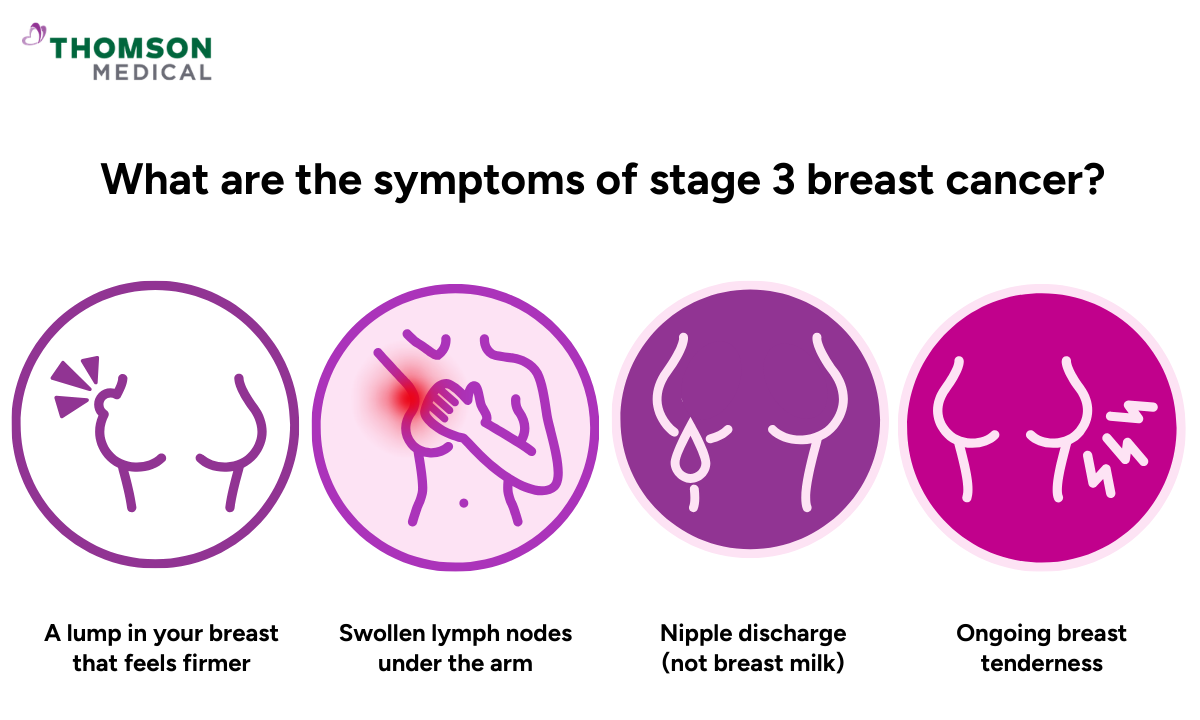
A lump in your breast that feels larger, firmer, or more fixed
Swelling of part or all of the breast
Swollen lymph nodes under the arm or near the collarbone
Skin changes such as dimpling, puckering, redness, or thickening
Skin that looks pitted, like an orange peel
A nipple that has newly turned inward or changed in appearance
Nipple discharge that is not breast milk
Ongoing breast pain or tenderness that does not improve
If the cancer is inflammatory breast cancer, symptoms can develop quickly and sometimes within weeks. One breast may appear noticeably larger, warmer, heavier, or redder than the other.
Noticing a new lump on your breast can feel worrying. Checking with a healthcare provider is a good first step. Request an appointment with Thomson Breast Centre, where our specialists can assess any new lumps, skin changes, or nipple symptoms and help you understand what, if any, further steps may be right for you.
How is stage 3 breast cancer diagnosed?
If stage 3 breast cancer is suspected, your doctor will take a careful and thorough approach to understand exactly what is happening.
At this stage, the goal is to confirm the diagnosis. Your doctor will also check how far the cancer has spread within the breast and nearby lymph nodes and whether it has travelled elsewhere in the body.
Imaging tests
If this is your first diagnosis, your doctor will begin with standard breast imaging to assess the tumour and nearby lymph nodes.
You'll usually have:
Mammogram:
A breast mammogram maps the size and position of the tumour within the breast
Breast ultrasound:
A breast ultrasound examines the tumour and nearby lymph nodes more closely
MRI scan:
An MRI scan provides a detailed view of the breast and surrounding tissue, which is particularly useful when the chest wall or skin may be involved
Because stage 3 breast cancer is locally advanced, your doctor will usually recommend additional scans to understand the full extent of the disease.
These additional scans may include:
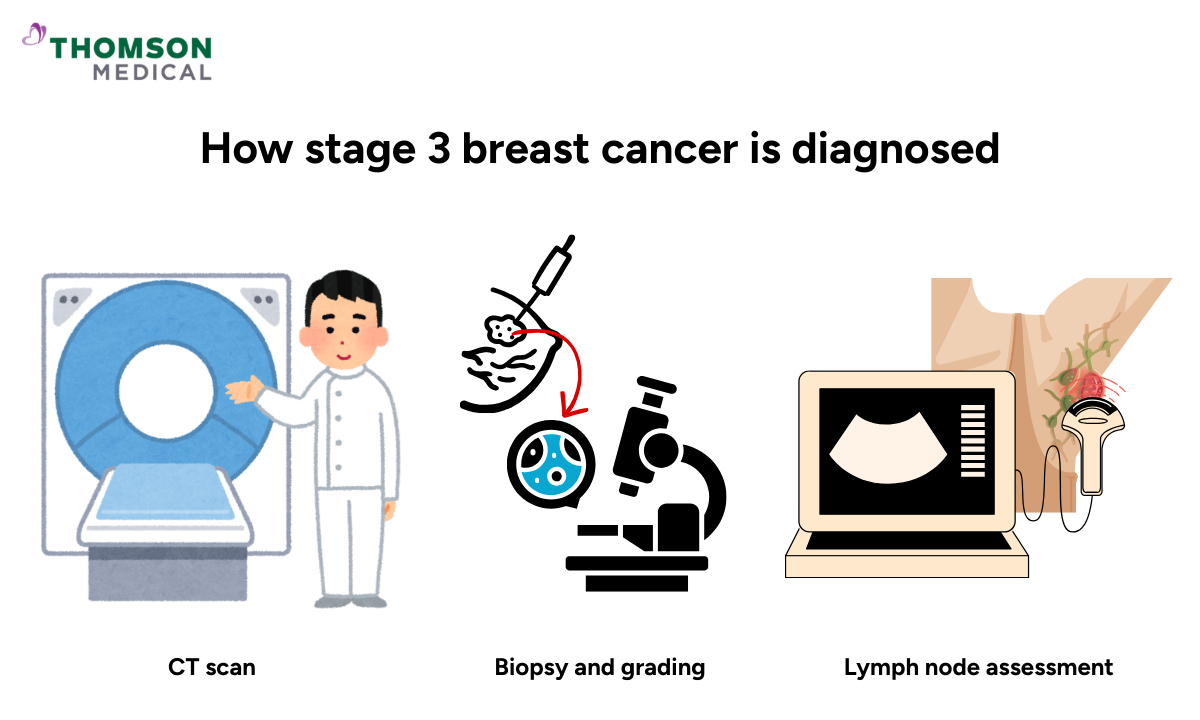
- A CT scan may be performed to look at the chest and abdomen, helping doctors check whether cancer has reached nearby organs such as the lungs or liver.
- A PET scan can highlight areas of increased cell activity and may detect cancer in lymph node regions beyond the underarm. In many cases, a bone scan is also done to see whether the cancer has spread to the bones.
Not every person will need every scan. Your doctor decides which tests are appropriate based on your situation. The aim is to build a complete picture before treatment begins.
Biopsy and grading
At stage 3, the breast biopsy reveals details that shape your entire treatment plan, including whether the cancer is hormone receptor positive, HER2 positive, or triple negative, and how quickly the cells are likely to grow. These findings directly determine which treatments are recommended and in what order.
Your report will also include a grade from 1 to 3:
Grade | What it means |
Grade 1 (low-grade) | Cells look similar to healthy breast cells and grow slowly |
Grade 2 (moderate-grade) | Cells grow at a moderate pace |
Grade 3 (high-grade) | Cells look quite different from healthy cells and grow more quickly |
A higher grade at stage 3 often means a more active treatment approach is needed from the start. In some cases, genomic testing may also be used to further personalise your plan.
Lymph node assessment
Lymph node involvement is one of the key features of stage 3 breast cancer. At this stage, cancer may have spread to several groups of lymph nodes, not only under the arm but also sometimes near the breastbone or above the collarbone.
Because multiple nodes are often involved at stage 3, a procedure called an axillary lymph node dissection is commonly recommended. This involves removing a larger number of lymph nodes from under the arm. The aim is to remove affected nodes and to understand exactly how extensive the spread is.
This information is important, as it helps guide decisions about further treatment, including whether radiotherapy should also target the lymph node areas.
How is stage 3 breast cancer treated?
Treatment at stage 3 is comprehensive and carefully coordinated. Because your cancer is more advanced locally, your care team will usually combine several therapies to give you the best possible outcome.
Your treatment plan will be personalised for you, based on:
The sub-stage (3A, 3B, or 3C)
Tumour size and location
Number of lymph nodes involved
Hormone receptor and HER2 status
Whether inflammatory breast cancer is present
Your age, overall health, and personal preferences
Your care team will help you understand which options apply to your situation.
Treatment often begins before surgery
In many cases, your therapy will start before any surgery, called neoadjuvant therapy. The goal is to shrink your tumour and reduce lymph node involvement. This can make surgery more manageable, increase the possibility of breast-conserving surgery in some cases, and show how your cancer responds to treatment.
Surgery
After neoadjuvant treatment, surgery is usually the next step. The approach will depend on how your tumour has responded.
Your surgery may include:
Lumpectomy, if your tumour has shrunk enough
Mastectomy, which removes the entire breast, often recommended if the tumour is large, involves the skin or chest wall, or affects multiple areas
If you have inflammatory breast cancer, your doctor will usually recommend a modified radical mastectomy. This surgery removes the entire breast and the affected lymph nodes to give you the best chance of controlling the disease.
If you need a mastectomy, breast reconstruction is an option. This is something your care team can discuss with you when the time is right, often planned after all additional treatments are completed.
Chemotherapy after surgery (adjuvant therapy)
After surgery, you may need further chemotherapy, especially if cancer cells are still found in your breast or lymph nodes. This helps lower the risk of the cancer returning.
In some cases, a different chemotherapy drug may be used if the initial treatment did not fully remove the cancer.
Radiation therapy
Radiation therapy is commonly recommended at stage 3, following both lumpectomy and mastectomy. It uses targeted radiation to destroy any cancer cells that may remain after surgery, reducing the risk of the cancer returning.
At stage 3, the treatment area is often broader than at earlier stages and may include the chest wall, lymph nodes under the arm, or lymph nodes near the breastbone or collarbone, depending on where cancer was found. If adjuvant chemotherapy is also needed after surgery, radiotherapy will usually begin once that is complete.
Hormone therapy (endocrine therapy)
If your cancer is hormone receptor-positive, hormone therapy becomes an important long-term part of your treatment. It works by reducing the effect of oestrogen or progesterone on any remaining cancer cells, helping to lower your risk of recurrence.
At stage 3, hormone therapy is usually continued for five to ten years, longer than at earlier stages. The specific medication depends on your menopausal status and how your body responds.
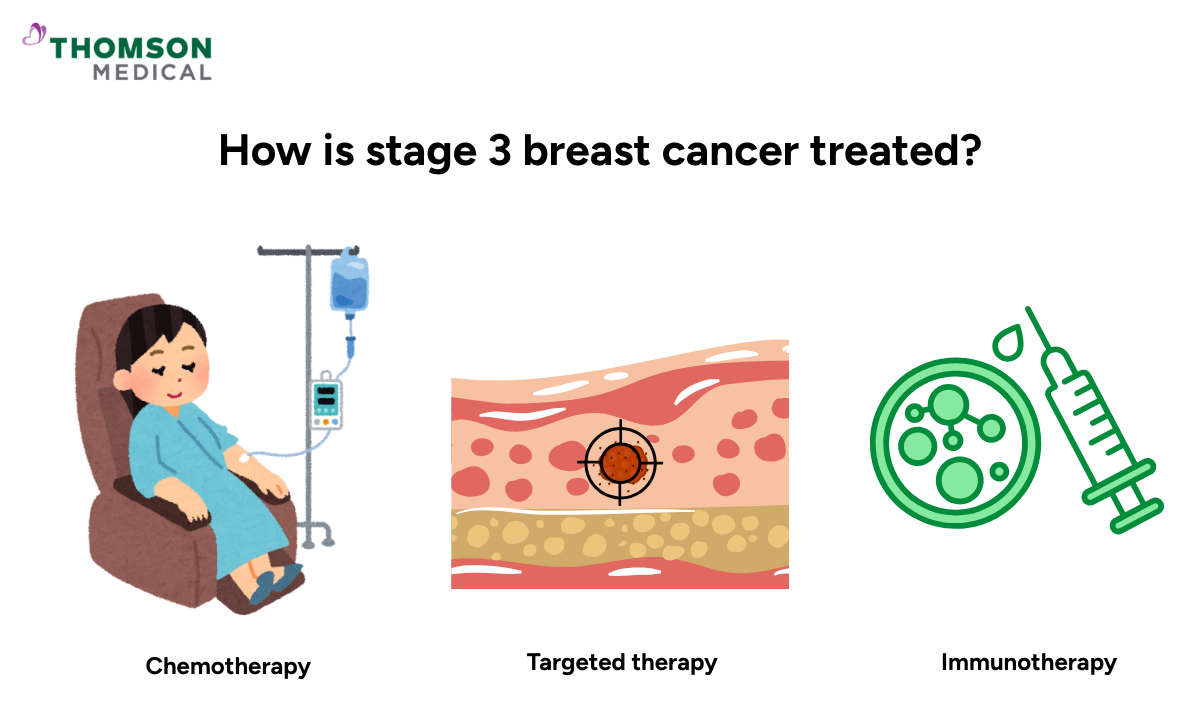
Targeted therapy
Targeted therapy works by blocking the HER2 protein, which can drive the growth of certain breast cancers.
Whether this treatment is part of your plan depends on your biopsy results, which will show whether your cancer is HER2-positive. If it is, targeted therapy is typically given both before and after surgery and at stage 3, often continuing for up to a year after surgery alongside other treatments.
Immunotherapy
Triple-negative breast cancer, where the tumour lacks hormone receptors and the HER2 protein, does not respond to hormone or targeted therapies, so treatment takes a different approach.
Immunotherapy may be recommended alongside chemotherapy to help the immune system identify and respond to cancer cells more effectively. Depending on your situation, this may be given before or after surgery. Your doctor will discuss whether immunotherapy is suitable for you and explain how it fits into your overall treatment plan.
Your doctor will talk through which of these treatments applies to your situation, explain how they work together, and answer any questions you have before treatment begins.
A stage 3 diagnosis is significant, but you do not have to face it alone. Request an appointment with Thomson Breast Centre, where our team will walk you through every step of your diagnosis and treatment, explain what each approach involves, and support you throughout your care.
FAQ
Is stage 3 breast cancer curable?
Stage 3 breast cancer is considered locally advanced, but it is not automatically a terminal diagnosis. Many people respond well to cancer treatment and achieve long-term remission. Outcomes depend on the sub-stage, cancer type, and how well the cancer responds to treatment.
What treatment options are available if my stage 3 breast cancer is triple negative?
Triple-negative breast cancer requires a different approach, as it does not respond to hormone therapy or HER2-targeted treatments. Treatment options typically include chemotherapy as the primary systemic treatment, often with immunotherapy. Your doctor will build a plan tailored to your specific diagnosis.
Will I need radiotherapy even if I have a mastectomy at stage 3?
Yes, in most cases. Unlike at stage 2, where radiotherapy after mastectomy depends on individual risk factors, it is a standard part of cancer treatment at stage 3 even after full breast removal.
Can inflammatory breast cancer be treated the same way as other stage 3 breast cancers?
Not exactly. Inflammatory breast cancer is treated more aggressively because it spreads quickly. Treatment typically begins with chemotherapy to control the disease before surgery. A modified radical mastectomy is the standard surgical approach, followed by radiotherapy.
Will my lymph nodes need to be removed at stage 3?
In most cases, yes. Because stage 3 breast cancer commonly involves multiple lymph nodes, axillary lymph node dissection (the surgical removal of lymph nodes under the arm) is frequently required. The extent of removal depends on how many nodes are affected and what imaging and biopsy results reveal before surgery.
How long does treatment for stage 3 breast cancer typically take?
Treatment for stage 3 breast cancer is a longer process than at earlier stages and can span anywhere from six months to over a year, depending on the combination of treatments involved.
Neoadjuvant chemotherapy alone typically runs for several months before surgery, followed by radiotherapy and long-term hormone or targeted therapy that may continue for five to ten years.
The information provided is intended for general guidance only and should not be considered medical advice. For personalised recommendations and tailored advice based on your unique situations, request an appointment with Thomson Breast Centre today.