

You may have been told that fibroids are common and that most women with them conceive without problems. While that can be true, it depends entirely on where the fibroid is.
Of all fibroid types, submucosal fibroids are most closely associated with fertility challenges, including difficulty with implantation and early pregnancy loss. Knowing what makes this type distinct can help you have a more informed conversation with your doctor about your options.
What is a submucosal fibroid?
A submucosal fibroid is a benign (non-cancerous) growth that develops just beneath the inner lining of the uterus. Unlike other types of fibroids, it pushes into the uterine cavity, the space where a pregnancy grows.
How are submucosal fibroids classified?
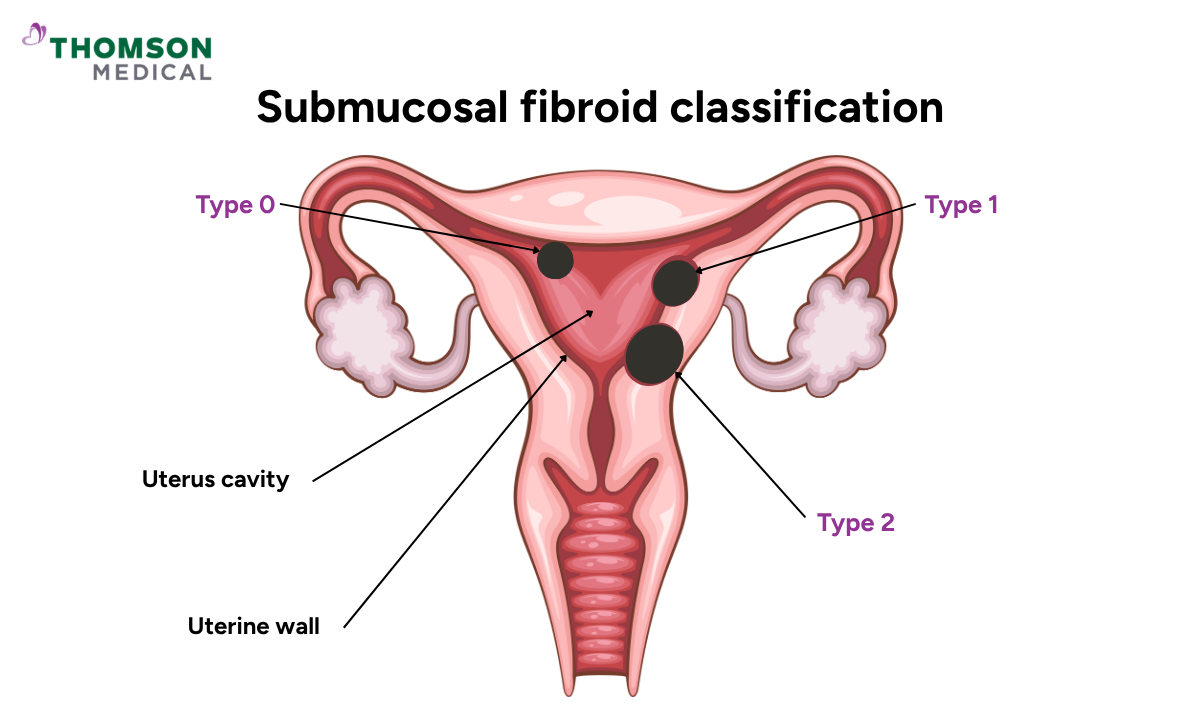
Doctors use a system from the International Federation of Gynaecology and Obstetrics (FIGO) to describe how much of the fibroid sits inside the uterine cavity.
There are three main types:
Type 0: The fibroid is entirely within the cavity, attached by a stalk
Type 1: Mostly inside the cavity, with less than 50% extending into the uterine wall
Type 2: More than 50% is embedded in the wall, but it still bulges into the cavity
Knowing the fibroid type helps your doctor plan the most appropriate care for you.
What causes submucosal fibroids?
The exact cause is not fully understood, but several factors may make fibroids more likely to develop.
These include:
Hormonal changes involving oestrogen and progesterone
A family history of fibroids
Being in your reproductive years, particularly your 30s and 40s
A higher body weight, which may be linked with higher oestrogen levels
It is worth knowing that having one or more of these factors does not mean you will definitely develop fibroids.
What submucosal fibroid symptoms might you notice?
Submucosal fibroids develop within the uterine cavity, which means they commonly affect menstrual bleeding and, in some cases, fertility. Because they grow into the space where a pregnancy would normally implant and develop, they may interfere with implantation or make it harder for an embryo to grow normally. Symptoms can occur even when the fibroid is relatively small.
These may include:
Very heavy periods, sometimes with large clots
Bleeding between periods
Painful or severe menstrual cramps
Tiredness and breathlessness caused by low iron levels (iron deficiency anaemia)
May affect fertility or make conception more difficult
Recurrent miscarriage
If you are experiencing ongoing heavy bleeding, worsening period pain, or fertility concerns, it is worth speaking with your doctor. They can assess what is happening and talk through the next steps with you
Our gynaecologists
Loading...
How is a submucosal fibroid diagnosed?
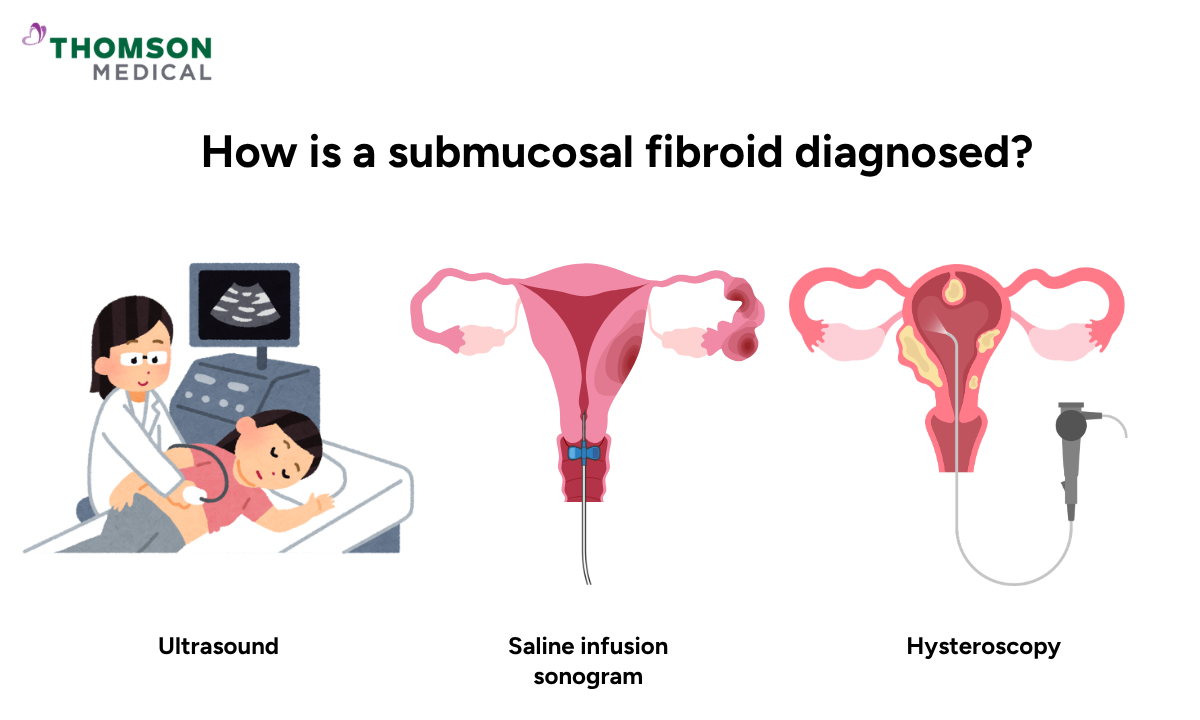
Your doctor will usually start with a pelvic examination and then recommend one or more tests to get a clearer picture.
These include:
Ultrasound:
A small probe is gently placed inside the vagina to get a detailed view of the uterus
Saline infusion sonohysterography:
A small amount of sterile fluid is passed into the uterus during an ultrasound, making fibroids easier to see
Hysteroscopy:
A thin, flexible camera is passed through the cervix into the uterus. It can also be used to treat the fibroid during the same procedure.
MRI scan:
Used in more complex situations to get a detailed picture of the uterus and surrounding structures
Each of these helps in a slightly different way, and your doctor will advise which is most appropriate for your situation.
Because submucosal fibroids grow inside the uterine cavity, accurate imaging is important in understanding their size and position. Request an appointment with Thomson Medical for a thorough assessment, including an ultrasound, a hysteroscopy, or other investigations, if needed.
Does a submucosal fibroid always need treatment?
Not necessarily. If your fibroid is small, not causing any symptoms, and not affecting your fertility, your doctor may simply keep an eye on it with regular monitoring. Many women live comfortably with fibroids and never need any intervention.
If you are unsure whether your symptoms warrant treatment, your doctor can help you understand your options and what is most suitable for your situation.
What treatment options are available?
If symptoms start to affect your daily life, several treatment options are available depending on the size and type of your fibroid, your overall health, and your plans for future pregnancy.
Medicines
Medicines cannot remove fibroids, but they can help ease symptoms while you consider further treatment or prepare for a procedure.
These may include:
Pain relief:
Common pain medicines such as ibuprofen can help ease pelvic discomfort during your period.
Hormonal therapy:
The contraceptive pill, hormonal injections, or a hormonal coil that releases progestogen can help reduce bleeding over time.
GnRH medicines:
These temporarily lower oestrogen levels and may help shrink fibroids, often before surgery. They are used under close medical supervision and are not suitable for prolonged use.
Once treatment stops, symptoms can return, so medicines are often used briefly alongside other treatments rather than as a long-term solution on their own.
Minimally invasive procedures
If medicines alone are not enough, minimally invasive procedures may help manage fibroids without major surgery.
These include:
Hysteroscopic myomectomy:
The fibroid is removed through the cervix using a thin camera and instrument, with no cuts to the abdomen.
This is commonly considered for people with symptoms who wish to preserve their fertility.
Uterine artery embolisation (UAE):
Tiny particles are injected into the blood vessels that supply your fibroids, reducing their blood supply and causing them to shrink over time.
Endometrial ablation:
The lining of the uterus is treated to reduce heavy bleeding. This is not suitable if you wish to preserve fertility or become pregnant in the future.
These options can ease symptoms and may shorten recovery time compared with surgery. Your doctor will advise which option is most appropriate based on the type, size, and position of your fibroids.
Surgical options
Surgery may be considered when other treatments have not provided enough relief or are not suitable for your situation.
These include:
Myomectomy:
This procedure removes the fibroids while keeping your uterus intact. Many people who wish to preserve their fertility choose this option.
Hysterectomy:
This involves removing the uterus entirely. It is usually considered when other treatments have not provided enough relief and a future pregnancy is not planned.
When the uterus is removed, fibroids cannot return. With all other treatments, whether surgical or otherwise, there remains a chance that new fibroids may develop over time.
When should you see a doctor?
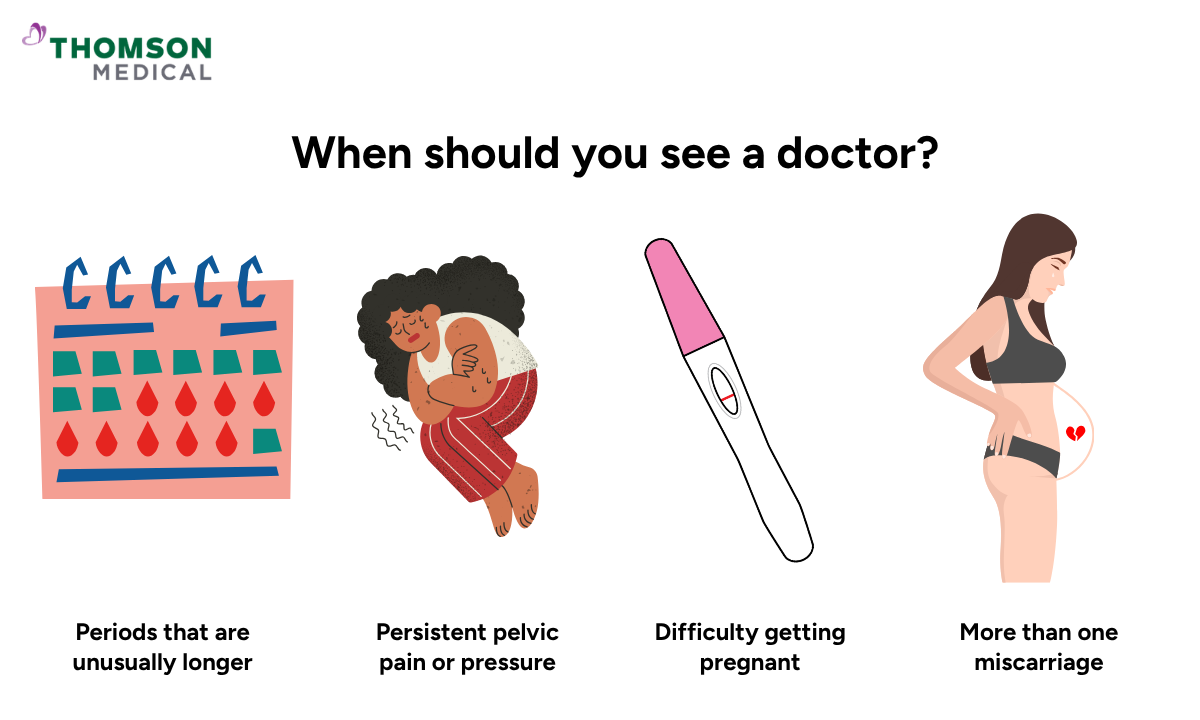
Fibroids are rarely an emergency, but certain symptoms suggest they may need further assessment.
Speak to your doctor if you notice any of the following:
Periods that are unusually heavy or longer
Bleeding between periods
Persistent pelvic pain or pressure
Difficulty getting pregnant after trying for a year (or six months if you are over 35)
More than one miscarriage
If something does not feel right, it is always worth getting it checked. Your doctor can help you understand what is causing your symptoms and discuss the options available to you.
Symptoms such as prolonged periods, bleeding between cycles, or persistent pelvic pain should not be ignored. Request an appointment with Thomson Medical for timely evaluation and advice tailored to your symptoms and future plans.
FAQ
What is the treatment for submucosal fibroids?
Treatment depends on the fibroid's size, location, severity of symptoms, and your future pregnancy plans. Options range from medicines to help manage symptoms through to procedures such as hysteroscopic myomectomy, which removes the fibroid while keeping the uterus intact. Your doctor will discuss which approach suits your situation.
Can submucosal fibroids become cancerous?
Submucosal fibroids are benign and not cancerous. In rare cases, a cancer called uterine leiomyosarcoma can develop in the uterus, but this is not thought to arise from pre-existing fibroids.
How quickly do submucosal fibroids grow?
Growth rates vary. Some submucosal fibroids grow slowly over many years, while others may enlarge more quickly. Hormonal changes during the reproductive years often influence fibroid growth.
Can submucosal fibroids be treated without surgery?
Yes, medicines may help reduce heavy bleeding and temporarily shrink fibroids. However, to remove a fibroid completely, a procedure such as hysteroscopic surgery is usually needed.
When should submucosal fibroids be removed?
Your doctor may suggest removal when fibroids are causing heavy bleeding, anaemia, difficulty getting pregnant, recurrent miscarriage, or persistent pelvic pain.
What size is considered large for a submucosal fibroid?
There is no strict size definition for a ‘large’ submucosal fibroid. Treatment decisions depend more on symptoms, the degree of cavity distortion, and fertility impact than on size alone. For personalised advice, please consult a specialist.
The information provided is intended for general guidance only and should not be considered medical advice. For personalised recommendations and tailored advice based on your unique situations, please consult a specialist at Thomson Medical. Request an appointment with Thomson Medical today.
For more information, contact us:
Thomson Specialists (Women's Health)
Thomson Women's Clinic (TWC)
- Novena:
6592 6686 (Call), 8611 8986 (WA) - Bukit Batok:
6569 0668 (Call), 8686 3525 (WA) - Choa Chu Kang:
6893 1227 (Call), 8282 1796 (WA) Jurong:
6262 8588 (Call), 6262 8588 (WA)- Katong (female doctor):
6970 2272 (Call), 8611 9020 (WA) - Punggol:
6243 6843 (Call), 8811 0328 (WA) - Sembawang: 6753 5228
- Sengkang: 6388 8125
- Serangoon (female doctor): 6382 3313
- Tampines: 6857 6266
- Tiong Bahru: 6276 1525