

If you've lost a tooth, especially one that’s hidden when you smile, you might be wondering, "Do I really need to replace it?"
The truth is, missing a tooth can impact your dental health and your daily life more than you might think. Missing teeth can lead to issues with eating, speaking, and even self-esteem, while also increasing the risk of more serious dental problems like jawbone loss and gum disease.
The good news is that tooth replacement solutions can help prevent these problems and restore your comfort and function. Let's explore your options so you can make the best decision for your oral health.
What causes tooth loss?
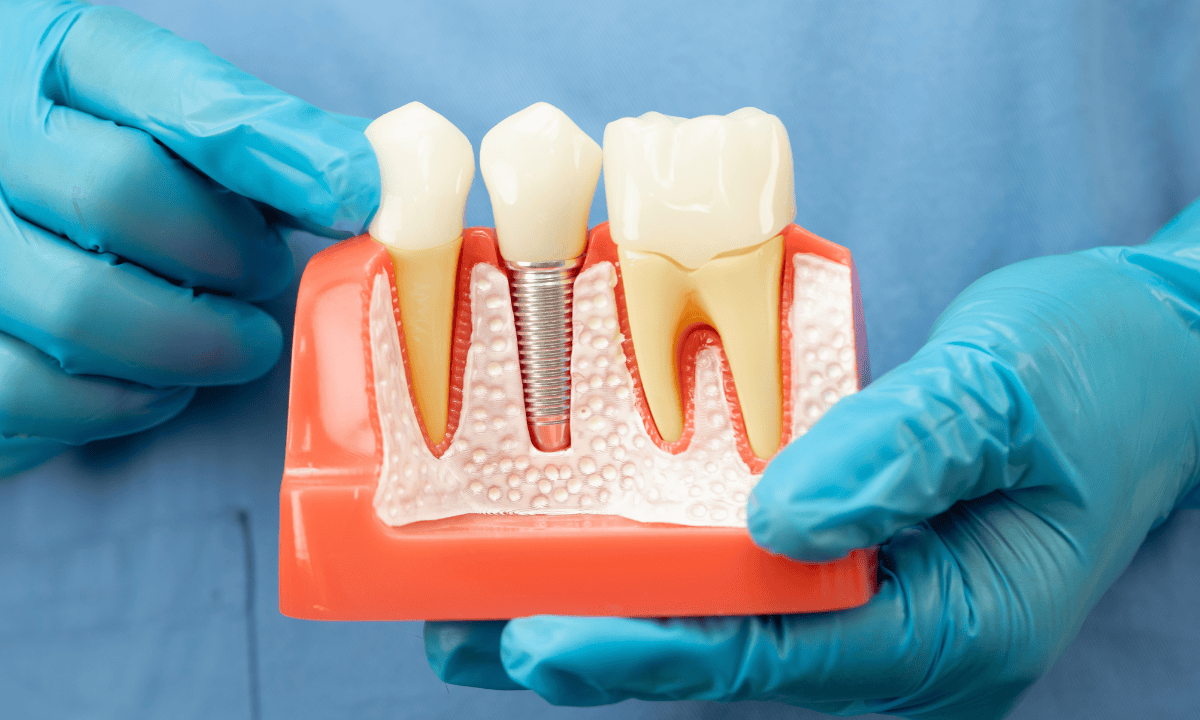
Tooth loss is a common issue affecting many people. It can happen for several reasons, including:
Dental decay:
When cavities progress and can’t be repaired, your doctor may suggest a tooth extraction.
Trauma or injury:
Accidents, sports injuries, or falls can cause tooth loss.
Gum disease:
When periodontal disease advances, it weakens the supporting bone and tissues, causing teeth to loosen and fall out.
However, if you’ve already experienced tooth loss, don’t worry; there are effective ways to address it.
What happens when a missing tooth is not replaced?
It's tempting to ignore a missing tooth, especially if it's not visible. However, missing a tooth can impact your dental health and your daily life in several ways:
Difficulty in chewing and biting:
Missing teeth makes it harder to chew and bite food, which limits the types of food you can eat and affects your nutrition and digestion over time.
Changes in speech:
Gaps caused by missing teeth can affect how you pronounce words.
Drifting of adjacent teeth:
When a tooth is missing, the surrounding teeth may gradually drift or tilt into the empty spaces. This can lead to misalignment throughout your mouth.
Changes in your bite:
When teeth move out of position, the way your upper and lower teeth come together changes. This imbalance puts extra pressure on your remaining teeth.
Jawbone resorption:
Without tooth roots, bone loss in the jaw can occur over time. This can reduce your overall jawbone volume and weaken its structural integrity.
Temporomandibular joint (TMJ) issues:
Changes in bite and jaw alignment can lead to TMJ disorders, causing persistent clenching, jaw pain, and dysfunction.
Changes in facial appearance:
As jawbone loss progresses, your face may lose its support structure, causing a sunken or sagging facial appearance.
Self-esteem and confidence issues:
These changes may impact your confidence in social interactions.
You may feel surprised and concerned learning about these issues. However, they don’t happen overnight, and you can prevent them with timely tooth replacement.
If you're experiencing any of these changes, schedule an appointment with Thomson Medical. Our dentist will assess your condition and discuss personalised solutions to help you restore your confidence.
Our dentists
Loading...
Tooth replacement options
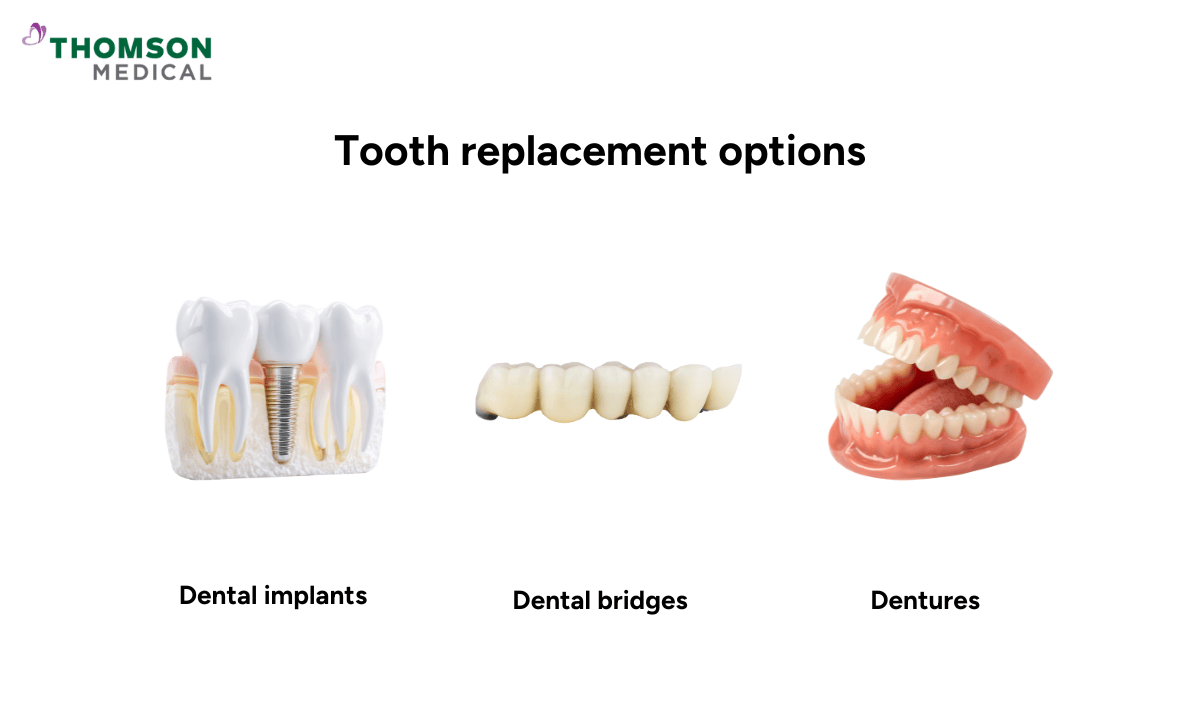
There are three main options that help you replace your missing teeth. Each option will have its own benefits, and your doctor will help you decide the best fit for your situation.
Dental implants
During surgery, your dentist places small titanium posts into your jawbone, which act as artificial tooth roots. These posts then support dental crowns, bridges, or dentures.
Implants are durable and long-lasting. They look and function much like natural teeth. However, if there isn't enough bone support, you may need bone grafting (also called bone augmentation) before implant placement. Your dentist will assess this during your consultation.
Dental bridges
Just as the name suggests, a dental bridge “bridges” the gap created by one or more missing teeth.
A bridge consists of one or more artificial teeth that are anchored to your natural teeth on either side of the gap or to dental implants. Because it's a fixed appliance, it stays securely in your mouth, and you won't have to take it out.
Most of the time, the bridge is custom-made to match your natural teeth. It can be made from metal, porcelain, or a combination of both, depending on where it is placed in your mouth or your preferences.
Dentures
Dentures are removable devices used to replace one or more missing teeth. They have two main types:
Partial dentures replace some missing teeth
Complete dentures replace an entire arch (upper or lower teeth).
Based on your needs, dentures can be made from different materials such as acrylic resin, thermoplastic resin, and cast metal. They help restore your teeth's function and appearance but require regular maintenance and adjustments. They may take some time to get used to, and you’ll need to remove them for cleaning.
If you’re unsure which one you should choose, don’t worry. Your doctor will walk you through each option in detail, weigh the pros and cons, and recommend the one that’s right for you.
What is the best option for replacing teeth?
There isn’t a one-size-fits-all answer for everyone, and what works for you may not be effective for others. The best choice for you depends on a number of factors:
The number of missing teeth:
Are you replacing one tooth or several?
Location:
Front teeth may have different requirements than back teeth.
Your overall oral health:
The condition of your remaining teeth and gums.
Bone density:
Your jawbone needs to be strong enough to support an implant.
Personal preferences:
Do you prefer a fixed or removable solution?
If you need more information or support, you should consult your dentist to determine the most suitable option.
Regardless of which replacement you choose, maintaining good oral hygiene and attending regular dental check-ups are still very important. They help ensure your replacement teeth last as long as possible.
If you're ready to explore your options, schedule an appointment with Thomson Medical today for a dental examination and personalised advice.
FAQ
Can teeth be replaced permanently?
Yes, this is possible with the right care and professional support. Dental implants and bridges are usually considered permanent solutions.
However, as you get older, the tissues in your mouth may change, affecting your dental replacement over time. That's why replacements are usually categorised into two main options: fixed or removable. Each type has its own level of durability and ability to adapt to your changing needs.
How can I replace my teeth without implants?
If implants aren’t the right option for you, you can consider fixed or removable options. A fixed option includes dental bridges, and removable alternatives include dentures.
What is the most affordable way to replace missing teeth?
Removable dentures are usually the most affordable option. However, it’s important to remember that each option has pros and cons. It's advisable to talk to your dentist to make sure you have the right fit.
How long do dental implants last?
With the right care and maintenance, tooth implants can last 25 years or even longer. Their longevity depends on factors like:
Your dental hygiene habits
Regular dental visits
Your overall health
Whether you smoke
Can I eat normally with dentures?
Yes, you can eat most foods with dentures. However, you might want to start with softer foods at first and gradually try harder or chewier items as you get used to wearing them.
With practice, you can enjoy a varied diet. Your dentist will provide guidance on foods to approach carefully and tips for comfortable eating.
Can I sleep with dentures in?
It’s possible to sleep with dentures in, but your dentist may recommend removing them at night for a few reasons:
Gives your gum tissues time to rest and recover from daily pressure
Lower the risk of bacterial growth and oral infections
Prevents potential fungal infections like oral thrush
Allows natural saliva flow to cleanse your mouth
Helps maintain the health of your gums and any remaining natural teeth
When you remove your dentures at night:
Use denture cleanser to clean them
Put them in water or denture solution overnight (never let them dry out)
Clean your gums, tongue, and any remaining teeth before bed
Your doctor may advise you to keep dentures in at first until you get used to wearing them, or in specific situations. Make sure to follow your dentist's personalised recommendations for your situation.
The information provided is intended for general guidance only and should not be considered medical advice. For personalised recommendations and tailored advice based on your unique situation, please consult a specialist at Thomson Medical.
Dr Charlotte Goh
Dentistry
Thomson Dental Centre (Novena Specialist Center)
English
AIA Dental PPO, Alliance MediNet, IHP, Inova Care and 2 others
