

Have you noticed that your teeth aren't as white as they used to be? This may be affecting your confidence when you smile or take photos. However, tooth discolouration is natural and can be caused by factors such as dietary habits, beverages consumption, or simply due to natural ageing process.
To help restore your smile's brightness and boost your confidence, teeth whitening can be an effective solution. Let's explore what teeth whitening involves, the options available in Singapore, and what you can expect from this treatment.
What is teeth whitening?
Teeth whitening is a cosmetic dental procedure that lightens your teeth's natural colour and reduces the appearance of stains and discolouration. The whitening process uses bleaching agents that gently break down stain molecules within your teeth.
When performed by a dentist in a dental clinic or under their guidance at home, teeth whitening is a safe, minimally invasive procedure with no downtime. You may experience some tooth sensitivity initially, but this is temporary and will subside over time.
Who should consider teeth whitening?
Since teeth whitening is a cosmetic dental procedure, you may consider this treatment if you feel your smile is not as bright as it used to be. This treatment is generally recommended if you have healthy teeth and gums, particularly if the staining is yellowish from foods, drinks, or smoking.
However, whitening may not be the right first option for everyone, especially if you:
- Experience significant tooth sensitivity
- Have worn enamel
- Have untreated cavities
- Have other gum concerns
Whitening only works on natural teeth and will not change the colour of dental restorations such as crowns, veneers, fillings, or bonding.
For deeper discolouration, such as grey or brown tones resulting from certain medications or previous dental trauma, your dentist may recommend alternative treatments to achieve more consistent and natural-looking results.
What causes tooth discolouration?
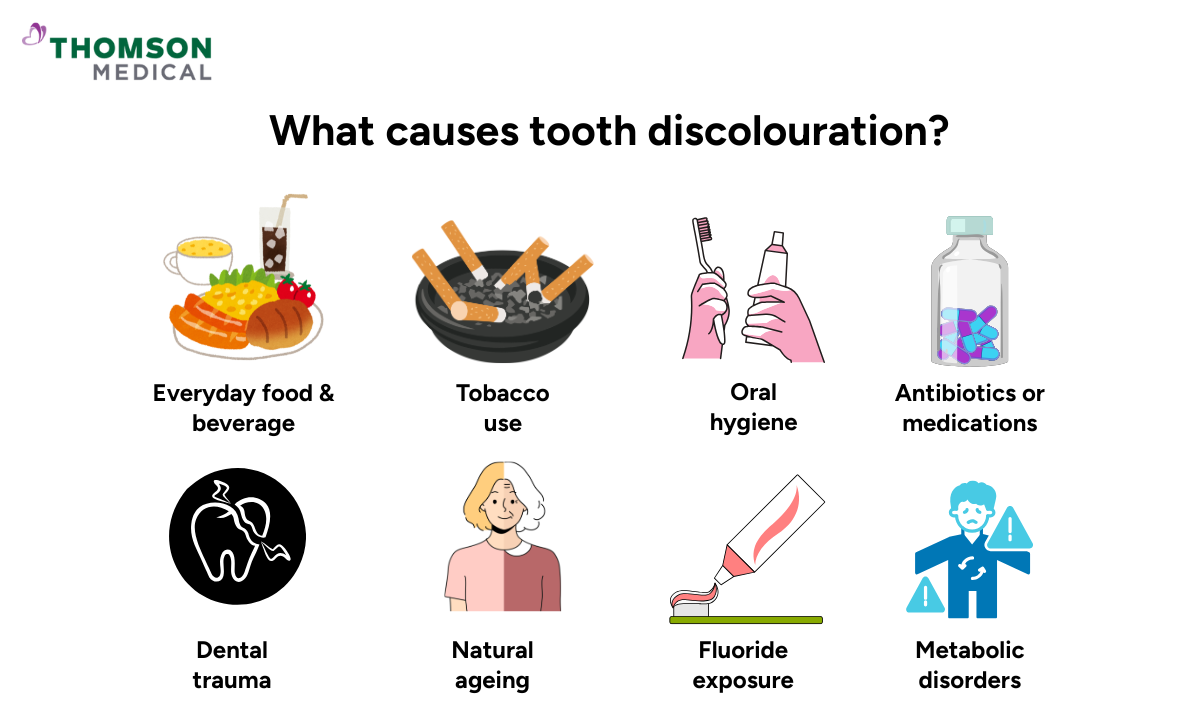
Knowing what's causing your tooth discolouration can help you and your dentist choose the most suitable approach to brighten your smile. Dental stains fall into two main categories, each with different causes and treatment options.
Extrinsic stains
This type of stain affects the outer layer of your teeth, known as enamel, and are typically caused by things we encounter in everyday life. Common causes of extrinsic stains include:
- Everyday foods and beverages:
- Coffee, tea, red wine, berries, and richly coloured sauces contain natural pigments that can gradually leave their mark on tooth enamel over time.
- Tobacco use:
- Smoking or chewing tobacco can create stubborn surface stains that are more resistant to removal.
- Oral hygiene habits:
- When plaque and tartar build up on teeth, they can create a surface for stains to cling to.
- Certain medications:
- Some antibiotics, particularly tetracycline, taken during childhood when teeth are still developing, can affect tooth colour.
Intrinsic stains
Intrinsic stains develop within the inner structure of the tooth, in the layer called dentin. These can be more complex to address, but there are still effective options available. Common causes of intrinsic stains include:
- Dental trauma:
- An injury to a tooth can sometimes cause it to darken over time due to changes within the tooth structure.
- Natural ageing:
- As we age, the enamel on our teeth naturally becomes thinner, allowing the yellowish dentin layer beneath to show through more.
- Even with excellent brushing habits, teeth naturally become duller over time as part of the ageing process.
- Fluoride exposure:
- Whilst fluoride is beneficial for dental health, excessive exposure during childhood can sometimes lead to white spots or brown patches on teeth.
- Medical conditions and treatments:
- Certain health conditions, metabolic disorders, or treatments like chemotherapy can sometimes affect tooth colour from within
The type of staining you have influences which treatments will be most effective for you. Extrinsic stains generally respond very well to professional whitening treatments and improved oral care habits. Intrinsic stains can be more challenging, though whitening may still offer some improvement depending on the cause.
Types of teeth whitening
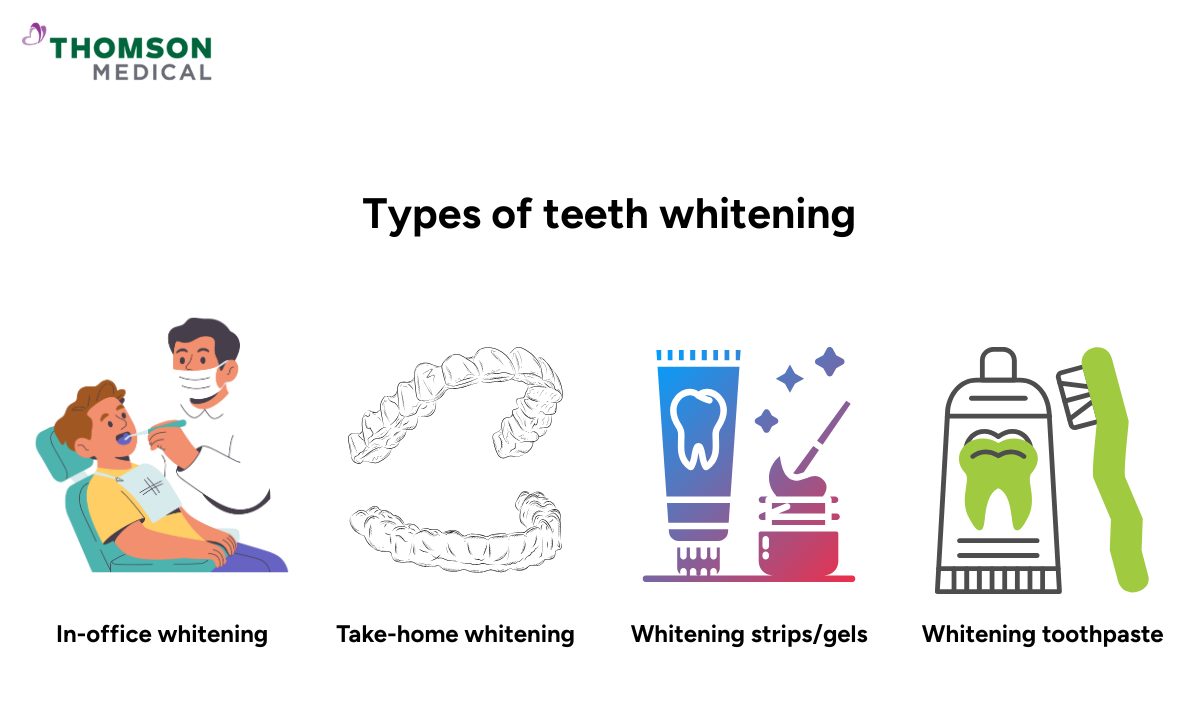
Teeth whitening can be done through several methods, ranging from professional treatments to at-home options, each with different strengths, timelines, and expected results. Here are different methods commonly used for teeth whitening:
In-office whitening:
A dentist applies a professional-grade bleaching gel to your teeth, which may be activated with specialised light technology or laser light to enhance the whitening process.
This clinical procedure can lighten teeth by multiple shades in a single appointment, suitable for those seeking visible results in a shorter timeframe
Take-home whitening kits:
Your dentist creates personalised trays or take-home kits based on impressions of your teeth, along with professional-strength bleaching gel for home use.
The trays are worn for a specified duration each day over several weeks to achieve gradual whitening results from the comfort of your home.
Over-the-counter products:
Various products such as whitening strips and gels are available at pharmacies and supermarkets, typically containing lower concentrations of bleaching agents compared to professional treatments.
May provide modest improvements in tooth colour for surface-level concerns.
Whitening toothpaste:
Formulated with mild abrasives or polishing agents designed to help reduce surface stains as part of your daily oral care routine.
Effects are generally limited to surface-level stain removal rather than changing the natural shade of your teeth.
Since everyone's teeth are different, a consultation with a dentist can help determine whether teeth whitening is suitable for you. Request an appointment with Thomson Dental Centre for personalised advice on achieving your desired smile.
Our dental specialists near you
Loading...
What can you expect during the treatment
Tooth whitening process varies depending on whether you choose an in-office procedure or an at-home treatment. Here's what typically happens with each approach:
In-office teeth whitening
Consultation and preparation:
Your dentist assesses your dental health and discusses your whitening goals during an initial consultation.
They'll take some photographs to track your journey and give your teeth a gentle clean to prepare them for treatment.
During the dental treatment:
A protective layer is carefully applied to your gums to keep them comfortable throughout the process.
A professional-grade bleaching gel is applied to your teeth, which may be activated with specialised light technology.
Completion and review
Depending on your starting point and situation, you may have one or more applications during your visit.
Your dentist will review the results with you and discuss how to maintain your brighter smile at home.
At-home teeth whitening
Consultation and preparation:
Your dentist evaluates your dental health and discusses suitable at-home whitening options.
This personalised approach means you can achieve results in the comfort of your own home
Your home routine:
You'll be given a take-home kit with everything you need, along with clear, easy-to-follow instructions on using your trays.
- You'll usually wear your trays for a set amount of time each day for a few weeks, depending on the gel concentration your dentist prescribes.
Progress review:
A follow-up appointment allows your dentist to assess your progress and make any necessary adjustments to your treatment plan
Whether you choose in-office or at-home whitening, having a conversation with your dental professional first can help you feel confident about which dental restoration option suits you best. Good oral hygiene habits will also help you maintain your results for longer.
Potential side effects and safety considerations
Teeth whitening is generally safe when performed under professional guidance, though it's helpful to know what you might experience so you can feel prepared.
Common potential side effects
Tooth sensitivity to hot or cold temperatures is the most common side effect, though this typically subsides within a few days after treatment.
Some people experience mild gum irritation, particularly if the whitening gel comes into contact with soft tissues.
These effects are usually temporary and can be managed with sensitivity toothpaste or by adjusting the treatment schedule.
When to seek medical advice
If you have existing dental work such as crowns, veneers, or fillings, it's worth noting that whitening treatments don't affect these materials in the same way as natural teeth.
Whitening may not be suitable if you have significant tooth decay, gum disease, or very sensitive teeth, your dentist can assess this during your consultation.
Pregnant or breastfeeding women are generally advised to postpone whitening treatments as a precautionary measure.
Using products safely
Always follow the instructions provided by your dentist, particularly regarding how long to wear trays or how frequently to apply products
Overuse of whitening products doesn't speed up results and may increase teeth sensitivity or damage tooth enamel
Teeth whitening costs in Singapore
The cost of teeth whitening in Singapore varies based on the treatment approach and where you choose to have it done. You can typically expect fees to range from SGD 30 to SGD 200 or more, depending on factors like the whitening method and the clinic setting. Public institutions such as polyclinics may offer more accessible pricing, whilst private clinics often provide greater flexibility with appointment times.
Teeth whitening treatments aren't currently covered under CHAS subsidies, but it's always worth checking if other dental services you may need are eligible. MediSave is generally reserved for surgical dental procedures that are medically necessary, so cosmetic treatments like teeth whitening typically fall outside this scheme. Coverage is typically reserved for surgical dental procedures that are deemed medically necessary.
For detailed fee information and payment options, contact our medical concierge team today.
How to maintain your whitening results
Your brighter smile is something worth protecting, and the good news is that a few simple, mindful habits can help you preserve your whitening results for longer. You don't need to make drastic changes; just small, consistent steps that fit naturally into your daily routine.
Daily oral care habits:
Brushing twice a day with fluoride toothpaste and flossing regularly helps remove plaque and surface stains before they build up.
Consider using a straw when drinking beverages that may stain, as this helps minimise contact with your front teeth.
Rinsing your mouth with water after eating or drinking can help wash away substances that might discolour your teeth.
Being mindful of what you consume:
Certain foods and drinks such as coffee, tea, red wine, and deeply coloured sauces can gradually affect the brightness of your teeth over time.
You don't need to avoid these entirely, but being aware of their impact can help you make choices that support your whitening results.
If you do enjoy these items, try to rinse with water afterwards or brush your teeth when convenient.
Lifestyle consideration:
Smoking and tobacco use can significantly diminish the longevity of your whitening results, so reducing or avoiding these habits benefits both your smile and your overall health.
Regular dental check-ups and professional cleanings help maintain your oral health and can refresh your smile's brightness.
Touch-up treatments:
Depending on your individual circumstances, your dentist may suggest occasional touch-up treatments to help maintain your desired level of brightness.
These are typically less intensive than your initial whitening and can be done either at the clinic or at home.
Remember, everyone's teeth respond differently to whitening, and how long your results last will depend on your unique habits and lifestyle.
FAQ
What causes teeth discolouration?
Teeth naturally change colour over time for various reasons. As we age, our enamel gradually becomes thinner, revealing more of the yellowish layer beneath. Everyday favourites like coffee, tea, and red wine can leave their mark, as can smoking. Sometimes medications or simply not having the chance to brush as thoroughly as we'd like can contribute to discolouration.
Is teeth whitening safe?
Yes, teeth whitening is generally very safe when carried out under professional guidance or when using products as directed. Your dentist will assess your individual situation to ensure whitening is appropriate for you. While some people may experience temporary tooth sensitivity or mild gum irritation, these effects typically resolve quickly. Following your dentist's instructions helps minimise any discomfort.
How long does it take to see the difference?
The timeline varies depending on which whitening method you choose. In-office treatments can show visible results in a single appointment, whilst at-home treatments work gradually over several weeks. Your dentist can help set realistic expectations based on your starting point and chosen method.
How long do the effects of teeth whitening last?
Most people enjoy their whitening results for anywhere from one to three years, though this varies from person to person. Your lifestyle, dietary habits, and oral care routine all play a role in how long your results last. The encouraging news is that simple habits like rinsing after coffee or tea and maintaining good oral hygiene can help extend your results.
How does teeth whitening work?
Whitening products contain gentle bleaching agents, typically peroxide based like hydrogen peroxide or carbamide peroxide, that work beneath the tooth's surface. These agents break down the coloured molecules that cause staining, making them less visible and helping your teeth appear brighter. It's a well established process that dental professionals have used safely for many years.
Can I whiten my teeth at home?
Absolutely. There are many at-home whitening options available, from whitening toothpaste to strips and gels. That said, having a conversation with your dentist first can help you choose the most suitable option for your teeth and avoid any potential complications. They can also provide custom fitted trays for a more comfortable, effective home treatment.
What level of whiteness can I achieve for my teeth?
Results vary beautifully from person to person, and that's perfectly normal. Some people see dramatic changes, whilst others experience more subtle brightening. Your natural tooth colour and the type of discolouration you have both influence the outcome. Your dentist can give you a realistic sense of what's achievable for your unique smile.
The information provided is intended for general guidance only and should not be considered medical advice. For personalised recommendations and tailored advice based on your unique situations, please consult a specialist at Thomson Medical. Request an appointment with Thomson Medical today.
Dr Charlotte Goh
Dentistry
Thomson Dental Centre (Novena Specialist Center)
English
AIA Dental PPO, Alliance MediNet, IHP, Inova Care and 2 others
