

If you have noticed persistent symptoms in your throat that you may be concerned with, such as difficulty swallowing or changes in your voice without an obvious reason. You may naturally feel confused or concerned that these symptoms could be linked to something more serious, especially if you have a family history of throat cancer.
Knowing the signs, risk factors, stages, and available treatments can help you feel more informed about the condition and the steps you can take.
What is throat cancer?
Throat cancer is a general term for cancers that develop in the throat, also known as the pharynx, or in the nearby voice box (larynx). The throat is a muscular tube that connects the back of the nose to the oesophagus and windpipe, allowing air, food, and liquids to pass through.
Most throat cancers are squamous cell carcinomas, which develop from the thin, flat cells lining the inside of the throat. These cells form part of the mucous membrane, which helps protect and keep the throat moist. When these cells become abnormal and start growing uncontrollably, they can develop into cancer.
Common types of throat cancer
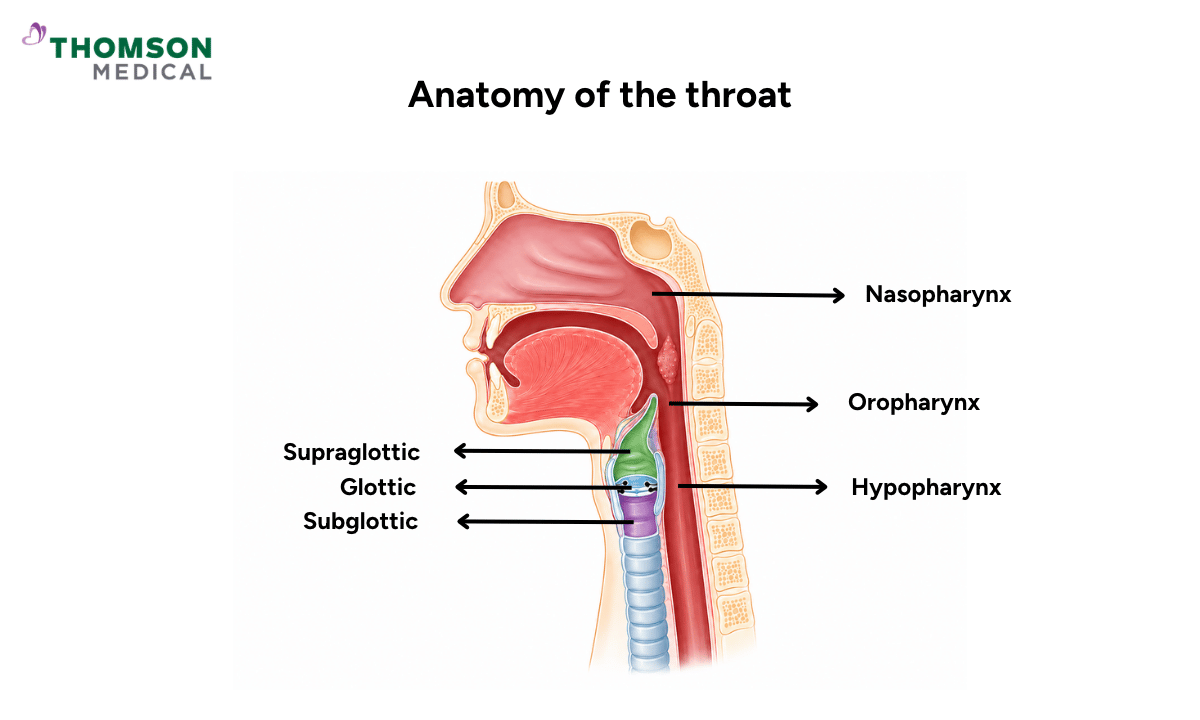
The type of throat cancer is generally classified by where the cancer begins. There are two main locations where throat cancer can develop, which are the pharynx (throat) and the larynx (voice box).
Pharyngeal cancer
Pharyngeal cancer develops in the pharynx, the hollow muscular tube that runs from behind the nose towards the oesophagus and windpipe. It can affect different parts of the throat, including:
Nasopharyngeal cancer:
Develops in the upper part of the throat (nasopharynx), just behind the nose and above the soft palate.
Oropharyngeal cancer:
Develops in the middle part of the throat (oropharynx), directly behind the mouth. It may affect the tonsils, soft palate or base of the tongue.
Hypopharyngeal or laryngopharyngeal cancer:
Develops in the lower part of the throat (hypopharynx), just above the oesophagus and around the lower part of the voice box.
Laryngeal cancer
Laryngeal cancer develops in the larynx, or voice box, which connects the lower part of the throat to the windpipe. It can be classified according to the area of the voice box where the cancer starts:
Glottic cancer:
Develops in the vocal cords, which vibrate to produce your voice.
Supraglottic cancer:
Develops in the upper part of the voice box and may affect the epiglottis, a flap of cartilage that helps prevent food and liquid from entering the windpipe when you swallow.
Subglottic cancer:
Develops in the lower part of the voice box, below the vocal cords.
What are the symptoms of throat cancer?
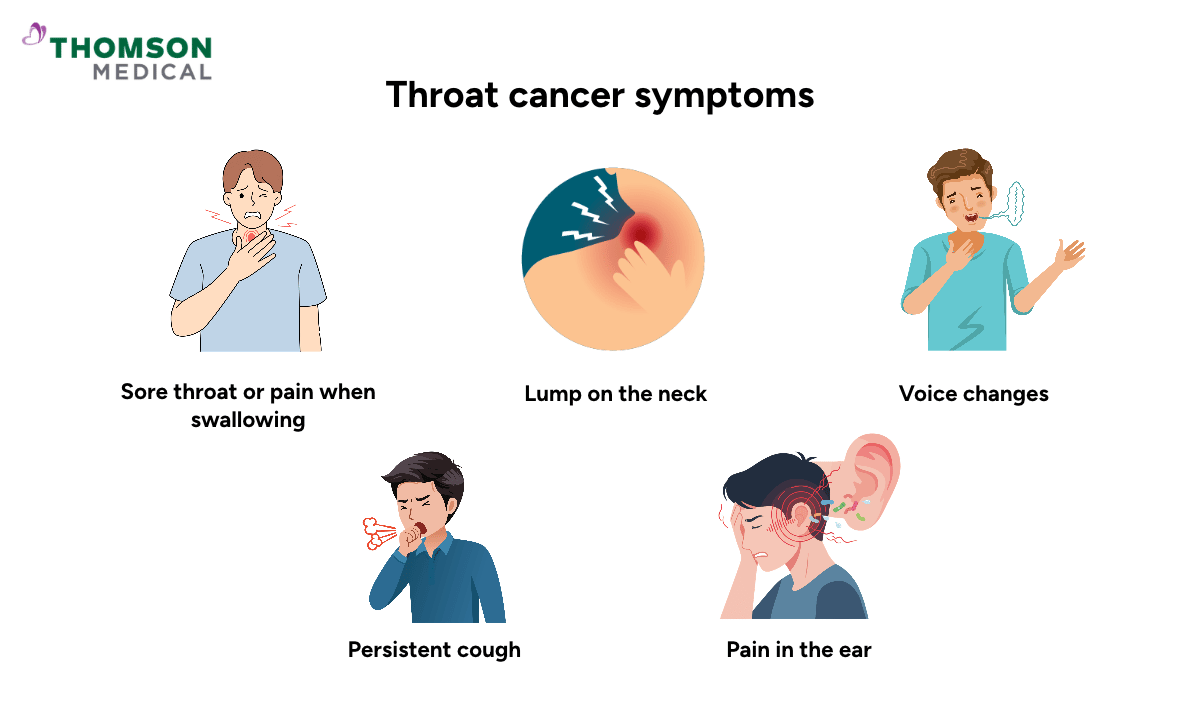
Throat cancer does not always cause noticeable symptoms in its early stages. However, when symptoms do occur, they can vary depending on where the cancer develops and may initially resemble common throat or respiratory conditions.
Possible symptoms include:
Sore throat or pain when swallowing
A noticeable lump on the neck
Changes in your voice that persist without an obvious cause
Persistent cough, sometimes accompanied by blood-stained saliva or phlegm (clear mucus made in your lungs)
Pain in the ear that occurs
Unexplained weight loss
Experiencing these symptoms does not directly mean that you have throat cancer, as they can also be caused by infections and other common conditions. However, if symptoms persist for more than two to three weeks or longer, do not hesitate to consult with a doctor.
If you have experienced any of the mentioned symptoms above, speaking with a doctor can help identify the possible cause and determine whether further assessment is needed. Schedule an appointment with Thomson Medical.
Our ENT specialists
Loading...
Who is at risk for throat cancer?
Throat cancer can develop for different reasons, and the exact cause is not always known. However, several factors have been identified that may increase the risk of developing the condition, including:
Tobacco use:
Smoking cigarettes, cigars, or pipes is one of the main risk factors, as harmful chemicals in tobacco smoke can damage the cellular lining of the throat.
Heavy alcohol use:
Regularly drinking large amounts of alcohol can increase the risk and may be even higher when alcohol and tobacco use are combined.
Age and gender:
The risk generally increases with age, although it may occur in younger adults.
Throat cancer is also more commonly diagnosed in men than women. This difference may be linked to factors such as higher rates of tobacco and alcohol usage among men and differences in exposure to other risk factors.
Human papillomavirus:
Human papillomavirus (HPV) is linked to some oropharyngeal cancers, particularly those affecting the tonsils and base of the tongue.
When high-risk types of HPV persist in the throat, they can cause changes to the affected cells, which may increase the risk of developing cancer.
Epstein-Barr virus:
Epstein-Barr virus (EBV), which can cause glandular fever (an infection that may cause symptoms such as fever, sore throat, and swollen lymph nodes), is associated with an increased risk of nasopharyngeal cancer.
EBV can remain in the body after the initial infection and cause changes to cells in the nasopharynx, which may contribute to cancer development.
Workplace or chemical exposure:
Long-term exposure to certain substances, including wood dust, asbestos, nickel, and industrial chemicals, may increase the risk of throat cancer.
Repeated exposure can irritate or damage the cells lining the throat and airways, which may lead to abnormal cell changes.
Family history:
Having a family history of throat cancer can be associated with a higher risk of developing the condition.
This condition is related to inherited genetic factors that can make some people more susceptible to abnormal cell changes.
What are the stages of throat cancer?
The stage of throat cancer describes how much the cancer has grown and whether it has spread. Doctors look at the size and location of the tumour, whether nearby lymph nodes are affected, and whether the cancer has spread to other parts of the body.
A commonly used system is the TNM staging system:
T (tumour) describes the size of the primary tumour and how far it has grown into nearby tissues.
N (nodes) indicates whether the cancer has spread to nearby lymph nodes and the extent of this involvement.
M (metastasis) shows whether the cancer has spread to distant parts of the body.
These T, N, and M categories are then combined to determine an overall stage, which is generally grouped from stage I to stage IV. Earlier stages usually indicate a smaller cancer that has not spread extensively, while later stages indicate more extensive local disease, regional lymph node involvement, or distant spread.
How is throat cancer diagnosed?
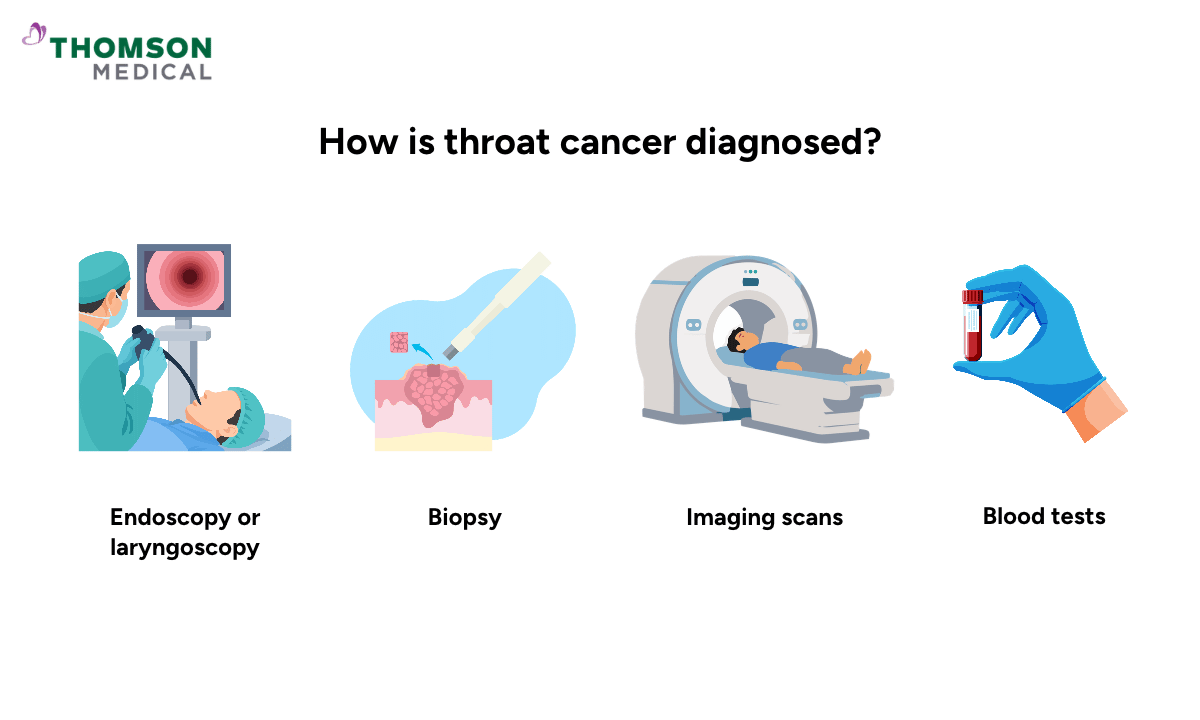
Throat cancer diagnosis usually involves a physical examination, a closer look inside the throat, and tests to confirm whether cancer cells are present. Your doctor may first ask about your symptoms, medical history and any factors that may increase your risk, such as smoking or alcohol use.
They may examine your mouth, throat, and neck and check for abnormalities such as a lump or swollen lymph nodes. Further tests may include:
Endoscopy or laryngoscopy:
A thin, flexible tube with a light and camera may be passed through the nose or mouth to examine the throat, voice box, and surrounding areas.
An endoscopy allows the doctor to view the nose and throat, while laryngoscopy provides a closer look at the larynx and vocal cords.
These examinations can help identify abnormal areas that may need further investigation.
Biopsy:
If an abnormal area is found, your doctor may remove a small sample of tissue for examination under a microscope.
A biopsy is the main test used to confirm whether cancer cells are present and can also help determine the specific type of throat cancer.
Imaging scans:
Scans may be used to assess the size and location of a tumour and determine whether it has spread to nearby tissues or lymph nodes.
Depending on your symptoms and suspected cancer type, these may include CT scans, MRIs, and PET scans. Ultrasound may also be used in some cases, particularly to assess lymph nodes in the neck.
Blood tests:
Blood tests may be carried out to assess your general health and help your healthcare team plan further investigations or treatment. They may also be used to look for other conditions that could contribute to your symptoms.
However, you may not require all of the tests. Your doctor will explain which tests are appropriate and what the results mean for your diagnosis and treatment plan.
How is throat cancer treated?
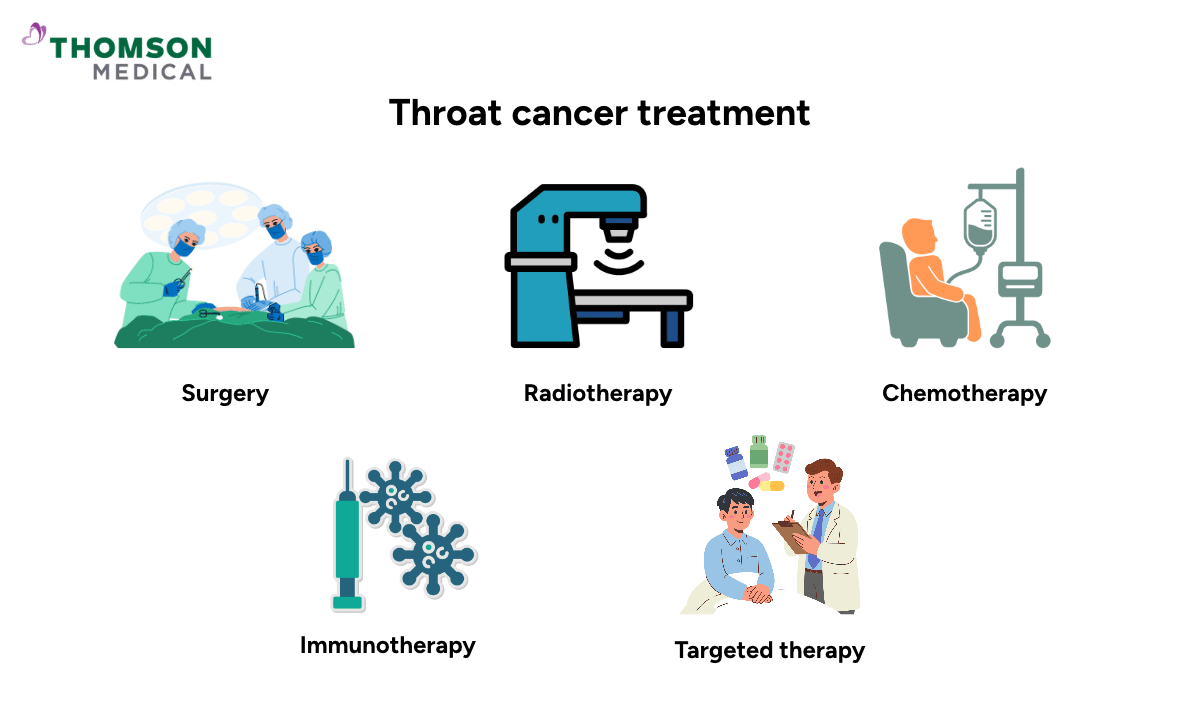
Treatment for throat cancer depends on the type and size of the cancer, whether it has spread, and your overall health. Treatment may include:
Surgery:
Surgery aims to remove the cancer while preserving as much healthy tissue and normal function as possible.
Depending on the size and location of the tumour, this may involve removing part of the throat or voice box.
Larger tumours may require removal of the entire voice box, known as a laryngectomy.
Radiotherapy:
Radiotherapy uses high-energy radiation to destroy cancer cells and may be used alone for some smaller cancers or alongside other treatments.
Chemotherapy:
Chemotherapy uses medicines to stop or slow the growth of cancer cells and may be given before or after surgery, together with radiotherapy, or when the cancer has spread to other parts of the body.
Immunotherapy:
Immunotherapy helps the body's immune system recognise and attack cancer cells. It may be recommended when other treatments are no longer suitable or have not worked.
Targeted therapy:
Targeted therapy uses medicines that focus on specific changes in cancer cells to slow or stop their growth.
It may be considered for some advanced or recurrent throat cancers, depending on the type and characteristics of the cancer.
Your treatment plan may involve one treatment or a combination of treatments, depending on your diagnosis and individual circumstances. Your specialist will discuss the available options, including their potential benefits and side effects, before treatment begins.
If you have been diagnosed with throat cancer and are considering your treatment options, speaking with a doctor can help you better understand which approach may be suitable for your condition. Schedule an appointment with Thomson Medical.
FAQ
Can you have throat cancer without a sore throat?
Yes, it is possible, particularly in the early stages or when the cancer develops in a less noticeable area of the throat. Depending on its location, throat cancer may cause a persistent neck lump, difficulty or pain when swallowing, voice changes, ear pain, unexplained weight loss, or throat discomfort. Some throat cancers may also cause few or no noticeable symptoms at first.
What are the early warning signs of throat cancer?
Early warning signs can vary depending on where the cancer develops. Possible warning signs include a sore throat that does not improve, difficulty or pain when swallowing, persistent hoarseness, a lump in the neck or throat, ear pain, or unexplained weight loss.
If you experience any of those persistent and worsening symptoms, seeing a doctor can help identify the cause and, if necessary, allow treatment to begin earlier.
How serious is throat cancer?
Throat cancer can be serious, but its outlook varies depending on several factors. These include where the cancer started, its stage, whether it has spread, HPV status and your overall health. HPV status refers to whether the cancer is linked to infection with human papillomavirus (HPV).
Cancers diagnosed at an earlier stage may be more localised and easier to treat. More advanced cancers can be more serious if they have spread to nearby tissues, lymph nodes or distant organs.
Is there a complication of throat cancer?
Throat cancer can cause complications depending on where it develops and how far it has progressed. It may affect everyday functions such as chewing, swallowing, and speaking. As the cancer progresses or spreads to other parts of the body, it may also cause breathing difficulties, unexplained weight loss, or pain.
The information provided is intended for general guidance only and should not be considered medical advice. For personalised recommendations and advice based on your individual circumstances, schedule an appointment with Thomson Medical.
Reference
Amin, M. B., Greene, F. L., Edge, S. B., Compton, C. C., Gershenwald, J. E., Brookland, R. K., Meyer, L., Gress, D. M., Byrd, D. R., Winchester, D. P. (2017). The Eighth Edition AJCC Cancer Staging Manual: Continuing to build a bridge from a population-based to a more "personalized" approach to cancer staging. CA: a cancer journal for clinicians, 67(2), 93–99. https://doi.org/10.3322/caac.21388
For more information, contact us:
Thomson Medical Concierge
- 8.30am - 5.30pm
- WhatsApp: 9147 2051
Need help finding the right specialist or booking for a group?
Our Medical Concierge is here to help you. Simply fill in our form, and we'll check and connect you with the right specialist promptly.
Notice:
The range of services may vary between Thomson clinic locations. Please contact your preferred branch directly to enquire about the current availability.
Get In Touch