

In Traditional Chinese Medicine (TCM), the tongue is more than a muscle used for speech and taste. It’s considered an important diagnostic tool that offers insight into your overall health, particularly the balance of energy within your body.
Changes in the colour, shape, or coating of the tongue may reflect internal imbalances long before symptoms become obvious. For this reason, tongue examination is commonly performed alongside other diagnostic methods in TCM to guide treatment and care.
The four diagnostic methods used in TCM
In TCM, physicians rely on four core diagnostic methods to understand not just symptoms, but their root cause.
Observation (望):
Includes examining the tongue, facial colour, posture, and overall vitality
Listening and smelling (闻):
Assesses breathing patterns, voice strength, and subtle body odours
Inquiry (问):
Explores digestion, sleep, stress levels, menstruation, appetite, and emotional health
Pulse diagnosis (切):
Evaluates pulse depth, strength, and rhythm at different positions, each linked to specific organs
Tongue diagnosis forms a central part of observation and often provides insight into your digestive and metabolic health.
Why is the tongue important in TCM?
Examining your tongue is an important part of the consultation. This is because changes in the tongue can reflect what is happening inside your body.
The tongue is believed to be connected to the major internal organs through energy pathways known as meridians. Because of this connection, the colour, shape, coating and moisture of your tongue can offer useful clues about your overall health and internal balance.
Each area of the tongue corresponds to different organs. By observing specific zones, a TCM physician can gain insights into how well these organs are functioning and whether there are signs of imbalance, such as excess heat, weakness, or stagnation.
If you’re curious about what your tongue may reveal about your health, you can consider scheduling a consultation with Thomson Chinese Medicine. Our physician can help to assess your tongue conditions and explain what they may mean for your overall wellbeing.
Our TCM specialists
Loading...
What do the physicians look for during tongue examination?
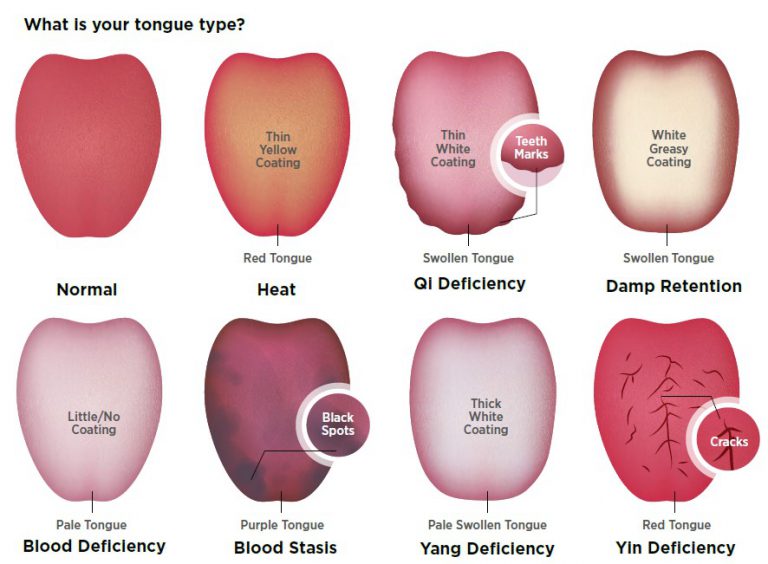
TCM tongue diagnosis focuses on three main features. These are always interpreted together rather than in isolation.
Tongue colour
In TCM, the colour of the tongue body offers insight into circulation, body temperature, and blood health.
Red tongue
A red tongue may indicate excess heat or inflammation in the body. In TCM, this suggests that your body may be overstimulated or struggling to cool itself effectively, which can affect both physical and emotional well-being.
You may experience:
Headaches or irritability
Acid reflux or heartburn
Difficulty sleeping
Fever
Pale tongue
A pale tongue often points to cold patterns or a deficiency of Qi and Blood. This means the body may not be producing or circulating enough energy and blood to adequately nourish tissues and organs.
You may experience:
Fatigue or low energy
Dizziness
Shortness of breath or frequent illness
Purple or dark tongue
A purple or dark-coloured tongue may indicate blood stasis, where circulation is sluggish or obstructed. Over time, this can lead to pain or discomfort, particularly in chronic or long-standing conditions.
You may experience:
Chronic or persistent body ache
Menstrual irregularities, including painful periods or dark menstrual flow
Cold hands and feet despite a normal environment
Tongue shape and size
Along with colour, the shape of your tongue can offer useful insights into how your body is functioning. In TCM, changes in tongue shape are often linked to how well your body manages fluids, supports digestion, and nourishes tissues.
Swollen tongue with teeth marks:
Indicates dampness accumulation and Spleen Qi deficiency
Frequently associated with stomach problems such as bloating, or loose stools
Thin or small tongue:
Suggests Qi and Blood deficiency
May be linked to exhaustion, dry skin, poor concentration, or palpitations
Tongue coating
The coating on your tongue can provide insight into the health of your digestive system and how well your body manages fluids. Changes in thickness or colour may reflect how efficiently digestion is working and whether there is an internal imbalance.
Thick white coating:
Indicates dampness and cold affecting the digestive tract
Often associated with heaviness, nausea, or poor appetite
Thick yellow coating:
Suggests dampness combined with heat
May be linked to constipation, bitter taste, bad breath, or inflammation
Little or no coating:
Indicates Yin deficiency
Commonly associated with night sweats, dry mouth, restlessness, or heat sensations
What your tongue says about your gut health

In TCM, the Stomach and Spleen are central to how your body digests food, absorbs nutrients and generates energy. When these systems are under strain, your tongue may show early signs of imbalance, even before you feel obvious digestive discomfort, such as:
Thick or greasy coating in the centre of the tongue:
May reflect slowed digestion or difficulty processing food and fluids efficiently
Pale tongue with a white coating:
May indicate weak Spleen Qi and reduced ability to transform nutrients into energy
These tongue changes can appear before bloating, reflux or ongoing fatigue becomes persistent. Identifying them early allows you to receive more timely, targeted support to restore digestive balance and overall wellbeing.
Tongue diagnosis at Thomson Chinese Medicine
At Thomson Chinese Medicine, our physicians are licensed and registered by the TCM Practitioners Board of Singapore's Ministry of Health. Tongue diagnosis forms part of our TCM assessment, providing insights into your digestive health, circulation, and overall internal balance.
For the most accurate assessment, please:
Avoid brushing or scraping your tongue on the day of your appointment.
Refrain from consuming coffee, tea, or strongly coloured foods beforehand.
Extend your tongue naturally for no longer than 10 seconds during examination, as prolonged extension may alter its colour.
Your physician will assess your tongue alongside your pulse, symptoms, and medical history to build a complete picture of your health.
To discover what your tongue reveals about your health and how TCM can support your wellbeing, schedule a consultation with Thomson Chinese Medicine.
FAQ
Can tongue diagnosis detect health issues early?
Yes, in TCM, changes in your tongue may reflect functional imbalances before clear symptoms or medical findings appear. This can offer early insight into how your body is coping internally. It is often used as part of a broader assessment rather than a standalone tool.
Does everyone have the same “normal” tongue?
No, tongue appearance naturally varies from person to person. In TCM, physicians focus on changes and patterns over time rather than comparing your tongue to a single “ideal” standard. Your tongue is always interpreted in the context of your overall health.
Should I check my tongue at home?
You may notice visible changes, but tongue diagnosis requires professional training. A TCM physician considers colour, shape and coating together with your symptoms and medical history. Self-assessment alone may be misleading without proper interpretation.
Can diet affect tongue appearance?
Yes. What you eat and drink, as well as hydration and alcohol intake, can temporarily affect your tongue’s colour and coating. These short-term changes are usually not a concern. Persistent changes are more clinically meaningful and worth professional assessment.
Is tongue diagnosis used alongside Western medicine?
Yes. Tongue diagnosis is commonly used as a complementary assessment alongside Western medical care. It does not replace medical tests or diagnoses. Instead, it offers additional insight into digestive function and overall balance.
How often should tongue diagnosis be performed?
Tongue assessment may be done at every TCM consultation. This allows your physician to track changes over time and monitor how your body responds to treatment. It helps guide ongoing, personalised care.
The information provided is intended for general guidance only and should not be considered medical advice. For personalised recommendations and tailored advice based on your conditions, schedule a consultation with Thomson Medical today.
Physician Jun Negoro
Traditional Chinese Medicine
Thomson Chinese Medicine (TCM Paragon Medical Centre) and 1 other
English, Mandarin
Alliance MediNet
