

Hearing the term “triple negative breast cancer” can feel confusing, especially if you’re trying to understand how it may affect your treatment options. Many people are unsure what the diagnosis means and how it differs from other types of breast cancer.
While treatment plans vary based on individual factors, options such as chemotherapy, immunotherapy, and other systemic therapies may be considered. Understanding what this diagnosis means and how treatment decisions are made can help you approach the next steps with greater clarity and confidence.
What is triple-negative breast cancer?

Triple negative breast cancer (TNBC) refers to tumours that lack three common receptors used to guide certain targeted treatments. Because of this, management may involve different treatment approaches compared with hormone-positive breast cancers.
When a TNBC biopsy is tested, it shows negative results for:
Oestrogen receptors, proteins that respond to oestrogen
Progesterone receptors, proteins that respond to progesterone
HER2 protein, a protein that promotes cancer cell growth
Because TNBC lacks these receptors, it won't respond to hormone therapy or HER2-targeted drugs that work for other breast cancers. Instead, your treatment will focus on chemotherapy, surgery, and radiation therapy.
New treatments for TNBC continue to emerge, including immunotherapy and targeted therapies for certain genetic mutations. Your healthcare team will create a treatment plan tailored specifically to you.
TNBC symptoms
TNBC symptoms are the same as other types of breast cancer. Knowing what to look for helps you take action early if something feels different.
You may notice:
Breast changes:
A lump or thickening in your breast or underarm that feels different from the surrounding tissue
Changes in breast size or shape
Dimpling or puckering of the skin
Persistent pain or tenderness in one area
Skin and nipple changes:
Redness, scaling, or thickening of the breast skin
Nipple discharge (other than breast milk)
A nipple that turns inward or changes position
Finding a lump can be worrying, but most breast lumps are benign (non-cancerous). Still, any unusual changes deserve attention. If you notice something different about your breasts, schedule an appointment with your doctor.
Early assessment brings you clarity and, if needed, a better chance for successful treatment.
Causes and risk factors
If you've been diagnosed with TNBC, you may be wondering why this happened to you. The truth is, doctors don't fully understand why some women develop TNBC while others don't.
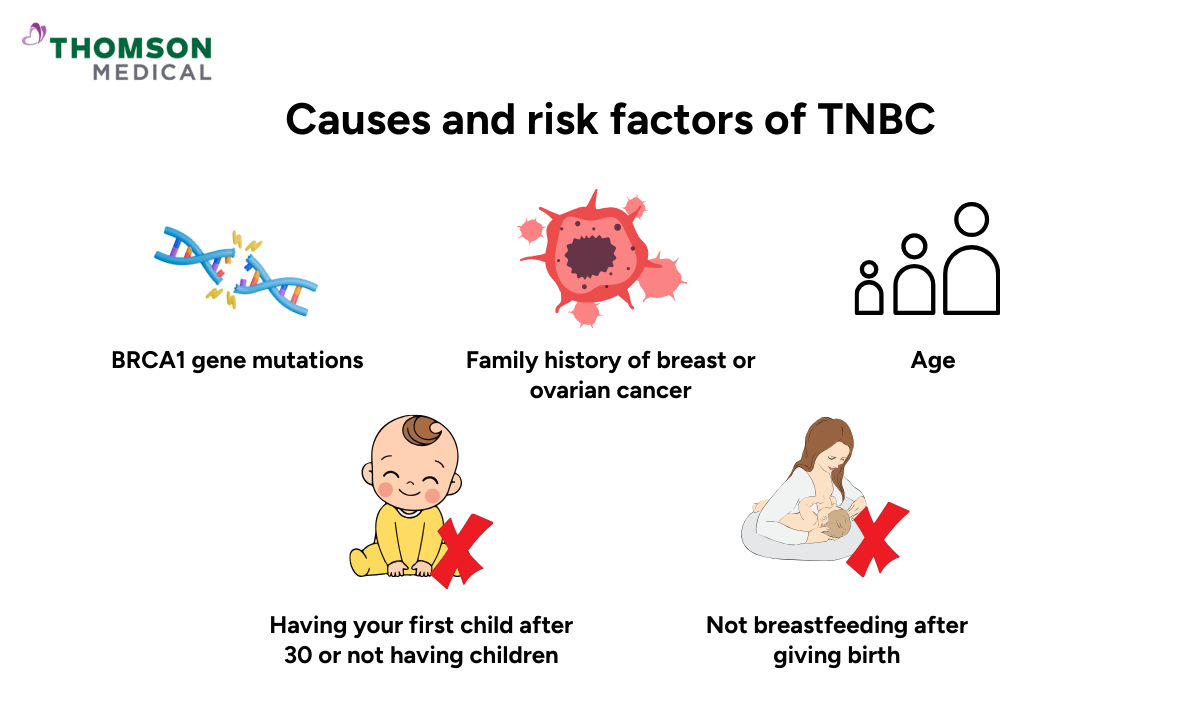
What is known are certain factors that may increase risk, such as:
Genetic factors:
BRCA1 gene mutations
Family history of breast or ovarian cancer
Other factors that may play a role:
Age (TNBC is more common in younger women, particularly those under 40)
Having your first child after age 30 or not having children
Not breastfeeding after giving birth
Having risk factors doesn't mean you’re guaranteed to develop TNBC. Many women with these factors never develop the condition, while others without any obvious risks do.
If you have a strong family history of breast or ovarian cancer, consider speaking with your doctor about genetic counselling. Understanding your individual risk can help you make informed decisions about your care and give you greater peace of mind.
How is TNBC diagnosed?
If your doctor suspects TNBC, you'll go through a series of tests. While this process may feel daunting, each test helps build a clear picture of what's happening in your body so your healthcare team can create the right treatment plan for you.
Imaging tests
These non-invasive tests allow your doctor to examine your breast tissue and identify any areas of concern:
Mammogram, which is an X-ray that detects abnormalities in breast tissue
Breast ultrasound, which uses sound waves to examine lumps and distinguish between solid masses and fluid-filled cysts
Breast MRI scan, which provides a more detailed view of your breast tissue
Your doctor will recommend which imaging tests are right for you based on your individual circumstances.
Biopsy
A breast biopsy involves your doctor removing a small sample of breast tissue to examine under a microscope. This test confirms whether cancer cells are present.
Receptor testing
Once cancer is confirmed, the tissue sample is tested for oestrogen receptors, progesterone receptors, and HER2 protein. If all three tests come back negative, you'll receive a triple-negative breast cancer diagnosis.
Staging tests
If TNBC is confirmed, your doctor may recommend additional tests such as CT scans or bone scans. These tests show whether the cancer has spread beyond the breast, helping your doctor plan the most effective treatment approach.
Each test brings you one step closer to clarity and treatment. Your healthcare team will be with you throughout this journey, answering your questions and supporting you every step of the way.
If you've noticed concerning breast changes or need diagnostic testing, schedule an appointment with Thomson Medical. Our specialists will guide you through the process with care and ensure you receive the accurate answers you need to move forward with confidence.
TNBC treatment options
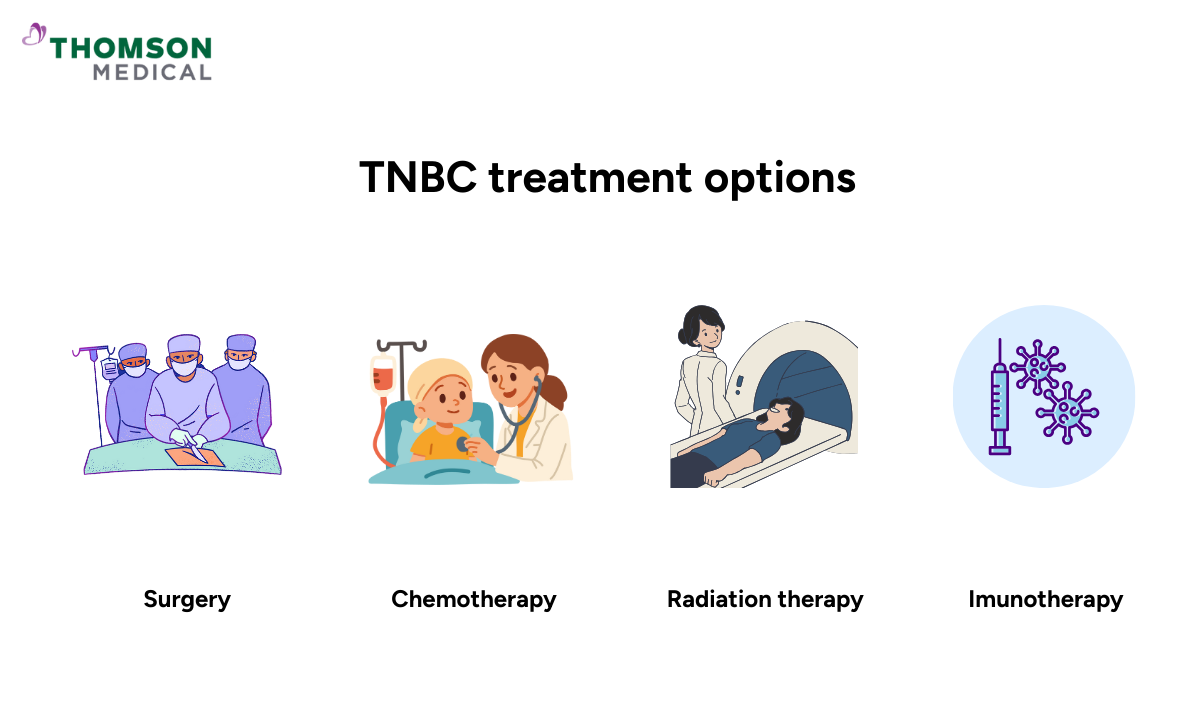
If you have been diagnosed with TNBC, your treatment plan will be tailored to your unique situation. Your doctor will consider the size and stage of your tumour, whether it has spread, and your overall health when recommending the right approach for you.
Surgery
Breast surgery removes the cancerous tissue from your breast. The type depends on your tumour's size and location:
A lumpectomy removes the tumour and a small amount of surrounding healthy tissue while preserving most of your breast
A mastectomy removes the entire breast and is usually recommended for larger tumours or multiple areas of cancer
Your surgeon may also remove lymph nodes from under your arm to check if the cancer has spread. This helps determine whether you'll need additional treatment.
Chemotherapy
Chemotherapy uses powerful drugs to destroy cancer cells throughout your body. For TNBC, it's often the primary treatment because this cancer type doesn't respond to hormone therapy or HER2-targeted drugs.
You may receive chemotherapy before surgery to shrink the tumour or after surgery to eliminate any remaining cancer cells and reduce the risk of recurrence.
Radiation therapy
Radiation therapy uses high-energy beams to destroy cancer cells in your breast area. It's usually recommended after a lumpectomy to eliminate any remaining cancer cells in your breast tissue.
Your doctor may also suggest radiation after mastectomy if your tumour was large or if cancer was found in multiple lymph nodes.
Newer treatment options
Additional treatments are now available for TNBC, including:
Immunotherapy, which helps your immune system recognise and attack cancer cells, may be used alongside chemotherapy
PARP inhibitors, which are targeted drugs that work particularly well for women with BRCA gene mutations
While it's natural to feel anxious about what lies ahead, these treatment options offer real hope. Your doctor will work closely with you to create a plan that fits your specific needs and circumstances. Your questions, concerns, and preferences are an important part of shaping your care.
If you've been diagnosed with TNBC and feel uncertain about which treatment path is right for you, schedule an appointment with Thomson Medical. Our team will create a personalised treatment plan tailored to your specific needs and support you throughout your entire journey.
Living with triple-negative breast cancer
Taking small, active steps in your care and wellbeing won't make everything easier overnight, but it can help you feel more grounded as you move through treatment.
During treatment
Attend your scheduled appointments and communicate openly with your healthcare team about any side effects or concerns. Don't hesitate to ask for help from family, friends, or support groups when you need it.
Treatment side effects vary from person to person. Common ones include fatigue, nausea, and hair loss. Your doctor can recommend medications or strategies to help you manage these effects and maintain your quality of life.
Your emotional wellbeing matters
It's completely natural to experience a range of emotions after diagnosis – fear, anger, sadness, or uncertainty. Consider connecting with a counsellor or joining a support group where you can share your experiences with others who truly understand what you're going through.
After treatment
Regular follow-up appointments help monitor your recovery and watch for any signs of recurrence. Your doctor will create a follow-up schedule based on your individual needs.
Take this journey one step at a time. Some days will be harder than others, and that's okay. Your healthcare team is here to guide you, and support is available whenever you need it.
Our women's cancer specialist
Loading...
FAQ
Is triple-negative breast cancer the most aggressive type?
TNBC tends to grow faster than other breast cancers and has a higher risk of early recurrence. However, it often responds well to chemotherapy, especially when caught early.
Can TNBC come back after treatment?
Yes, TNBC has a higher recurrence risk, particularly in the first three to five years after treatment. Regular follow-up appointments help monitor for any signs of recurrence.
Why can't hormone therapy be used for TNBC?
TNBC cells lack oestrogen, progesterone, and HER2 receptors. Since hormone therapy works by blocking these receptors, it's not effective for TNBC. Treatment focuses on chemotherapy, surgery, and radiation instead.
What is the survival rate for TNBC?
Survival rates depend on the stage at diagnosis. Early-stage TNBC has favourable outcomes, with five-year survival rates similar to other breast cancers when detected and treated promptly.
Is TNBC genetic?
While not all TNBC is genetic, it's more common in people with BRCA1 gene mutations. If you have a family history of breast or ovarian cancer, genetic counselling may be recommended.
Are there any new treatments for TNBC?
Yes, newer options include immunotherapy and PARP inhibitors for people with BRCA mutations. Clinical trials continue to explore additional treatment approaches.
Can lifestyle changes help prevent TNBC recurrence?
While no lifestyle changes guarantee prevention, maintaining a healthy weight, exercising regularly, limiting alcohol, and not smoking may help reduce recurrence risk. Discuss specific recommendations with your doctor.
The information provided is intended for general guidance only and should not be considered medical advice. For personalised recommendations based on your medical conditions, request an appointment with Thomson Medical.