

Ovarian cancer includes many types, depending on the kind of cell where the cancer starts. Each type occurs at different ages and may require different treatments. The three main types of ovarian cancer are epithelial ovarian cancer, germ cell ovarian tumours, and sex cord stromal tumours.
What are ovarian cancer tumours?
Ovarian cancer tumours are abnormal growths in or around the ovaries. The ovaries are two small organs in a woman's reproductive system that produce eggs and hormones like oestrogen (which helps regulate the menstrual cycle and supports female characteristics) and progesterone (which prepares the body for pregnancy).
Not all ovarian tumours are cancerous. Some are benign, meaning they don't spread to other parts of the body. However, malignant tumours are cancerous and can spread beyond the ovaries if not treated.
Types of ovarian cancer tumours
There are three primary categories of ovarian cancer, each developing from different cell types in the ovary:
Epithelial tumours
Germ cell tumours
Stromal tumours
Epithelial ovarian cancer
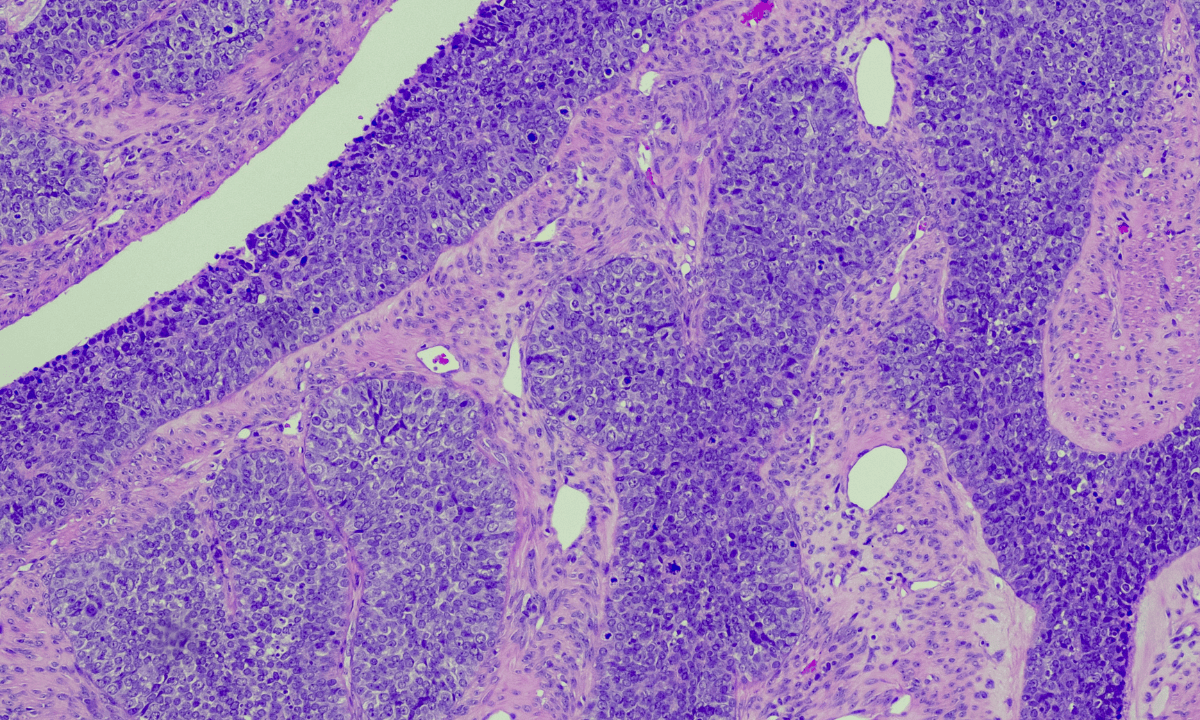
This is the mostcommon type, accounting for about 90% of all ovarian cancers. These cancers begin in the thin layer of tissue that covers the ovary’s surface. Epithelial ovarian cancer most commonly develops in women over 50, particularly after menopause.
There are different subtypes of epithelial ovarian cancer, such as:
High-grade serous:
This is the most common subtype, accounting for more than 50% of cases of epithelial ovarian cancer.
High-grade serous carcinoma is most often diagnosed in women between the ages of 40 and 60.
Standard cancer treatment includes surgery followed by ovarian cancer chemotherapy.
Endometrioid carcinoma:
This cancer often develops in women with a history of endometriosis and originates in the uterine lining.
Clear cell:
Younger women are frequently diagnosed with clear cell ovarian cancer, which is typically discovered early on.
Endometriosis may raise your chances of acquiring this type of cancer.
Low-grade serous:
This type isusually diagnosed around age 45 and grows slowly over time.
Mucinous:
This tumour can grow very large (up to 20 cm) but usually stays within the ovaries.
It can be one of the following:
Non-cancerous (benign)
Borderline (contain abnormal cells but are not a cancer)
Cancerous (malignant)
Symptoms you might experience
This type of cancer can be difficult to spot in its early stages because you may not notice any clear symptoms at first. Many people are diagnosed only after the disease has already spread beyond the ovaries.
It’s important to have regular check-ups with your gynaecologist and to know the possible warning signs, which may include:
Persistent bloating or swelling in your abdomen
Feeling full quickly after eating
Changes in bowel habits, such as constipation
Frequent need to urinate
Discomfort or pain in the lower abdomen or pelvis
Epithelial ovarian cancer can also be caused by other, less serious conditions. But if they persist for several weeks or feel unusual for you, it’s best to talk to your doctor. Early detection can make a real difference in managing this condition.
Cancers related to epithelial ovarian cancer
Although the cancer cells do not begin in the ovaries, fallopian tube cancer and primary peritoneal carcinoma are closely related to epithelial ovarian cancer and are often grouped together.
Fallopian tube cancer:
This cancer starts at the end of the fallopian tubes where they join the ovaries.
Most cases are high-grade serous cancers.
Primary peritoneal carcinoma:
The peritoneum is a layer of thin tissue that lines the inside of your tummy and covers abdominal organs, such as the bowel and the liver.
This rare cancer mainly affects women over 60 and is often diagnosed at stage 3 or 4.
Symptoms you might experience
The symptoms of fallopian tube cancer and primary peritoneal cancer are very similar to the symptoms of ovarian cancer. They can be very unclear and difficult to spot, which is why the types of cancer are usually detected in their advanced stages.
As such, if you experience any of the following symptoms or feel unusual for your body, it’s important to see a doctor. Here are some common symptoms that you may notice:
Swollen or enlarged abdomen
Persistent abdominal or pelvic pain
Bloating or a feeling of fullness
Nausea or vomiting
Loss of appetite
Changes in your bowel habits, such as constipation or diarrhoea
Urinary changes, including needing to urinate more often or urgently
Our women's cancer specialist
Loading...
Germ cell ovarian tumours
These tumours start in the egg-producing cells of the ovary and account for about 2–5% of ovarian cancers. They usually affect young women, often in their teens or early 30s.
Germ cell tumours may be benign or malignant. Let’s look closer at each one:
Benign germ cell ovarian tumours:
The most common subtype is mature teratoma, also known as a dermoid cyst.
It often occurs in women from adolescence to their 40s.
Malignant germ cell cancers:
This cancer includes many subtypes, and each subtype occurs at a different age, such as:
Immature teratoma is usually found in teenagers and women in their 20s.
Dysgerminoma commonly affects women aged 15-30 years old.
Ovarian yolk sac tumours usually occur in children and young adults.
Mixed germcell tumours are made from two or more types of germ cell tumours.
Symptoms you might experience
Germ cell tumours can cause a range of symptoms, some of which may be easy to mistake for common gynaecological or digestive issues. However, paying attention to persistent or unusual changes in your body is important. Symptoms may include:
Ongoing pain in your abdomen or pelvis that doesn't go away
A noticeable lump in your abdomen
Bloating or an increase in the size of your tummy
Irregular periods or heavier periods than usual
Unexpected vaginal bleeding after your periods have stopped
Sex cord stromal tumours
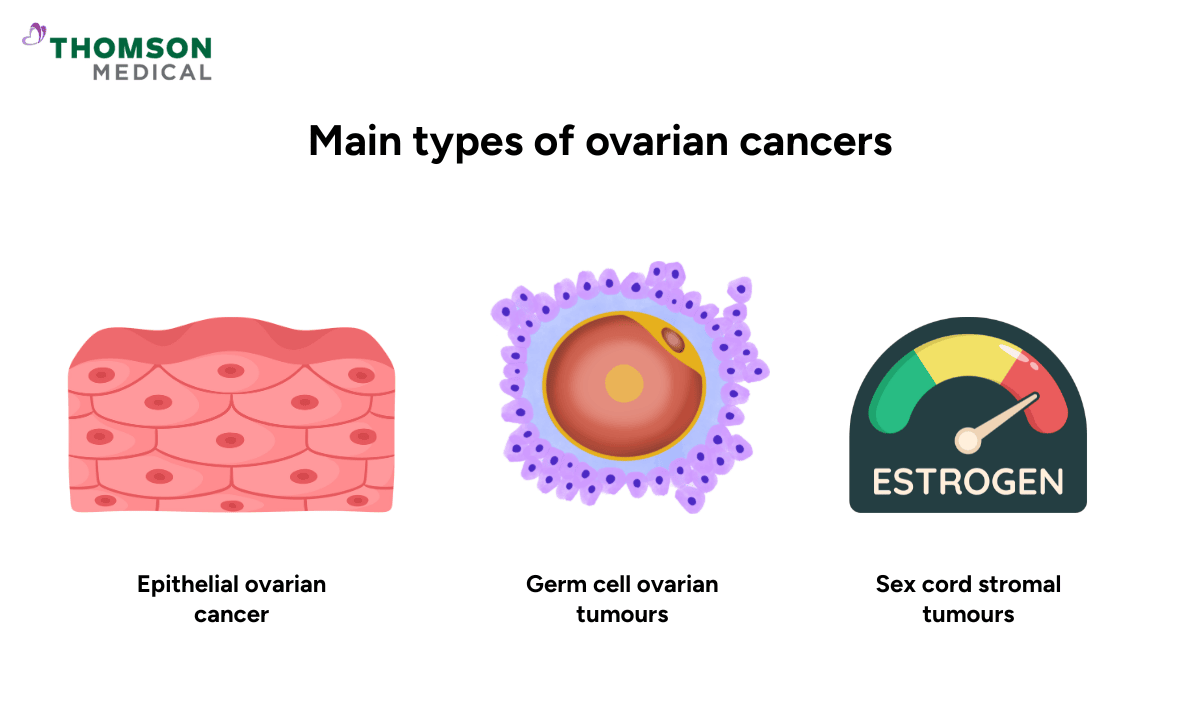
These rare tumours start in the stroma or the sex cords, which are tissues that support the ovary. There are different subtypes of ovarian sex cord stromal tumours, including:
Granulosa cell tumour:
This is the most common subtype of sex cord stromal tumours and it is malignant.
Granulosa cell tumour usually makes the female hormone oestrogen and can occur in children and younger women or early in the menopause.
Sertoli-Leydig tumour:
This subtype is a rare and while many are benign, some can be malignant.
Sertoli-Leydig tumour produces the male hormone testosterone and usually appears in women in their 20s–30s.
The symptoms of sex cord stromal tumours are similar to those of ovarian cancer in general, including abdominal pain, bloating, irregular periods, constipation, and urinary changes. In addition, if you have a granulosa cell tumour, you may experience breast tenderness due to increased oestrogen levels, or voice deepening and excessive hair growth on the face, chest, and limbs if you have a Sertoli-Leydig tumour.
Borderline ovarian tumours
Borderline ovarian tumours are abnormal growths that form in the tissue covering the ovary, but they are not cancerous. They account for about 10-15% of ovarian tumours and usually occur in women aged 20–40.
If you’ve been diagnosed with ovarian cancer, seek timely treatment with our experienced oncology team. The earlier therapy begins, the better your chances for successful recovery and long-term survival. Request an appointment with Thomson Medical today.
Treatment options for ovarian tumours
Treatment of ovarian tumours usually involves a combination of surgery and chemotherapy; some women with specific tumour types may benefit from hormonal therapy or targeted therapies. Your treatment plan may depend on your stage and type of cancer.
Surgery
Most ovarian tumours require surgical removal. Your surgeon may remove one or two of your ovaries for early-stage cancer. Both ovaries and the womb may be removed if your cancer is advanced or you don't want to preserve your ability to have children.
Chemotherapy
Chemotherapy – which uses chemicals to kill fast-growing cancer cells – can be injected into your vein or taken by mouth. You usually undergo chemotherapy after surgery to kill any cancer cells that might remain. Sometimes, chemotherapy can also be used before surgery. Some types of cancer, like low-grade serous ovarian cancer or clear cell tumours, respond less effectively to chemotherapy.
Hormonal therapy
Hormone therapy uses drugs to block the effects of the hormone oestrogen on ovarian cancer cells to control their growth. This treatment may be a beneficial option for some types of slow-growing cancers like low-grade serous ovarian cancer.
FAQ
Which type of ovarian cancer is the most common?
The most common form is epithelial ovarian cancer, which begins in the thin layer of cells covering the outside of the ovary. It accounts for about 90% of all ovarian cancer cases. Within this group, high-grade serous cancer is the most frequent subtype and is often diagnosed at a later stage.
What are these rare ovarian tumours?
Rare ovarian tumours include germ cell tumours, which start in the egg-producing cells, and stromal tumours, which begin in the cells that produce hormones.
What type of ovarian cancer does not respond to chemotherapy?
Some types, such as low-grade serous cancer, clear cell cancer, and mucinous ovarian cancer, tend to respond less effectively to chemotherapy.
Do different types of ovarian cancer have different survival rates?
Yes, survival rates can vary depending on the type of ovarian cancer. High-grade serous cancers are more aggressive and often diagnosed at advanced stages, which lowers survival rates. On the other hand, germ cell and stromal cell tumours are usually detected earlier and tend to respond better to treatment, improving long-term survival.
Which is the most aggressive type of ovarian cancer?
High-grade serous ovarian cancer is considered the most aggressive. It grows rapidly and spreads easily to nearby organs. It is often diagnosed at a late stage, which makes it more challenging to treat.
Which ovarian tumour has the worst prognosis?
Among ovarian cancers, high-grade serous cancer, especially when diagnosed at stage 3 or 4, has the poorest prognosis. Early diagnosis and treatment at a specialised cancer centre may improve survival outcomes.
The information provided is intended for general guidance only and should not be considered medical advice. For personalised recommendations based on your medical conditions, request an appointment with Thomson Medical.
References:
Epithelial ovarian cancer. (n.d.). Cancer Research UK. https://www.cancerresearchuk.org/about-cancer/ovarian-cancer/types/epithelial-ovarian-cancer
Types of ovarian cancer | Ovarian cancer information. (2024, June 3). Ovarian Cancer Action. https://ovarian.org.uk/ovarian-cancer/types-of-ovarian-cancer/
Germ cell ovarian tumours. (n.d.). Cancer Research UK. https://www.cancerresearchuk.org/about-cancer/ovarian-cancer/types/germ-cell
- Sex cord stromal tumours. (n.d.). Cancer Research UK. https://www.cancerresearchuk.org/about-cancer/ovarian-cancer/types/sex-cord-stromal
For more information, contact us:
Thomson Fertility
- Paragon: 6252 7766
- Novena: 6399 3758, 8811 0358 (WA)
Thomson Specialists (Women's Health)
Thomson Women's Clinic
- Novena:
6592 6686 (Call), 8611 8986 (WA) - Bukit Batok:
6569 0668 (Call), 8686 3525 (WA) - Choa Chu Kang:
6893 1227 (Call), 8282 1796 (WA) Jurong:
6262 8588 (Call), 6262 8588 (WA)- Katong (female doctor):
6970 2272 (Call), 8611 9020 (WA) - Punggol:
6243 6843 (Call), 8811 0328 (WA) - Sembawang: 6753 5228
- Sengkang: 6388 8125
- Serangoon (female doctor): 6382 3313
- Tampines: 6857 6266
- Tiong Bahru: 6276 1525