

Uterine fibroid embolisation (UFE) treats fibroids by cutting off their blood supply rather than removing them. A specialist passes a thin tube (catheter) into the arteries feeding the fibroids and injects small particles to block them, and the fibroids shrink over the following months as a result.
It’s one of several options for symptomatic fibroids, and it suits some situations better than others. Here’s how UFE works, who it’s typically considered for, what recovery involves, and what it costs in Singapore, including how MediSave and insurance could apply.
What is uterine fibroid embolisation?
A UFE procedure is a minimally invasive procedure used to treat symptomatic fibroids without the need to remove the uterus (womb). Rather than open surgery, this procedure is performed through a small puncture in the skin, usually near the groin (upper thigh area) or wrist.
Your doctor may suggest UFE as a treatment option if you have symptoms such as heavy periods, pelvic pain or pressure and would prefer to avoid surgery that requires the removal of the uterus.
Whether UFE is suitable for you depends on your symptoms, the results of imaging tests, your medical history, and your plans for future pregnancies. This is because UFE may affect fertility, so if you are planning to become pregnant, your doctor may discuss alternatives such as a myomectomy.
What symptoms could UFE treat?
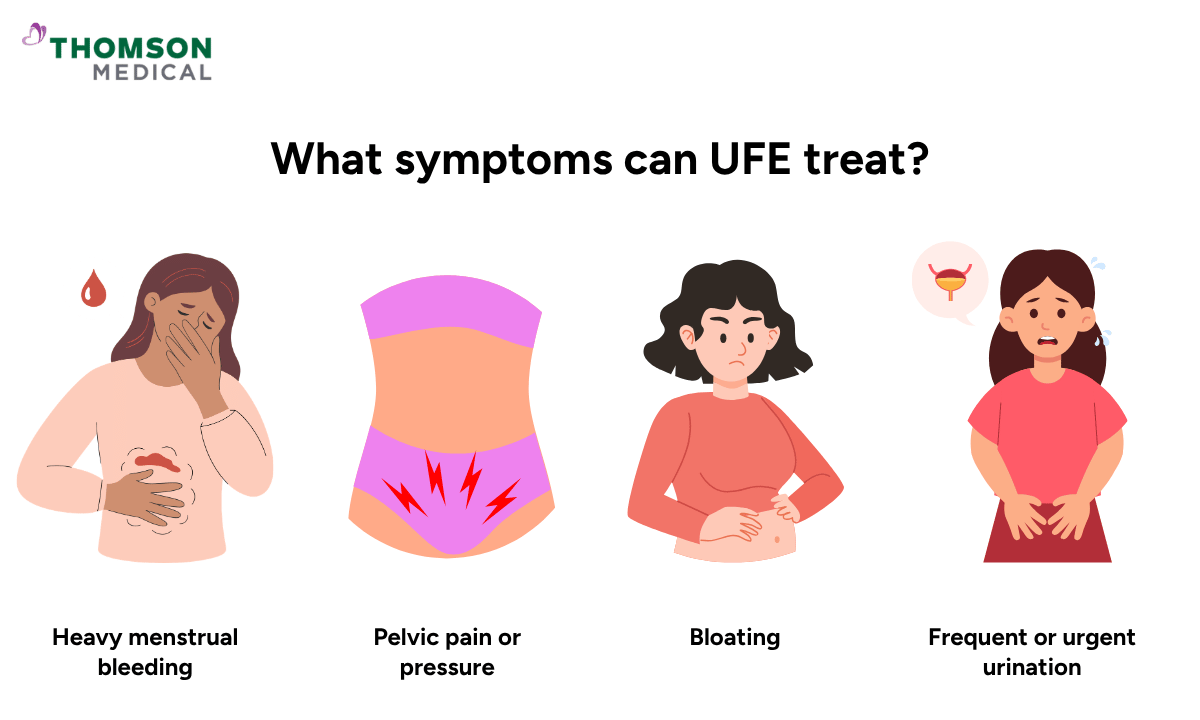
Fibroids may cause symptoms by pressing on nearby organs or increasing blood flow within your uterus. UFE aims to reduce these symptoms by shrinking the fibroids over time and may also be considered for other conditions where reducing blood flow could help control symptoms or bleeding.
UFE may help improve:
Pelvic pain or pressure
Bloating or a feeling of fullness in the abdomen
Frequent or urgent urination
Pain during sexual intercourse
The suitability of uterine fibroid embolisation depends on factors such as your symptoms, fibroid size and location, and future pregnancy plans. Request an appointment with Thomson Medical for personalised advice and treatment planning.
Our O&G specialists
Loading...
How do you prepare for UFE?
Preparing for UFE involves both medical assessment and practical planning to help the procedure go safely. Your doctor will guide you through the steps based on your health and treatment plan.
Medical checks
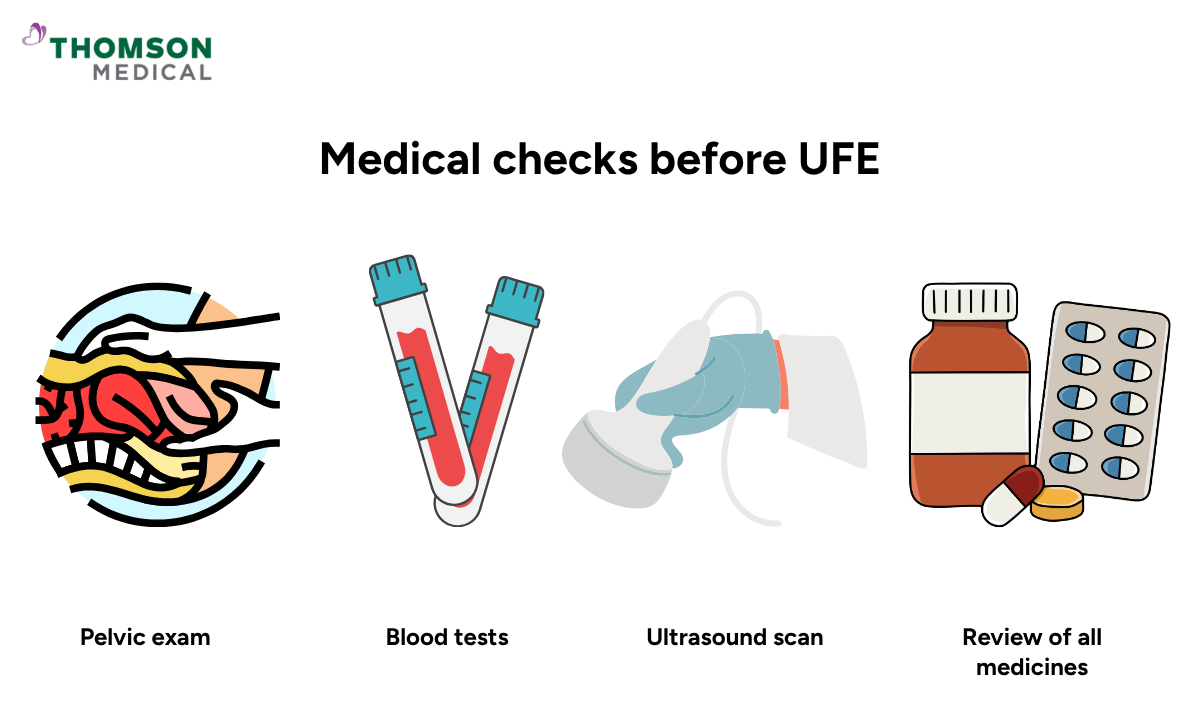
Before the procedure, your doctor will carry out several checks to confirm whether UFE is suitable for you and to plan the treatment safely.
You may need:
A pelvic exam and blood tests
An ultrasound scan to assess the size, number, and location of your fibroids
A review of all medicines you are taking, including hormonal medicines, supplements, and over-the-counter medicines
Before the procedure, inform your doctor if you are pregnant or think you may be pregnant. You should also mention any allergies to contrast dye, iodine, latex or anaesthesia.
You should also inform your doctor of any history of bleeding disorders or problems with blood clotting so that they may plan the procedure safely.
Follow your doctor’s instructions
Alongside your medical checks, a few simple preparations will help your procedure day go smoothly.
Before the procedure:
Follow your doctor's fasting instructions carefully
Read your consent form and ask questions if anything is unclear
Arrange for someone to help you at home for the first day or two after the procedure
Fasting instructions are given for your safety and must be followed exactly as advised. If you eat or drink when asked not to, the procedure may need to be postponed.
If you are taking blood-thinning medicines or aspirin, ask your doctor whether you should stop taking them before the procedure.
What to expect during the procedure
You will usually receive medication to help you relax, along with a local anaesthetic to numb the groin area and keep you comfortable during the procedure.
In general, the procedure involves:
A thin tube (catheter) being guided through a blood vessel in the groin into the uterine arteries
Contrast dye is being injected so the blood vessels may be seen clearly on X-ray imaging
Tiny particles being injected to block the blood supply to the fibroids
Final X-ray images are being taken to confirm the targeted blood vessels have been treated
UFE may be performed as a day procedure, or you may be asked to stay overnight depending on your situation.
Recovering after UFE
After the procedure, recovery times may vary, but women generally return to their usual routine within one to two weeks. During the first one to two days, you may experience:
Cramping or pain in your lower abdomen, which could be managed with painkillers your doctor prescribes
Fatigue, which is a normal part of recovery and a sign that your body needs rest
Mild nausea or a low-grade fever in some cases
However, your doctor will advise you on when it is safe to return to work, exercise and other activities, and they will provide guidance on how to do so safely.
What are the risks of UFE?
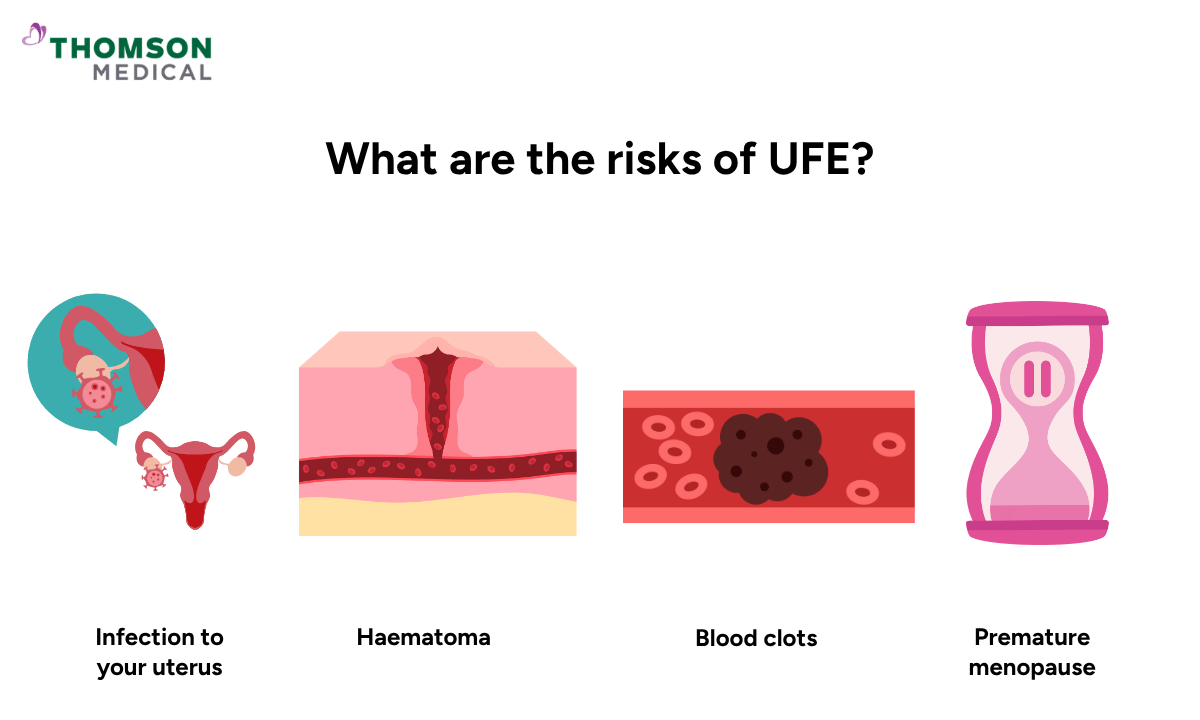
As with any medical procedure, UFE carries some potential risks and complications, although serious problems are uncommon.
Possible risks include the following:
Abnormal bleeding
Infection in your uterus or at your groin puncture site
A haematoma (a collection of blood under your skin at the groin site)
Injury to nearby blood vessels or surrounding structures
Blood clots
Allergic reaction to contrast dye or other medicines used during the procedure
Changes to your menstrual cycle, including lighter periods or, in some cases, no periods at all
Premature menopause, particularly if you are closer to menopausal age
Possible effects on your fertility, such as reduced ovarian reserve
Your doctor will assess your individual risk factors and explain what complications are most relevant to your situation before recommending UFE.
How much does UFE cost in Singapore?
The cost of UFE in Singapore may vary depending on your situation and the hospital you choose. To help you plan, the Ministry of Health (MOH) provided fee benchmarks for private hospitals and clinics.
Here are the general fee benchmarks provided by MOH:
| Fee type | With GST | Without GST |
|---|---|---|
Surgeon fee | SGD 5,450 to 8,720 | SGD 5,000 to 8,000 |
Inpatient doctor attendance | SGD 230 to 450 per day | SGD 210 to 420 per day |
A few things to keep in mind:
These are MOH benchmark figures and do not represent the actual fees charged at any specific hospital or clinic
These figures cover doctor fees only and do not include hospital fees, medications, or investigations such as blood tests or imaging
Speaking with your care team directly will give you a more accurate picture of what to expect
Please note that these are estimated costs based on the information available at the time of writing, and they may have changed since then. These costs may also vary depending on the required treatment, hospital, and location of care.
If you are considering uterine fibroid embolisation and would like a clearer understanding of the expected costs, contact our medical concierge team to discuss your individual treatment plan and estimated fees.
FAQ
What are the disadvantages of uterine fibroid embolisation?
Although UFE is minimally invasive, it still carries some risks and limitations. Possible disadvantages include:
- Pelvic pain after the procedure
- Recovery period that may last around one to two weeks for many women
- Infection and injury to surrounding tissue
- Fibroid recurrence or incomplete symptom relief
Does UFE work long-term?
UFE may provide longer-term symptom relief for some women; it may help relieve symptoms such as the following:
- Heavy menstrual bleeding
- Pelvic pain
- Pressure by shrinking fibroids
- Reducing their blood supply
However, long-term results may vary depending on factors such as fibroid size, number, and individual hormonal changes.
How painful is UFE?
Many women experience cramping that can range from moderate to severe in the days following the procedure. This is usually most intense during the first few hours to days and gradually improves with prescribed pain relief and rest.
Is UFE considered major surgery?
No, UFE is not considered major surgery. It is a procedure that does not involve open surgery. A small, flexible tube is inserted into a blood vessel in the groin to carry out the treatment.
Who should not undergo UFE?
UFE may not be suitable for women with asymptomatic fibroids, active pelvic infections, pregnancy, suspected uterine or endometrial cancer, or plans to conceive in the future. Speak to your doctor to understand whether UFE is suitable for your situation.
Which is better for fibroids, embolisation or ablation?
It depends on which type of ablation you are comparing. Endometrial ablation only reduces bleeding and does not treat fibroids. Radiofrequency ablation (fibroid ablation) shrinks fibroids directly but works best for one to three small to medium fibroids.
UFE targets all fibroids at the same time and may be more suitable for multiple or large fibroids. Your doctor will advise on the most suitable option based on your fibroid size, number, and whether you are planning to conceive in the future.
The information provided is intended for general guidance only and should not be considered medical advice. For personalised recommendations and tailored advice based on your unique conditions, request an appointment with Thomson Medical.
For more information, contact us:
Thomson Specialists (Women's Health)
Thomson Women's Clinic (TWC)
- Novena:
6592 6686 (Call), 8611 8986 (WA) - Bukit Batok:
6569 0668 (Call), 8686 3525 (WA) - Choa Chu Kang:
6893 1227 (Call), 8282 1796 (WA) Jurong:
6262 8588 (Call), 6262 8588 (WA)- Katong (female doctor):
6970 2272 (Call), 8611 9020 (WA) - Punggol:
6243 6843 (Call), 8811 0328 (WA) - Sembawang: 6753 5228
- Sengkang: 6388 8125
- Serangoon (female doctor): 6382 3313
- Tampines: 6857 6266
- Tiong Bahru: 6276 1525