

Vomiting can be unsettling, especially when the fluid appears yellow or green instead of containing food. Many people worry when they notice this change and wonder whether it signals something serious.
Bile may appear in vomit when the stomach is empty or after repeated episodes of vomiting. However, persistent bile vomiting, severe abdominal pain, or other concerning symptoms may require urgent medical assessment.
Understanding what bile vomiting means, possible causes, and warning signs that should not be ignored can help you decide when home care is appropriate and when medical attention is needed.
What is bile and why are you vomiting it?
Bile is a digestive fluid your liver makes and your gallbladder stores. It helps break down fats and normally flows into your small intestine, not your stomach.
When you throw up bile, it's usually because your stomach is empty. Maybe you've been vomiting for a while, haven't eaten, or can't keep anything down. There's nothing left in there except bile and gastric juice.
Bile looks yellow or green and tastes intensely bitter. It's worse than regular vomiting because it burns your throat and mouth, leaving an awful taste behind.
Is vomiting bile always serious?

Most of the time, vomiting bile isn’t dangerous. It’s your body reacting to irritation, emptiness, or overload, not something breaking down inside you.
However, in some rare cases, bile vomiting can signal something more serious that needs medical attention.
Common causes of vomiting bile
Vomiting bile isn't a disease – it's your body signalling that something's off in your digestive system. Here's what might be going on.
Empty stomach
If you've been throwing up for a while, skipped meals, or can't keep anything down, your stomach empties out. Once that happens, there's nothing left but bile and stomach fluids.
This is the most common reason for bile vomiting. It looks and feels awful, but it's usually just your body reacting to an empty, irritated stomach, not something dangerous.
Stomach flu or food poisoning
When a virus or bad food hits, you might feel nauseous, vomit repeatedly, and feel completely drained. After vomiting multiple times, bile shows up because there's nothing left in your stomach.
It's miserable while it lasts, but stomach flu and food poisoning usually run their course with rest, fluids, and time.
Excessive alcohol consumption
Alcohol irritates your stomach lining and ramps up acid production. Your stomach feels raw and unsettled, which can trigger vomiting. Once it's empty, up comes the bile.
This is common after heavy drinking and usually gets better as your stomach calms down and you rehydrate.
Pregnancy-related causes
Early pregnancy nausea and vomiting (morning sickness) can be relentless. You might feel too sick to eat, too exhausted to function, and completely wiped out. But it is incredibly common and rarely harmful. In most cases, it won't affect your health or your baby's development.
Bile reflux and gastro-oesophageal reflux disease
Gastric acid and bile reflux can irritate your stomach and oesophagus (food pipe), causing burning pain, nausea, and vomiting. This happens with bile reflux, but also with peptic ulcers or severe inflammation.
Your stomach can feel constantly raw and sensitive, which leads to ongoing nausea and bile vomiting.
Intestinal obstruction
In rare cases, an intestinal blockage in your small intestine stops normal digestion and causes vomiting, including bile. Intestinal blockage is uncommon but serious and needs immediate medical care.
How to tell how serious your symptoms are
When you're vomiting yellow bile, it's usually hard to know if you should worry. Some symptoms look scary but turn out to be minor. Others mean you need medical help.
When home care is usually enough
These symptoms usually mean your body is dealing with irritation, dehydration, or a short-term bug that'll pass with rest and basic care:
Vomiting that slows down or settles
Mild nausea
You can keep small sips of fluid down
No fever or confusion
No severe pain
In these situations, your body is likely handling this on its own without the need for medical treatment.
When to get a regular appointment
These signs mean your body might need help and recovery may not happen safely on your own:
Persistent vomiting
Increasing abdominal pain
Ongoing dehydration
Weakness, dizziness, or faintness
Unexplained weight loss
Symptoms not improving after 24–48 hours
Medical care prevents serious complications like severe dehydration, infection, or things getting worse. It also speeds up recovery.
When to go to emergency department or seek urgent care
These symptoms might be a sign that something serious is happening, and you should seek out treatment immediately:
Severe or worsening abdominal pain
High fever
Confusion, extreme drowsiness, or altered consciousness
Vomiting blood
Severe dehydration
It’s best to seek medical help early, as it’s a safe and sensible step to take.

Our urgent care specialist
Loading...
When medical tests are needed
You don’t need tests for every episode of vomiting yellow bile.
Your doctor usually recommends tests when:
Symptoms are severe or won't go away
Warning signs show up
They suspect a blockage, infection, or problem with your organs
You're not getting better with time and basic care
Tests might include blood tests, imaging like CT scans, or other specific tests depending on what's happening.
Treatment options for bile vomiting
In many cases, treating bile vomiting is straightforward.
You might need:
Medication to stop nausea and vomiting
Pain relief
IV fluids if you're dehydrated
Sometimes treatment targets the specific cause:
Antibiotics or antivirals for infections
Medication for bile reflux, acid reducers for acid reflux
Pregnancy support or hormone treatment
Hospital care for serious issues like a intestinal obstruction or severe gastrointestinal infection
Not everything needs intense treatment. A lot of these issues get better on their own with basic care. And when you do need medical treatment, it usually works well, especially if you get help early.
Home care for vomiting bile
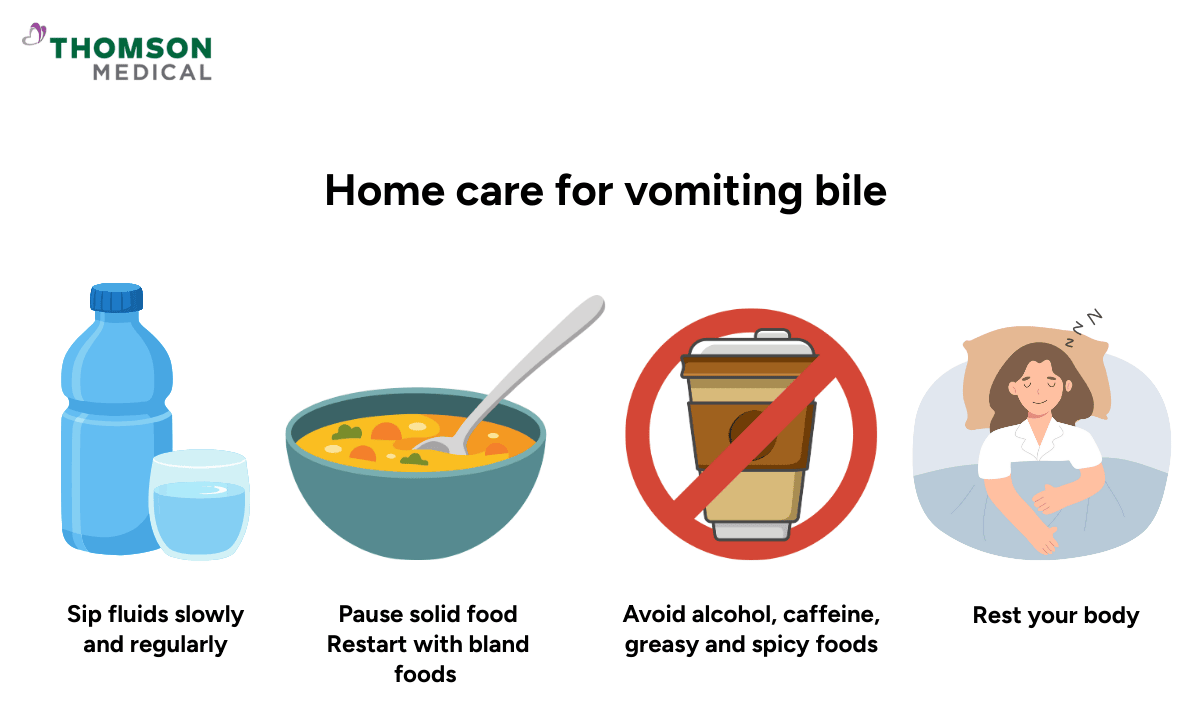
If your symptoms are mild and stable, basic care at home can go a long way in helping your body settle and recover naturally.
Hydration first:
Sip fluids slowly and regularly.
Oral rehydration solutions are helpful, especially if you’ve been vomiting a lot.
Let your stomach rest:
If vomiting is active, it’s okay to pause solid food.
Once nausea settles, restart gently with bland foods like toast, rice, bananas, and soup.
Avoid stomach irritants:
It’s best to avoid alcohol, caffeine, greasy foods, spicy foods, and acidic foods.
Rest your body:
Your body recovers when you slow down.
For most people, symptoms ease within a day or two when your body is supported properly, and recovery happens more smoothly than it might feel in the moment.
How to prevent vomiting bile again
After you begin to recover, you might be worried if this will happen again.
In many cases, you can reduce the chances of future bile vomiting with some simple changes.
Eating regularly and avoiding long fasting periods
Staying well hydrated
Limiting alcohol
Managing bile reflux and underlying digestive conditions
Avoiding known food allergy
Vomiting yellow bile looks scary, but it's usually just your body reacting to an empty, irritated stomach or a temporary bug, not something serious. That said, if you're worried or not sure what's going on, there's nothing wrong with seeing a doctor for peace of mind.

FAQ
What colour is bile vomit?
Bile vomit is usually yellow or green and has a strong, bitter taste.
Should I drink water if I throw up bile?
Yes, but sip slowly. Small, frequent sips help prevent dehydration without triggering more nausea.
Is yellow bile vomit an emergency?
Bile vomiting is often caused by an empty or irritated stomach. Seek medical help if it’s severe, persistent, or comes with red-flag symptoms such as severe abdominal pain, high fever, confusion, or severe dehydration.
Does throwing up bile mean you are dehydrated?
Not always, but it often happens after repeated vomiting or poor intake, which can lead to dehydration.
Should I lie down after vomiting yellow bile?
Rest is helpful but keep your head slightly elevated and lie on your side if you feel nauseated.
How to settle your stomach after puking bile?
It’s best to rest, take slow sips of water or oral rehydration solution, avoid food until nausea settles, and restart with bland foods when ready.
The information provided is intended for general guidance only and should not be considered medical advice. For personalised recommendations based on your medical conditions, request an appointment with Thomson Medical.
For more information, contact us:
Thomson Medical 24-Hour Urgent Care Centre (Novena)
- Call: 6350 8812
Notice:
The range of services, vaccinations, and tests may vary. Please contact us directly to enquire about the current availability.
Request an Appointment