

After a diagnosis of vulvar cancer, or once treatment is behind you, the question that tends to surface is what happens from here. It’s difficult to answer in general terms, because the outlook depends heavily on the stage at diagnosis, whether lymph nodes are involved, and your overall health.
What can be said is that vulvar cancer found early, while still confined to the vulvar, is generally treated with good results. Here’s what shapes the outlook for vulvar cancer, how survival statistics should be read, and what follow-up care involves.
What do vulvar cancer survival rates mean?
Vulvar cancer survival rates are statistical estimates of the percentage of people with this gynaecologic cancer who are still alive after a certain amount of time after diagnosis, usually 5 years, compared with people who do not have that cancer.
While the word “survival” can feel worrying, these figures are not meant to predict how long an individual person will live or what their outcome will be after diagnosis. Doctors use these figures to discuss the outlook and estimate the overall effectiveness of the available treatments.
The 5-year relative survival rate is commonly used as a measure of treatment success because it is an internationally recognised standard that allows cancer outcomes to be compared consistently across countries, healthcare systems, and over time. Five years is also considered a meaningful timeframe for assessing cancer outcomes, as many recurrences occur within this period, although the risk does not disappear completely.
However, this rate alone cannot tell you exactly what might happen in the future, because everyone is different and many factors can affect your outlook. That is why it is always advisable to discuss what these figures may mean for your situation with your doctor.
Vulvar cancer outlook by stage
According to data from the FIGO 2021 review about the vulvar cancer staging system, the estimated 5-year outlook varies according to the stages of vulvar cancer.
Stage 1
In stage 1 vulvar cancer, the cancer is limited to the vulva or perineum – the area of skin between the vagina and anus. It has not spread to nearby lymph nodes or other parts of the body.
As the cancer remains localised at this stage, it generally has the most favourable outlook. The reported estimated five-year outlook for this localised stage is 86%.
Stage 2
In stage 2, the cancer has spread to nearby structures, such as the lower part of the vagina, urethra or anus. It has not spread to nearby lymph nodes. The outlook of this stage depends on whether the cancer remains localised as in stage 1 or has spread regionally.
Stage 3
In stage 3, the cancer has spread to nearby lymph nodes or nearby pelvic structures, such as the lower part of the urethra, vagina, or anus. At this stage, whether the cancer has spread to the lymph node can also affect the outlook. The estimated five-year outlook for this regional stage is approximately around 53% to 80%.
Stage 4
In stage 4, the cancer has spread extensively to nearby areas, such as the upper vagina or urethra, or to distant parts of the body, including the organs beyond the pelvis.
The outlook is less favourable when the cancer has spread to distant areas. The estimated five-year outlook at this stage is around 19%.
It is important to note that survival rates are based on data from groups of people with similar diagnoses and cannot predict an individual’s outcome. Your doctor will consider several factors when discussing your expected outlook. Schedule an appointment with Thomson Women's Clinic & Cancer Surgery for a consultation with a gynaecological oncologist.
What factors can affect the vulvar cancer outlook?
The outlook for vulvar cancer may vary from woman to woman. While the cancer stage is one of the most important factors that doctors consider, other factors such as the cancer grade, tumour type, age, and overall health may also influence how the disease behaves and how well it responds to treatment.
Your doctor will assess these factors together with your treatment history to better understand your individual condition and recommend a suitable care plan.
Lymph node involvement:
If cancer has not spread to the lymph nodes, the outlook is generally better. If cancer has spread to one or more lymph nodes, the risk of recurrence is higher, and outlooks are usually lower.
The cancer stage:
Early-stage vulvar cancer usually has a better outlook than at a later stage because cancer that has spread to nearby tissues, lymph nodes or distant organs is generally more difficult to treat.
The tumour size and depth of invasion:
Smaller tumours and tumours that have not grown deeply into surrounding tissue generally have a better outlook. Meanwhile, larger tumours or tumours with deeper locations increase the risk that cancer has spread to the lymph nodes.
The cancer grade:
Higher-grade (how abnormal the cancer cells look under the microscope) cancers may grow and spread more quickly than lower-grade cancers.
The cancer type:
The most common type, squamous cell carcinoma, generally has a better outlook when it is linked to human papillomavirus (HPV) because it is less aggressive and responds better to treatment. Although the outcome still depends on factors such as stage and lymph node involvement.
Less common types, including vulvar melanoma, often have a poorer outlook because they could be more likely to recur or spread.
Age and overall health:
Younger people often have better outcomes than older people, although age alone does not determine outcomes.
Other health conditions, such as heart or lung disease, may affect which treatments are safe and suitable. Your overall health and response to treatment could also affect your outlook.
How thorough the cancer was removed:
If the cancer is completely removed during the surgical procedure, the chance of the cancer returning is lower. Meanwhile, if there are still some cancer cells left, the cancer may recur.
Our gynaecological oncologist
Loading...
Available vulvar cancer treatment
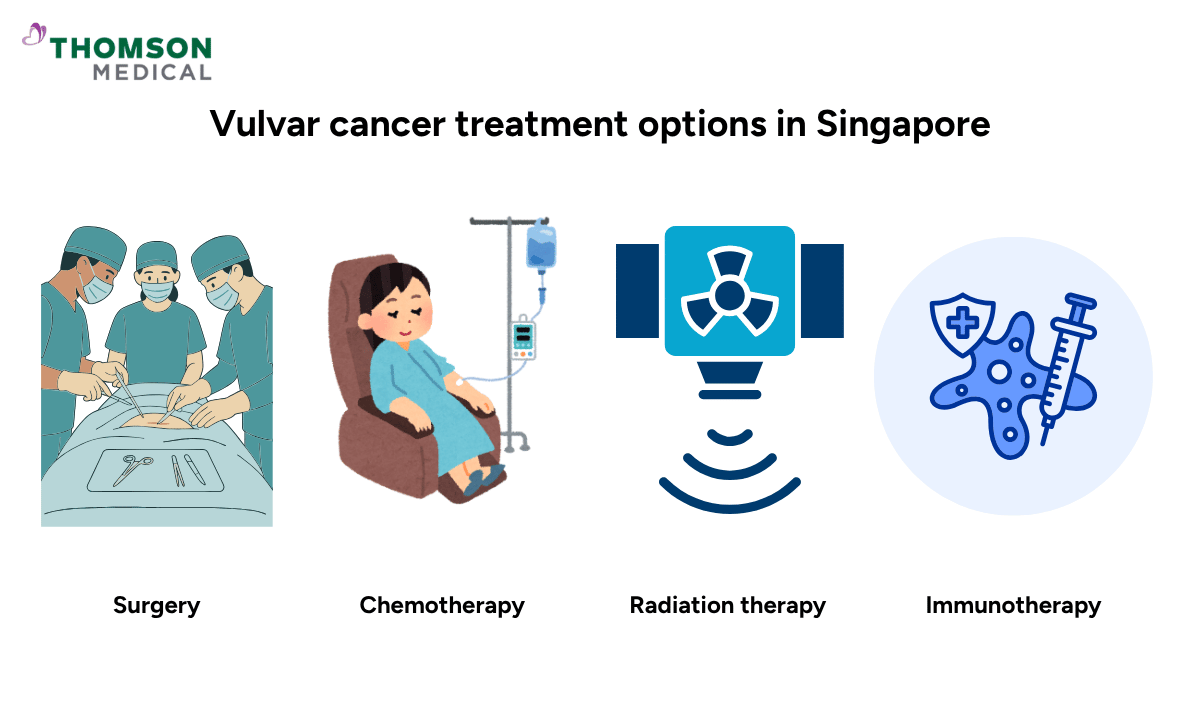
Vulvar cancer treatment varies based on the stage of the disease and may include several options for your consideration:
Surgery:
Surgery is often the first treatment for vulvar cancer, especially in early stages. Doctors usually remove the tumour and some healthy tissue around it.
In some cases, they also remove part or all of the vulva, including the labia minora, labia majora, and sometimes the clitoris. If they think the cancer may have spread, they may also remove lymph nodes from the groin.
Chemotherapy:
Chemotherapy uses anti-cancer drugs to destroy cancer cells. For vulvar cancer, it is not usually the main treatment on its own.
Doctors more often use it to shrink the cancer, support radiotherapy, or treat advanced or recurrent disease.
Radiation therapy:
Radiation therapy uses high-energy rays to kill cancer cells or shrink the tumour.
Doctors usually use radiation therapy to shrink the cancer before surgery, treat any cancer left after the surgical treatment, or treat cancer that has spread to lymph nodes or cannot be removed safely.
Immunotherapy:
Immunotherapy uses medicines that help your immune system recognise and attack cancer cells. Doctors usually consider it for advanced, recurrent, or metastatic vulvar cancer.
If you are unsure which vulvar cancer treatment is right for you, schedule an appointment at Thomson Women's Clinic & Cancer Surgery. A gynaecological oncologist can help you understand your options.
How to reduce the risk of vulvar cancer recurring?
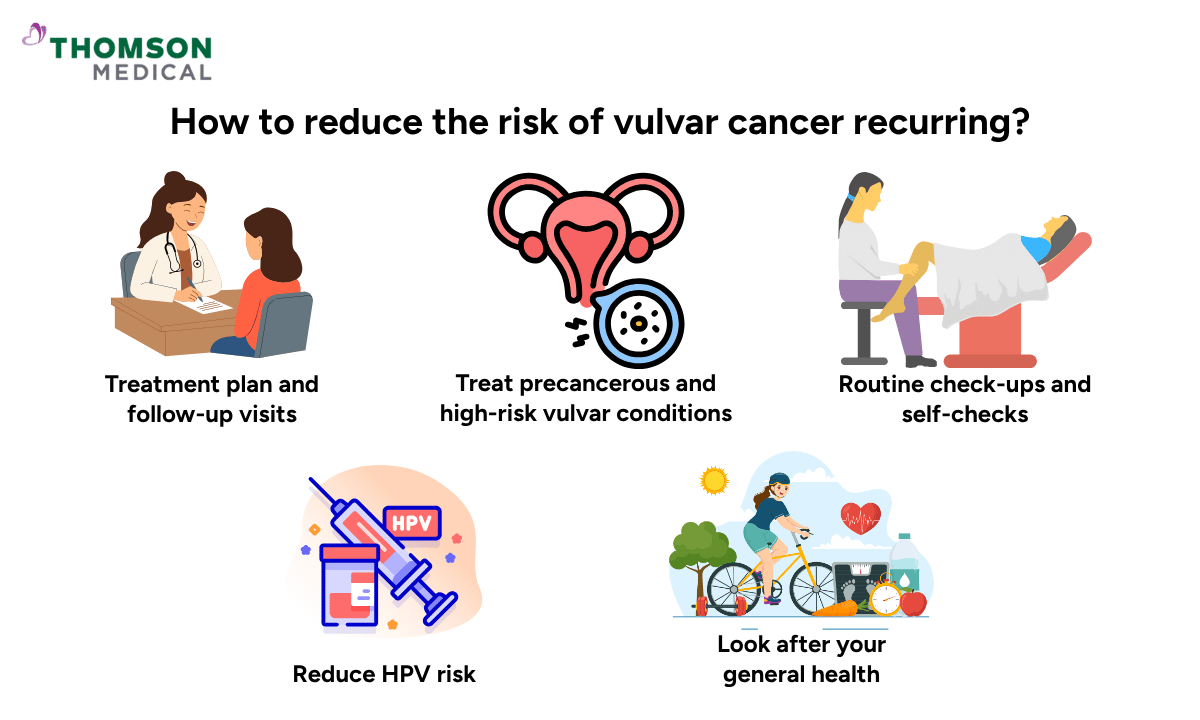
While you cannot completely control whether vulvar cancer comes back, there are several steps that could help lower the risk of recurrence.
Follow the treatment plan and attend follow-up visits
After diagnosis, you need to follow the treatment plan from your specialist. Meanwhile, after treatment, it is best to always attend the regular follow‑up visits so your doctor may check for any signs that the cancer has returned and manage treatment side effects.
Managing precancerous and high-risk vulvar conditions.
Common vulvar conditions, such as vulvar intraepithelial neoplasia (VIN) – a precancerous condition when abnormal cells grow in the top layer of vulvar skin – could increase the risk of recurrence. It is best to treat this condition early to reduce the risk that new cancer develops in the future.
Attend routine gynaecological check-ups
Your doctor may advise routine gynaecological check-ups to help detect any recurrence early.
Additionally, you may also do self-exams of your vulva using a mirror to look for new unusual changes or non-healing areas. It is best for you to see your doctor if you notice anything unusual.
Reduce HPV risk
Certain infections like HPV could increase the risk of vulvar cancer recurrence. You may reduce the chance of HPV infection by considering HPV vaccination and using condoms during intercourse.
Look after your health
Good general health may help your body respond better to treatment and aid recovery. Here are some tips you could try:
Eating a balanced diet
Staying physically active as advised by your doctor
Maintaining a healthy weight
Managing and following medical advice for other long‑term conditions, such as diabetes, heart disease, or high blood pressure
If you have any questions about reducing your risk of recurrence, you could discuss these with a gynaecological oncologist. Schedule an appointment at Thomson Medical.
FAQ
Does vulvar cancer recurrence affect the long-term outlook?
Yes. Vulvar cancer recurrence can affect your long-term outlook, but this varies from person to person.
The outlook depends on the recurrence location, treatability, and how early it is found. Cancer that returns only in the vulva may still respond well to treatment. Meanwhile, cancer that returns in the lymph nodes, pelvis or distant parts of the body is usually harder to treat.
How often should I be checked after vulvar cancer treatment?
After vulvar cancer treatment, you will usually have regular follow-up appointments for several years. The typical follow-up schedule is:
- First visit: about 6 to 8 weeks after finishing treatment, to check healing and discuss any early side effects. If you had radiotherapy or chemoradiotherapy, the first visit may take place 10 to 12 weeks after treatment.
- Years 0 to 2: check‑ups every 3 to 4 months.
- Years 3 to 5: check‑ups every 6 to 12 months if you have no ongoing problems.
- After 5 years: annual review and longer‑term follow‑up, particularly if you have ongoing vulvar skin conditions, such as vulvar intraepithelial neoplasia (VIN), or long‑term treatment side effects.
Is vulvar cancer more dangerous in younger women?
Vulvar cancer is not usually more dangerous in younger women because younger women are more likely to have HPV-related vulvar cancer, which is associated with more favourable outcomes.
HPV-related vulvar cancer may respond better to treatments, such as radiotherapy and chemoradiotherapy. Meanwhile, vulvar cancers that are unrelated to HPV can behave more aggressively.
What happens if you don't treat vulvar cancer?
If you don't treat vulvar cancer, it can grow locally, causing more pain, itching, sores, bleeding, and damaging nearby tissue. Over time, it can spread to the surrounding organs and eventually to other body parts through the bloodstream.
It can lead to harder treatment in the future and complications, such as severe pain or urinary and bowel problems. Eventually, untreated vulvar cancer can become life-threatening.
What are the types of vulvar cancer?
Vulvar cancers come in several types, including:
- Squamous cell carcinoma: it starts in the flat cells that cover the surface of the vulva. It may be linked to HPV or develop independently of HPV.
- Verrucous carcinoma: a rare type of squamous cell carcinoma. It often has a wart-like appearance and usually spreads locally rather than to lymph nodes or distant organs.
- Vulvar melanoma: this type starts in melanocytes (the cells that produce skin pigment), and it may appear as a dark or unusually coloured patch on the vulva.
- Extramammary Paget disease: a condition that affects the top layer of vulvar skin and can cause a persistent red, itchy or scaly patch that resembles eczema.
- Sarcoma: which starts in connective tissues, such as muscle, fat, blood vessels or fibrous tissue in the vulva.
- Basal cell carcinoma: a condition that usually starts in basal cells (the skin's renewal cells) in the deepest layer of the epidermis (the outer layer of skin) and may appear as a persistent lump, patch or sore.
The information provided is intended for general guidance only and should not be considered medical advice. For personalised advice based on your conditions, schedule an appointment with Thomson Medical.
References
Virarkar, M., Vulasala, S. S., Daoud, T., Javadi, S., Lall, C., & Bhosale, P. (2022). Vulvar Cancer: 2021 Revised FIGO Staging System and the Role of Imaging. Cancers, 14(9), 2264. https://doi.org/10.3390/cancers14092264
For more information, contact us:
Thomson Specialists (Women's Health)
Thomson Women's Clinic (TWC)
- Novena:
6592 6686 (Call), 8611 8986 (WA) - Bukit Batok:
6569 0668 (Call), 8686 3525 (WA) - Choa Chu Kang:
6893 1227 (Call), 8282 1796 (WA) Jurong:
6262 8588 (Call), 6262 8588 (WA)- Katong (female doctor):
6970 2272 (Call), 8611 9020 (WA) - Punggol:
6243 6843 (Call), 8811 0328 (WA) - Sembawang: 6753 5228
- Sengkang: 6388 8125
- Serangoon (female doctor): 6382 3313
- Tampines: 6857 6266
- Tiong Bahru: 6276 1525