

Watching your baby stare at your food, reach for your fork, or open their mouth when a spoon comes close can be exciting and a little confusing. But are these signs that they're ready for solid foods, or should you wait until they hit the six-month mark?
The truth is, readiness for solids isn't just about age – and starting at the right time with the right foods can make all the difference to your baby's eating habits for years to come. So how do you know when your baby is truly ready, and what should that first meal look like?
What is weaning?
Weaning is a gradual process that begins when your baby shows signs they are ready to explore foods beyond milk. During this time, small amounts of solid foods are slowly introduced alongside breast milk or formula, which continues to meet most of your baby’s nutritional needs.
In the first year, milk remains the main source of nutrition, with solid foods supporting development and early eating skills. As your baby approaches their first birthday, this balance slowly shifts.
Is my baby ready for weaning?
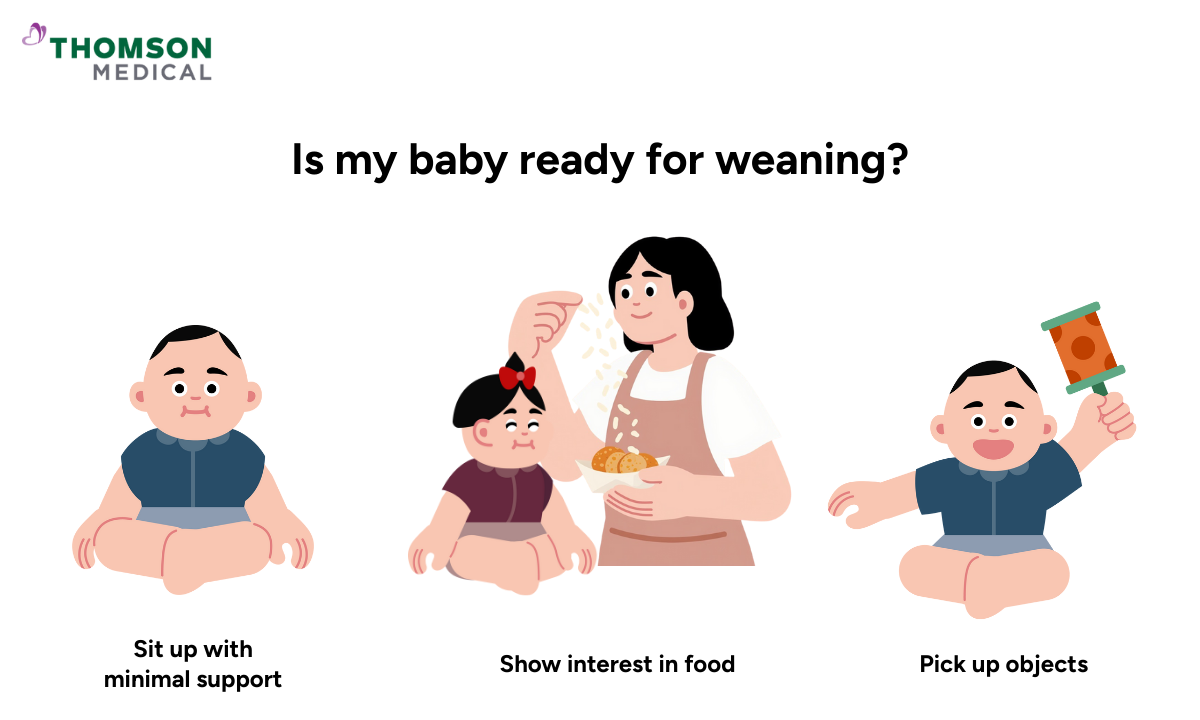
Many babies are ready to start solid foods at around six months. However, every baby develops at their own pace, so it’s often more helpful to look for signs of readiness rather than focusing on age alone.
Your baby may be ready for weaning if they can:
Sit upright with minimal support and hold their head steady
Show interest in food, such as watching you eat or reaching for food
Pick up objects and bring them to their mouth
These skills work together to make eating possible. Good core strength allows your baby to sit upright safely, while hand-to-mouth coordination lets them bring food (and toys) to their mouth.
Weaning happens in stages, with different foods and textures introduced over time as your baby grows. If you’re unsure, your doctor can help assess your baby’s individual development.
Our ParentCraft trainers
Loading...
Stage 1: Starting solids (around 6 months)
When starting solids, sit your baby upright in a highchair and eat together when possible. Babies learn by watching you, and seeing you eat helps them understand that mealtimes are a shared experience.
What to offer at 6 months
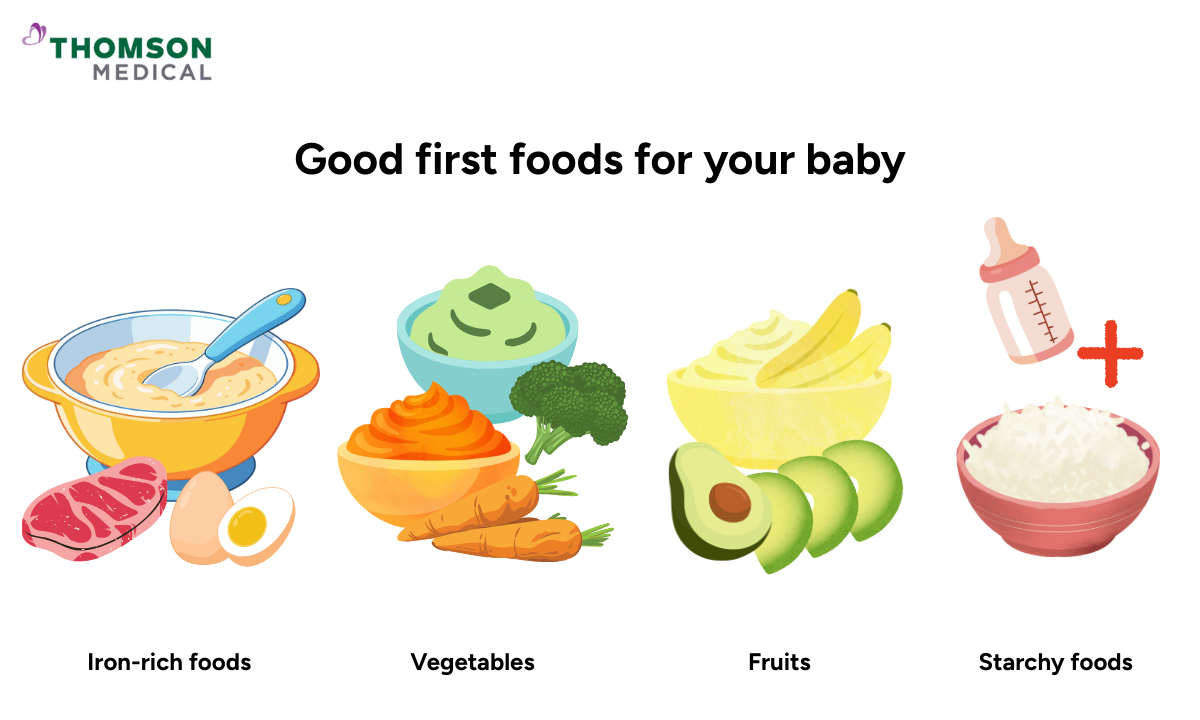
Begin with simple and single-ingredient foods. From six months onwards, the iron stores your baby was born with start to reduce, making iron-rich foods a priority alongside other first foods.
Good first foods include:
Iron-rich foods (essential for brain development):
Puréed meat or poultry
Mashed lentils or beans
Well-cooked egg yolk, mashed
Iron-fortified baby cereal mixed with breast milk or formula
Vegetables (provide vitamins and minerals):
Mashed or puréed carrot
Sweet potato
Broccoli or cauliflower
Fruits (natural sweetness and vitamin C):
Mashed banana
Cooked puréed apple or pear
Avocado
Starchy foods (energy for growth):
Baby rice mixed with your baby's usual milk
Mashed potato
You can mix the foods with your baby's usual milk to create a familiar taste and smoother texture. Vegetables can also be cooked until soft enough to mash easily with a fork, making them easier for your baby to manage.
How much to expect
As your baby is learning to eat, it is normal if your baby might only take a few teaspoons of solid food at first. Offer 1-2 tablespoons of food and let your baby's interest guide you. Even small tastes help them become familiar with new flavours and textures.
Don't worry if your baby pushes food out at first. This often happens as they learn to move food from the front to the back of their mouth. Even babies who are ready for solids need time to master this new skill.
To help spot any reactions, keep offering the same food for 2-3 days before introducing something new. This makes it easier to identify the cause if your baby develops a rash, upset stomach, or other symptoms.
Stage 2: Progressing to more texture (7-9 months)
At this stage, many babies are ready to explore more texture and variety. Move from smooth purées to mashed foods with soft lumps and then to minced textures. This gradual progression helps your baby learn to move food around their mouth and become familiar with different consistencies.
Offer soft finger foods they can pick up themselves, like cooked pasta shapes, soft fruit pieces, or strips of toast. This encourages self-feeding skills and hand-eye coordination.
Increasing meal frequency
Gradually increase to two or three meals a day. You can start combining foods and introducing a wider range of flavours.
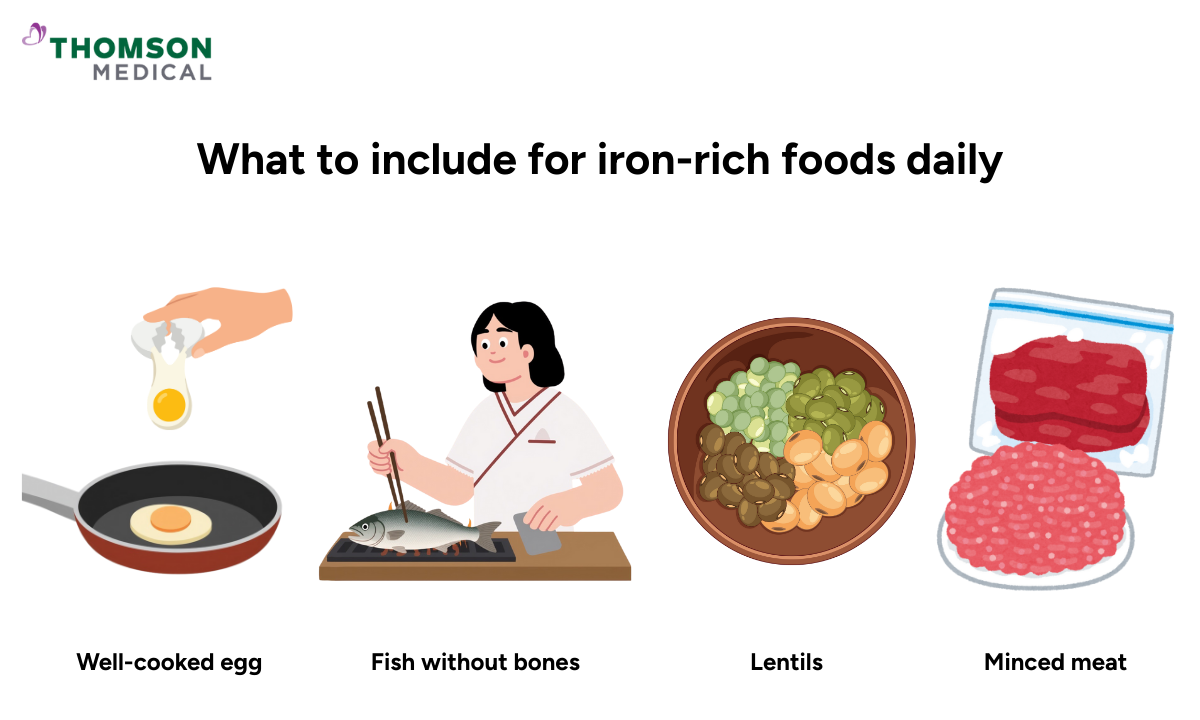
Continue including iron-rich foods daily:
Well-cooked egg
Fish without bones
Lentils
Minced meat
You may notice your baby starting to show preferences, which is completely normal. Respect these while you continue to offer a variety of food. Keep offering foods they've refused before. Your baby's tastes change, and it can take 10-15 attempts before your baby accepts something new.
Stage 3: Moving toward family foods (9-12 months)
Your baby is becoming more independent. They can roughly mash food and are developing their pincer grip to pick up smaller pieces. Aim to offer three meals a day plus one or two healthy snacks.
Include your baby in family mealtimes where possible. They can eat modified versions of what the family eats, but avoid adding salt or sugar. Eating together helps your baby learn by watching you and supports positive mealtime habits.
The transition from milk
By their first birthday, your baby may be getting most of their nutrition from solid foods, with milk providing the rest. They might drop from 4 to 5 milk feeds to 2 to 3 per day as they eat larger portions of solid foods.
This shift is natural. By 12 months, many babies naturally eat more solid foods and rely less on breastfeeding or bottle-feeding
Supporting your baby from purées to family foods requires careful planning and safe feeding practices. You may contact us to learn more about weaning at Thomson ParentCraft Centre, where parents receive hands-on guidance for introducing solids and how to structure mealtimes.
When to introduce allergenic foods
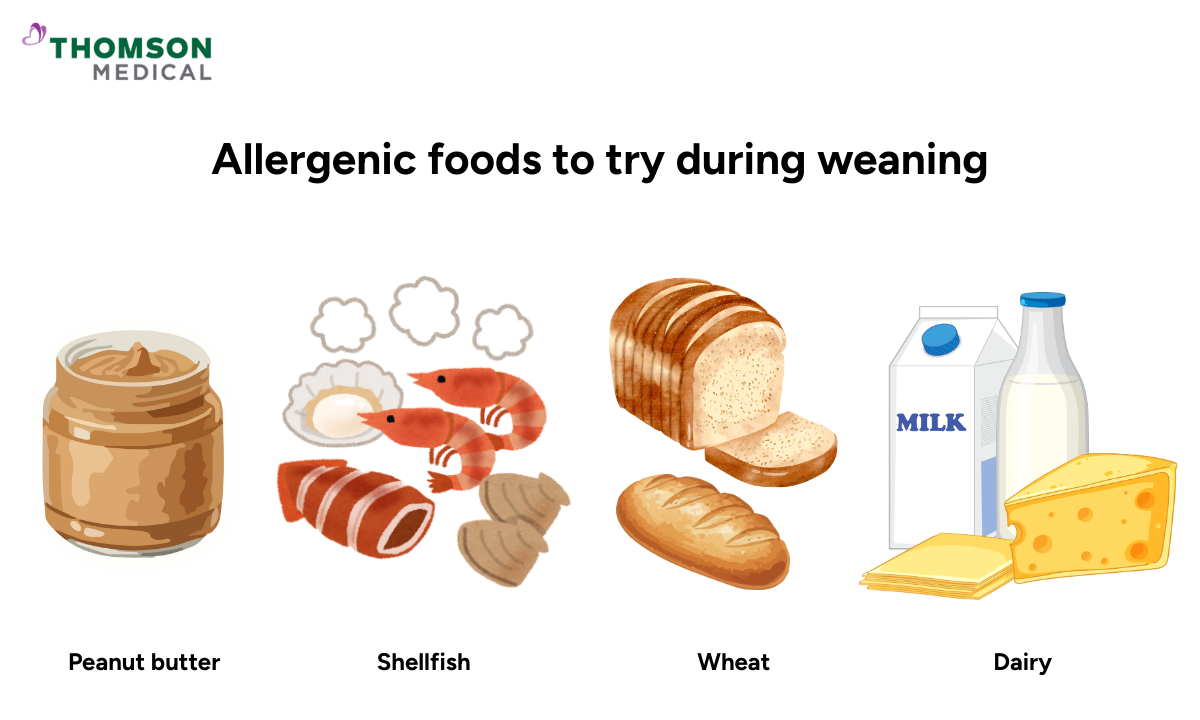
You can introduce common allergenic foods from around six months. Introduce them one at a time in small amounts so you can watch for any reactions over the following 2 or 3 days.
Allergenic foods you can try:
Eggs
Finely chopped nuts
Fish
Shellfish
Wheat
Dairy
There's no need to delay these foods unless your doctor advises otherwise. Early introduction may actually help reduce the risk of developing allergies.
If your baby has eczema or a family history of allergies, speak with your doctor before introducing these foods.
When to offer water to your baby
You can begin offering your baby small sips of water with meals from around six months. Use a free-flow cup or open cup rather than a bottle. This helps your baby learn how to sip and supports healthy tooth development.
Your baby doesn't need large amounts of water at this stage. A few sips with meals is enough. Avoid fruit juice and sugary drinks, as these can damage teeth and may reduce your baby’s appetite without providing the nutrition they need.
What are the foods to avoid during weaning?
While many foods become safe as your baby develops, there are some foods that have risks and should be avoided throughout the first year.
Avoid feeding your baby with:
Honey (before 12 months):
Can contain spores that produce toxins in a baby's immature digestive system, potentially causing a serious illness
Salt and sugar:
Keep it to a minimum in your baby's food.
Your baby's kidneys cannot process excess salt, and early sugar exposure may create preferences for overly sweet foods.
Whole nuts:
Can pose choking risk and should be avoided until at least five years of age
Always supervise your baby while eating. Gagging is common and normal while your baby learns to eat food. They might cough or push food forward with their tongue. This reflex protects them.
But choking is silent and can be more serious. Choking may make your baby unable to cough or make noise and may turn them blue. If your baby appears distressed or starts turning blue, seek immediate help.
Starting solids can feel overwhelming, especially when your baby refuses foods or eats very little at first. This is part of the process. Most babies take several weeks to show real interest in solid foods, and some take months. Give yourself and your baby time to learn together.
Ensuring your baby’s safety and nutrition during the first year is crucial. You can consider requesting an appointment with Thomson Medical to consult our specialists at the Thomson ParentCraft Centre about avoiding high-risk foods and managing mealtime challenges effectively.
FAQ
When is my baby ready to start weaning?
Most babies show signs of developmental readiness around 6 months. Your baby's digestive system and oral motor skills need to be developed enough to handle foods. Look for these indicators:
- Sitting up with minimal support in a high chair
- Showing interest in food
- Pick up things and bring it to their mouth
- No longer automatically push food out with their tongue
There’s no need to rush or aim for perfection, as weaning is a learning process for both you and your baby. Trust your baby’s cues, move at their pace, and remember that milk remains an important part of their diet during this time.
What are the best first foods to offer?
Good first foods include soft vegetables like steamed green beans or sweet potato, mashed banana, and well-cooked rice. Offer iron-rich foods such as puréed meat or zinc-fortified grains because babies' iron stores deplete around 6 months.
Should I worry about food allergies?
Current guidance suggests introducing potential allergens early. Foods like eggs, nuts and peanuts (ground or butter form only), fish, and dairy can be introduced from 6 months. Introduce new foods one at a time to spot allergic reactions like rashes, vomiting, or breathing difficulties. Consult your health visitor if you have a family history of food allergies.
What foods should I avoid?
Never give whole nuts and peanuts, raw carrots, or hard foods that could choke your baby. Avoid raw shellfish, mould-ripened soft cheeses, honey (until 12 months), and foods with added salt or sugar. Always refrigerate leftovers promptly and never reheat more than once.
How can I encourage self-feeding?
Self-feeding promotes independence and develops motor skills. Offer finger foods like soft fruit, toast strips, or well-cooked pasta. A baby spoon with a soft tip helps little hands manage. Eating together during family meals lets your baby observe and copy behaviours.
How do I wean off breastfeeding while introducing solids?
Breast milk remains your baby's main source of nutrition during early weaning, with solid food serving as complementary food. As your baby gradually increases their intake of solids between 6 and 12 months, they'll naturally nurse less frequently.
When should I seek professional help?
If your baby consistently refuses food, gags excessively beyond the first weeks, or you're concerned about their nutritional needs, speak with your health visitor. A child nutritionist or paediatric professional can provide tailored advice, especially for babies with medical conditions or severe food allergies.
The information provided is intended for general guidance only and should not be considered medical advice. For personalised recommendations and tailored advice based on your unique situations, please consult a specialist at Thomson Medical. Request an appointment with Thomson Medical today.
References:
Lessa, A., Garcia, A. L., Emmett, P., Crozier, S., Robinson, S., Godfrey, K. M., & Wright, C. M. (2020). Does early introduction of solid feeding lead to early cessation of breastfeeding? Maternal and Child Nutrition, 16(4), e12944. https://doi.org/10.1111/mcn.12944
World Health Organization: WHO. (2019, December 20). Complementary feeding. https://www.who.int/health-topics/complementary-feeding
For more information, contact us:
Thomson ParentCraft Centre
Thomson Breast Centre
Request an Appointment