

Receiving a negative IVF result may be disheartening, particularly given the physical demands, time commitment and emotional investment involved in treatment. In the days after an unsuccessful cycle, you may notice physical changes as the effects of fertility medications wear off, alongside a range of emotional responses. Understandably, this may leave you wondering what will happen to your body next.
What does a failed IVF mean?
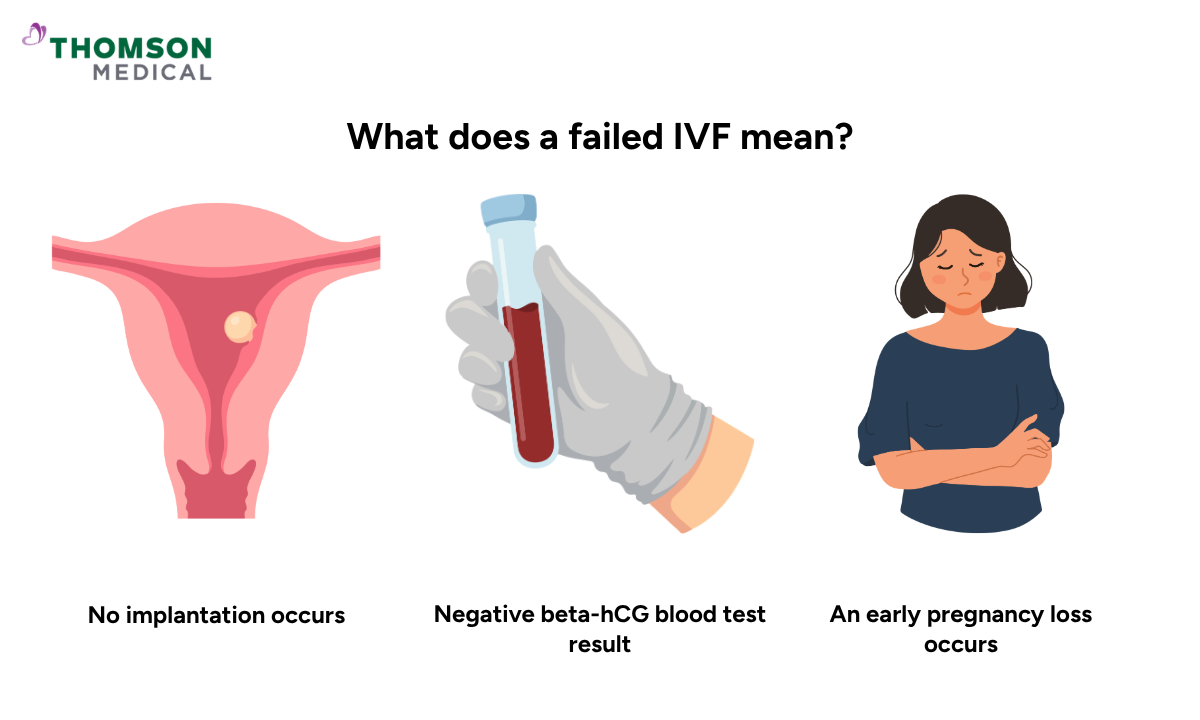
A failed in vitro fertilisation (IVF) refers to a cycle that does not lead to a pregnancy. An IVF cycle might be considered unsuccessful for several reasons:
No implantation occurs:
When an embryo is transferred into the womb, it does not attach to the uterine lining and begin developing.
Negative beta-hCG blood test result:
After embryo transfer, a blood test is used to measure beta-human chorionic gonadotropin (beta-hCG), a hormone produced in early pregnancy. A negative result means the test has not detected a pregnancy.
An early pregnancy loss occurs:
Sometimes, a pregnancy test is initially positive, but the pregnancy ends very early, which doctors may describe as a chemical pregnancy or early miscarriage. This situation might be caused by several factors, such as chromosomal abnormalities.
An unsuccessful IVF cycle might be emotionally difficult, particularly due to the time, effort, and hope involved in the fertility treatment. However, it is important to remember that a negative outcome is not the result of anything you or your partner did wrong.
Although IVF may facilitate fertilisation and embryo development, there are many factors that affect whether a pregnancy occurs, and no treatment could guarantee success.
How common is an unsuccessful IVF cycle??
A negative IVF outcome happens to many couples, and this situation is not that uncommon. In Singapore, the outcomes of assisted-reproductive technology (ART) treatment, including IVF, vary among women with different ages.
For example, the Ministry of Health data from 2017 to 2021 showed that 24% of ART treatment cycles among women below 30 led to a birth. The figure was slightly lower, around 22%, for women aged 30 to 34. It then declined to around 17% among women aged 35 to 39 and about 6% among women aged 40 and above.
These figures show that the likelihood of a birth per cycle varies considerably with age. Therefore, some couples may be likely to need more than 1 IVF cycle to achieve a successful pregnancy.
Our fertility doctors in Singapore
Loading...
What happens to your body after failed IVF?
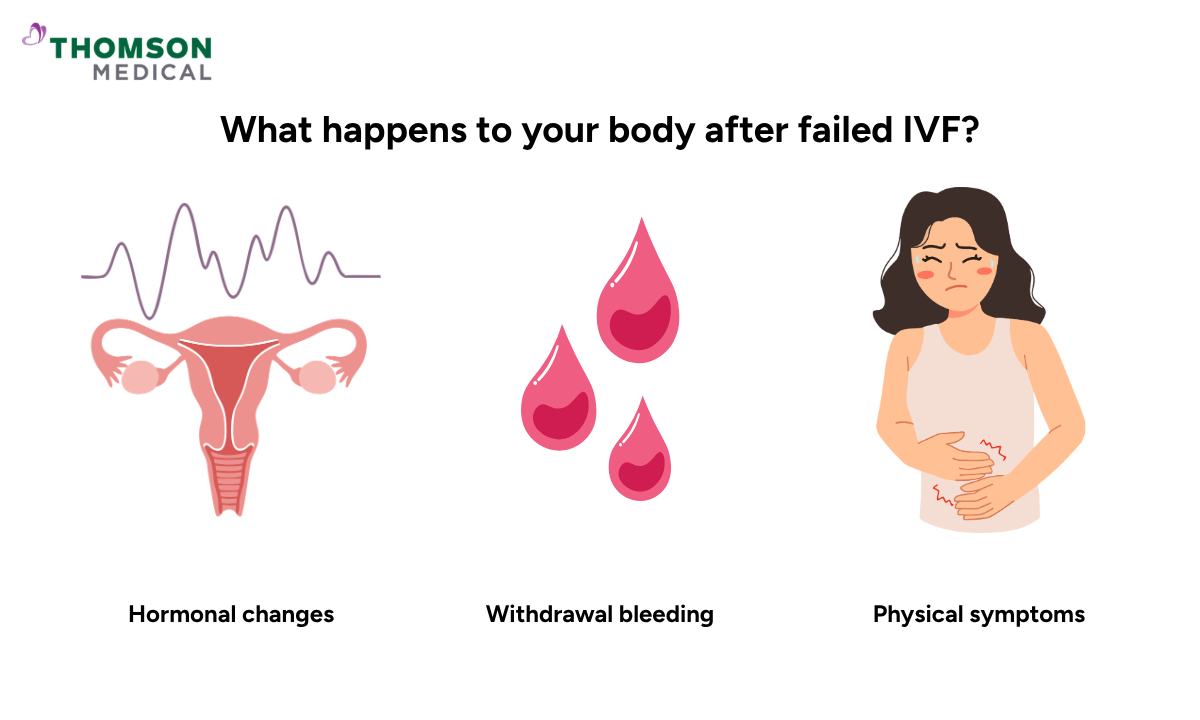
After an unfavourable IVF outcome, you may notice physical and emotional changes over the following days or weeks. These may vary depending on the medication, treatment stage, and your individual circumstances.
Hormonal changes
After confirming that your cycle does not result in a pregnancy, your doctor might advise you whether and when to stop progesterone or other fertility medications. As medication levels fall, your body gradually returns towards its usual menstrual pattern.
During this time, you may feel:
More emotional than usual
Physically uncomfortable
Mood changes
Low energy
Mild cramps
These symptoms might feel similar to premenstrual symptoms and may improve as your body recovers.
Withdrawal bleeding
If your doctor advises you to stop progesterone support, your progesterone levels may fall and the uterine lining starts to shed. This situation may cause withdrawal bleeding, which is vaginal bleeding that happens after you stop taking hormone medication. This bleeding may look and feel similar to a menstrual period.
Withdrawal bleeding may start within a few days of stopping progesterone medications. It may be lighter or heavier than your usual period and may be accompanied by mild cramps.
Physical symptoms
Some physical symptoms from treatment may continue while your body recovers. This is because the effects of fertility medications and hormone support will take time to settle.
You may experience:
Bloating
A feeling of fullness in the lower abdomen
Mild cramps
Breast tenderness
Tiredness
These symptoms may gradually improve over the following days or weeks.
Besides the hormonal and physical impacts mentioned above, navigating an unsuccessful cycle may also carry a significant emotional weight. These emotional feelings may appear straight away or fluctuate over time.
You may give yourself time to process your IVF outcome before deciding what to do next. If you need emotional support, consider speaking with your partner, family, or friends. But if you experience that the emotional grief or stress response is too overwhelming, you may consider getting help from a psychological counsellor.
If you or someone close to you has been experiencing a negative IVF outcome and is facing physical symptoms that disrupt daily activities, visit a fertility specialist to examine the symptoms and check whether it needs further assessment. Schedule an appointment at Thomson Fertility Singapore.
How to take care of yourself after a negative IVF result
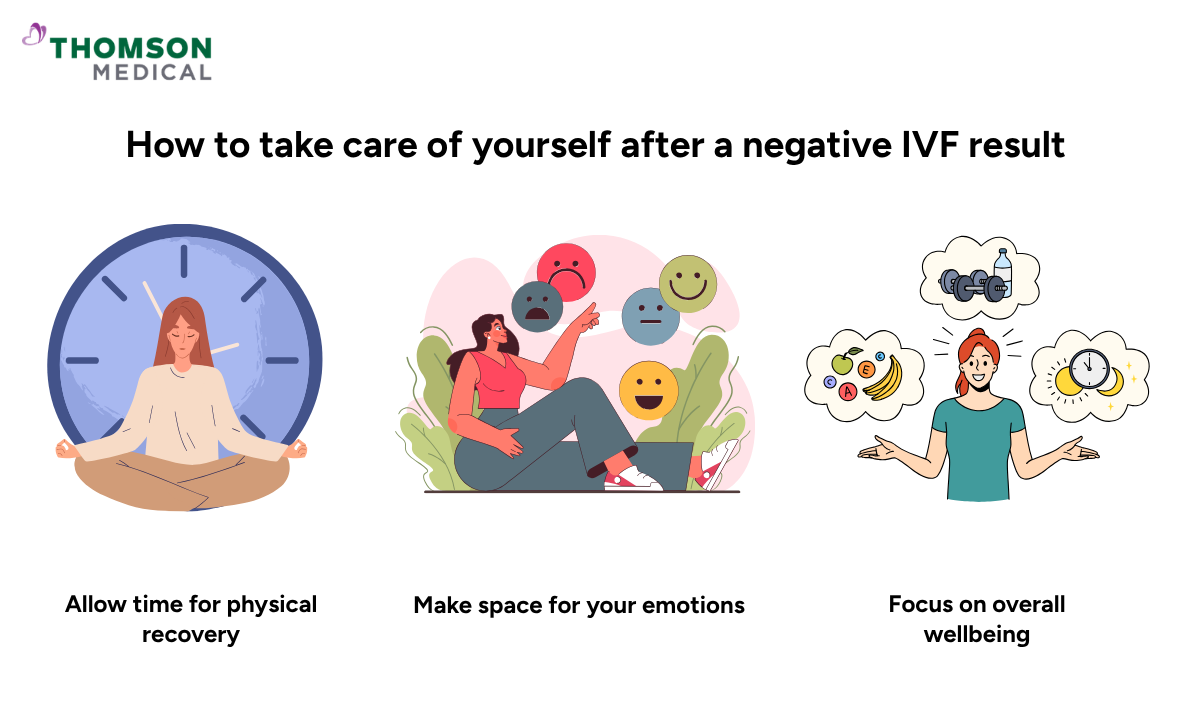
The response and recovery process after facing a negative outcome from a fertility treatment may vary, but you may find it helpful to focus on several things:
Allow time for physical recovery:
Rest if you feel tired and return to your usual routine at a pace that feels manageable.
Make space for your emotions:
If you are experiencing grief, disappointment, or other strong emotions, talk to your partner, a family member, friend, or a professional who could help you to feel more at ease and support your mental health.
Focus on overall wellbeing:
Eat regular balanced meals, stay hydrated, get adequate sleep, and return to physical activity when you feel ready and your clinic says it is safe.
If you have further questions about your IVF outcome, you may also arrange a follow-up appointment with your fertility doctor to discuss your outcome and the appropriate next steps.
What factors may affect your IVF outcome?
Several factors may affect how IVF treatment progresses and the likelihood of conception, such as:
Age:
As age increases, the number and quality of eggs generally decline. Sperm health, including sperm count, movement, and quality, may also change with age.
These age-related changes might affect fertilisation, embryo development, and implantation.
Ovarian reserve:
Ovarian reserve refers to the estimated number of eggs remaining in the ovaries. A reduced ovarian reserve often means fewer eggs collected per cycle, which affects how many embryos are available for transfer or freezing.
Cause of infertility:
Conditions such as blocked or damaged fallopian tubes and severe male factor infertility may make it more difficult for the egg and sperm to meet and fertilise.
Uterine health:
Lifestyle and general health:
Factors such as body weight, smoking, alcohol intake, sleep, and overall health may affect fertility and pregnancy health.
Healthy lifestyle changes might support your general wellbeing but could not guarantee a particular IVF outcome.
Sperm, egg, and embryo quality:
Sperm quality may affect whether fertilisation occurs and how an embryo develops.
Egg quality may influence whether an embryo develops normally, so eggs with chromosomal abnormalities may be less likely to produce an embryo that implants or continues to develop.
Meanwhile, embryo quality may also affect the likelihood of implantation and pregnancy.
Information you gained from a previous cycle also provides clinical insight, which helps your fertility specialist understand how your ovaries responded to stimulation and how your embryos developed.
If you and your partner have been experiencing an unfavourable IVF outcome and are unsure of your appropriate next steps, consider a consultation with a fertility specialist. Schedule an appointment at Thomson Fertility Singapore.
FAQ
When can you try another IVF cycle?
The timing of another IVF cycle depends on your treatment plan, recovery, and the type of treatment planned next. Some women may be able to proceed after their next period, while others may need longer.
Your fertility specialist can help you decide when it is appropriate to try again. They may consider factors such as whether you are planning another egg-retrieval cycle or a frozen embryo transfer, the results of your previous cycle, and whether you have any ongoing symptoms or complications.
What might be done differently in another IVF cycle?
Your fertility specialist may review what happened at each stage of treatment and discuss whether any changes may be appropriate. This could include adjusting fertility medication, reviewing fertilisation and embryo development, or planning the next embryo transfer differently.
In some cases, your fertility specialist may recommend continuing with a similar treatment plan. This may be appropriate if the review does not identify a specific concern with the medication plan, egg retrieval, fertilisation, embryo development, or embryo transfer technique.
Should you change your lifestyle before attempting another IVF cycle?
You may not need to make drastic lifestyle changes before another IVF cycle. However, you can use this time to focus on habits that support your overall health, such as stopping smoking, limiting or avoiding alcohol, eating regular balanced meals, and staying physically active.
While these changes cannot guarantee a successful IVF outcome, they may help to support your health while you prepare for treatment.
Is it possible to get pregnant naturally if your IVF has not resulted in pregnancy?
Natural conception may still be possible after an IVF cycle that did not result in pregnancy. It is because that previous IVF cycle does not affect the outcome of a future natural conception. However, your individual likelihood depends on the reason IVF was recommended, your age, whether you ovulate, tubal health, and sperm factors.
The information provided is intended for general guidance only and should not be considered medical advice. For personalised advice based on your conditions,schedule an appointmentwith Thomson Medical.
For more information, contact us:
Thomson Fertility Centre
- Paragon: 6252 7766
- Novena: 6399 3758, 8811 0358 (WA)
Dr Tan Heng Hao
Obstetrics & Gynaecology (O&G)
Thomson Fertility Singapore (Novena)
English
Great Eastern, Prudential x TMC
