

Your embryo transfer is complete, and now comes the part many find hardest: the two-week wait until your pregnancy test date. With nothing to do but wait, it’s natural to read into every feeling and wonder if it means something.
Here’s a day-by-day breakdown of what to expect after an IVF embryo transfer, including the symptoms that are common during this time, the activities to avoid, and the signs that may require a doctor's visit.
What is an embryo transfer?
During an in vitro fertilisation (IVF) embryo transfer, your fertility doctor places an embryo into your uterus (womb) using a catheter (a thin and flexible tube). This procedure may take place in the same cycle as egg retrieval or later as part of a frozen embryo transfer cycle.
In a fresh embryo transfer, your doctor may perform the transfer procedure around 3 to 5 days after egg retrieval, often at the blastocyst stage. Meanwhile, if they use a frozen embryo, the transfer is usually scheduled at a later time, when the uterine lining is ready and the timing is matched to the embryo’s developmental stage.
An embryo transfer procedure usually takes around 10 to 15 minutes and is commonly performed without anaesthesia. Although you may not experience any pain, experiencing some mild discomfort may still be expected. Once the embryo is transferred, you will wait for it to implant into the uterine lining.
What happens immediately after embryo transfer?
After the embryo transfer, you may rest briefly at the fertility clinic or hospital before going home on the same day. You may usually return to light, everyday activities the same day after the procedure, unless your doctor advises otherwise.
Some women may worry that the embryo could fall out after an embryo transfer. However, this is unlikely to happen as a result of normal daily activities. Since the embryo is placed inside the womb, walking, using the toilet, or changing position in bed may not cause it to fall out.
What are the common symptoms after embryo transfer?
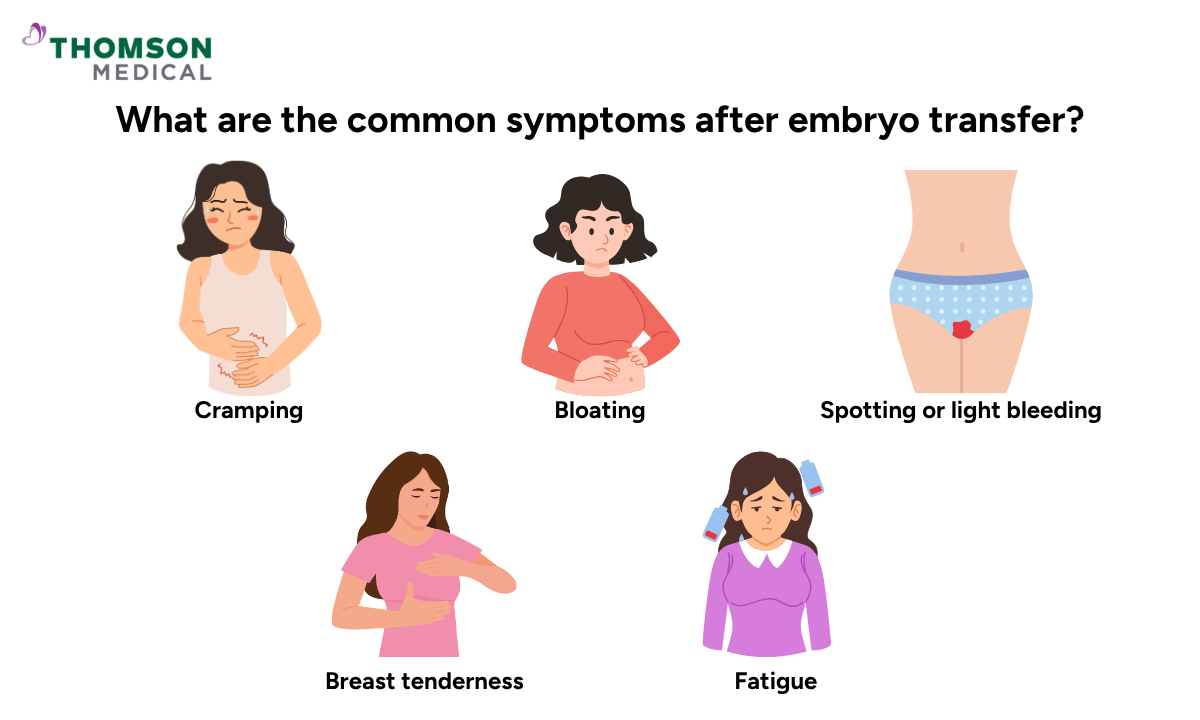
After an embryo transfer, you may notice some symptoms, which may occur due to progesterone hormone or other fertility medications used during IVF, the transfer procedure, or changes during the treatment cycle. Here are the common symptoms after IVF embryo transfer:
Mild cramping: you may have cramps similar to menstrual cramps after the procedure or while taking hormonal medication.
Bloating: your abdomen may feel full or tight due to progesterone, which could contribute to bloating.
Spotting or light bleeding: you may experience a small amount of pink or brown spotting, or light bleeding, after the procedure or due to hormonal changes.
Breast tenderness: your breasts may feel swollen or sensitive because of progesterone or other hormonal medication.
Fatigue: hormonal medication, disrupted sleep, and emotional stress may make you feel more tired than usual.
However, you may also experience no symptoms after the IVF embryo transfer. This situation is common and does not indicate whether your embryo transfer will result in a pregnancy.
If you have noticed spotting or other symptoms after your IVF embryo transfer that worry you, visit a doctor for a medical examination. Schedule an appointment with Thomson Medical.
Our fertility doctors in Singapore
Loading...
What to expect after embryo transfer day by day
After the embryo transfer, you will wait until your scheduled pregnancy test. This period is also known as the two-week wait, although the exact timing varies between treatment protocols. The purpose of this waiting period is to allow a pregnancy hormone level to increase and be reliably measured.
What happens after the transfer depends on the stage of the embryo when it was transferred, your treatment protocol, and individual variation. However, in general, here is what you may expect:
Days 1-2
During this period, the embryo continues its early development after transfer. Depending on its stage of development at transfer, it may begin the early stages of implantation, such as making contact with and attaching to the uterine lining. At this stage, you may not notice any symptoms.
Days 3-5
On days 3-5, the embryo may be preparing to implant in the uterine lining. During this time, some women may experience mild cramping, while others feel no changes at all.
Days 6-8
Depending on the embryo stage at transfer, implantation-related changes may occur during this period, but the timing may vary. At this period, you may experience light spotting or mild cramps, but these may be related to the transfer procedure or hormonal medication.
Days 9-14
If implantation has occurred, your body may begin producing increasing amounts of human chorionic gonadotropin (hCG), the hormone detected by pregnancy tests. During this period, some women may experience symptoms related to implantation, such as fatigue, breast tenderness, or mild nausea.
However, these symptoms may also be caused by progesterone or other fertility medications, so they may not reliably indicate pregnancy.
How to take care of yourself after embryo transfer
While you could not know the outcome yet during the two-week wait, you may try to focus on supportive measures to help you feel more comfortable.
Rest and activity:
Instead of having a strict bed rest, your doctor may encourage you to do light activities, such as short walks.
Diet and hydration:
Focus on a balanced and nourishing diet which contains fruits and vegetables, lean protein, whole grains, and healthy fats.
Staying hydrated is equally important if you recently experienced ovarian stimulation or feel bloated.
Medications:
Continue taking all prescribed medications, especially progesterone support and oestrogen. Do not stop the medications unless instructed by your doctor.
Emotional wellbeing:
The two-week wait period may bring a mix of hope, worry, and uncertainty. To help look after your emotional wellbeing, you may talk to partners, family, or friends and practise some relaxation techniques.
What to avoid after embryo transfer
Besides trying to practise the tips mentioned above to take care of yourself, your doctor may also advise you on what you need to avoid or limit. These may include:
Strenuous exercise, high-impact workouts, or activities that cause discomfort, particularly if your ovaries are enlarged after egg retrieval.
Hot tubs and saunas, because prolonged exposure to high heat may lead to overheating (hyperthermia), which may raise concern if pregnancy occurs. However, a warm bath or shower may be acceptable.
Smoking, alcohol, and recreational drugs, which could affect your general health.
Unapproved medications, because some products may interact with your fertility medications.
Excessive caffeine, as high caffeine intake, especially if you are already pregnant during the wait, may be associated with possible pregnancy risks.
Additionally, it is understandable to look for reassurance while waiting for your test. If online searches or discussion forums increase your anxiety, consider setting limits on how often you check them.
If you experience difficulties related to stress, physical strain, or other aspects during the two-week wait, consider a consultation with a doctor who could provide professional advice. Schedule an appointment with Thomson Medical.
When should you take a pregnancy test?
During the two-week wait, your doctor will usually arrange an hCG blood test around 9-14 days after the transfer. This test measures the level of hCG, a hormone produced after implantation.
If the first blood test is positive, your fertility care team may repeat it about 48 hours later to assess how the hCG level is changing.
Additionally, your doctor may also advise you to take home pregnancy tests at certain times. However, this test has limitations, as it relies on detecting the hCG level in urine. So, if you take the test before enough pregnancy hormones have built up, the result may be negative even if implantation has occurred, which is called a false negative.
If your IVF cycle included an hCG hormone trigger injection before egg retrieval, this hormone medication may still be detectable in your body for some time. Therefore, if you take a home test too soon, it may detect the injected hCG rather than hCG produced by a pregnancy, resulting in a false positive.
When to visit a doctor
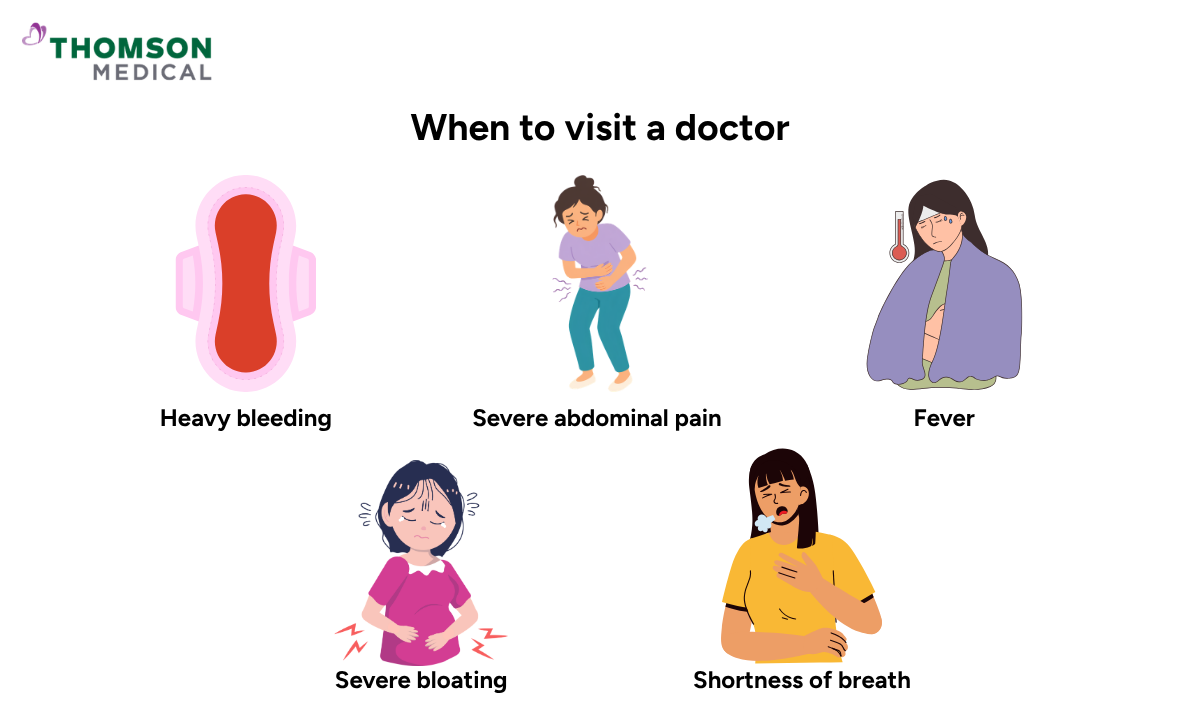
After the embryo transfer, you may experience some common symptoms, which usually do not require medical assessment. However, there are some symptoms that may indicate more serious issues. Visit a doctor if you experience:
Heavy bleeding (it may appear like a period or heavier)
Severe abdominal pain
Fever
Severe bloating
Shortness of breath
If you experience any symptoms that feel unusual, concerning, and disrupting your daily life after an IVF embryo transfer, visit a doctor so they could examine what may cause it and whether you may need further assessment.Schedule an appointment with Thomson Medical.
FAQ
Can stress affect IVF outcome?
Normal levels of stress are unlikely to affect your IVF treatment outcome. Whether IVF results in a pregnancy are more likely affected by factors such as embryo development, uterine factors, age, and the underlying reason for infertility. However, it is still recommended to manage stress for your overall wellbeing after an IVF embryo transfer.
How many days should you rest after an embryo transfer?
You could rest on the day of the transfer, but extended bed rest may not be necessary, as it may not affect the transferred embryo or your IVF outcome. You can resume normal light activities the next day after the embryo transfer.
How can you help your embryo attach to the womb?
While implantation is largely beyond your control, you can support your body by:
- Taking medications as prescribed
- Avoiding harmful substances
- Eating well and staying hydrated
- Managing stress
- Getting enough rest
What is the recommended position to sleep after embryo transfer?
There is no recommended sleeping position after an embryo transfer. You may sleep on your side, back, stomach, or other position that feels comfortable for you.
However, if you feel bloated, try using extra pillows for support. You can place a pillow between your knees when sleeping on your side or under your knees when lying on your back.
The information provided is intended for general guidance only and should not be considered medical advice. For personalised advice based on your conditions,schedule an appointmentwith Thomson Medical.
References
Soltani, S., Salari-Moghaddam, A., Saneei, P., Askari, M., Larijani, B., Azadbakht, L., Esmaillzadeh, A. (2023). Maternal caffeine consumption during pregnancy and risk of low birth weight: a dose-response meta-analysis of cohort studies. Critical reviews in food science and nutrition, 63(2), 224–233. https://doi.org/10.1080/10408398.2021.1945532
For more information, contact us:
Thomson Fertility Centre
- Paragon: 6252 7766
- Novena: 6399 3758, 8811 0358 (WA)