

The days after an IUI can come with a lot of uncertainty. You may be wondering how your body is responding or whether the medications you’re taking – such as oestrogen – are helping. Understanding why oestrogen is used and when to stop it can bring a bit more clarity during this sensitive stage.
What is IUI?
Intrauterine insemination (IUI) is a fertility treatment where your doctor places sperm directly into your uterus when you're ovulating.
Think of it as giving the sperm a head start. Normally, sperm has to travel all the way through your cervix to meet the egg in your fallopian tubes. IUI shortens that journey and gives you a better chance at fertilisation. Your doctor might suggest IUI if you're dealing with mild male factor infertility, unexplained infertility, or ovulation disorders.
Our IUI specialists in Singapore
Loading...
Why you might take oestrogen after IUI
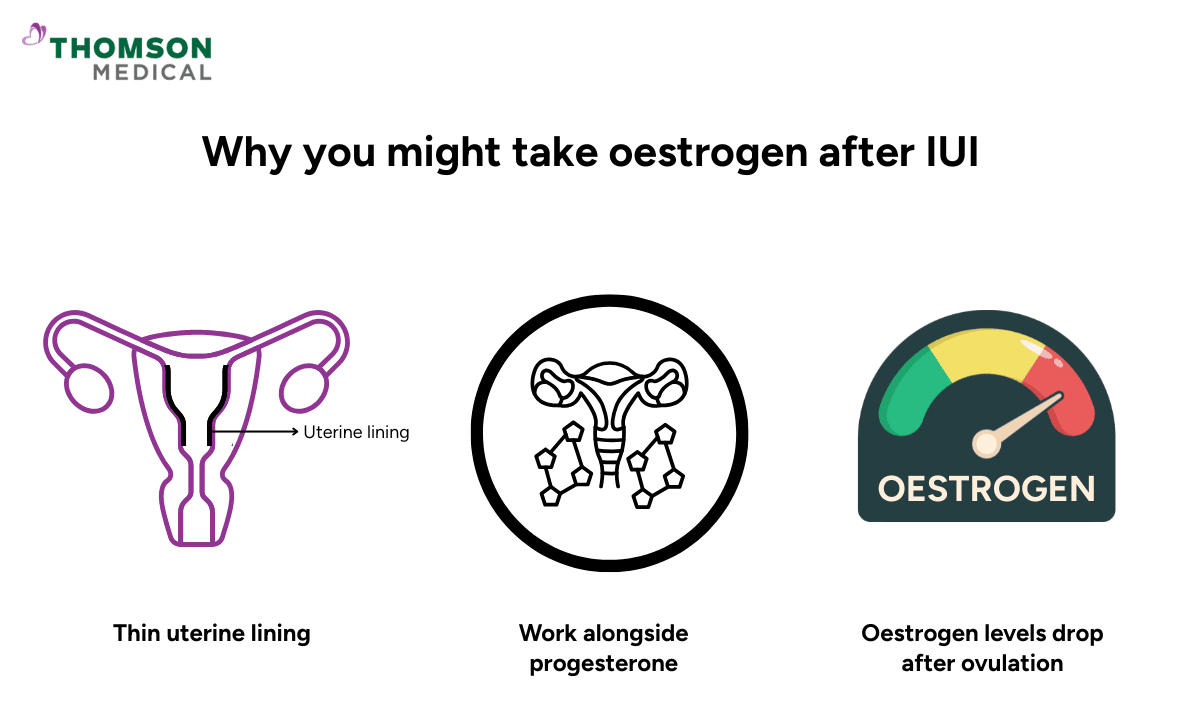
Not everyone undergoing IUI needs oestrogen. When it’s prescribed, it’s usually tailored to what your body needs to support implantation. The main reasons include:
If your uterine lining is thin:
You need a uterine lining thick enough for an embryo to implant. If it measures less than 7–8 mm on an ultrasound, your doctor can prescribe oestrogen to help thicken it.
To work alongside progesterone:
Some fertility clinics add oestrogen to progesterone support because they believe this combination better mirrors what happens naturally in early pregnancy.
When oestrogen levels drop significantly after ovulation:
After ovulation, oestrogen levels naturally decrease. If this drop is quite significant in your case, doctors may add oestrogen supplements along with progesterone.
When you will start taking oestrogen
The timing of oestrogen depends on your individual situation. If your uterine lining is thin, your doctor will usually start it early in your cycle, even before ovulation, to give your lining enough time to build up properly.
When you need luteal phase support (the time after ovulation when your body prepares for pregnancy), your doctor usually starts oestrogen alongside progesterone shortly after ovulation or immediately following your IUI procedure.
Your doctor will tailor the dosage based on your uterine lining, hormone levels, and how your body responds to treatment.
If you're unsure why oestrogen was prescribed for your IUI cycle, or whether you need it, request an appointment with a Thomson Medical fertility specialist. Our specialist can review your ultrasound findings, hormone levels, and treatment plan and provide guidance on the appropriate use of medication during your cycle.
When to stop taking oestrogen
When to stop oestrogen really depends on whether you’re pregnant or not, and your doctor will always guide you based on your situation.
If you’re not pregnant:
You’ll usually stop taking oestrogen once you get a negative pregnancy test or when your period arrives. Your doctor will let you know exactly when to test and when it’s okay to stop, so you’re not left guessing.
If you’re pregnant:
You’ll typically continue oestrogen until about 8–10 weeks of pregnancy. By then, the placenta has developed enough to take over producing the hormones your body needs to support the pregnancy naturally.
Why is the timing of oestrogen important?
During early pregnancy, your body goes through significant hormonal changes. Stopping oestrogen too early may cause your hormone levels to drop before the placenta is ready to take over. Continuing longer than needed, however, may lead to side effects without added benefit.
Getting the timing right helps protect your early pregnancy while avoiding unnecessary medication. Your fertility doctor will guide you through this process to ensure your body is supported safely.
How will your doctor monitor and adjust your treatment?

Every person is unique, and how your body responds to treatment may be different from anyone else's. Your doctor will monitor your hormone levels and track your progress throughout treatment, adjusting your plan based on what they observe.
If you have questions or concerns about your IUI treatment, request an appointment with a Thomson Medical fertility specialist. Our specialist can review your progress, explain any necessary adjustments, and provide guidance tailored to your situation.
FAQ
What happens if I stop oestrogen too soon after IUI?
If you’re taking oestrogen for luteal phase support and stop too early, it may affect your hormone balance during the critical implantation period. However, since oestrogen supplementation after IUI is not standard practice, the specific risks depend on why you were prescribed it. Always follow your doctor's instructions rather than stopping on your own.
Can too much oestrogen prevent implantation?
Excessively high oestrogen levels could potentially affect implantation, but when prescribed by fertility specialists at monitored doses, this is very rare. Your doctor adjusts your dosage based on your hormone levels and how your body responds.
Is it safe to continue oestrogen after a positive pregnancy test?
In many cases, yes. In fact, it is often necessary. Your body needs continued hormone support until your placenta is fully functional, which happens around 8–10 weeks of pregnancy.
Do I still need progesterone if I'm on oestrogen?
Yes, you do. Progesterone is the primary hormone for maintaining your uterine lining during early pregnancy and is essential for a successful outcome. Oestrogen may work alongside progesterone in some treatment plans, but it does not replace it.
Can oestrogen delay my period after a failed IUI?
Yes, this can happen. Oestrogen, particularly when combined with progesterone, may delay your period after an unsuccessful IUI cycle. You’ll usually start bleeding within a few days after you stop taking both medications.
What are the side effects of oestrogen after IUI?
You might experience bloating, nausea, mood swings, breast tenderness, or headaches. These side effects are generally mild and will resolve once you stop the medication. If you’re concerned about any symptoms, speak with your doctor.
How do I know when to stop all medications?
Only stop your medications when your doctor tells you to. This decision is based on your pregnancy test results, ultrasound findings, and your hormone levels. Never stop on your own without consulting your doctor first.
The information provided is intended for general guidance only and should not be considered medical advice. For personalised recommendations and advice based on your unique situation, please consult a specialist at Thomson Medical. Request an appointment with Thomson Medical today.
References:
Kutlu, T., Özkaya, E., Şanverdi, İ., Devranoğlu, B., İpekçi, C., Konukçu, B., Şahin, Y., & Karateke, A. (2016). The relationship between estradiol-progesterone alterations after ovulation trigger and treatment success in intrauterine insemination cycles. Journal of Turkish Society of Obstetric and Gynecology, 13(2), 56–61. https://doi.org/10.4274/tjod.45656
Riaz, H., Fatima, N., Pathan, S., Memon, M., Ghafoor, A., Chaudhry, S., & Khaliq, M. (2025). Correlation between hormonal modulation and pregnancy outcomes: The impact of estrogen priming and endometrial receptivity in intrauterine insemination. Cureus, 17(6), e85345. https://doi.org/10.7759/cureus.85345
For more information, contact us:
Thomson Fertility
- Paragon: 6252 7766
- Novena: 6399 3758, 8811 0358 (WA)
Thomson Specialists (Women's Health)
Request an Appointment