

Abdominal cramps can come on unexpectedly. You might notice a tightening or aching sensation after a meal, during your period, or even at a time when nothing seems out of the ordinary. While some cramps are mild and pass quickly, others can be uncomfortable enough to interfere with your daily activities.
In many cases, abdominal cramps will naturally settle after a bit of rest and care. Still, it can be difficult to know when discomfort is something you can safely manage at home and when it deserves medical attention.
Understanding what to watch for, when to seek assessment, and which symptoms should not be ignored can help you make calm, informed decisions about your health.
What are abdominal cramps?
Abdominal cramps are a specific type of abdominal pain that comes in waves, tightening and releasing rather than staying constant.
Your abdomen houses many organs, including your stomach, intestines, liver, kidneys, bladder and reproductive organs. Because of this, cramping can come from different sources.
You'll usually experience abdominal cramps as waves that tighten and release, rather than staying the same.
You might feel:
A squeezing or tightening sensation
An aching discomfort
Sharp and intermittent pain
Pressure in your lower stomach
The location of the pain offers important clues. If you're experiencing cramps in the upper abdomen, it might be linked to the stomach or digestive system, while cramps in the lower abdomen may involve the intestines, bladder or reproductive organs.
Paying attention to where your pain is, how intense it feels, and any other symptoms you're experiencing helps you understand what might be causing it and whether you need professional assessment.

Common causes of abdominal cramps
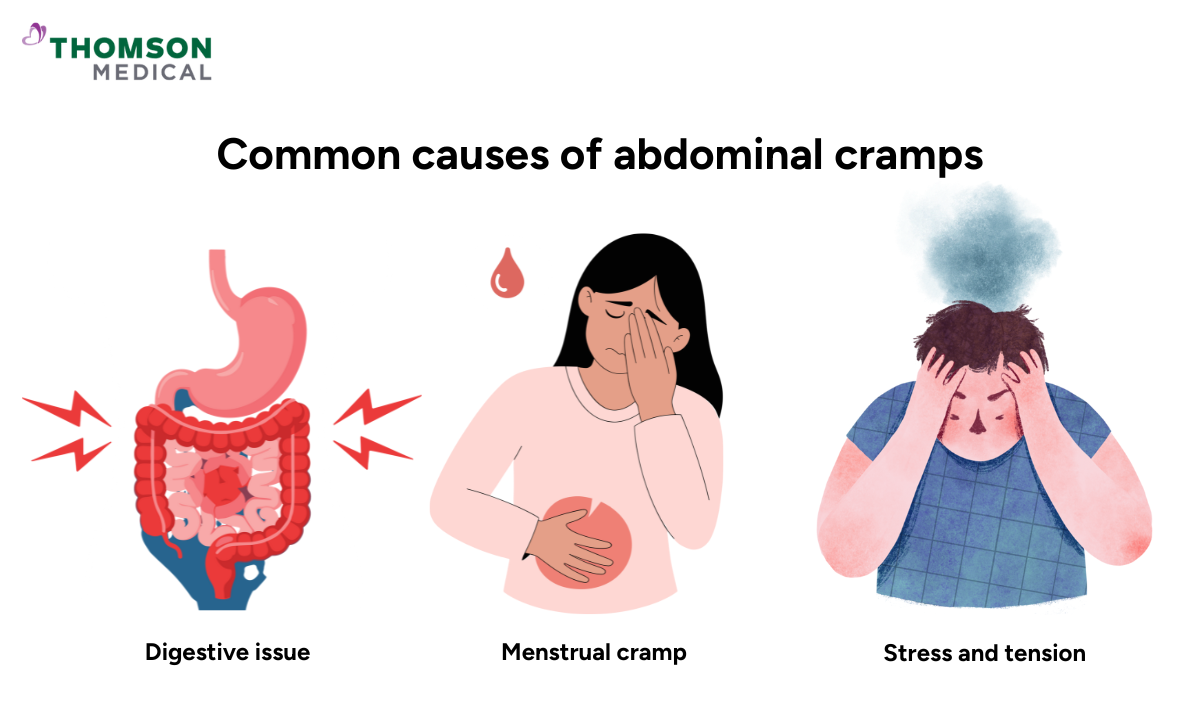
Most abdominal cramps can be managed at home and resolve on their own. Here's what you should know:
Digestive issues:
Gas, bloating and mild constipation can cause temporary cramping.
These usually improve with rest, staying hydrated and adjusting your diet.
Menstrual cramps:
Period pain affects most women at some point in their lives.
Although uncomfortable, normal menstrual cramps often ease with over-the-counter pain relief.
Food sensitivities:
Mild reactions to certain foods can cause cramping that settles within hours.
Common triggers include dairy, spicy foods or high-fibre meals.
Stress and tension:
Your gut responds to stress. Anxiety can cause cramping that eases once you relax.
While abdominal cramps can be uncomfortable, they usually don’t require urgent medical attention. However, if symptoms persist or worsen, it’s best to check with your doctor to identify the cause.
Our urgent care centre specialist
Loading...
When abdominal cramps need urgent care
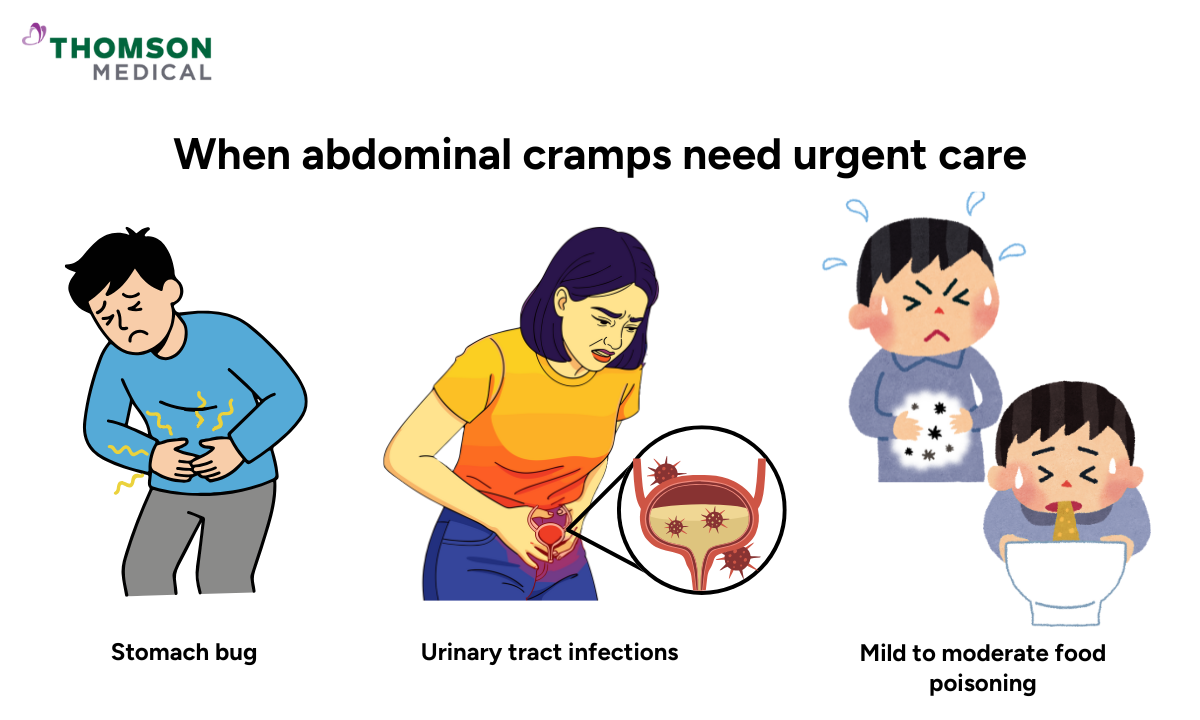
If you’re unsure about your symptoms, it’s always wise to seek medical advice. An Urgent Care Centre (UCC) can provide timely assessment and treatment if you notice any warning signs.
Here are specific situations where a UCC visit makes sense:
Moderate food poisoning
Most food poisoning resolves within 24 hours.
You should consider urgent care when:
Severe cramping that lasts more than 24 hours
Repeated vomiting that makes it hard to stay hydrated
You notice blood in your stool or vomit
You develop a high fever with your symptoms
The doctor can manage your symptoms and watch for complications. Some types of food poisoning need specific treatment, such as antibiotics for bacterial infections, while others need monitoring.
Gastroenteritis
Gastroenteritis, often called a stomach bug, can cause stomach cramps along with vomiting and diarrhoea. Most people feel better with rest and staying hydrated.
However, urgent care is recommended if you:
Cannot keep fluids down for more than 12 hours
Feel dizzy or lightheaded when you stand up
Notice very dark urine or are urinating much less than usual
Still have symptoms after 24 hours
Dehydration can develop quickly, especially in hot weather. At a UCC, the doctor can give you fluids through a drip. This is especially important for older adults and those with other health conditions.
Gastritis
If you have a history of stomach ulcers or gastritis, you’re likely familiar with how your usual symptoms feel.
You should seek urgent care when:
Your upper abdominal cramping becomes much worse than usual
Pain wakes you at night or continues despite medication
You notice dark stools
Ongoing nausea prevents you from eating
Your doctor can adjust your medication, check for complications like bleeding and manage your symptoms while determining if you need further tests.
These conditions respond well to prompt medical attention. UCCs provide same-day assessment and treatment. If you're uncertain whether your symptoms warrant a visit, it's always better to seek advice.
Our gastroenterology specialist
Loading...
Urinary tract infections causing cramping
Urinary tract infections (UTIs) cause burning when you urinate, but they can also lead to lower abdominal cramping.
Consider visiting urgent care if you have:
Cramping pain in your lower abdomen or back
Urgent need to urinate frequently
Burning or pain when passing urine
Fever alongside these symptoms
Without treatment, UTIs can spread to your kidneys, leading to more severe health problems in the future. Your doctor can test your urine, confirm the infection, and prescribe antibiotics. Early treatment prevents complications and helps you feel better faster.
Severe menstrual cramping
Period pain varies from person to person.
However, certain period-related cramping needs medical attention:
Pain so severe you cannot manage normal activities
Cramping that doesn't respond to usual pain relief
Very heavy bleeding requiring pad changes every hour or more frequently
Sudden change in your usual pattern
Cramping between periods
These symptoms might suggest conditions like ovarian cysts, endometriosis or fibroids. Your doctor can check your symptoms, perform an initial assessment and refer you to a specialist if needed.
Our O&G specialist
Loading...
Abdominal cramps in children
Children experience stomach aches often, partly because their digestive systems are still developing and they're more sensitive to dietary changes, stress, or minor infections. Knowing when it's serious can feel challenging.
Consider seeking urgent care for your child when:
Cramping continues on for more than two hours
They refuse all food and fluids
Vomiting continues despite rest
Fever accompanies the cramping
They seem unusually drowsy or difficult to wake
The pain is in one specific area
The urgent care team can assess your child through a gentle physical examination, checking their abdomen for tenderness and asking questions about their symptoms. They'll provide care and determine whether your child needs a specialist. Having your child’s medical records and medication lists on hand helps the medical team provide care more efficiently

FAQ
What's the difference between abdominal cramps and abdominal pain?
Abdominal cramps are a specific type of abdominal pain that comes in waves, tightening and releasing rather than staying constant. Cramping feels like squeezing in your stomach, while other types of abdominal pain might feel like a steady ache, burning or sharp stabbing. Cramps often relate to your digestive system or reproductive organs, where muscles contract and relax.
Can kidney stones cause abdominal cramping?
Yes, kidney stones can cause severe abdominal cramping that comes in waves and spreads from your back to your lower abdomen and groin. The cramping happens when the stone blocks your urine flow and irritates the ureter. Other symptoms you might experience include blood in your urine, nausea and an urgent need to urinate.
Can digestive issues cause cramping that feels like period pain?
Yes, digestive issues like constipation, bloating or gas can cause cramping that feels very similar to menstrual cramps. Inflammatory bowel disease can also cause lower abdominal cramping that mimics period pain.
Does acid reflux or GERD cause abdominal cramping?
Gastro-oesophageal reflux disease (GERD), or acid reflux, can cause upper abdominal cramping along with heartburn and chest pain. When stomach acid flows back into your oesophagus, it can cause cramping, bloating and a feeling of fullness in your upper abdomen. The cramping usually worsens after you eat fatty, spicy or acidic foods.
When should I worry about abdominal cramps and seek medical attention?
You should seek medical attention if your cramping is severe and lasts more than a few hours, is accompanied by a high fever above 38°C, includes blood in your stool, involves persistent vomiting, or shows signs of dehydration.
How are diagnostic tests used to find the cause of abdominal cramping?
Doctors use several diagnostic tests to identify the cause of your cramping. Blood tests and urine tests check for infection, inflammation and urinary tract infections. Imaging like X-rays or ultrasound can spot kidney stones, blockages or organ problems.
What's the connection between inflammatory bowel disease and abdominal cramping?
Inflammatory bowel disease (IBD), such as Crohn's disease and ulcerative colitis, commonly causes abdominal cramping. The cramping happens because inflammation in your gastrointestinal tract affects how your intestinal muscles work. During flare-ups, inflammation increases and cramping worsens.
The information is intended for general guidance only and should not be considered medical advice. For personalised recommendations and advice based on your unique situation, please consult a specialist at Thomson Medical. Request an appointment with Thomson Medical today.
For more information, contact us:
Thomson Medical 24-Hour Urgent Care Centre (Novena)
- Call: 6350 8812
Notice:
The range of services, vaccinations, and tests may vary. Please contact us directly to enquire about the current availability.
Request an Appointment