

Not all discharge looks the same, and not all changes mean the same thing. A slight colour shift might be tied to your cycle, while a change in smell or consistency could point to an infection that is easier to treat when caught early.
Knowing what to look for and what each type of change might signal can help you work out when to monitor and when to act.
What is abnormal vaginal discharge?
Vaginal discharge – sometimes called leukorrhoea – is a natural, healthy part of how the female body keeps itself clean. Produced by glands in the vagina, cervix, and uterus, it helps carry away dead cells and bacteria, and its colour, texture, and volume can shift throughout the menstrual cycle, during pregnancy, while breastfeeding, or around menopause.
For most women, discharge is entirely normal. The concern arises when there is a noticeable change (particularly in smell, colour, or consistency) that may point to an underlying condition. Understanding what to look out for can help you decide when it is worth speaking to a healthcare provider.
What are different types of vaginal discharge and their possible causes?
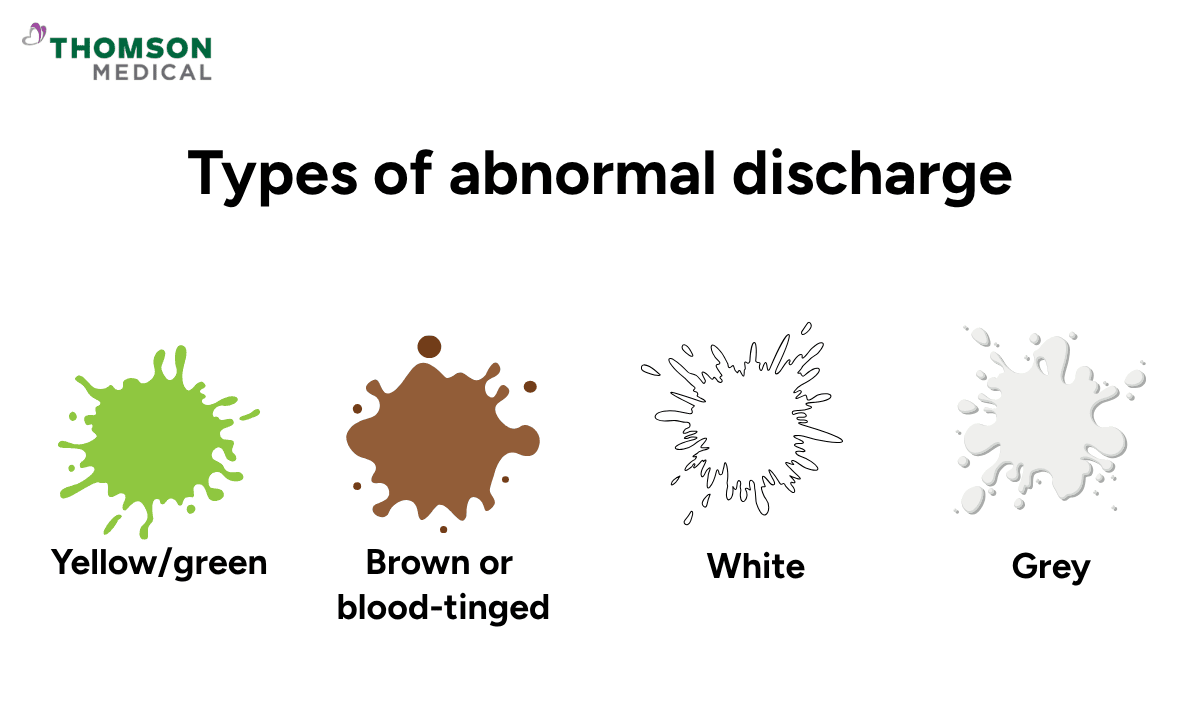
Normal vaginal discharge is typically watery, clear or whitish and often varies with hormonal changes due to your menstrual cycles, pregnancy or menopause. However, a change in colour or consistency can indicate a potential issue. Here are some types of discharges and their possible causes:
Yellow or green discharge
A yellowish or green tinge, particularly when accompanied by an unpleasant odour or frothy texture, may suggest a bacterial infection such as bacterial vaginosis, trichomoniasis, or another sexually transmitted infection (STI). This type of discharge is worth having assessed.
Brown or blood-tinged discharge
Brown discharge often reflects old blood clearing from the uterus, which can be normal around the start or end of a period. If it occurs outside your usual cycle or persists, it is worth discussing with a doctor, as it may occasionally be associated with hormonal changes or, less commonly, conditions affecting the cervix or uterus.
White, thick, or curd-like discharge
A thick, white discharge with a cottage cheese-like texture (often with itching or irritation) is commonly associated with a yeast infection (candidiasis). This is one of the more common causes of abnormal discharge and is generally treatable.
Grey or frothy discharge
Grey or frothy discharge, especially with a strong or fishy smell, may indicate bacterial vaginosis, a common condition caused by an imbalance of bacteria in the vagina.
Many women find that a brief check-up is all it takes to get a clear answer and peace of mind. If you would like to speak with someone, schedule an appointment with Thomson Medical to speak with our healthcare specialists and get the guidance you need.
What is the treatment for abnormal vaginal discharge?
Treatment depends on the underlying cause of the discharge. To identify what is causing the change, your healthcare provider may take a vaginal swab, which is sent to a laboratory for analysis.
In some cases, particularly if there are concerns about the cervix, additional tests may be recommended.
Once a cause has been identified, treatment is usually straightforward:
Bacterial infections are typically managed with antibiotics
Yeast infections are commonly treated with antifungal medication
It is worth noting that self-treating – particularly with over-the-counter products – without knowing the underlying cause may not always be effective, and a brief consultation can help ensure you receive the right care for your specific situation.
Our gynaecologists in Singapore
Loading...
When should you see a doctor about abnormal vaginal discharge?

It is completely normal to notice some discharge every day — your body produces it naturally to keep things healthy and balanced. Most of the time, there is no cause for concern. But there are certain changes worth paying attention to.
Consider speaking with a doctor if you notice any of the following:
A strong or unpleasant odour, particularly one that is fishy or sour
A change in colour such as yellow, green, or grey discharge, which is not typical for your body
An unusual texture, such as frothy, watery, or thick curd-like discharge
A sudden increase in volume that feels out of the ordinary for you
Accompanying symptoms such as itching, burning, irritation, or pelvic discomfort
Bleeding or brown discharge occurring outside of your usual period
You do not need to wait until symptoms become severe. If something feels off – even if you are not sure what it is – a short consultation can help rule out infection or other causes and give you clarity.
It is also worth keeping a simple note of when you first noticed the change, what it looks like, and whether anything accompanied it (such as a new product, medication, or sexual activity). This can be genuinely helpful during your appointment.
Early assessment is often straightforward. Many causes of abnormal vaginal discharge are easily treated once identified, and addressing them promptly can help prevent further discomfort.
For personalised advice, consider speaking with a women's health doctor. You can request an appointment with Thomson Medical if you have questions or concerns about your vaginal discharge.
FAQs
When should I go to the doctor for an abnormal discharge?
Schedule an appointment with your healthcare provider if you notice any major changes in the colour, texture and amount of vaginal discharge. This can include a foul-smelling or fishy odour, a frothy or cottage cheese-like consistency, or changing to a shade of grey, green or yellow.
Is it normal to have a lot of vaginal discharge every day?
It is normal for vaginal discharge to vary in amount from time to time. However, it can be abnormal if you notice a sudden, unusually large amount of vaginal discharge. It is important to consult your healthcare provider, as it may signify a sign of infection.
How to prevent abnormal vaginal discharge?
To reduce your chances of developing vaginal infections and abnormal discharge, consider the following preventative measures:
Keep your vagina clean by gentle washing with water and mild soap outside. It is not necessary to put soap directly into your vagina.
Avoid douching and using feminine products or sprays in your vagina area.
After using the toilet, always wipe from front to back to avoid bacteria entering your vagina and causing infection.
Wear loose-fitting clothing to promote airflow and comfort.
Change your undergarments frequently to maintain hygiene.
Practise safe sex by wearing condoms to prevent infections.
Does douching reduce vaginal discharge?
Douching is a method to wash out the vagina with a mixture of water and vinegar. There are various types of douches containing antiseptics and fragrances sold in the supermarkets and drugstores. However, douching is ineffective at getting rid of the strong unpleasant odour of vaginal discharge. In fact, douching increases the risk of infection.
Will abnormal vaginal discharge go away on its own?
Abnormal vaginal discharge will not go away on its own if it is caused by infection. It is advisable for you to seek medical attention if you experience abnormal vaginal discharge.
Keeping an eye on your vaginal discharge can help you track what’s typical for your body and notice any changes promptly. Anything out of the ordinary should be discussed with your healthcare provider. Remember, diagnosing and treating infections early can prevent long-term complications.
The information provided is intended for general guidance only and should not be considered medical advice. For personalised recommendations and tailored advice based on your unique situations, please consult a specialist at Thomson Medical. Request an appointment with Thomson Medical today.
For more information, contact us:
Thomson Specialists (Women's Health)
Thomson Women's Clinic (TWC)
- Novena:
6592 6686 (Call), 8611 8986 (WA) - Bukit Batok:
6569 0668 (Call), 8686 3525 (WA) - Choa Chu Kang:
6893 1227 (Call), 8282 1796 (WA) Jurong:
6262 8588 (Call), 6262 8588 (WA)- Katong (female doctor):
6970 2272 (Call), 8611 9020 (WA) - Punggol:
6243 6843 (Call), 8811 0328 (WA) - Sembawang: 6753 5228
- Sengkang: 6388 8125
- Serangoon (female doctor): 6382 3313
- Tampines: 6857 6266
- Tiong Bahru: 6276 1525