

Think acne is just something teenagers deal with? Think again. If you're seeing breakouts well into your twenties, thirties, or even beyond, you're definitely not alone – adult acne is way more common than most people realise. The truth is, acne doesn't care about your age. It can show up at any stage of life, triggered by everything from hormonal changes to stress to the products you're using on your skin.
The good news is with the right approach and combining some lifestyle factors with effective treatments, you really can get your skin back on track.
What is acne?
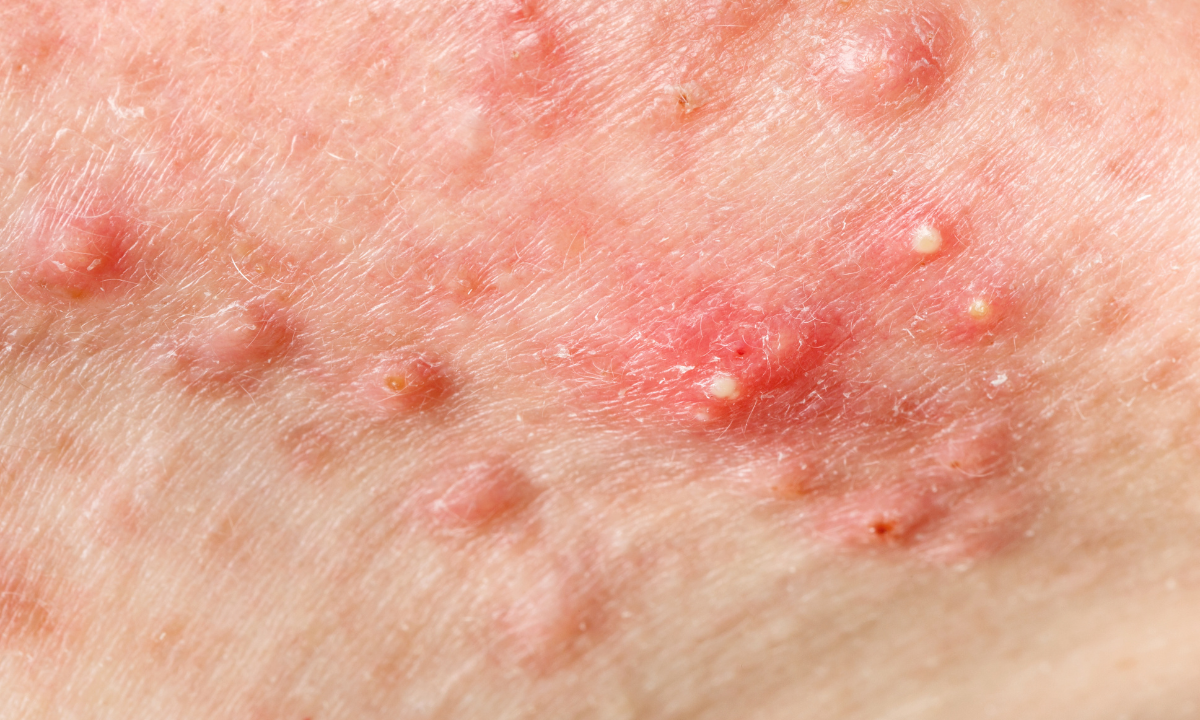
Acne happens when your pores get clogged with sebum (the natural oil your skin makes) and dead skin cells. When that happens, you end up with whiteheads and blackheads.
If bacteria get into those clogged pores, that's when things get more inflamed – you'll see redness, swelling, and those more painful bumps like pimples or deeper lumps under the skin.
Acne usually shows up on your face, chest, back, and shoulders, basically anywhere your skin tends to be oilier. For some people it's just occasional breakouts, while others deal with more persistent acne problems that can sometimes leave acne scars.
What causes acne?
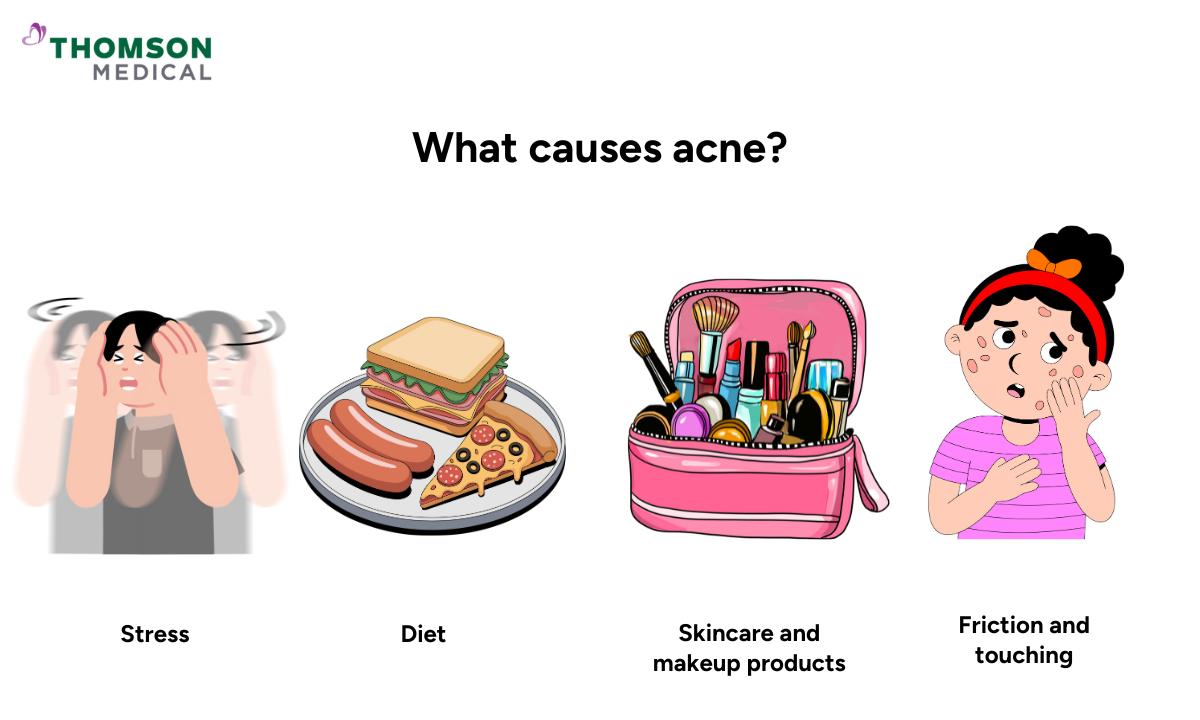
Knowing what triggers your breakouts is key to keeping your skin under control. Acne starts with clogged pores, but many different things in your daily life can make it worse.
Hormones:
Hormonal fluctuations during puberty, pregnancy, or your period cause your skin to produce more oil.
Women with PCOS (polycystic ovary syndrome) often deal with hormonal acne too.
Stress:
When you're stressed out, your body releases hormones like cortisol that tell your oil glands to go into overdrive, potentially leading to bacterial overgrowth in clogged pores.
Diet:
Sugary foods, white bread and pasta, dairy, and greasy foods seem to make acne worse for some people.
Skincare and makeup products:
Some products clog your pores, so look for anything labelled "non-comedogenic", which means it won't block them up.
Certain medications:
Some medications can cause breakouts as a side effect, including steroids, lithium, and certain seizure medications.
Friction and touching:
Things like tight headbands, backpacks, or face masks that rub against your skin can irritate it.
Touching your face frequently can also make acne worse.
Smoking and genetics:
Both smoking and your genes influence whether you'll struggle with acne and how severe it might be.
If you’re struggling to pinpoint what’s causing your acne or need help managing persistent breakouts, request an appointment with Thomson Medical. Our dermatology specialists can review your skin, lifestyle factors, and medical history to create a personalised plan that targets the root causes and helps you achieve clearer skin.
How can lifestyle changes help reduce acne?
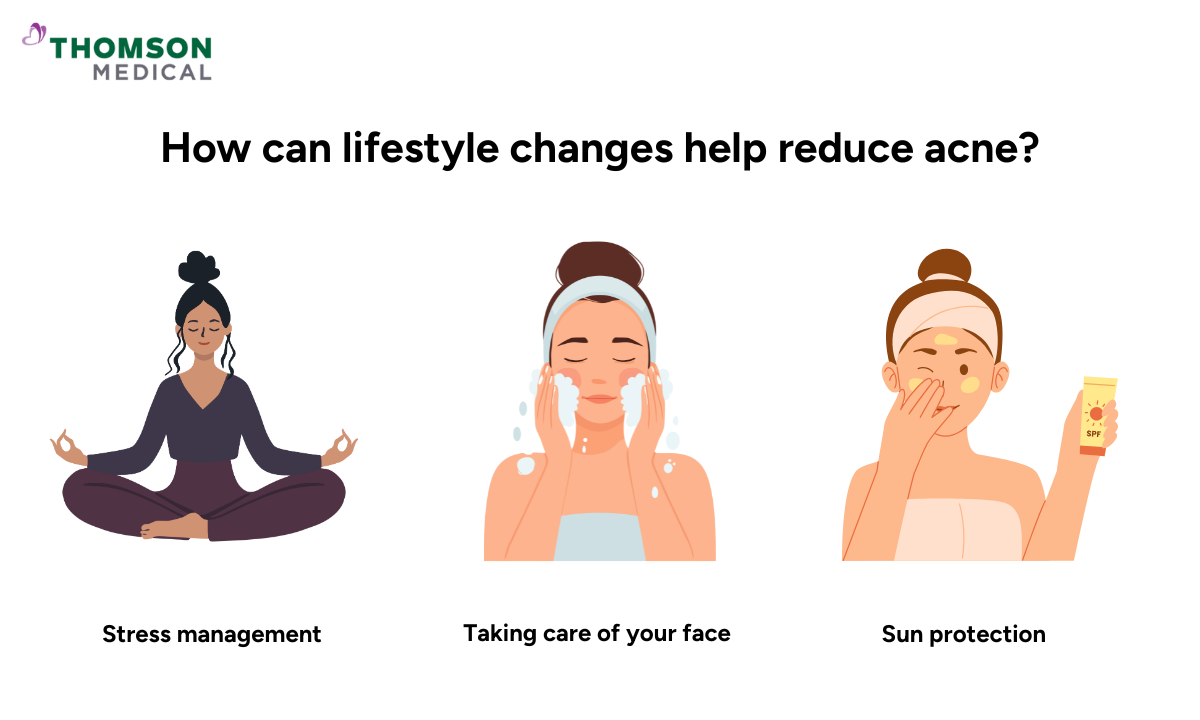
Making thoughtful lifestyle adjustments can significantly reduce breakouts and improve your skin's overall health.
Stress management
Stress may raise cortisol and oil production, which can worsen acne for some. Try these to help:
Exercise regularly to ease stress and boost mood
Practice meditation or deep breathing
Spend time with loved ones
Enjoy relaxing hobbies
If stress keeps triggering your acne, it's worth seeing a dermatologist or other medical professional.
Getting enough sleep
Skin repairs itself during sleep, and poor rest might raise cortisol levels linked to more oil. Aim for 7-8 hours with these habits:
Stick to a regular bedtime
Cut caffeine, nicotine, and alcohol
Avoid screens 30 minutes before bed
Keep your bedroom cool, dark, and quiet
Taking care of your face
A good skincare routine is essential, but more isn't always better. Daily habits that you should try include:
Wash your face twice daily with a gentle and non-comedogenic cleanser
Skip the harsh scrubbing, which just makes inflammation worse
Use chemical exfoliants like salicylic acid instead of rough scrubs
If your skin is sensitive, only exfoliate once a week
Pat your skin dry with a clean towel
Avoid touching or picking your skin as picking pushes bacteria deeper into your skin. If extraction is needed, see a professional rather than doing it yourself.
Diet adjustments
What you eat can affect your skin. While diet alone won't cure acne, the right food choices help reduce inflammation and balance hormones.
Foods to reduce or avoid:
High-sugar items and refined carbs like white bread
Dairy, especially skim milk
Processed or greasy foods
Choose acne-friendly foods to include:
Veggies and leafy greens
Berries and fruits
Nuts, seeds, whole grains
Fish rich in omega-3s and olive oil
Keep your hair and bedding clean
Since hair and pillowcases can transfer residue to your skin, keeping them clean helps prevent clogged pores. Here’s how simple habits like cleaner hair and fresher bedding:
Wash your hair thoroughly to remove all product traces
Rinse from head to toe, shampooing first, then cleansing your face and body
Keep hair off your face to prevent oil transfer
Change pillowcases weekly (daily if severe)
Makeup practices
Your routine can either help or harm your acne. Most importantly:
Never sleep with makeup on
Use non-comedogenic makeup products
Clean makeup brushes and sponges at least once a week
Replace old makeup products according to expiration dates
Sun protection
Sun exposure stimulates oil production, darkens hyperpigmentation, and can slow the fading of acne scars. Sun exposure can also interfere with skin recovery. Protect your skin by:
Using oil-free and non-comedogenic sunscreen with at least SPF 50
Applying sunscreen daily, even on cloudy days
Limiting excessive sun exposure
Removing sunscreen completely at day's end
Hydration
When your skin is dehydrated, it produces more oil to compensate, leading to clogged pores. How to hydrate properly:
Drink plenty of water throughout the day
Use a water-based moisturiser, especially if you have oily skin
Adjust your skincare to different environments
Our dermatologist
Loading...
What are the common acne treatments in Singapore?
If lifestyle changes aren't enough, you've got plenty of acne treatment options that can really help manage acne effectively.
Products you can grab at the pharmacy
For mild acne, these products are available at pharmacies without a prescription:
Benzoyl peroxide kills bacteria and unclogs pores
Salicylic acid removes dead skin cells and unclogs pores
Sulphur has antibacterial properties
Adapalene prevents clogged pores and reduces inflammation
Products that combine benzoyl peroxide and adapalene tend to work even better. Just be patient and give whatever you try a good 4 to 6 weeks – your skin needs time to respond and show improvement.
Prescription topicals and oral medications
When your acne's being more stubborn or it's getting severe, your doctor can step in with stronger treatments.
For topical treatments, your doctor might recommend:
Stronger retinoids (topical retinoid formulations) than what you'd find over the counter
Antibiotic gels and lotions that fight infection
Azelaic acid to help clear your skin
Glycolic acid for chemical exfoliation
Combination products that tackle acne from multiple angles
For oral medications, your doctor may prescribe:
Oral antibiotics you take by mouth for moderate acne
Hormonal therapies for women, like birth control pills or or oral antiandrogens spironolactone
Isotretinoin for severe acne
Chemical peels
Chemical peels use solutions applied to your skin to go after clogged pores, bacteria, and inflammation. You'll want a trained professional to do this since everyone's skin reacts differently. These are part of clinically proven treatments for acne.
Photodynamic therapy and light therapy
These light-based treatments work to calm inflammation and reduce pimples, especially if your acne is mild to moderate. Your doctor will often pair them with other medications to get you faster results. You might see some peeling, crusting, or temporary darkening where you've been treated.
Laser treatments
Laser treatments can be combined with other methods to give you better results overall. Many clinics find laser treatment useful for controlling active acne.
For those dealing with post-acne scars, options like laser resurfacing or fractional resurfacing may be recommended to improve skin texture and reduce the appearance of acne scars. Acne scar removal often requires multiple treatment sessions for optimal results.
When should I see a doctor?
It's time to book an appointment with a doctor or dermatologist if:
Your acne doesn't improve after 4 to 6 weeks of over-the-counter treatment
You have severe acne with many papules, pustules, nodules, or cysts
Your acne is causing scarring or emotional distress
You notice signs of infection
Your acne affects your quality of life
Getting help early can save you from dealing with long-term scarring.
If your acne isn’t improving or you’re unsure which treatment is right for your skin, request an appointment with Thomson Medical. Our dermatologist can assess your acne type, review what you’ve already tried, and recommend a treatment plan that’s safe, effective, and tailored to your skin’s needs.
FAQ
Which is the most effective acne treatment?
Begin with benzoyl peroxide and adapalene. If you're not sure which acne product to buy, start with one that contains benzoyl peroxide, adapalene, or both. They are more effective when combined. Give the treatment a few weeks before expecting to see results.
What is the best treatment for acne?
It really depends on how bad your acne is. Mild acne often responds to over-the-counter options like benzoyl peroxide or topical retinoids. More severe cases may require oral antibiotics, prescription-strength retinoids, or hormonal therapies. Persistent and severe acne might need isotretinoin, a stronger oral retinoid.
Can salicylic acid cause acne?
No, salicylic acid does not cause acne. However, it can cause a temporary initial increase in breakouts known as "skin purging". This occurs because salicylic acid speeds up cell turnover, bringing underlying congestion to the surface more quickly. This phase is temporary and should resolve in about 4 to 6 weeks.
How can I stop hormonal acne?
You'll want to tackle this from multiple angles. Keep up a gentle skincare routine using non-comedogenic products. On the medical side, your doctor might suggest topical retinoids. oral antibiotics, or hormonal therapies like birth control pills or spironolactone. Managing your stress levels helps too, along with cutting back on sugar, dairy, and foods that spike your blood sugar quickly.
Is laser treatment safe for acne?
Acne laser treatment is generally safe but does carry some risks. The most common side effects are temporary skin colour changes (such as redness or darker patches) and swelling. The good news is these usually fade within a few hours or days.
Why isn't my acne clearing?
There could be a few reasons. Hormonal imbalances, stress, your diet, skincare habits that aren't quite right, or even your genetics might be at play. Sometimes products are too harsh, or you're not sticking with a treatment long enough to see results. There could also be underlying health issues going on. If you've been taking good care of your skin at home but nothing's improving, it's definitely time to see a dermatologist who can figure out what's really going on.
The information is intended for general guidance only and should not be considered medical advice. For personalised recommendations and advice based on your unique situation, please consult a specialist at Thomson Medical. Request an appointment with Thomson Medical today.
Reference:
Reynolds, R. V., Yeung, H., Cheng, C. E., Cook-Bolden, F., Desai, S. R., Druby, K. M., Freeman, E. E., Keri, J. E., Gold, L. F. S., Tan, J. K., Tollefson, M. M., Weiss, J. S., Wu, P. A., Zaenglein, A. L., Han, J. M., & Barbieri, J. S. (2024). Guidelines of care for the management of acne vulgaris. Journal of the American Academy of Dermatology, 90(5), 1006.e1-1006.e30. https://doi.org/10.1016/j.jaad.2023.12.017
Dr Tan Hiok Hee
Dermatology (Skin)
Thomson Specialist Skin Centre (Novena Specialist Center)
English, Mandarin
.png%3Fbranch%3Dprod&w=640&q=75)